How to Create SEO Landing Pages That Actually Convert Visitors Into Customers

How to Create SEO Landing Pages That Actually Convert Visitors Into Customers

Most businesses get traffic. Very few get customers from that traffic. If you have ever checked your analytics and seen healthy numbers of visitors but a contact form that barely gets touched, the problem usually isn’t your traffic. It’s your landing page.

A landing page that ranks well but doesn’t convert is, frankly, a wasted opportunity. You did the hard part, getting someone to click, and then lost them at the finish line. This guide walks through how to build landing pages that do both jobs at once: rank on Google and turn a visitor into an actual lead or sale.

Why Most Landing Pages Rank But Don’t Convert

Here’s something we see constantly when auditing client websites. A page targets the right keyword, has decent backlinks, and still sits on page one with almost no conversions. Why does this happen?

Usually it comes down to a mismatch between what the visitor expected when they clicked and what they found on the page. Someone searching for a specific service has a specific intent. If your landing page talks generally about your company instead of directly addressing that intent within the first few seconds, the visitor bounces. Google notices that bounce, and your rankings eventually suffer too. Conversion and ranking are not separate goals, they feed each other.

There’s also the trust problem. A landing page with no client proof, no clear contact information, no real explanation of how the service works, and no sense of who is behind the business will struggle to convert no matter how good the design looks. We covered this trust gap in detail in our piece on why visitors leave a website without contacting the business, and the same principles apply directly to landing pages.

Start With One Clear Goal Per Page

A landing page trying to sell three services at once usually sells none of them well. Before writing a single word, decide what one action you want the visitor to take. Request a quote. Book a call. Download a guide. Everything on the page should push toward that single action.

This is different from a homepage, which has to serve many purposes for many types of visitors. A landing page is narrow by design. If you are running SEO Services in Mumbai, your Mumbai landing page should speak only to a Mumbai business owner’s specific concerns, not generic marketing language that could apply to anyone, anywhere.

Match the Headline to Search Intent, Not Just Keywords

A headline stuffed with keywords but written for a search engine, not a person, is one of the fastest ways to lose a visitor in under five seconds. Your headline needs to do two things simultaneously: include the term people are actually searching for, and confirm to a real human that they landed in the right place.

For example, a headline like “Digital Marketing Solutions” tells the visitor almost nothing. A headline like “Get More Local Customers With SEO Services in Haryana” tells them exactly what they get and where it applies. The second version reads naturally, matches intent, and still carries the keyword weight you need.

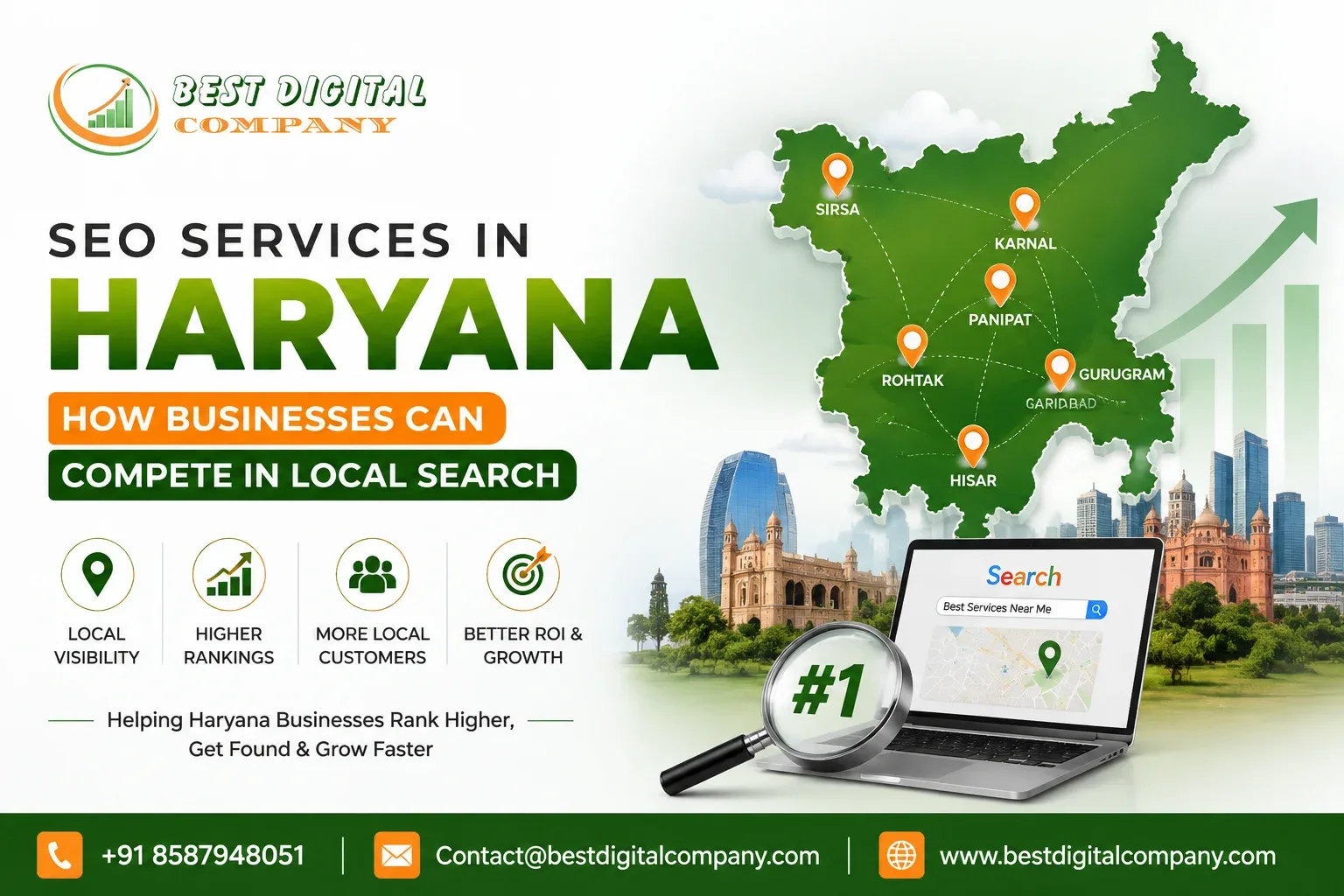
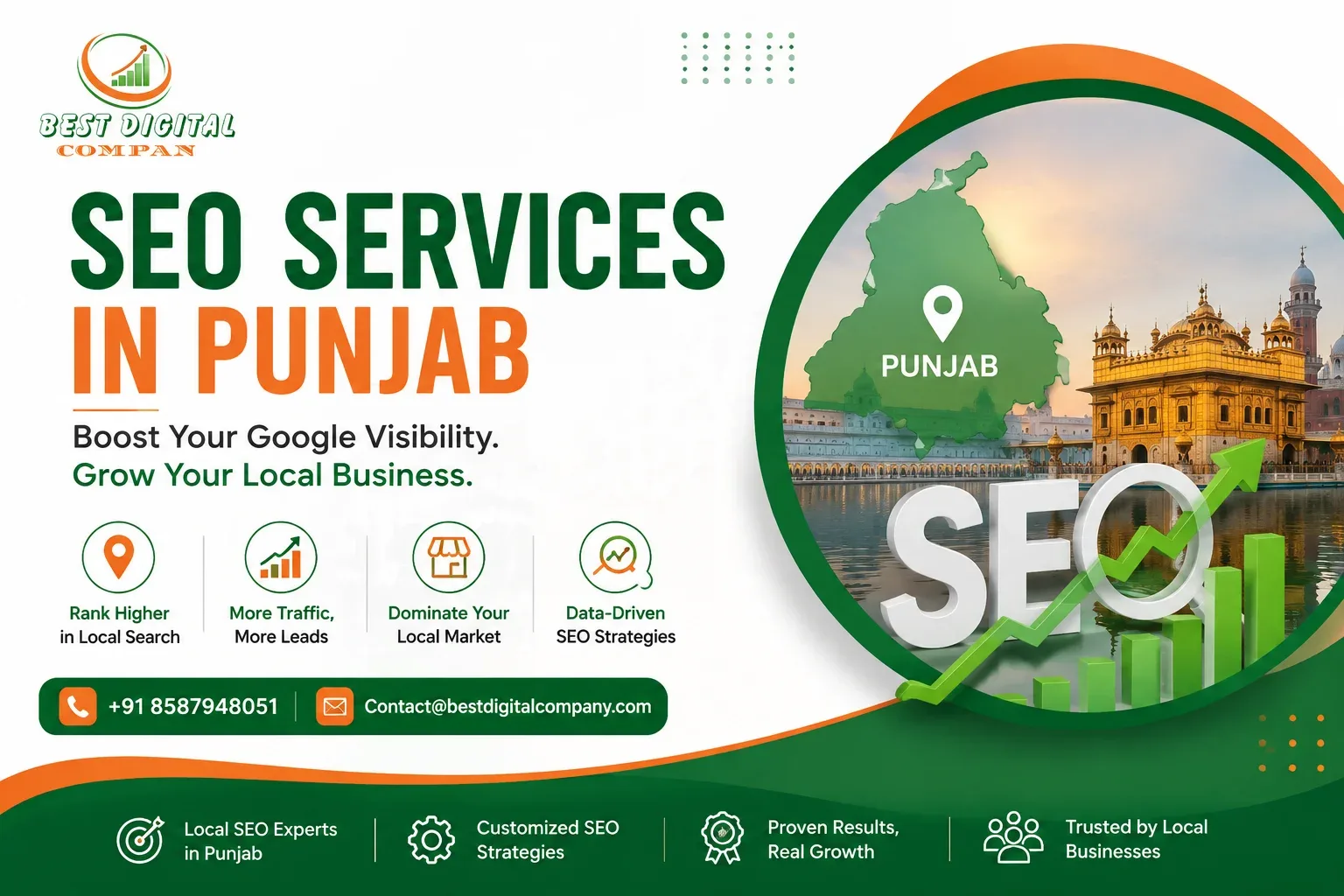
This is also where local specificity pays off. If you serve multiple regions, build a dedicated page for each rather than one generic page trying to rank everywhere. We have separate pages built this way for SEO Services in Punjab and SEO Services in Haryana, each speaking to the specific market instead of a one-size-fits-all pitch.

Write Content That Answers Real Questions, Not Filler

Google’s systems have gotten noticeably better at telling the difference between a page written to genuinely help someone and a page written to hit a word count. Thin, repetitive paragraphs that restate the same idea five different ways don’t fool anyone anymore, human or algorithm.

The fix is straightforward, even if it takes more effort. Write the page the way you would explain the service to a customer sitting across from you. What problem are they dealing with? What have they probably already tried that didn’t work? What makes your approach different? Address these honestly, with specifics, not vague promises like “best results guaranteed.”

This connects directly to a topic we explored in how to build topical authority in SEO, where depth and genuine expertise on a subject matter far more than surface-level keyword coverage. A landing page benefits from the same depth, scaled down to the specific service and audience it’s targeting.

Build Trust Signals Into the Page Itself

Trust is not a “nice to have” section at the bottom of the page. It needs to be woven throughout. A few elements that consistently move the needle:

  • Real client names, logos, or case studies rather than vague testimonials
  • A visible phone number and email, not buried behind a contact form
  • Clear information about who runs the business and where it’s based
  • Specific numbers and results instead of generic claims

This is essentially Google’s E-E-A-T idea (experience, expertise, authority, trust) applied at the page level. A landing page that demonstrates real experience with a service, written by people who clearly understand the subject, will outperform a generic template page even if both target the same keyword.

Use a Layout That Guides, Not Overwhelms

Visual structure matters as much as the words on the page. A wall of text with no breathing room loses people fast, no matter how good the writing is. Break the page into clear sections: a strong opening statement, the problem you solve, how your process works, proof of results, and a final call to action.

Keep the call-to-action visible without forcing it on every scroll. One clear button repeated naturally at logical points, top, middle, end, works better than aggressive pop-ups interrupting the reading experience. If a visitor has to hunt for how to contact you, you’ve already lost them.

Optimize for Speed and Mobile Without Sacrificing Substance

A beautifully written landing page that takes eight seconds to load on a phone will lose the majority of its visitors before they read a single line. Speed and mobile usability aren’t separate from content quality at this point, they’re part of the same conversion equation.

Compress images, avoid unnecessary heavy scripts, and test the page on an actual phone, not just a desktop browser. This ties closely into the broader question we addressed in website redesign versus SEO optimization: a slow or clunky page undermines every other effort you’ve made, including the SEO work getting people there in the first place.

Test, Measure, and Refine Continuously

A landing page is never really “finished.” The first version is a starting point, not a final product. Track where visitors drop off, which sections they actually read, and which version of your headline or call-to-action performs better.

Small changes often produce outsized results. Moving a contact form higher on the page, changing one line of headline copy, or adding a single client testimonial near the top can shift conversion rates meaningfully. The businesses that treat their landing pages as a living, improving asset consistently outperform those that build once and walk away.

Local Relevance Still Wins

One pattern shows up again and again across regions: businesses that build landing pages tailored to their actual local market consistently outperform those running one generic national page. A business offering SEO Services in Mumbai needs language, examples, and proof points that feel relevant to Mumbai’s competitive landscape, not borrowed copy that could describe any city.

The same applies whether you’re building out a presence for SEO Services in Punjab or SEO Services in Haryana. Local intent searches carry strong purchase signals, and a landing page that speaks directly to that local context tends to convert noticeably better than a generic equivalent.

Final Thoughts

A landing page that converts isn’t about clever tricks or aggressive sales language. It’s about clarity, honesty, and respecting the visitor’s time. Tell them clearly what you do, prove you can be trusted, make the next step obvious, and keep the experience fast and easy on any device.

Ranking gets someone to your door. Conversion is what happens once they’re standing in it. Get both right, and your landing pages stop being a cost center and start being one of your strongest sources of actual business.


Frequently Asked Questions

What’s the difference between a landing page and a regular website page?

A landing page is built around one specific goal and one specific audience, usually tied to a single service, campaign, or location. A regular website page, like a homepage or services page, serves a broader purpose and audience. Landing pages convert better precisely because they’re narrow and focused.

How long should an SEO landing page be?

There’s no fixed word count that guarantees success. The right length is whatever it takes to clearly explain the offer, address the visitor’s concerns, and build enough trust to act, without padding the page with repetitive filler just to hit a number.

Can one landing page target multiple locations?

It’s possible but rarely effective. A page trying to rank for several cities at once usually ends up too generic to perform well for any of them. Dedicated pages for each location, written with real local context, consistently perform better in both rankings and conversions.

How often should a landing page be updated?

Treat it as ongoing work rather than a one-time project. Review performance data every few months, update outdated statistics or testimonials, and refine the headline or call-to-action based on what visitor behavior is telling you.

Does page design really affect conversions, or is it mostly the content?

Both matter, and they work together. Strong content with a cluttered, slow, or confusing layout still loses visitors. Clean design with weak or vague content fails just as easily. The pages that convert well get both pieces right at the same time.

Why does my landing page rank well but still get few inquiries?

This usually points to a gap between search intent and what the page delivers, or a lack of trust signals once the visitor arrives. Reviewing the page against what a first-time visitor actually needs to see before taking action is the fastest way to find the gap.

How to Build Topical Authority in SEO: The 2026 Blueprint for Higher Rankings

How to Build Topical Authority in SEO: The 2026 Blueprint for Higher Rankings

Let’s be real for a second. The days of writing one good article and hoping it ranks are long gone. Google’s systems in 2026 are far more sophisticated than they were even two years ago. They don’t just look at a single page anymore. They look at your entire website and ask one fundamental question: Does this site genuinely know what it’s talking about?

That’s topical authority in a nutshell. And if you don’t have it, you’re fighting an uphill battle against websites that do.

We’ve spent years helping businesses across India build lasting digital presence through smart, structured SEO strategies. What we’ve seen, time and again, is that the brands that win in search aren’t the ones with the most backlinks or the flashiest websites. They’re the ones who’ve built deep, trusted expertise on their topic cluster and made sure Google knows it.

This guide walks you through exactly how to do that in 2026.


What Is Topical Authority and Why Does It Matter in 2026?

Topical authority is Google’s way of measuring how comprehensively and reliably a website covers a particular subject area. It’s not just about having one great article. it’s about owning the entire conversation around a topic.

Think of it like this. If someone asked you about heart surgery, you’d trust a cardiologist over a general physician, right? Google thinks the same way. A website that has covered every angle of a subject- beginner guides, advanced strategies, case studies, FAQs, comparisons tells Google: this is the expert on this topic.

In 2026, three forces make topical authority more critical than ever:

AI Overviews in Google are pulling answers directly from sites that demonstrate deep, consistent expertise not just individual pages that match a query.

Google’s Helpful Content System has evolved to reward experience-backed, comprehensive content while penalising thin or repetitive material.

Zero-click searches mean your brand needs to be the recognised authority so users seek you out directly not just stumble upon you. We covered zero-click marketing strategies in detail in a separate post if you haven’t read it yet, it’s worth your time.


The Difference Between Topical Authority and Domain Authority

This is a question we get asked constantly, so let’s settle it clearly.

Domain Authority (DA) is a third-party metric that estimates the overall strength of your website based largely on backlinks. It’s a useful proxy, but it’s not what Google actually uses as a direct ranking signal.

Topical Authority is about content depth and relevance within a specific niche. A brand new website about one narrow topic say, industrial solar panels for factories can outrank a high-DA generalist site if it covers that topic more thoroughly and expertly.

In practical terms: you can have a DA of 70 and still lose rankings to a DA-30 site that has built genuine topical depth. We’ve seen it happen repeatedly with our clients.


Understanding Topic Clusters: The Foundation of Topical Authority

If topical authority is the destination, topic clusters are the road you build to get there.

A topic cluster consists of:

One Pillar Page — a comprehensive, long-form piece that covers a broad topic at a high level. This becomes the authority hub.

Multiple Cluster Pages — individual posts that go deep on specific subtopics related to the pillar.

Internal Links — connecting every cluster page back to the pillar and to each other, passing authority and helping Google understand the structure.

Here’s a simple example. If your pillar page is about SEO Services, your cluster pages might cover:

How on-page SEO works What is technical SEO and why it matters How to build backlinks ethically Local SEO vs national SEO: which does your business need? How to measure SEO success with the right metrics

Each cluster page links back to the pillar.The pillar links out to each cluster. Google crawls this web of content and sees a site that has genuinely mastered this subject area.

This is also why internal linking is so powerful. It’s not just a technical SEO trick. It’s how you show Google the shape of your expertise. Read our full guide: Why Your SEO Is Failing: The Power of Internal Linking Explained


Step-by-Step: How to Build Topical Authority in 2026

Step 1 – Choose Your Core Topic With Intent

Before writing a single word, you need to define your territory. What does your business genuinely know better than anyone else?

For a digital marketing agency, the core topic might be SEO Services. For a local business, it might be very specific like plumbing repairs in your city. The narrower and more specific you can go while still having enough to say, the faster you’ll build authority.

Ask yourself: What topics does my business serve day in and day out? What questions do my actual customers ask me that I can answer better than a generic website? What subtopics exist within this space that haven’t been covered well online?

Step 2 – Map Out Every Subtopic Your Audience Needs

Once you’ve chosen your core topic, map every subtopic that exists within it. Use tools like Google’s People Also Ask, your own customer conversations, and competitor analysis.

Organise these into three categories:

Awareness topics for people who are just learning (e.g., “What is SEO?”) Consideration topics for people comparing options (e.g., “SEO vs PPC: which is better?”) Decision topics for people ready to act (e.g., “How to choose the right SEO agency”)

This maps directly to search intent which Google is increasingly using to match content to queries. If you cover all three layers, you’re speaking to your audience at every stage of their journey.

Step 3 – Create Your Pillar Page First

The pillar page is your home base. It should:

Be long-form and comprehensive (typically 3,000–5,000+ words) Cover the topic broadly but with enough depth to be genuinely useful Link out to all your cluster content Be written with clear expertise not just a list of facts, but real perspective

Your pillar page is also the place to showcase Experience, Expertise, Authoritativeness, and Trust (E-E-A-T). Include author credentials, real-world examples, specific data, and original insights. Generic content won’t cut it.

Step 4 – Write Cluster Content That Goes Deep

Each cluster post should fully answer one specific question or subtopic. Don’t try to cover too much in a single post. The magic of the cluster model is that each piece is focused and thorough and together they create a complete picture.

Every cluster post should:

Target one specific, well-researched keyword or question Include practical, actionable information not just theory Draw on real experience or case studies wherever possible Link back to the pillar page and to 2–3 related cluster posts

For example, our post on why your website isn’t generating leads is a cluster post that feeds into a broader understanding of digital marketing strategy. It’s specific enough to be deeply useful and connected enough to build authority.

Step 5 – Use Internal Linking as Your Structural Backbone

Internal links are what tie your topic cluster together. They serve two purposes: they help users navigate deeper into your content, and they help search engines understand the hierarchy and relationship between your pages.

Best practices for internal linking within a topic cluster:

Every cluster post links back to the pillar page The pillar page links to every cluster post Related cluster posts link to each other when genuinely useful Use descriptive, keyword-rich anchor text not just “click here”

If you want to understand the mechanics in detail, our guide on the power of internal linking  breaks this down with practical examples.

Step 6 – Optimise for E-E-A-T Across Every Piece

Google’s quality evaluators use E-E-A-T – Experience, Expertise, Authoritativeness, and Trustworthiness as the lens through which they assess content quality. In 2026, with AI-generated content flooding the web, Google has doubled down on rewarding content that comes from real human experience.

Here’s how to demonstrate E-E-A-T practically:

Experience: Include first-hand examples, client stories, and what you’ve personally seen work and not work Expertise: Show credentials, qualifications, or professional background especially in the author bio Authoritativeness: Earn mentions and links from recognised publications and industry voices Trustworthiness: Be transparent about who you are, cite credible sources, keep content accurate and updated

Writing that sounds like it was typed by a human who genuinely understands the topic with opinions, nuances, and real context is what separates content that ranks from content that disappears.


SEO Services in Mumbai: Building Topical Authority in a Hyper-Competitive Market

Mumbai is one of India’s most competitive digital markets. Whether you’re in finance, retail, hospitality, or healthcare, the online competition is fierce. Businesses that invest in structured SEO Services in Mumbai and pair them with a genuine topical authority strategy are the ones breaking through the noise.

What works particularly well for Mumbai-based businesses is hyper-local topical clustering. Rather than trying to compete nationally on broad keywords from day one, start by becoming the definitive resource for your industry in Mumbai. Cover every question your local customers ask. Build pages that speak directly to the Mumbai market – local trends, local competition, local customer behaviour.

Once you own your city, expanding to national authority becomes a far smoother journey.


SEO Services in Punjab: How Regional Businesses Can Win With Content Depth

Punjab has seen extraordinary growth in its digital economy over the past three years. Businesses across Ludhiana, Amritsar, Jalandhar, and Chandigarh are increasingly investing in digital presence and the ones seeing the best results are those who’ve committed to content depth over time. Our SEO Services in Punjab are designed specifically for businesses in this market.

The challenge for most Punjab-based businesses is that they try to compete on the same generic keywords as national brands and lose. The smarter approach is to build topical authority around the intersection of your industry and your region.

A logistics company in Ludhiana, for example, could build an entire topic cluster around supply chain and freight management in North India with content covering local routes, regulatory requirements, cold chain logistics specific to Punjab’s agriculture sector, and seasonal demand patterns. That level of specificity is something a national brand simply cannot replicate.


SEO Services in Haryana: Turning Local Expertise Into Search Authority

Haryana’s business landscape is evolving rapidly, with significant industrial growth in Gurugram, Faridabad, Panipat, and Sonipat. Businesses here are waking up to the fact that ranking on Google isn’t about luck. it’s about strategy. Smart investment in SEO Services in Haryana combined with a well-structured topical authority approach can give regional businesses a meaningful edge over national players who aren’t addressing local needs.

The key insight for Haryana businesses: your real-world expertise is your biggest asset. The things you know about operating in this specific market seasonal factors, local regulations, customer preferences, regional competition that’s content that national websites can’t produce authentically. Document it. Publish it. Own it.


Common Mistakes That Undermine Topical Authority

We’ve worked with hundreds of businesses on their SEO strategies, and we see the same mistakes again and again.

Publishing Without a Plan

Random, disconnected blog posts don’t build topical authority. If your content calendar is just “write about whatever’s trending this week”, you’re not building a cluster you’re building a pile. Every piece of content needs a clear home in your topic structure.

Covering Topics Superficially

Thin content 400-word posts that barely scratch the surface actively hurts you in 2026. Google’s Helpful Content System is getting better at identifying content that covers a topic without truly addressing user needs. If your post on “What is backlink building?” can be bettered by a five-minute Wikipedia read, it’s not adding value.

Ignoring Existing Content

Most businesses already have content sitting on their site that could be reorganised into clusters. Before creating new content, audit what you have. A post that’s half-done on a relevant topic can often be expanded into a proper cluster page rather than starting from scratch.

Skipping the Technical Foundation

Topical authority is built on content, but it’s supported by solid technical SEO. If your site is slow to load, broken on mobile, or hard for crawlers to navigate, your cluster strategy will underperform. Our post on why mobile-friendly websites rank higher covers the essentials of what Google looks for technically.

Not Updating Content Over Time

Topical authority isn’t a set-and-forget exercise. Google rewards freshness and accuracy. Set up a schedule to review your pillar and cluster pages at least once a year  updating data, expanding sections that have grown in importance, and removing anything that’s become outdated.


How Topical Authority Connects to AI Search and Generative Answers

This is where things get really interesting in 2026. If you’ve noticed that Google is now showing AI-generated summaries at the top of many results pages, you’re seeing the new frontier that topical authority directly feeds into.

AI Overviews pull information from sources that Google trusts as authoritative on a topic. If you’ve built genuine topical depth, you’re far more likely to be cited in these AI summaries which means visibility even when users don’t click through. We wrote about this in detail in our blog on how to rank in ChatGPT, Gemini and AI search results.

Similarly, our post on Generative Engine Optimization covers how to specifically optimise your content to be referenced by AI systems a strategy that works hand-in-hand with building topical authority.

The brands that win in AI-powered search aren’t the ones trying to game the system. They’re the ones who’ve become genuinely trustworthy resources on their topic which is exactly what the topical authority model is designed to create.


Topical Authority Checklist: Where Does Your Site Stand?

Use this as a quick self-assessment:

Do you have a defined primary topic that your site is focused on? Have you mapped the subtopics within your niche that your audience searches for? Do you have pillar pages for your core topics? Do you have cluster content covering each major subtopic? Are your pages interlinked in a logical, structured way? Does your content reflect genuine first-hand experience and expertise? Is your author information and E-E-A-T visible on your pages? Do you update your content regularly? Is your site technically sound mobile-friendly, fast, crawlable? Are you tracking which content is driving traffic and engagement?

If you answered “no” to more than three of these, there’s significant topical authority work to be done and it’s worth starting now rather than later.


How Professional SEO Services Accelerate Topical Authority

Building topical authority takes time but it takes far less time when it’s done with a proper strategy from the start. Most businesses that try to do this on their own spend months creating content that doesn’t connect, doesn’t rank, and doesn’t build the clusters they need.

Working with experienced SEO professionals means you start with a clear map, not a blank page. You know exactly which pillar pages to build, which cluster posts to prioritise, which keywords to target at each stage, and how to structure your internal linking so that Google sees the full picture of your expertise from day one.

Beyond content strategy, there’s the technical side making sure your website development and architecture supports crawling, indexing, and link equity flow properly. And complementary channels like social media marketing can amplify your content’s reach, bringing in the engagement signals that further reinforce your authority.

If you want to understand what professional SEO actually costs and what you should expect for your investment, our post on SEO pricing in India for 2026 gives you a clear, honest breakdown.


Frequently Asked Questions About Topical Authority in SEO

How long does it take to build topical authority?

There’s no fixed timeline, but most businesses start seeing meaningful movement within 4–8 months of consistently publishing well-structured cluster content. Full topical authority in a competitive niche typically takes 12–18 months of sustained effort. The good news: once you’ve built it, it’s very difficult for competitors to displace you quickly.

Do I need a large website to build topical authority?

Not at all. A focused website with 30 tightly structured, high-quality pages on a specific topic will outperform a 300-page site that covers everything loosely. Quality, structure, and coherence matter far more than sheer volume. Start small and go deep, then expand.

Is topical authority the same as being ranked number one?

Topical authority increases your likelihood of ranking highly across many related queries — not just one. The goal isn’t a single number-one ranking; it’s consistent, broad visibility across your entire subject area. When Google trusts you as an authority, a single strong piece of content can lift rankings for dozens of related pages.

Can topical authority be built through off-page SEO as well?

Absolutely. Backlinks from reputable publications in your industry signal to Google that external sources consider you an authority on your topic. Guest posts, expert quotes, PR coverage, and community engagement all contribute to the authority side of the equation. But these work best when your on-site content structure is already solid external signals amplify what’s already there.

What’s the role of keyword research in building topical authority?

Keyword research is the starting point for mapping your topic cluster. You’re not just looking for high-volume keywords. you’re looking for the full universe of questions, concerns, and searches that exist within your topic area. Tools like Google Search Console, Google’s auto-suggest, and People Also Ask sections are gold for this. Long-tail keywords, in particular, are often the entry points that build authority before you can compete on the broader terms.

How does topical authority help with AI-generated search results?

AI systems whether Google’s AI Overviews, ChatGPT search, or Gemini tend to cite and reference sources that have demonstrated consistent, deep coverage of a topic. If you’ve built genuine topical authority, you’re more likely to be included in the sources these systems draw from when answering user questions. This is why topical authority and the emerging field of Generative Engine Optimisation (GEO) are closely related.

Do I need to publish new content every day to maintain topical authority?

No and please don’t publish every day just for the sake of it. Consistency matters more than frequency. Publishing two or three genuinely excellent, well-researched pieces per month is far more effective than churning out daily content that adds little value. Your existing content also benefits from regular updates, which counts as fresh activity in the eyes of search algorithms.

What industries benefit most from topical authority?

Almost every industry benefits, but topical authority is particularly powerful for B2B services, professional services (legal, financial, medical, marketing), e-commerce with complex product categories, and local services where demonstrating expertise can be a genuine trust signal for prospective customers. If your customers need to trust you before they buy, topical authority accelerates that trust.


Final Thoughts: Authority Is Earned, Not Hacked

We say this to every client who comes to us looking for a quick fix: there is no shortcut to genuine authority. The websites that rank consistently and resist algorithm changes are the ones that have put in the work to truly cover their subject area not the ones that found a loophole.

The good news is that building topical authority is a strategy that compounds over time. Every piece of content you publish, every internal link you create, every cluster page you develop makes the entire site stronger. You’re not just optimising individual pages you’re building an asset.

If you’re ready to start building that kind of lasting, sustainable search presence for your business whether you’re in Delhi, Mumbai, Punjab, Haryana, or anywhere else in India .we’d love to talk. Get in touch with Best Digital Company and let’s build something that actually lasts.

Explore our SEO Packages or learn more about our Search Engine Optimization services.

Related reading: Google Algorithm Updates 2026AI Search Optimization in 2026Website Redesign vs SEO Optimization .

Why Punjab Businesses Are Finally Taking Digital Marketing Seriously And What It Means for You

Why Punjab Businesses Are Finally Taking Digital Marketing Seriously  And What It Means for You

From textile factories in Ludhiana to steel traders in Bathinda, businesses across Punjab are waking up to a simple truth: if your customers can’t find you online, your competitor will be found instead. This guide is for every business owner in Patiala, Jalandhar, Ludhiana, Bathinda, and beyond who’s asked themselves, “Do I really need a digital marketing agency?”

Let’s be honest Punjab has always had sharp businessmen. The trader who knows how to negotiate, the manufacturer who knows his margin, the retailer who knows his neighbourhood. But the rules of visibility changed, quietly and completely, over the last few years. Word of mouth still matters. But it now travels through Instagram reels, Google Maps reviews, and WhatsApp forwards before it ever reaches a potential buyer. If your digital presence doesn’t back up your reputation, you’re invisible to an entire generation of buyers.

That’s where working with a proper digital marketing agency in Punjab changes the game. Not just someone who makes a page and disappears but a team that understands what your business actually needs, builds a strategy around it, and reports results you can understand and act on.


What Does a Digital Marketing Agency in Patiala Actually Do?

If you’ve heard the term “digital marketing” thrown around but aren’t quite sure what it covers, you’re not alone. It’s one of those phrases that means everything and nothing at the same time. So let’s break it down in plain language.

When a business in Patiala hires a digital marketing agency in Patiala, they’re typically looking for a mix of services working together  not a single checkbox to tick. The most common needs we see from local businesses are:

  • Search Engine Optimisation (SEO) — getting your website to appear when people search for your product or service on Google. If someone in Patiala types “best steel supplier near me” or “wedding caterers in Patiala,” does your business show up?
  • Social Media Marketing — building a consistent presence on Facebook, Instagram, and YouTube so your brand stays top of mind even when someone isn’t actively searching.
  • Pay Per Click (PPC) Advertising — running Google Ads or Meta Ads campaigns that put your business in front of people ready to buy, right now.
  • Website Development — building or improving your website so it converts visitors into enquiries, not just impresses them visually.

The key difference between a good agency and a mediocre one is integration. Any freelancer can run one of these channels in isolation. A proper agency ties them together, so your SEO keywords inform your ad copy, your social content supports your website traffic, and every channel feeds the same funnel.

We’ve written a detailed piece on how most business websites fail to generate leads  and a lot of what we see from Punjab businesses comes down to this exact mismatch between individual efforts and coordinated strategy.

The Punjab Market Is Different And Your Digital Strategy Should Reflect That

One thing that frustrates us about generic digital marketing advice is how little it accounts for regional business realities. Ludhiana’s hosiery and bicycle industry has very different buyer behaviour than Bathinda’s agrochemical sector. Jalandhar’s sports goods manufacturers sell both B2B and D2C. Patiala’s service businesses ,clinics, coaching centres, restaurants depend heavily on local trust signals.

A digital marketing company in Bathinda that works well needs to understand the local competitive landscape, the seasonal buying patterns, and the languages people actually search in Punjabi, Hindi, and English together, often in the same query. “Steel fabricators Bathinda” gets searched. So does “ਬਠਿੰਡਾ ਵਿੱਚ ਸਭ ਤੋਂ ਵਧੀਆ ਹੋਟਲ.” A good strategy accounts for all of it.

Similarly, a digital marketing company in Jalandhar needs to recognise that Jalandhar businesses often serve customers from across North India which means local SEO alone isn’t enough. You need content and advertising that works both regionally and nationally depending on your product.

This nuance is exactly why working with a team that has experience across markets from Delhi NCR to smaller cities gives Punjab businesses an edge. We’ve helped clients from across India and understand how buyer intent shifts by geography. If you’re curious how we’ve helped businesses in neighbouring states, our work on SEO Services in Haryana shows a similar playbook adapted to a similar regional audience.


Digital Marketing Services in Ludhiana – The Scale That Demands Serious Strategy

Ludhiana is a different beast. It’s one of Punjab’s largest cities by population and easily its biggest commercial hub. The competition for digital attention is proportionally steeper. If you’re a business in Ludhiana and you haven’t invested seriously in digital marketing services in Ludhiana, you’re likely losing ground to competitors who have.

What we’ve seen consistently with Ludhiana clients is that they’ve often tried “some SEO” or “boosted a few posts” without a clear strategy behind it. The result is spend without return. What makes the difference is starting with an audit understanding where you currently stand in search visibility, what your competitors are doing, and where your biggest untapped opportunities are.

For a typical Ludhiana manufacturer or trader, the most immediate wins often come from three places: Google Business Profile optimisation (showing up properly in local map searches), website speed improvements, and targeted content that answers the questions your buyers are actually asking online. These aren’t glamorous but they’re what moves the needle.

We also find that Ludhiana businesses benefit enormously from Pay Per Click campaigns run with tight geographic targeting, especially for seasonal products. The cost per lead in many Punjab niches is still significantly lower than in metro markets but that window won’t stay open forever as more businesses come online.


SEO Services in Punjab – The Foundation Every Business Needs

If there’s one digital investment that compounds over time, it’s search engine optimisation. Unlike paid ads, which stop the moment your budget runs out, good SEO continues to bring in traffic months and years after the work is done. It’s the digital equivalent of owning prime real estate rather than renting a billboard.

Our SEO Services in Punjab are built around this long-term mindset. We don’t promise overnight results because any agency that does is either misleading you or using tactics that will hurt you later. What we deliver instead is a systematic approach: technical health of your website, targeted content that matches real search intent, and authority-building through quality links and mentions.

For businesses in smaller cities like Patiala or Bathinda, local SEO is often the fastest and most cost-effective starting point. Optimising for “near me” searches, building consistent NAP (name, address, phone) citations across directories, and managing your Google reviews can dramatically change how many people find you within months.

For businesses with national ambitions manufacturers who supply pan-India, or service companies that work remotely a broader keyword strategy is needed. This is where deep content work, technical SEO, and a longer-term roadmap come in. The approach mirrors what we’ve successfully implemented for businesses through our SEO Services in Mumbai, where competitive landscapes demand more depth and precision.


What to Look for When Choosing a Digital Marketing Agency in Punjab

This is the question we get asked most often and we’ll answer it honestly, even if it means you end up choosing someone else. Here’s what actually separates good agencies from the rest:

They ask about your business before pitching their services

A good agency will want to understand your revenue model, your customer profile, your seasonal patterns, and your existing marketing before recommending anything. If someone pitches you an “SEO package” in the first five minutes without asking a single question about your business, walk away.

They give you realistic timelines

SEO takes time. Social media takes consistency. PPC needs testing before it scales. Any agency that promises “page one in 30 days” or “10x ROI in a month” is overpromising. Results take time, and good agencies set expectations honestly from day one. We’ve written about this specifically in our post on whether to prioritise a website redesign or SEO first it depends entirely on where you are and what problem you’re solving.

They report clearly and honestly

You should always know where your money went and what it produced. Monthly reports should show traffic, leads, ranking movement, and spend efficiency not just vanity metrics like “reach” or “impressions.” If you can’t read a report and understand whether your investment is working, ask for a better one.

They have documented results

Ask for case studies or examples from businesses similar to yours. It doesn’t have to be the exact same industry but it should demonstrate that they understand lead generation, not just content creation. Our blog on Generative Engine Optimisation for 2026 shows how we stay ahead of the curve for clients because digital marketing is evolving fast and your agency needs to evolve with it.


SEO Services in Haryana and Beyond – Why Regional Expertise Matters

Punjab and Haryana share a lot in common similar industries, overlapping supply chains, and a shared North Indian consumer base. Businesses in both states often compete for the same customers. That’s why we approach our SEO Services in Haryana with the same regional sensitivity as we do for Punjab understanding local intent, local language patterns, and local trust signals.

When a business in Patiala needs to reach customers in Ambala or Chandigarh, or when a Ludhiana exporter needs to rank for queries from buyers in Mumbai, the strategy has to be cross-regional. This is where having an agency that has operated across multiple states not just in one city gives you a measurable advantage.

Our experience spans from Delhi NCR to Punjab, Haryana, Mumbai, and beyond. That breadth of perspective means we’re not guessing what works in your market we’ve built the playbook across enough geographies to know when to follow a standard approach and when to adapt.


The Real Cost of Not Investing in Digital Marketing

We want to address something that comes up often in conversations with Punjab business owners. Many say, “Our business has run fine without digital marketing for 20 years – why do we need it now?”

The honest answer: your buyers changed, even if your business hasn’t. A young buyer in Ludhiana looking for a wholesale fabric supplier will search Google before calling anyone. A family in Jalandhar looking for a wedding venue will check Instagram before walking in. A procurement manager in Bathinda looking for an industrial supplier will check your website and reviews before replying to your email.

The cost of invisibility online isn’t always visible that’s what makes it dangerous. You’re not losing orders dramatically. You’re just not getting the ones you could have had. Over time, that compounds. Businesses that invested in digital marketing five years ago in Punjab are now reaping the benefits of compounded organic traffic and brand recognition. Those starting today have ground to make up but it’s absolutely recoverable with the right strategy.

We’ve detailed how zero-click marketing is changing lead generation in 2026 in our post on generating leads when users never visit your website. It’s worth a read if you want to understand where things are heading.


FAQ

Is there a good digital marketing agency in Patiala that works with small businesses?

Yes and it matters less where the agency’s office is and more whether they understand your market. Best Digital Company works with businesses across Punjab, including in Patiala, offering customised packages that fit small and medium business budgets without compromising on strategy quality. We start with a detailed consultation so we understand your business before recommending any service.

How long does digital marketing take to show results for a Punjab business?

It depends on the channel. PPC campaigns can show results within days of launch, though optimisation takes a few weeks. SEO is a longer game for most businesses in Punjab, meaningful ranking improvements typically take 3–6 months, with compounding results over the following year. Social media builds engagement progressively. We always set clear expectations upfront so you know what to expect at each stage.

What’s the difference between a digital marketing agency and a freelancer?

A freelancer typically handles one or two channels say, social media posting or basic SEO. An agency brings a full team: strategists, SEO specialists, content writers, ad managers, and designers who work in coordination. For businesses that want an integrated approach where every channel supports the others .An agency almost always delivers better returns than multiple individual freelancers working in silos.

Does the digital marketing company in Jalandhar or Bathinda need to be local?

Not at all. In fact, an agency with a broader national perspective often brings more value .They’ve seen what works across industries and geographies, which means they can adapt proven strategies to your local market rather than building from scratch. Best Digital Company serves clients across Punjab and North India, and our results speak for the model.

What digital marketing services are most important for Ludhiana businesses?

It genuinely depends on your business type, but most Ludhiana businesses benefit first from local SEO (ranking in Google Maps and local searches), followed by Google Ads for immediate lead generation, and then content-led SEO for long-term organic growth. For B2B exporters, LinkedIn and national keyword targeting also play an important role. We’d recommend starting with a free audit to identify your biggest gaps.

How much should a Punjab business budget for digital marketing?

There’s no one-size-fits-all number. A starting point for a local business typically runs between ₹15,000–₹40,000 per month for a managed service covering SEO and social, with additional ad spend on top if you’re running PPC. Larger businesses or those with aggressive growth targets invest proportionally more. The most important thing is that your spend maps to a defined goal not just activity.

Can digital marketing work for traditional industries like textile or agro in Punjab?

Absolutely in fact, some of the most impressive ROI we’ve seen comes from traditional industries entering digital marketing later than others. The competition for digital attention in sectors like agro, textile, and manufacturing is still lower than in retail or services, which means earlier movers in Punjab’s industrial sectors have a significant advantage right now. The window to establish online authority is open but it won’t stay open forever.

Does Best Digital Company offer SEO services specifically for Punjab businesses?

Yes. Our SEO Services in Punjab are designed specifically for the regional market accounting for local search patterns, language intent (Punjabi, Hindi, and English), competitor landscape, and the particular buyer journeys common in North Indian markets. We also offer broader national SEO for businesses looking to grow beyond Punjab.

Generative Engine Optimization (GEO): The New SEO Strategy for 2026

Generative Engine Optimization (GEO): The New SEO Strategy for 2026

A few months ago, one of our long-term clients called us with a strange complaint. Their website traffic from Google had dropped, but their phone was ringing more than ever. New customers kept saying the same thing: “ChatGPT told me about you” or “Gemini recommended your service.” That conversation is the clearest proof we have seen that the rules of online visibility have changed. Ranking on a results page is no longer the only goal. Being the answer an AI engine gives someone is the new finish line, and that finish line has a name: Generative Engine Optimization, or GEO.

If you run a business and have spent years investing in search engine optimization, this shift can feel unsettling. The good news is that GEO does not replace everything you have built. It builds on top of it. This guide breaks down what GEO actually means, why 2026 is the year it stopped being optional, and how a business whether you run an SEO services in Mumbai operation, an SEO services in Punjab business, or an SEO services in Haryana company can adapt without starting from zero.

What Generative Engine Optimization Actually Means

Generative Engine Optimization is the practice of structuring your website content so that AI systems like ChatGPT, Google’s AI Overviews, Gemini, Perplexity, and Claude can read it, understand it, and choose to use it when answering someone’s question. Traditional search engine optimization was built around one outcome: getting a blue link in front of someone so they click through to your site. GEO focuses on a different goal entirely getting your content selected, synthesized, and cited by AI systems when they generate answers to user questions.

Put simply, classic SEO got you ranked. GEO gets you quoted.

This is not a small distinction. When someone searches “best digital marketing company near me” the old way, they see ten listings and make their own choice. When that same person asks an AI assistant the same question, the assistant picks two or three sources, blends them into one answer, and hands the user a recommendation. If your business is not one of the sources the AI trusts, you are invisible in that conversation, even if your website is technically well optimized for Google.

We have already explored this shift from a few angles on our blog, including how brands can rank in ChatGPT, Gemini, and AI search results, and what AI search optimization in 2026 demands from a technical standpoint. GEO ties both of those ideas together into one coherent strategy.

Why GEO Matters More in 2026 Than It Did a Year Ago

The numbers behind this shift are hard to ignore. ChatGPT now has more than 800 million weekly users, Perplexity handles roughly 780 million monthly queries, and Google’s AI Overviews now appear in a large share of search results. Industry researchers tracking this transition have noted that AI-referred website sessions jumped 527% year-over-year in just the first five months of 2025, which tells you this is not a future trend. It is already happening in real time, inside the same browsers and apps your customers use every day.

What makes this period especially important is the overlap problem. Research from AI visibility firms has found that the overlap between top Google results and the sources AI systems actually choose to cite has dropped from around 70% to below 20%. That means ranking well on Google no longer guarantees that an AI engine will mention you at all. The two systems are starting to reward different things, and a business that only optimizes for one is leaving the other half of its potential audience untouched.

This is exactly the gap we addressed in our earlier post on zero-click marketing in 2026  more people are getting answers without ever clicking through to a website, and businesses need a plan for being part of that answer rather than competing for a click that may never come.

How GEO Is Different From Traditional SEO

It helps to think of traditional SEO and GEO as two related but separate disciplines rather than one replacing the other.

Traditional SEO is built around keywords, backlinks, page speed, and technical structure designed to satisfy a crawler and a ranking algorithm. The end goal is a position on a results page. The fundamental unit of success in classic SEO is the click a user sees a listing, clicks through, and potentially converts.

GEO works differently because the “reader” is no longer just a human scrolling a page. It is a language model trying to extract a clear, trustworthy answer in seconds. Generative engines parse meaning rather than keywords, so content built for GEO needs to be structured around clearly defined entities, claims, and relationships, using elements like structured markup, well-organized headings, explicit definitions, FAQ sections, and comparison tables. The aim shifts from being ranked to being quotable.

This also changes what counts as good content. A page that simply claims to be “a market leader” gives an AI system nothing it can use, while a page built around a specific, sourced, and verifiable claim gives the system exactly the kind of detail it needs to cite confidently. That single idea specificity over vague claims is the difference between content that gets quoted by AI tools and content that gets ignored by them.

If your team is still relying on outdated keyword-stuffing habits, it is worth revisiting our breakdown of common SEO and digital marketing mistakes in 2026, since many of those same habits actively work against GEO.

The Building Blocks of a Working GEO Strategy

A strong GEO approach is not one trick. It is a handful of fundamentals applied consistently across a website.

Structure your content around clear, extractable answers. Every important page should answer its core question directly within the first few lines, then expand with supporting detail. AI systems tend to pull the most direct, well-formed sentence from a page, so burying your answer under three paragraphs of introduction works against you.

Back up claims with specific, original data. General statements about being “trusted” or “experienced” do not give an AI model anything to cite. Numbers, dates, percentages, and named outcomes do. Strategies that work well in 2026 include answering questions directly, including original data, building author authority, earning third-party citations, and publishing consistently.

Use schema markup and clean technical structure. Best practice for 2026 includes implementing schema markup for FAQs and reviews, using clear heading hierarchies with one topic per section, ensuring content is server-side rendered rather than hidden behind JavaScript, and confirming nothing important is locked behind logins or paywalls. It is also worth checking that AI crawlers are not accidentally blocked through your robots file or CDN settings.

Build genuine topical authority. AI systems, much like search engines, tend to trust sites that demonstrate consistent depth on a subject rather than scattered, one-off posts. This is one of the reasons location-specific expertise pages matter so much for local businesses a dedicated page on SEO services in Mumbai signals real, specific authority on that market, rather than a generic national claim stretched across every city.

Maintain editorial consistency across your site. This is where Experience, Expertise, Authoritativeness, and Trust, commonly known as EEAT, becomes central. AI tools weigh whether content reflects first-hand experience and a credible author, not just polished writing. A blog post written by someone with a named author byline, supported by services pages with consistent contact details and a verifiable business address, carries more weight than anonymous, generic content.

Where Local SEO Still Fits Into the GEO Conversation

A common misconception is that GEO replaces local SEO. It does not. If anything, location-specific expertise has become more valuable, because AI systems still rely heavily on local relevance signals when someone asks a location-based question like “who offers the best SEO services in Punjab” or “which agency handles SEO services in Haryana.”

For a business serving multiple regions, this means your location pages cannot be thin, duplicated templates. Each one needs distinct, locally relevant detail: client examples from that market, region-specific challenges, and language that reflects how businesses in that area actually search and ask questions. A well-built SEO services in Mumbai page should read differently from a Punjab or Haryana page, not just swap the city name in an otherwise identical paragraph. AI systems are increasingly good at detecting templated, repeated content, and so is Google, which means duplication hurts you twice over.

This same principle came up in our earlier post on why businesses across Delhi, Mumbai, and Punjab struggle to convert website visitors into leads  the issue was rarely a lack of traffic, and almost always a lack of clear, locally specific trust signals on the page itself.

Practical Steps to Start Optimizing for Generative Engines Today

You do not need to rebuild your entire website to begin adapting. A focused, staged approach works better than trying to fix everything at once.

Start by auditing your most important pages your homepage, your core service pages, and your highest-traffic blog posts and ask whether a stranger reading only the first two sentences would understand exactly what you offer and why it is credible. If the answer requires scrolling, that page needs restructuring.

Next, add an FAQ section to key pages using direct, conversational questions that match how people actually ask AI assistants for help. This is precisely why a section like the one below matters: it is not filler, it is structured for exactly how generative engines retrieve and cite answers.

Then, review your author and company information. Make sure blog posts carry a real author name, your contact details are consistent across every page, and your business information matches across your website, your Google Business listing, and any directories you appear in. Keyword stuffing is explicitly something to avoid AI systems are built to recognize and discount it, just as modern search algorithms do.

Finally, treat this as an ongoing discipline rather than a one-time project. Citation authority compounds over time in much the same way domain authority did for traditional SEO, and most brands in most industries have not started this work yet, which means the businesses that invest now are the ones AI systems will be citing well into 2027 and 2028.

If you are unsure where your own pages currently stand, our team at Best Digital Company offers a structured way to evaluate this. Our search engine optimization services now fold GEO readiness into every audit we run, alongside the technical and content fundamentals that have always mattered for ranking well.

Bringing SEO and GEO Together Instead of Choosing One

The businesses that will struggle most over the next few years are the ones treating this as an either-or decision. SEO focuses on what a search engine’s crawler sees, while GEO focuses on what an AI model understands, trusts, and chooses to cite and the most effective strategies in 2026 integrate both rather than picking a side. A page with strong technical SEO and weak factual clarity will still struggle to get cited by AI tools. A page with brilliant, quotable content but broken technical fundamentals will struggle to rank at all. You need both working together.

This is also why we encourage clients to think of GEO as an extension of good content practice rather than a separate technical skill to bolt on. The core tactics behind GEO answering questions directly, building real author authority, and publishing consistently overlap heavily with what makes content genuinely useful to a human reader in the first place. Optimizing for AI engines and writing content people actually trust are, increasingly, the same job.

Whether your business operates out of Delhi, supports SEO services in Mumbai, manages SEO services in Punjab, or runs SEO services in Haryana, the underlying principle does not change by geography. Clear, specific, well-structured, and genuinely authoritative content wins in both search results and AI-generated answers. The businesses that adapt their content strategy now, rather than waiting for AI search to become unavoidable, are the ones that will still be visible and getting recommended three years from now.


Frequently Asked Questions

What is Generative Engine Optimization in simple terms?

Generative Engine Optimization is the practice of writing and structuring website content so that AI tools such as ChatGPT, Gemini, and Google’s AI Overviews can understand it clearly enough to use it when answering a user’s question. Instead of aiming for a high position on a results page, the goal is to be the source an AI system trusts and quotes.

Is GEO replacing traditional SEO completely?

No. GEO works alongside SEO rather than replacing it. Search engines still rank pages based on technical health, relevance, and authority, and a large share of website traffic still comes from traditional search. GEO simply adds a second layer of optimization aimed at how AI systems retrieve and cite information, since many user journeys now start with an AI assistant instead of a search bar.

How is GEO different from Answer Engine Optimization (AEO)?

The two terms are closely related and often used together. GEO generally refers to the broader practice of optimizing for generative AI platforms, while AEO is sometimes used to describe optimizing specifically for direct, single-answer responses. In practical terms, the techniques largely overlap: clear structure, direct answers, and verifiable claims benefit both.

Does my business need GEO if most of my customers are local?

Yes. Local searches are increasingly handled by AI assistants too, especially through voice search and conversational queries like “who provides good SEO services in Mumbai” or “best agency for SEO services in Haryana near me.” Local businesses that build clear, specific, region-focused content are well positioned to be cited in these AI-generated local recommendations.

How long does it take to see results from a GEO strategy?

There is no fixed timeline, but most businesses begin noticing early signals, such as appearing in AI-generated summaries or being mentioned by name in chatbot responses, within a few months of consistent work. Because citation authority builds over time, similar to how domain authority builds in traditional SEO, the businesses that start earlier tend to see compounding benefits later.

Can I measure whether AI engines are citing my website?

Yes, to an extent. You can track AI-referred traffic through analytics tools by monitoring referral sources from AI platforms, and you can manually test relevant questions in tools like ChatGPT and Perplexity to see whether your business or content gets mentioned. It is not as precise as traditional rank tracking yet, but the visibility is measurable.

What is the single most important first step for a business starting GEO in 2026?

Start with content clarity. Make sure your most important pages answer their core question directly within the first few lines, back up any claims with specific and verifiable detail, and ensure an FAQ section addresses the real questions your customers ask. Technical fixes matter too, but clear, trustworthy, well-structured content is the foundation everything else builds on.


Need help building a content and technical strategy that works for both search engines and AI platforms? Our team at Best Digital Company has spent the last few years adapting our SEO services for exactly this shift.

Get in touch to see where your website currently stands.

Website Redesign vs SEO Optimization: Which Should You Do First?

Website Redesign vs SEO Optimization: Which Should You Do First?

This is one of those questions that business owners argue about in boardrooms, WhatsApp groups, and late-night calls with their agency. Do you fix the house first, or do you start telling people it exists? The answer, as with most things in digital marketing, depends on what your house actually looks like right now.

Let’s be direct: there is no single answer that works for every business. A brand-new startup launching its first website has a completely different situation from a seven-year-old e-commerce company whose website still looks like it was built during the first Modi government. But there is a logical way to think through this decision and by the end of this article, you’ll know exactly which move makes sense for you.


First, Let’s Understand What Each Actually Involves

People often throw around these two terms as if they are interchangeable. They are not. They solve different problems, and confusing them leads to wasted money.

What Is a Website Redesign?

A website redesign means rebuilding or significantly restructuring your website visually, technically, or both. It could mean a new layout, a faster tech stack, a mobile-first experience, improved navigation, or a complete brand refresh. Sometimes it is cosmetic. Sometimes it goes all the way down to how the website is coded and hosted.

Our Web Development and Designing service covers everything from simple facelifts to complete ground-up rebuilds. The scope of work varies dramatically based on what the existing website looks like and what the business needs to achieve.

What Is SEO Optimization?

Search engine optimization (SEO) is the ongoing practice of improving how your website appears in organic search results. This involves keyword research, on-page content strategy, technical audits, link building, local SEO, and more. It is not a one-time task it is a long-term investment that compounds over months.

Whether you are looking at SEO Services in Mumbai, SEO Services in Punjab, or SEO Services in Haryana, the fundamentals remain the same but the competition, local search behaviour, and audience intent differ significantly by market. That is why local SEO expertise matters.


The Core Dilemma: Why Business Owners Get Stuck

Here is the situation most people find themselves in: the website is outdated and embarrassing, but it is also getting some organic traffic. If you redesign it carelessly, you might wipe out years of ranking signals. If you pour money into SEO on a broken website, you are optimising something that may never convert visitors into customers.

“We spent six months doing SEO on our old site, got rankings, and then redesigned only to lose everything because the new URLs weren’t redirected properly.” a real problem we see more often than you’d think.

This is not a hypothetical. It happens constantly. The good news is it is entirely avoidable if you approach both with a clear plan.


When to Prioritise the Website Redesign First

There are specific situations where jumping into SEO without fixing the website first is simply bad strategy. Here is when you should redesign first:

Your website does not work on mobile

Google moved to mobile-first indexing years ago, and yet there are still businesses running websites that look terrible on a phone. If your site is not mobile-responsive, all SEO efforts are being made on a foundation Google has already decided to deprioritise. Fix this before spending a rupee on organic ranking campaigns.

Your page speed is genuinely bad

Core Web Vitals Google’s page experience signals directly influence rankings. If your website takes more than four seconds to load, SEO content work alone will not rescue you. The technical foundation needs attention first.

Your website has zero existing traffic or rankings

If you are a new business, or if your website currently has no meaningful organic presence to protect, you have nothing to lose by redesigning first. Build the right thing from the start, with SEO architecture baked in from day one.

The website structure itself creates confusion

If visitors cannot figure out what you do in five seconds, or if your navigation is a maze, even the best-ranked landing page will fail to convert. High bounce rates signal poor user experience, which eventually feeds back negatively into your rankings over time.


When to Prioritise SEO Optimization First

On the other hand, there are plenty of situations where you should run SEO work before touching the design:

Your website already has decent organic traffic

If you have built up rankings over the years, even on a dated website, those rankings represent real business value. Rushing into a redesign without a proper SEO migration plan can destroy that traffic overnight. Before you change anything structural, get a full SEO audit done. Understand which pages rank, for what keywords, and map out a proper redirect plan.

You need results quickly and budget is limited

A full website redesign is expensive and takes time often three to six months from planning to launch. SEO, on the other hand, can start showing traction in four to six months with the right strategy. If you need to start building organic visibility now, SEO first makes practical financial sense.

Your core user experience is actually fine, just not optimised

Sometimes a website is perfectly usable it loads fine, it works on mobile, people can navigate it but it simply has no content strategy, no keyword targeting, and no authority signals. In this case, the structure is fine; what it needs is content optimisation, not a rebuild.

We’ve written about why 90% of business websites fail to generate leads and the surprising truth is that most of those failures are not design problems at all. They are strategy and content problems.


The Smartest Approach: Do Both, But in the Right Order

The businesses that win in organic search are rarely the ones who did either redesign or SEO in isolation. The ones who grow sustainably treat them as a single, coordinated project.

Here is a framework that works well in practice:

Phase 1 — Audit: Technical SEO audit plus UX review of the current site. Understand what exists, what ranks, and what is broken.

Phase 2 — Strategy: Keyword research and information architecture planning. Design the new site around how people actually search.

Phase 3 — Redesign with SEO built in: New site built with proper URL structure, schema markup, page speed, and content hierarchy already in place. No traffic loss. Launch with advantages already embedded.

Phase 4 — Ongoing SEO: Content creation, link building, local and technical SEO. Compound growth month over month.

This is the approach we use at Best Digital Company and it avoids the nightmare scenario of losing months of SEO progress to a poorly planned redesign.


How Each Affects the Other (And Why You Cannot Ignore This)

A redesign done without SEO planning can devastate your rankings

This is the most common and most painful mistake. A developer builds a beautiful new website, changes all the URLs, removes the old blog posts, restructures the navigation and within weeks, organic traffic drops by 60%. Why? Because Google had indexed the old structure, and the new site essentially looks like a different entity to search engines.

301 redirects, canonical tags, preserving backlink equity, maintaining meta data .these are not optional. They are survival requirements during any redesign.

SEO done on a technically broken website has a ceiling

On the flip side, trying to do SEO on a website with broken crawlability, duplicate content issues, or terrible load speed is like trying to race with a flat tyre. You will make some progress, but you will never reach your potential. Google’s crawlers need to be able to access your content efficiently. If they cannot, even brilliant content work will underperform.


What About PPC While You Figure This Out?

Here is something many businesses overlook: while your organic strategy is being planned and implemented, Pay Per Click advertising can keep leads coming in immediately. It is particularly useful during the transition period between an old website and a new one. you continue to appear in front of buyers while the organic strategy matures.

We have covered this topic in depth in our piece on how to choose the best digital marketing agency in 2026  because the agency you choose will determine how well these moving parts are coordinated.


A Word About Social Media in This Mix

While redesign and SEO are being sorted, Social Media Marketing can build brand awareness and drive direct traffic independently of search rankings. Think of it as a parallel track ,you are not waiting for SEO to kick in before you start building an audience.

The brands winning in 2026 are not choosing between channels. They are building integrated strategies where organic search, social presence, paid ads, and a well-designed website all work together. We have explored this shift in detail in our post on zero-click marketing in 2026  worth reading if you want to understand where lead generation is heading.


Regional Markets Deserve a Mention

If you are operating in specific cities or states, the competitive landscape for local search is very different from national campaigns. The decision between redesign and SEO also depends on how saturated your local market is.

For businesses in Maharashtra’s financial hub, our SEO Services in Mumbai are structured around high-competition urban keywords where technical excellence and content depth both matter enormously. In contrast, businesses exploring SEO Services in Punjab or SEO Services in Haryana often find there is less competition for local keywords meaning a well-optimised website can achieve strong results faster than it might in a metro market.

Understanding your local competitive landscape before making the redesign vs. SEO call can save you significant time and budget.


Quick Decision Guide: Which Should You Do First?

Answer these questions honestly:

  • Does your website load in under 3 seconds on mobile? No → Redesign first.
  • Does your current site have pages ranking on Google’s first page? Yes → SEO audit before redesign.
  • Is your website less than 2 years old and reasonably functional? Yes → SEO first.
  • Does your website embarrass you when you share the link? Yes → Redesign, but bring SEO into the brief.
  • Are you launching a brand-new business? Build with SEO from the ground up.

If you answered “both” to most of these that is probably the right answer. The best websites are designed and built with SEO in mind from the very first wireframe.


Frequently Asked Questions

Can I do website redesign and SEO at the same time?

Yes, and this is actually the ideal scenario when planned properly. The key is to integrate the SEO strategy into the redesign process not treat them as two separate projects. When keyword research, URL structure, content hierarchy, and technical requirements are defined before design begins, the new website launches already optimised rather than needing fixes after the fact.

Will a website redesign hurt my current Google rankings?

It can, if done carelessly. The most common causes of ranking drops after a redesign are changed URLs without proper 301 redirects, removed content that had backlinks pointing to it, poor page speed on the new site, and loss of structured data. A professionally managed redesign with a solid SEO migration plan should not result in long-term ranking losses.

How long does SEO take to show results?

Most businesses start seeing meaningful movement in 4 to 6 months for competitive keywords, and sometimes sooner for local or long-tail terms. SEO is a compound investment, the work done in month one starts paying off in month six, and continues growing. It is not instant, but the traffic it builds is also not dependent on ad spend.

My website is old but still gets traffic. What should I do?

Protect your existing traffic first. Get an SEO audit before you touch anything. Map all your current ranking URLs, identify which ones have backlinks or significant organic traffic, and create a detailed redirect plan. Only once that plan is in place should you proceed with the redesign. This order of operations is non-negotiable if you want to preserve what you have built.

Is SEO still worth investing in for regional businesses in Punjab, Haryana, or Mumbai?

Absolutely and in many regional markets, the opportunity is actually better than in highly saturated metros because the competition for local search terms is lower. Businesses using our SEO Services in Punjab and SEO Services in Haryana often find that consistent SEO work delivers visible results faster than national campaigns, simply because fewer local businesses have invested seriously in it yet.

What if I have a tight budget? Should I choose redesign or SEO?

If budget is the primary constraint, a targeted SEO campaign on your existing website almost always delivers a better return in the short to medium term provided the website is technically functional. You can often generate leads with solid content and local SEO while saving toward a proper redesign. However, if the existing website has fundamental technical problems, no SEO strategy will fully compensate for that.

Do I need SEO if I am running Google Ads?

These serve different purposes. Google Ads delivers immediate, paid visibility that stops the moment your budget runs out. SEO builds organic authority that keeps sending traffic without per-click costs. Businesses that rely solely on paid ads are renting their traffic, while businesses that invest in SEO are building an asset. The smartest strategy uses both paid for immediate results, organic for long-term sustainability.

How do I know if my website needs a full redesign or just SEO improvements?

Ask yourself: Does your website load quickly on mobile? Is the navigation intuitive? Does the visual design reflect your current brand and pricing level? If visitors arrive from search and immediately leave, is that because the content does not match their expectations, or because the website experience itself is off-putting? The answers will tell you whether you have a design problem, a content problem, or both. Our team can help diagnose this. Reach out via our contact page.


Final Thoughts

The redesign vs. SEO debate is a false choice in many ways. Both need to happen. The question is just about sequence and that sequence should be driven by the current state of your website, not by whoever is pitching you hardest this week.

If your website is technically broken or genuinely outdated, fix that foundation first but bring SEO into the design brief from day one. If your website is functional but invisible in search, start optimising immediately and plan a redesign for the next phase of growth. If you are building from scratch, there is no excuse for not doing both simultaneously.

And if you are unsure which category you fall into, that is exactly what we are here for. The team at Best Digital Company has worked with businesses across Delhi, Mumbai, Punjab, Haryana, and beyond helping them make smarter decisions about where to invest first.

Check our Search Engine Optimization services or browse our SEO packages to understand what a structured engagement looks like. You can also explore our Web Development packages if a redesign is on your roadmap.

Whatever you decide, just make sure you are deciding with data not anxiety.

Zero-Click Marketing in 2026: How to Generate Leads When Users Never Visit Your Website

Zero-Click Marketing in 2026: How to Generate Leads When Users Never Visit Your Website

Here’s something that would have sounded absurd five years ago: your best lead today may have found you, decided to trust you, and is ready to call you without ever landing on your website. Welcome to the reality of zero-click marketing in 2026.

Roughly 65% of all Google searches now end without a single click. People get business hours from Knowledge Panels, find answers in AI Overviews, read product comparisons in featured snippets, and discover brands through short-form videos, all without touching your domain. If your strategy still defines success purely by traffic analytics, you’re measuring the wrong thing.

This blog breaks down what zero-click marketing actually means for businesses today, which channels and tactics genuinely work, and how our services from Search Engine Optimisation to Pay Per Click advertising can be repositioned to win leads in a world that barely clicks through.


1. What Is Zero-Click Marketing And Why It Matters Right Now

Zero-click marketing is the practice of generating brand awareness, authority, and inbound leads through digital touchpoints where the user never actually visits your website. The interaction happens entirely on Google’s SERP, on a social platform, inside a voice assistant, or through a brand impression that stays in memory until the person is ready to buy.

This isn’t a loophole or a workaround. It is simply where consumer attention has moved. Google’s AI Overviews, Position Zero featured snippets, Local Packs, People Also Ask boxes, and social search are now the first and sometimes only stop before a purchase decision.

For a digital marketing agency like ours, based in Delhi and working with businesses across India, the shift means our clients need to think about presence, not just placement. Ranking number one is still important. But being the brand that shows up authoritatively in answer boxes, maps, knowledge graphs, and social feeds that is the new lead funnel.


2. The Channels Driving Zero-Click Lead Generation in 2026

2.1 Google Featured Snippets and AI Overviews

When someone types ‘best digital marketing agency in Delhi’ or ‘how much does SEO cost in India,’ Google frequently pulls a direct answer from a webpage and displays it at the top sometimes without the user needing to scroll further. Your goal is to be that source.

Structured, well-formatted content that directly answers specific questions tends to earn these positions. Writing in clear Q&A formats, using concise definitions followed by detail, and organising content with semantic HTML all contribute. It’s disciplined writing not keyword stuffing that gets you there.

2.2 Google Business Profile and Local Pack

For service-based businesses, especially those targeting local markets, the three-pack of local results above organic listings often drives more enquiry calls than a full website visit would. Someone searching ‘PPC agency near me’ on mobile sees your rating, phone number, hours, and reviews and calls directly. That lead is zero-click from a website perspective, but it is a very real conversion.

Maintaining an accurate, review-rich Google Business Profile has become as important as having a well-built website. If you haven’t already, explore our Digital Marketing Services in Delhi to understand how local visibility fits into a broader strategy.

2.3 Social Search – Instagram, YouTube, and LinkedIn

Younger demographics increasingly use Instagram and YouTube as search engines. A business that shows up in a relevant Reel, a YouTube short explaining a service, or a LinkedIn thought-leadership post is generating brand awareness and leads without the user ever needing to visit a domain. The discovery happens on-platform.

This is precisely why our Social Media Marketing service now centres on searchable content, not just engagement content. Every post, caption, and hashtag is treated as an SEO asset.

2.4 Voice Search and Conversational AI

Smart speakers and AI assistants read out a single answer when someone asks a voice question. There is no second result. Optimising for conversational long-tail queries, local intent, and FAQ-structured content increases the probability that your business is the one answer Alexa, Google Assistant, or an AI chatbot returns.

2.5 Knowledge Panels and Brand SERPs

When users search your brand name directly, what does Google show them? A Knowledge Panel with accurate details and positive reviews builds enormous trust even if they never click. Managing your brand’s SERP through consistent NAP (Name, Address, Phone) data, authoritative backlinks, and structured data is a form of zero-click reputation management.


3. How to Build a Zero-Click Lead Generation Strategy

Step 1 — Audit Your Current SERP Presence

Before optimising for zero-click, understand where you currently appear. Search for your core service keywords and note: do you appear in featured snippets? Does your GBP show up in the local pack? Is your brand Knowledge Panel accurate? This baseline tells you where the gaps are.

Step 2 — Structure Content to Answer Questions Directly

Google’s crawlers are looking for content that answers a user’s question in the first 40–60 words of a section. This means leading with your answer, then providing supporting context. Use H2 and H3 headings that mirror real search queries. Include FAQ sections (like the one at the end of this article) because People Also Ask boxes heavily pull from structured FAQ schema.

Step 3 — Invest in Local SEO and GBP Optimisation

For businesses in Delhi and across India, local intent searches convert at the highest rate. A fully optimised Google Business Profile with updated services, photos, Q&A responses, and a steady stream of genuine reviews will generate enquiries without a single website visit. Pair this with our SEO Packages designed for local dominance.

Step 4 — Make Social Media Content Searchable

Think of every social post as a micro-webpage. Use descriptive captions, relevant hashtags treated as keywords, and on-screen text in videos. YouTube descriptions should be treated like blog introductions. When your social content is optimised for search intent, it appears in both social search and sometimes in Google’s own video carousel doubling your zero-click surface area.

Step 5 — Use Paid Ads to Own the SERP Real Estate

PPC campaigns through Google Ads can claim top-of-SERP real estate for branded and competitor keywords, ensuring that even zero-click searchers see your name, your messaging, and your credibility. Callout extensions, site links, and structured snippet extensions deliver information directly on the SERP the user learns who you are before clicking. Our PPC Services are designed to maximise this brand impression value, not just cost-per-click.

Step 6 — Implement Schema Markup Across Your Site

Schema markup tells Google exactly what your content means whether it’s a business address, a product price, a FAQ answer, or a review rating. Rich results generated by schema (stars, prices, event dates) appear directly on the SERP and increase your brand’s perceived credibility even in a zero-click environment. Your website may not get the visit, but it earns the trust.


4. Measuring Success When Clicks Aren’t the Metric

The hardest part of zero-click marketing is convincing stakeholders that the strategy is working when organic traffic numbers don’t move dramatically. Here are the metrics that actually matter:

  • Direct traffic and branded search volume — rising numbers here indicate growing off-SERP awareness
  • Google Business Profile insights — calls, direction requests, and message enquiries
  • SERP feature appearances — track featured snippet wins, local pack placements, and Knowledge Panel accuracy using tools like SEMrush or Ahrefs
  • Social media reach and saves — content saved or shared indicates informational value even without a click
  • Lead quality and source attribution — more leads identifying your brand by name, from referrals or word-of-mouth, often trace back to zero-click impressions
  • Phone call volume — particularly relevant for local businesses; this is often the most direct zero-click conversion signal

The mindset shift is this: you’re not trying to bring people to your website in Step 1 of the funnel. You’re building enough trust through zero-click touchpoints that by Step 3 or 4, they already know who you are and come directly.


5. What This Means for Small and Mid-Sized Businesses

We work with businesses across Delhi and beyond from dental clinics to e-commerce startups to professional service firms. As we noted in our blog on Digital Marketing for Small Businesses, the biggest challenge for smaller brands isn’t budget  it’s attention. Zero-click marketing levels that playing field to a surprising degree.

A well-optimised Google Business Profile costs nothing beyond time. Earning a featured snippet is achievable with strong content, not a big ad spend. Appearing in local voice search results is primarily a function of accurate data and consistent reviews. These are accessible advantages for businesses that invest in smart strategy over brute-force spending.

Even niche industries benefit. We’ve seen this firsthand with healthcare. Our Digital Marketing approach for dental clinics shows how local knowledge panels and GBP reviews drive a significant portion of new patient enquiries before a prospective patient ever reaches the clinic’s website.


6. The Role of Website Development in a Zero-Click World

You might wonder: if users aren’t visiting the site, does web development still matter? Absolutely and here’s why.

Your website is the engine that powers your SERP presence. Fast load speeds, clean technical architecture, proper structured data, and mobile optimisation all signal authority to Google which determines whether you appear in zero-click features at all. A slow, poorly structured site won’t earn featured snippets no matter how good the content is. Our Website Development & Design service builds sites designed to both convert visitors and perform well in zero-click environments.

Additionally, when a zero-click lead does decide to visit perhaps after seeing you in a featured snippet three times over two weeks.They’ll land on a site that confirms the authority they’ve already begun to associate with your brand. The website is still the conversion asset. It just no longer needs to be the first touchpoint.


Frequently Asked Questions (FAQ)

What is zero-click search and how is it different from zero-click marketing?

Zero-click search refers to a Google search that ends on the results page the user gets their answer from a snippet, knowledge panel, or local pack without clicking any link. Zero-click marketing is the strategic practice of designing your content, local presence, and social media to capitalise on these moments, generating brand awareness and leads through those on-SERP interactions rather than through website traffic.

Can zero-click marketing actually generate real leads?

Yes and for many local and service businesses, it already does. Phone calls from the Google local pack, messages through Google Business Profile, direct brand searches after seeing a featured snippet, and social DMs after a searchable video are all lead-generation events that trace back to zero-click touchpoints. They’re harder to track in a traditional GA4 dashboard, which is why attribution strategy matters alongside the zero-click tactics themselves.

Does investing in SEO still make sense if fewer people are clicking through?

More than ever. SEO today is about earning authority across the entire SERP featured snippets, local packs, image carousels, video results, and People Also Ask boxes are all SEO-driven surfaces. Ranking well still drives clicks for higher-intent, research-heavy queries. And the technical and content foundation required for good SEO is the same foundation that earns you zero-click features. See our Search Engine Optimisation service for how we approach this holistically.

How long does it take to see results from a zero-click strategy?

For local GBP optimisation and review building, you can see improved call volume within 4–8 weeks. For featured snippets and AI Overview placements, the content typically needs 3–6 months to gain enough authority and indexing signals. PPC-driven SERP impressions can begin immediately. A blended approach combining quick wins from local SEO and paid ads with longer-term content and technical SEO investments gives you results across both timeframes.

What types of content earn featured snippets most reliably?

Content that directly and concisely answers a specific question at the start of a clearly labelled section. Paragraph snippets (definitions and explanations), list snippets (step-by-step guides and ranked items), and table snippets (comparisons and data) are the three main formats Google pulls. FAQ sections using FAQ schema markup like this one significantly increase the probability of appearing in People Also Ask boxes on relevant queries.

Do PPC ads help with zero-click marketing?

Yes. PPC ads at the top of Google’s results page dominate visual real estate. Even users who scroll past without clicking absorb your brand name, your headline, and your value proposition. Over repeated exposures, this builds the brand familiarity that makes a future direct search or referral more likely. Extensions like callouts, structured snippets, and location extensions deliver information directly on the SERP which is itself a form of zero-click lead engagement. Explore our PPC Packages for options suited to different budgets.

Is zero-click marketing suitable for e-commerce businesses?

It depends on the intent stage. For top-of-funnel awareness and research-phase queries, yes zero-click strategies build the brand trust that influences purchase decisions later. For bottom-of-funnel transactional queries (‘buy running shoes online’), users typically do click through to browse and purchase, so traditional SEO and PPC with strong landing page conversion optimisation remains essential. A well-rounded strategy combines both.

How can Best Digital Company help with zero-click marketing?

We offer a fully integrated approach from technical SEO and schema implementation to content strategy, Google Business Profile management, social media marketing, and paid search. All of these services now incorporate zero-click considerations by default, because ignoring this shift isn’t a strategic option anymore. Contact us to discuss how we can build a presence strategy for your business that generates leads wherever your customers actually are not just on your website.


Final Thoughts

Zero-click marketing isn’t about giving up on your website. It’s about understanding that your website is one node in a much larger presence ecosystem and optimising all the other nodes too.

The businesses that will win in the next two to three years are those that show up authoritatively in featured snippets, maintain a well-reviewed local profile, create searchable social content, and use paid ads to own the SERP impression even when the click never comes. These aren’t separate strategies. They are a single, coherent approach to being visible where your audience’s attention actually lives.

If you’re ready to rethink your digital strategy for a zero-click world, we’d love to have that conversation. Explore our full range of Digital Marketing Services or get in touch with our team today.

Why Business Websites Fail to Generate Leads (And How to Fix It in 2026)

Why 90% of Business Websites Fail to Generate Leads (And How to Fix It in 2026

Let’s be honest about something most agencies won’t tell you: a beautiful website is not the same as a website that works. Every week, business owners come to us frustrated . They have spent money on a sleek design, maybe even invested in some SEO, and yet the phone isn’t ringing. The enquiry form collects dust. Traffic numbers look reasonable on Google Analytics, but revenue stays flat.

This is not bad luck. It’s a pattern we see repeatedly, and once you understand why it happens, it becomes very fixable.


The Real Problem Nobody Talks About

Here’s what we’ve noticed after auditing dozens of business websites: the issue is almost never one single thing. It’s a combination of small gaps that, taken together, create a complete breakdown in the journey from “visitor lands on page” to “visitor submits enquiry.”

Think of your website as a sales conversation. If a stranger walked into your shop and you mumbled your pitch, had no price list, forced them to navigate a confusing layout to find the contact button, and couldn’t prove you’d done this before. They’d walk right out. That’s exactly what happens online, just faster.

A key insight from our client work: in most cases, fixing lead generation doesn’t require rebuilding the entire website. Small, strategic changes to copy, structure, and trust signals can produce significant improvements within 30–60 days.


The 7 Reasons Your Website Isn’t Generating Leads

Mistake 1: No Clear Value Proposition Above the Fold

When someone lands on your homepage, you have roughly five to eight seconds before they decide to stay or leave. In that window, your site needs to answer three questions instantly: What do you do? Who is it for? Why should I choose you?

Most business websites open with a vague tagline like “Transforming your digital presence” or a hero image of a handshake. These say nothing. Visitors can’t intuit what you sell from abstract language, so they leave to find a competitor who’s clearer.

The Fix: Rewrite your homepage headline to be specific. Instead of “We help businesses grow,” try: “We help Delhi-based service businesses get 3x more enquiries through SEO and targeted ad campaigns.” Be blunt. Be specific. Your ideal customer should feel immediately understood.

Mistake 2: Slow Page Speed Is Killing Conversions Quietly

Page speed is one of those issues that operates in the background, silently destroying your lead potential. A site that takes four or five seconds to load on a mobile phone will lose the majority of visitors before a single word of your pitch is read.

Beyond user experience, slow sites rank lower on Google — so you’re simultaneously getting fewer visitors and converting a smaller percentage of the ones who do arrive. It’s a double penalty.

The Fix: Run your site through Google PageSpeed Insights today. The most common issues are uncompressed images, render-blocking JavaScript, and lack of browser caching. Compressing images alone can dramatically improve load time. Aim for a Core Web Vitals score in the green on both mobile and desktop.

Mistake 3: Calls-to-Action That Don’t Actually Call Anyone to Action

A CTA is meant to guide a visitor toward a specific next step. But many business websites use language so generic it produces no emotional response: “Submit,” “Learn More,” “Click Here.” These phrases are invisible. The visitor’s eye slides right over them.

Even worse some pages have no CTA at all, expecting visitors to scroll back up to find a contact link buried in the header navigation.

The Fix: Every page on your site should have one clear, benefit-driven CTA. Use language that communicates value: “Get Your Free Website Audit,” “Book a 15-Minute Strategy Call,” “See Our Packages.” Place it above the fold, at mid-page, and at the bottom. Make buttons contrast visually with the rest of the page .they should be impossible to miss.

Mistake 4: Ignoring Mobile Users in 2026

In India, mobile internet usage has been the dominant mode of browsing for years. If your website was designed primarily for desktop and then “made mobile-friendly” as an afterthought, the experience is likely frustrating: tiny text, overlapping elements, forms that are nearly impossible to complete with a thumb.

Google’s mobile-first indexing means your mobile version is what Google primarily evaluates for ranking purposes. A poor mobile site hurts your SEO and your conversions simultaneously.

The Fix: Open your website on your phone right now and try to fill in your contact form. If it takes more than four taps or requires zooming in, it needs work. Prioritise mobile layout, larger touch targets, shorter forms, and click-to-call buttons that work with one tap.

Mistake 5: No Trust Signals And Visitors Notice Immediately

Buying from a business online requires trust, and trust has to be earned fast. When a visitor sees a website with no client testimonials, no case studies, no visible team or address, no verifiable reviews, and a generic stock photo of a smiling woman at a laptop alarm bells ring subconsciously. They may not articulate it, but they feel uncertain.

In a market where scams and fly-by-night operations exist, credibility signals are not optional extras. They’re foundational.

The Fix: Add real testimonials with names and (where possible) photos. Showcase actual results even simple before/after numbers from SEO campaigns or ad performance. Display your physical address prominently. If you have Google reviews, embed or reference them. A face behind the business whether a photo of the founder or the team goes a long way in building immediate trust.

Mistake 6: Chasing Traffic Volume Instead of Traffic Quality

This is one we see particularly with businesses that have done some SEO. They’ve managed to rank for broad, high-volume keywords and they’re proud of the traffic numbers. But the visitors arriving aren’t potential customers they’re researchers, students, competitors, or people in completely different geographies.

10,000 monthly visitors who aren’t your target audience will produce fewer leads than 500 visitors who are actively looking for exactly what you offer.

The Fix: Review your Google Search Console data and identify which search queries are actually driving relevant visitors. Focus your content and SEO on high-intent, specific keywords the kind that signal someone is ready to enquire or buy, not just browse. Localised keywords (like “digital marketing agency Delhi” rather than just “digital marketing”) are often far more valuable despite lower search volume.

Mistake 7: Contact Forms That Ask for Too Much

Every additional field in a contact form reduces the likelihood that someone will complete it. We’ve seen businesses ask for name, company, phone, email, website URL, budget range, service required, and how they heard about the company .all before a single conversation has taken place. This feels invasive and creates unnecessary friction.

People are busy. If your form looks like a job application, they’ll close the tab and find a competitor with a simpler one.

The Fix: Pare your contact form down to the essentials: name, phone or email, and a brief message. You can gather the rest once you’re in conversation. A three-field form consistently outperforms a seven-field form in our experience. Also confirm form submissions immediately with a friendly “Thank you” message so people know their enquiry was received.

The 2026 Fix: A Practical Action Plan

Now that we’ve covered what’s going wrong, here’s how to approach fixing it in a logical sequence. The goal is to make improvements that have immediate impact without requiring you to rebuild everything from scratch.

Phase 1: The Quick Audit (Week 1)

Before making any changes, understand where you stand. Run your site through Google PageSpeed Insights, look at your bounce rate in Google Analytics (anything above 70% on key pages is a red flag), and ask five people who don’t know your business to look at your homepage for ten seconds and tell you what you do. Their answers or their confusion will tell you everything.

Phase 2: The Foundation Fixes (Weeks 2–4)

  • Rewrite your homepage headline to be specific, benefit-driven, and audience-aware
  • Compress all images and eliminate render-blocking scripts to improve load speed
  • Add a single, prominent CTA button above the fold on every key landing page
  • Reduce your contact form to three fields maximum
  • Add your physical address, phone number, and business hours visibly on every page
  • Embed or link to verified client reviews (Google Reviews, Justdial, or similar)

Phase 3: Content and Trust Building (Months 2–3)

Once the structural issues are addressed, focus on content that demonstrates expertise. Write case studies about real results you’ve achieved for clients not vague success stories, but specific outcomes with numbers. Build out service pages that answer the exact questions your ideal client is Googling. Create a blog that genuinely helps your target audience, not one stuffed with keywords that adds no real value.

In 2026, Google rewards pages that demonstrate genuine expertise, real-world experience, and content written for people not search engines. Thin, AI-spun content that says nothing new is being actively devalued. The websites winning organic traffic now are those with depth, specificity, and clear authorship.

Phase 4: Ongoing Optimisation (Month 3 Onwards)

Lead generation isn’t a one-time fix it’s an ongoing process. Monitor which pages visitors spend time on and which they leave quickly. Test different CTA copy. Track which traffic sources are sending you actual enquiries versus just visitors. Over time, this data tells you exactly where to invest your energy and budget for maximum return.

One thing to be aware of: If you’re running paid ads to a website that hasn’t gone through these fixes, you’re spending money to drive people into a funnel with holes in it. Fix the website first, then scale paid traffic. The return on ad spend improves dramatically when the landing experience is solid.


Frequently Asked Questions

 Why is my website getting traffic but no leads?
Traffic without leads usually signals a mismatch between what visitors expect and what your site delivers. Common causes include an unclear value proposition, weak or missing calls-to-action, slow page speed, and an absence of trust signals. Your site might be attracting the right audience but failing to persuade them to take the next step. Start by looking at your bounce rate and the average time spent on key pages those numbers will point you in the right direction.

What is a good website conversion rate for lead generation?
Industry averages typically land between 2% and 5% for lead generation websites. However, well-optimised sites in competitive service niches digital marketing, legal services, education, B2B can reach 8–12% with the right combination of targeted traffic, compelling copy, and friction-free forms. If you’re currently below 1%, there are structural issues to address before traffic volume becomes the focus.

How long does it take to see results after fixing a website?
Quick wins fixing CTAs, improving page speed, simplifying forms, adding trust signals can produce measurable improvements within two to four weeks. Deeper changes involving content strategy, SEO restructuring, and user experience may take three to six months to translate into a consistent, growing lead pipeline. In our experience, most clients see meaningful improvement within the first 60 days when foundational issues are tackled properly.

Does website design really affect lead generation?
Very much so. Design influences trust and clarity two things directly tied to whether visitors decide to reach out or leave. A cluttered layout, inconsistent branding, or confusing navigation signals unprofessionalism, even if your actual service is excellent. Research consistently shows that users make a judgment about a website’s credibility within the first few seconds, and that judgment affects whether they submit an enquiry.

Should I invest in SEO or paid ads first?
If your website’s conversion fundamentals are solid, paid ads can drive immediate leads while SEO builds long-term organic authority. Used together, they’re more powerful than either alone. But if your website isn’t yet optimised for conversions, running paid traffic to it is like pouring water into a leaky bucket you’re spending money without capturing the opportunity. Fix the website first, then scale traffic.

What role does mobile optimisation play in lead generation?
A critical one. In 2026, over 60% of web traffic comes from mobile devices and in India, that figure is even higher. If your contact form is hard to complete on a phone, your buttons are too small to tap, or your pages load slowly on mobile data, you’re losing the majority of potential leads before they’ve read a word of your offer. Google also uses your mobile version as the primary basis for search ranking under its mobile-first indexing policy.

How important is page speed for generating leads?
It’s one of the highest-impact factors you can address. As load time increases from one second to three seconds, the probability of a visitor bouncing rises by around 32%. Beyond user experience, page speed is a confirmed Google ranking signal meaning slow sites rank lower and attract less organic traffic in the first place. Compressing images, reducing scripts, and enabling browser caching are the most commonly overlooked yet highly effective improvements.


Final Thought

The difference between a website that generates leads and one that doesn’t isn’t usually a matter of budget or design complexity. It comes down to clarity, credibility, and user experience three things that are within reach for any business willing to look at their website honestly and make deliberate improvements.

If your website is currently more of a digital brochure than a lead generation engine, the fixes outlined here are your starting point. And if you’d rather have experienced eyes take a look, our team at Best Digital Company has helped businesses across Delhi and beyond turn underperforming websites into consistent sources of new enquiries.

The best time to fix it was six months ago. The second-best time is now.

Why Your Business Needs the Best Digital Marketing Company in Delhi NCR Right Now

Why Your Business Needs the Best Digital Marketing Company in Delhi NCR Right Now

Let’s be honest every second business owner in Delhi has at some point Googled “how do I get more customers online” and ended up more confused than when they started. There are thousands of agencies, countless promises, and very little clarity on what actually works.

So instead of throwing buzzwords at you, this post is going to do something different. We’re going to walk you through the real reasons businesses across Delhi, Noida, and the wider NCR region are turning to professional digital marketing and what separates an agency that genuinely grows your brand from one that just sends you monthly PDF reports you never read.


The Delhi Market Is Competitive and That’s Actually Opportunity

Delhi is one of the most dynamic commercial hubs in Asia. From Karol Bagh traders going digital to Noida startups raising seed rounds, the business landscape here moves fast. And that pace cuts both ways.

If you’re not visible online, your competitor quite literally the shop or office next to yours is taking the customers who were searching for exactly what you offer.

A professional digital marketing service in Delhi isn’t a luxury for “big brands.” It’s the baseline for survival in 2025. The difference is choosing a partner who understands the local market: the buying psychology of a Delhi NCR consumer, the peak hours when Noida audiences are scrolling, and the seasonal patterns that make or break campaigns in this region.

We have covered this in detail in our earlier post on Digital Marketing Service in Delhi: Transforming Businesses in the Digital Age  worth reading if you want the full picture of how the digital landscape here has evolved.


What a Real Digital Marketing Agency in Delhi Actually Does

Here’s something most agencies won’t admit: there’s no single magic channel. Growth happens at the intersection of several moving parts and the best agencies coordinate all of them rather than selling you one thing and calling it a strategy.

Search Engine Optimisation (SEO)

SEO is still the highest-ROI channel for most businesses, period. When someone searches “best interior designer in Noida” or “chartered accountant in South Delhi,” they already have intent. They want to hire someone. The question is whether they find you or your competitor.

A digital marketing agency in Delhi worth its salt will work on your keyword architecture, fix your technical SEO, build authority through content, and track ranking movement in a way that’s transparent not just a screenshot of a green arrow once a month.

Pay Per Click (PPC / Google Ads)

SEO takes time. PPC puts you at the top of Google results from day one. For businesses that need leads now a product launch, a seasonal sale, a new service Google Ads is the fastest lever. But poorly managed PPC burns money faster than almost anything else in marketing.

The right digital marketing company in Delhi NCR will set up campaigns with tight audience targeting, negative keywords to block irrelevant clicks, and conversion tracking so you know exactly which rupee generated which lead.

Social Media Marketing

Social media for business isn’t just about posting reels and hoping they go viral. It’s about showing up consistently where your audience is already spending time. Instagram for fashion and lifestyle, LinkedIn for B2B, YouTube for anything that benefits from demonstration.

We’ve written separately about how agencies work with specific industries and niches, including our guide on Digital Marketing Agency for Small Business because the approach for a small business looks quite different from an enterprise campaign, and that distinction matters.

Website Development

Your website is your 24/7 salesperson. A slow, outdated, or confusing website will kill conversions even if your ads and SEO are perfect. The best digital marketing companies in Noida and Delhi don’t just run campaigns. they also ensure the destination those campaigns send people to is actually designed to convert.


Why “Best Digital Marketing Company in Noida” Is a Search Worth Taking Seriously

Noida has grown into a proper tech and corporate hub and businesses there have specific needs. The talent pool is sophisticated, the B2B market is dense, and competition for digital visibility is high.

If you’re based in Noida or Sector 62, Sector 18, or anywhere in the NCR corridor, working with a team that understands the local business ecosystem matters. It’s not just about geography .it’s about strategy that fits your market, your competitors, and your customers.

The best digital marketing company in Noida will have case studies from brands in similar sectors, a measurable track record, and importantly the ability to speak to you in plain language about what they’re doing and why.


The Signs You’ve Chosen the Right Agency

After you’ve had a few conversations with agencies, here’s what separates the genuine ones from the rest:

They ask questions before they pitch. A good agency wants to understand your business before recommending a channel mix. If someone quotes you a package in the first five minutes, walk away.

They’re honest about timelines. SEO results in three months is almost always an exaggeration. A trustworthy digital marketing agency in Delhi will give you realistic expectations and explain what benchmarks to track in the interim.

They show you actual data. Not vanity metrics like “impressions” or “reach,” but leads generated, cost per acquisition, and revenue-attributable conversions. Real agencies are comfortable with accountability.

They understand your industry. Whether you’re in healthcare, real estate, e-commerce, or professional services, the approach changes. We explored this specifically in our blog on Digital Marketing Agency for Dentist, the kind of niche-specific thinking that makes campaigns actually work.


A Word on Budget: You Don’t Need to Spend a Crore to Start

One of the most common misconceptions we hear from small business owners is that digital marketing is only for companies with huge budgets. That’s simply not true.

You can start with a focused SEO strategy and a small PPC budget and still see meaningful results, if the strategy is right. The key is prioritisation. Rather than trying to be everywhere at once, start with the channel most likely to reach your buyer at the moment they’re ready to purchase.

As your results come in and ROI becomes clear, scaling up becomes a data-backed decision rather than a gamble.


Choosing Between Multiple Agencies: A Simple Framework

If you’re comparing agencies and feeling overwhelmed, try this:

  1. Ask for a sample audit of your current website and online presence. A good agency will have genuine observations, not generic feedback.
  2. Check their own SEO. If a so-called SEO agency doesn’t rank for basic industry terms themselves, that’s telling.
  3. Look at client retention. Long-term client relationships usually mean the agency actually delivers. Short-term contracts and high churn are red flags.
  4. Understand who will actually work on your account. Many agencies pitch senior strategists and then hand your account to junior executives. Know who your day-to-day contact is.

What Makes Best Digital Company Different

We’re a Delhi-based team that works across the NCR region from Rohini to Noida, from Gurugram to Greater Noida. Our focus is on measurable outcomes, not impressive-sounding strategies that never translate to actual business growth.

Our services – SEO, PPC, Social Media Marketing, and Website Development are designed to work together. Because a great ad that lands on a broken website does nothing. And a beautiful website that nobody finds is just an expensive digital brochure.

If you’re ready to have a real conversation about growing your business online, reach out to us here.


Frequently Asked Questions (FAQ)

What does a digital marketing service in Delhi typically include?

A comprehensive digital marketing service in Delhi generally covers search engine optimisation (SEO), pay-per-click advertising (Google Ads), social media marketing, content creation, and website management. However, the specific mix depends on your business goals, target audience, and budget. A good agency will recommend a custom strategy rather than a one-size-fits-all package.

How do I choose the right digital marketing agency in Delhi for my business?

Start by looking at their track record , do they have case studies from businesses similar to yours? Check whether they rank well for their own keywords (an SEO agency that doesn’t rank is a red flag). Ensure they offer transparent reporting, realistic timelines, and a clear point of contact. The best digital marketing agency in Delhi will take time to understand your business before recommending any service.

How long does it take to see results from digital marketing?

It depends on the channel. PPC campaigns can generate traffic and leads within days of launch. SEO is a longer-term investment meaningful ranking improvements typically take three to six months, with compounding growth over time. Social media builds brand awareness gradually. Any agency promising overnight SEO results should be approached with caution.

What is the cost of hiring a digital marketing company in Delhi NCR?

Pricing varies widely depending on the scope of work, the channels involved, and the agency’s experience. A focused SEO campaign for a small business might start at ₹10,000–₹25,000 per month, while comprehensive multi-channel campaigns for larger brands can run significantly higher. The more important metric is ROI ,how much revenue is the spend generating rather than the cost in isolation.

Is the best digital marketing company in Noida different from one in Delhi?

Operationally, not necessarily many top agencies serve the entire NCR region. However, local market knowledge matters. An agency that understands Noida’s business sectors, buyer demographics, and competitive landscape will build more targeted strategies than one applying a generic approach. Always ask an agency about their experience with businesses in your specific area.

Do small businesses really need a digital marketing agency?

Absolutely. In fact, small businesses often benefit the most because smart digital marketing can level the playing field against larger competitors. With the right digital marketing service in Delhi, a small business can appear prominently in local search results, reach highly targeted audiences on social media, and generate consistent leads without the overhead of traditional advertising. Our guide on Digital Marketing Agency for Small Business covers this in more detail.

Can digital marketing help my business get local customers in Delhi and Noida?

Yes, local SEO and geo-targeted PPC campaigns are specifically designed for this. By optimising your Google Business Profile, targeting location-specific keywords, and running ads with radius targeting, a good digital marketing company in Delhi NCR can drive foot traffic, phone calls, and enquiries from people in your immediate service area.


Ready to grow your business online? Contact Best Digital Company for a free consultation – no obligation, no jargon, just honest advice.

How to Choose the Best Digital Marketing Agency for Your Business in 2026

How to Choose the Best Digital Marketing Agency for Your Business in 2026: A Complete Guide

The digital landscape in 2026 looks nothing like it did five years ago. AI-driven search, short-form video dominance, and hyper-personalized advertising have completely reshuffled the rules of online marketing. If your business is still running the same playbook from 2020, you’re already behind.

Choosing the right and best digital marketing agency is one of the most important business decisions you will make this year. The wrong partner can drain your budget with little to show for it. The right one can multiply your revenue, dominate your niche on Google, and build a brand that people genuinely trust.

This guide walks you through everything you need to know from spotting red flags to asking the right questions. so you partner with an agency that actually delivers results.


1. Why Your Business Needs a Digital Marketing Agency in 2026

Let’s start with an honest question: why outsource at all? The answer is simple digital marketing today requires a team of specialists, not a single generalist. A professional agency brings together SEO strategists, paid media experts, content writers, designers, and data analysts under one roof.

Here’s what a full-service agency handles that most in-house teams struggle to manage alone:

  • Search Engine Optimization (SEO): Getting your website to rank on Google for keywords your customers are searching.
  • Pay Per Click Advertising (PPC): Running Google Ads and paid campaigns that bring immediate, targeted traffic.
  • Social Media Marketing: Building brand awareness and community across platforms like Instagram, Facebook, and LinkedIn.
  • Website Development & Design: Creating fast, mobile-friendly, conversion-optimized websites.

If your business doesn’t have expertise across all these channels, you’re leaving money on the table. Check out our detailed breakdown of digital marketing services to understand what a full-service engagement looks like.


2. Define Your Business Goals Before You Start Looking

One of the biggest mistakes business owners make is approaching agencies without a clear idea of what they want. “More customers” is not a goal. Here’s how to think about it:

  • Do you want to increase organic traffic through SEO?
  • Do you need immediate leads via paid advertising?
  • Are you launching a new product and need social media buzz?
  • Does your website need a redesign to improve conversions?

Once you define your goals, you can evaluate whether an agency specializes in what you actually need. A boutique agency that only does social media may not be the right fit if your primary need is ranking on Google. Similarly, an agency without strong web development capabilities can’t fix a site that bleeds users on mobile.


3. The Core Services to Look for in a Digital Marketing Agency

3.1 Search Engine Optimization (SEO)

SEO is the backbone of long-term online growth. An agency that offers genuine Search Engine Optimization services should be able to show you real-world results not just promises.

Look for agencies that cover:

  • Technical SEO audits (site speed, Core Web Vitals, crawlability)
  • On-page optimization (title tags, headers, keyword placement)
  • High-quality backlink building
  • Local SEO (Google Business Profile optimization)
  • Content strategy and blog creation

Always ask about their approach to SEO packages .Are they customizable based on your business size and industry, or are they selling you a cookie-cutter plan?

3.2 Pay Per Click Advertising (PPC)

If SEO is the marathon, Pay Per Click advertising is the sprint. PPC campaigns on Google Ads, Meta, and other platforms can drive qualified traffic within days of launch.

A competent PPC agency will:

  • Conduct thorough keyword research before spending a single rupee
  • Set up conversion tracking so you know exactly what’s working
  • A/B test ad copy continuously
  • Optimize bids to maximize your return on ad spend (ROAS)
  • Provide transparent reporting on clicks, conversions, and cost

Ask to see their PPC packages and find out if they charge a percentage of ad spend or a flat management fee. Transparency here is non-negotiable.

3.3 Social Media Marketing

In 2026, social media is not just about posting pretty pictures. It’s about building genuine communities, leveraging short-form video, and running targeted paid social campaigns. A strong Social Media Marketing team should understand the algorithm of each platform — and they should be able to prove it.

Evaluate whether their social media offering includes:

  • Content creation (graphics, Reels, stories, carousels)
  • Community management and engagement
  • Paid social advertising (Meta Ads, Instagram Ads)
  • Influencer outreach if relevant to your brand
  • Monthly analytics and performance reports

Check out their SMO packages to understand what’s included at each tier.

3.4 Website Development & Design

Your website is your most powerful marketing asset and it needs to work flawlessly. The agency you choose should offer professional Website Development & Design that includes responsive mobile design, fast page load speeds, SEO-friendly structure, and clear calls to action.

A slow, outdated, or confusing website will sabotage even the best marketing campaigns. Ask the agency:

  • Do you build sites on WordPress, custom code, or other CMS?
  • Will the site be optimized for Core Web Vitals?
  • What does the post-launch support look like?

Explore their Web Development packages for pricing and scope details.


4. How to Evaluate an Agency’s Credibility

4.1 Look at Real Case Studies and Results

Any agency can create a beautiful slide deck. The ones worth hiring will show you actual before-and-after data. Ask for case studies from businesses in your industry. Look for metrics like:

  • Percentage increase in organic traffic
  • Reduction in cost per lead from PPC campaigns
  • Follower growth rate and engagement improvement on social
  • Conversion rate improvement after a website redesign

4.2 Check Reviews and Client Testimonials

Google reviews, Clutch.co ratings, and direct client referrals are invaluable. Look for patterns in the feedback. If multiple clients mention communication problems or poor reporting, take that seriously.

4.3 Assess Their Own Online Presence

This one is often overlooked but incredibly revealing. Does the agency itself rank well on Google? Do their social media pages look active and professional? Is their website fast and well-designed? If they can’t market themselves, they probably can’t market your business either.

Our guide on Digital Marketing Service in Delhi covers how Delhi-based businesses can identify credible agencies that have a proven track record in the local market.

4.4 Ask About Their Team

Who exactly will be working on your account? Be wary of agencies that pitch senior strategists in meetings but hand your work off to junior interns. Ask to meet the actual team members who will manage your campaigns.


5. Red Flags to Watch Out For

Not every agency that claims to be “the best” actually is. Here are warning signs that should make you pause:

  • Guaranteed #1 Google rankings: No one can guarantee rankings. Google’s algorithm changes constantly, and any agency that promises first-page overnight is either lying or planning to use black-hat tactics that will eventually get your site penalized.
  • No clear reporting structure: If they can’t tell you how they’ll report results and how often walk away.
  • Vague pricing: Legitimate agencies provide itemized proposals. “It depends” is not a pricing strategy.
  • Lock-in contracts with no performance clauses: Be cautious of lengthy contracts with no exit clause if the agency fails to deliver results.
  • No knowledge of your industry: Generic agencies with no vertical expertise often produce generic results.

6. Questions to Ask Before Signing Any Contract

Walk into every agency pitch prepared with these questions:

  • What does your onboarding process look like?
  • Who is my dedicated account manager?
  • How do you measure success, and what KPIs will we track?
  • What tools do you use for SEO, PPC, and analytics?
  • How long before I should expect to see measurable results?
  • What happens if the campaign underperforms?
  • Can I see your reporting dashboard before we start?
  • Do you have experience working with businesses in my industry?

The quality of an agency’s answers to these questions tells you a great deal about how they operate and whether they’ll be a good long-term partner.


7. Understanding Agency Pricing Models

Digital marketing agencies typically bill in one of four ways:

  • Monthly Retainer: You pay a fixed monthly fee for an agreed scope of work. This is the most common model for ongoing SEO, social media, and content marketing.
  • Project-Based Pricing: Best for one-time work like a website redesign or a launch campaign. You pay a fixed fee for a defined deliverable.
  • Performance-Based: Some agencies charge based on results achieved. This sounds attractive but can incentivize short-term tactics over long-term health.
  • Percentage of Ad Spend: Common in PPC management, where the agency charges 10–20% of your monthly ad budget as their management fee.

For most small to medium businesses, a retainer model with a clearly scoped contract offers the best balance of accountability and flexibility. Always compare the agency’s packages side-by-side before committing.


8. The Importance of a Full-Service vs. Specialist Agency

Should you hire one agency that does everything, or multiple specialists for each channel? There’s no universal answer, but here’s a practical framework:

Go full-service if you need SEO, PPC, social media, and web development working together in an integrated strategy. A full-service agency ensures all channels are aligned and reporting into one cohesive plan.

Go specialist if you already have some channels covered internally and just need expert help with one specific area for example, outsourcing only your PPC campaigns.

We’ve covered this in our blog on Digital Marketing Agency for Small Business, which explains how smaller brands can get maximum value from limited budgets by choosing the right engagement model.


9. Industry-Specific Marketing: Why It Matters

Generic marketing rarely beats industry-specific expertise. An agency that has worked with your type of business understands your customer’s buying journey, seasonal patterns, competitive landscape, and the most effective messaging.

For example, if you run a healthcare practice, read our guide on Digital Marketing Agency for Dentists to understand how industry-specific strategies differ from general business marketing. The same principles apply across e-commerce, real estate, hospitality, and more. the channels and tactics are tailored to what actually converts in that sector.


10. Setting Realistic Timelines and Expectations

One of the most common sources of frustration between clients and agencies is mismatched expectations on timelines. Here’s a general benchmark:

  • SEO: Expect meaningful ranking improvements in 3–6 months. Significant revenue impact often takes 6–12 months. SEO is a long-term investment, not a quick fix.
  • PPC: Campaigns can go live within a week. However, optimization and profitable scaling typically takes 1–3 months of testing.
  • Social Media: Audience building takes time. Expect 3–6 months to see consistent engagement growth. Paid social can drive faster results.
  • Website Development: A professional redesign typically takes 4–10 weeks depending on complexity.

Any agency that promises explosive results in 30 days across all channels should be treated with serious skepticism.


Summary: Your Agency Selection Checklist

Before you sign with any digital marketing agency, run through this quick checklist:

  • ✅ They have verified case studies with measurable results
  • ✅ They offer the specific services your business needs (SEO, PPC, Social Media, Web Dev)
  • ✅ Their own digital presence is strong and professional
  • ✅ Pricing is transparent with itemized deliverables
  • ✅ They assign a dedicated account manager
  • ✅ Reporting is monthly, detailed, and tied to your specific KPIs
  • ✅ Contract terms are fair with a reasonable exit clause
  • ✅ They have experience in your industry or with similar business models

If you’re ready to partner with an agency that checks all these boxes, contact Best Digital Company today for a free consultation.


Frequently Asked Questions (FAQ)

How do I know if a digital marketing agency is good?

Look for verified case studies, transparent reporting, real client testimonials, and a strong online presence of their own. A good agency should be able to show you exactly what results they’ve driven for past clients with actual data, not just testimonials.

What should I budget for a digital marketing agency in 2026?

Budgets vary widely depending on the scope of services. For a small business, a monthly retainer for SEO and social media might start around ₹15,000–₹40,000 per month. PPC management adds on top of your actual ad spend. The key is to choose a package that aligns with realistic revenue goals not just the lowest price.

How long does SEO take to show results?

Typically 3 to 6 months for noticeable ranking improvements, and 6 to 12 months for significant organic traffic and revenue impact. The timeline depends on your industry’s competition, your website’s current health, and the quality of the agency’s work. SEO compounds over time the results you build in month three continue paying dividends in month twelve.

Should I hire a local agency or a national one?

Both have merits. A local agency understands your regional market and is easier to meet in person, which helps with communication. A national agency may have more resources and broader expertise. For most businesses, a local agency with proven results is the better starting point especially for local SEO and market-specific campaigns.

What’s the difference between SEO and PPC?

SEO (Search Engine Optimization) focuses on ranking your website organically in search results it’s a long-term strategy that builds over time without paying per click. PPC (Pay Per Click) involves running paid ads on platforms like Google where you pay each time someone clicks. Most businesses benefit from using both together: PPC for immediate traffic and SEO for sustainable, long-term growth.

Can a digital marketing agency guarantee first-page Google rankings?

No legitimate agency can guarantee specific rankings. Google’s algorithm changes hundreds of times per year, and rankings depend on many factors beyond any agency’s control. Be very cautious of any agency that promises guaranteed rankings. it’s a major red flag, often associated with black-hat tactics that can get your website penalized.

How do I measure whether my digital marketing agency is performing?

Set clear KPIs at the start of your engagement. For SEO, track keyword rankings, organic traffic, and leads from organic search. For PPC, monitor cost per click, conversion rate, and return on ad spend. For social media, watch follower growth, engagement rate, and referral traffic. Your agency should provide monthly reports with commentary not just raw numbers.

What happens if I’m not happy with my agency’s performance?

Before signing any contract, discuss what happens if performance targets are not met. Ask about exit clauses and notice periods. A confident, reputable agency won’t lock you into a rigid multi-year contract with no escape route. Performance reviews at 3 and 6 months are a healthy part of any client-agency relationship.

Do I need a website before hiring a digital marketing agency?

You don’t need a perfect website, but you need a functional one. If your site is outdated, slow, or not mobile-friendly, many agencies will recommend a redesign as a first priority because driving traffic to a bad website is wasteful. Some agencies like Best Digital Company offer web development and digital marketing as a combined package, which is often the most efficient approach.


What makes Best Digital Company different from other agencies?

Best Digital Company is a full-service digital marketing agency based in Delhi, offering SEO, PPC, Social Media Marketing, and Website Development ,all under one roof. Their data-driven approach, transparent reporting, and industry-specific strategies have helped businesses across multiple sectors grow their online presence and generate measurable revenue.

Contact them today to discuss your specific goals.

Best SEO Services in Gurugram: Here's Why Most Businesses Are Invisible on Google (And How to Fix It)

Best SEO Services in Gurugram: Here’s Why Most Businesses Are Invisible on Google (And How to Fix It)

Let’s be honest if you have ever Googled a service and scrolled past the first few results, you already know what being on page 2 means. It means being invisible.

Gurugram is a city that moves fast. New businesses open every week, competition is real, and customers have zero patience for digging through search results. They click what they see first, call who shows up first, and trust whoever Google puts in front of them.

So the real question is: when someone in Gurgaon searches for what you offer, are you showing up or is your competitor?

If it’s the latter, that’s exactly what we fix.


We Get It: SEO Can Feel Overwhelming

If you’ve tried figuring out SEO on your own, you know how confusing it gets. Keywords, backlinks, crawl errors, Core Web Vitals, E-E-A-T, it’s a lot. And most agencies don’t make it easier. They drown you in jargon, send you reports you can’t understand, and ask you to just “trust the process.”

We do things differently.

Best Digital Company is a no-nonsense SEO agency in Gurgaon that skips the fluff and focuses on what actually matters: getting your website in front of people who are actively looking for your products or services. Our Search Engine Optimization services are built for real businesses the kind that need real results, not vanity metrics.


Why SEO Actually Matters for Gurugram Businesses Right Now

Here’s something worth thinking about: roughly 92% of all online experiences start with a search engine. People aren’t just browsing they’re searching with intent. They want to buy, book, or hire. And when your website ranks for those searches, you’re not just getting traffic you are getting potential customers who are already halfway to a decision.

For businesses in Gurugram whether you are in Cyber City, Udyog Vihar, Sohna Road, or anywhere across the NCR the local competition has never been tougher. Real estate companies, clinics, IT firms, restaurants, coaching centres, law firms every niche is crowded online.

But here’s the thing: most businesses in Gurgaon still have terrible SEO. Which means if you get this right, you’re not just competing you’re winning.

Investing in proper SEO services in Gurugram gives you:

  • Visitors who are genuinely searching for what you sell not just random traffic
  • The kind of credibility that comes with ranking on page 1 (people trust Google’s top results)
  • A steady flow of leads that doesn’t stop the moment you pause a campaign
  • Long-term ROI that grows month over month, unlike paid ads that vanish the second your budget runs out

Speaking of paid ads if you are currently running Google Ads but haven’t touched SEO, you’re essentially renting visibility instead of owning it. The moment the budget stops, so does your traffic. SEO is what makes your growth sustainable.


What Actually Makes Us Different as an SEO Company in Gurugram

There are plenty of agencies in Gurgaon that will take your money and send you a monthly PDF with a few green arrows. We’re not that agency.

Here’s what working with us actually looks like:

We Start with Research, Not Assumptions

Before we write a single piece of content or touch a single setting on your website, we dig deep. We study your competitors, audit what’s already on your site, find out what keywords your ideal customers are actually using, and put together a clear roadmap. No guesswork. No templates.

We Fix the Technical Stuff You Didn’t Know Was Broken

A lot of websites have hidden problems that quietly kill their rankings slow page speeds, broken links, poor mobile experience, pages that Google can’t even crawl properly. Our team handles all of it. Because a technically clean website isn’t optional; it’s the starting point.

We Build Links That Actually Count

Not all backlinks are created equal. A handful of genuine, high-authority links from relevant websites will do more for your rankings than hundreds of spammy directory listings. We focus on quality over quantity building the kind of links that signal real trust to Google.

Local SEO That Gets You Found in Gurugram Specifically

If your customers are in Gurugram or nearby NCR areas, local SEO is where the biggest wins are hiding. We optimize your Google Business Profile, build local citations, work on your reviews strategy, and target the “near me” searches that people make when they’re ready to buy. This is how you show up on the map, not just in regular search results.

Reports You Can Actually Understand

Every month, you get a clear summary of where your keywords rank, how much organic traffic you’re getting, and what we did that month explained in plain English. You’ll always know what’s happening and why.


What’s Included in Our SEO Services in Gurugram

As a full-service SEO company in Gurugram, we handle everything from the ground up:

Keyword Research & Strategy — Finding the exact phrases your customers search before they buy, then building a content and optimization plan around them.

On-Page SEO — Making sure every page on your website is properly optimized titles, headings, content, internal links, images, and more.

Technical SEO — Cleaning up crawl errors, boosting page speed, fixing mobile issues, implementing schema markup, and making sure Google can read your site properly.

Content Creation — Writing blogs, landing pages, and service pages that are genuinely useful to readers and optimized for search engines. Not keyword-stuffed garbage — actual content people want to read.

Local SEO & Google Business Profile — Getting you into the local map pack for searches in Gurugram and nearby areas.

Link Building — Earning backlinks from real, authoritative websites in your industry or locality.

SEO Audits — A thorough review of your current website to identify exactly what’s holding your rankings back, with a clear action plan.

Curious about everything we offer? Check out our full digital marketing services SEO is powerful, but it works even better as part of a broader strategy.


SEO Packages That Don’t Require a Corporate Budget

A lot of small and mid-sized businesses in Gurugram assume good SEO is only for big companies with deep pockets. That’s simply not true.

We have put together SEO packages that work for businesses at every stage whether you are a local shop just getting started online or a growing company ready to go after national rankings. Every package is transparent you know exactly what you are getting and what it costs. No surprise fees, no vague “strategy” deliverables, no long-term lock-ins.


SEO Works Best When It’s Not Working Alone

SEO is the foundation, but the results compound when it’s part of a broader digital marketing approach.

SEO + PPC = Immediate and Long-Term Visibility While your SEO rankings are building (which takes time we will be upfront about that), Pay Per Click advertising puts you at the top of Google right now. Running both means you are always visible, and the data from your ads actually helps you make smarter SEO decisions.

SEO + Social Media = Greater Brand Trust Good rankings get clicks. But a strong social media presence is what turns those clicks into conversions. When someone finds you on Google and then sees you’re active and engaging on Instagram or LinkedIn, they trust you more. Our Social Media Marketing team makes sure your brand looks credible everywhere your customers look.

SEO + A Great Website = Traffic That Actually Converts There’s no point driving thousands of visitors to a website that’s slow, confusing, or broken on mobile. Our Website Development & Designing team builds sites that don’t just look good they load fast, work on every device, and turn visitors into enquiries.


Industries We’ve Helped Grow in Gurugram

Our SEO services in Gurugram have driven real results across industries including:

  • Real Estate — Ranking for competitive property and location-based searches across the NCR
  • Healthcare & Clinics — Helping doctors, dentists, and specialists get found by local patients (read more: Digital Marketing for Dentists)
  • IT & Tech Companies — Building search authority and attracting B2B leads through content and technical SEO
  • E-commerce — Reducing dependence on paid ads by driving organic product discovery
  • Local Businesses & Startups — Helping newer businesses punch above their weight online (see: Digital Marketing for Small Business)
  • Restaurants & Cafes — Winning the “restaurants near me” searches that bring in foot traffic
  • Educational Institutes — Ranking for admission and course-related searches at the right time of year

Whatever your industry, we take the time to understand your specific market before we build your strategy.


The Honest Truth About SEO Timelines

We are not going to promise you page 1 rankings in 2 weeks. Anyone who does is either lying or planning to use techniques that’ll get your website penalized six months from now.

Real SEO takes 3 to 6 months to show meaningful results, and that timeline depends on how competitive your industry is, how your website is currently set up, and how aggressively we work together. But here’s what’s also true: once those rankings come, they stick. And every month that passes, your competitors who aren’t doing SEO fall further behind.

The businesses dominating Google in Gurugram right now didn’t get there last week. They started months or years ago. Which means the best time for you to start is today not next quarter.


Let’s Have an Honest Conversation About Your SEO

If you’ve read this far, you’re clearly serious about growing your business online. We’d love to talk.

There’s no sales pitch, no pressure, no commitment required. Just a genuine conversation about where your website is right now, what’s holding it back, and what it would take to get you ranking where you should be.

Reach out today:

📞 +91 8587948051

📧 Contact@bestdigitalcompany.com

🌐 bestdigitalcompany.com

👉 Contact Us for a Free Consultation

👉 See Our SEO Packages


Frequently Asked Questions

How long before I see results from SEO?

Honestly? It depends on your industry and your starting point. Most of our clients start seeing noticeable movement in 3 to 6 months. Highly competitive markets may take a bit longer. But unlike paid ads, the results don’t disappear when the campaign ends.

What exactly do you do each month?

Every month includes a mix of on-page optimization, content creation or improvement, technical fixes, link building, and reporting. The specific activities depend on what your site needs at that stage. You’ll always know what was done and why see our SEO packages for details.

Do you do local SEO for Gurugram specifically?

Yes, and it’s one of our strongest areas. We optimize your Google Business Profile, build Gurugram-specific local citations, and target the kind of location-based searches that bring in customers from your area.

Can you run SEO alongside my existing Google Ads?

Absolutely and we’d actually encourage it. SEO and PPC work very well together. Ads give you immediate traffic while your organic rankings build, and the keyword data flows both ways.

Why Best Digital Company and not another agency in Gurgaon?

 Because we do not hide behind jargon, we do not promise what we cannot deliver, and we don’t disappear after signing a contract. We’re a team that genuinely cares about the businesses we work with. Take a look at our services and see if we feel like the right fit.


Best Digital Company — Helping businesses across Gurugram, Delhi NCR, and beyond get found, get clicks, and grow.