PPC Company vs PPC Agency

PPC Company vs PPC Agency: Which Model Fits Your Ad Budget?

A few weeks ago, we sat across two proposals from a client who was comparing offers before committing to paid advertising. One provider called itself a PPC company. The other called itself a PPC agency. The pricing was different, the contracts read differently, and the client had no idea why two businesses doing what sounded like the exact same job were priced so far apart.

This mix-up is more common than most business owners realize. The terms “PPC company” and “PPC agency” get used almost interchangeably in marketing conversations, yet in practice they often describe two different ways of running paid ad campaigns different team structures, different pricing logic, and different minimum budgets to make the relationship worthwhile. Picking the wrong one for your current budget is how businesses end up either overpaying for infrastructure they don’t need yet, or underpaying for a level of hands-on strategy their ad spend actually requires.

This guide breaks down what genuinely separates a PPC company from a PPC agency, how each one prices its work, and how to match the right model to the budget you actually have not the budget you hope to have in a year.

“PPC Company” and “PPC Agency” – What the Terms Actually Mean

There’s no official rulebook that defines these two labels, which is exactly why so much confusion exists. But when you look past the branding, a pattern shows up consistently across the industry.

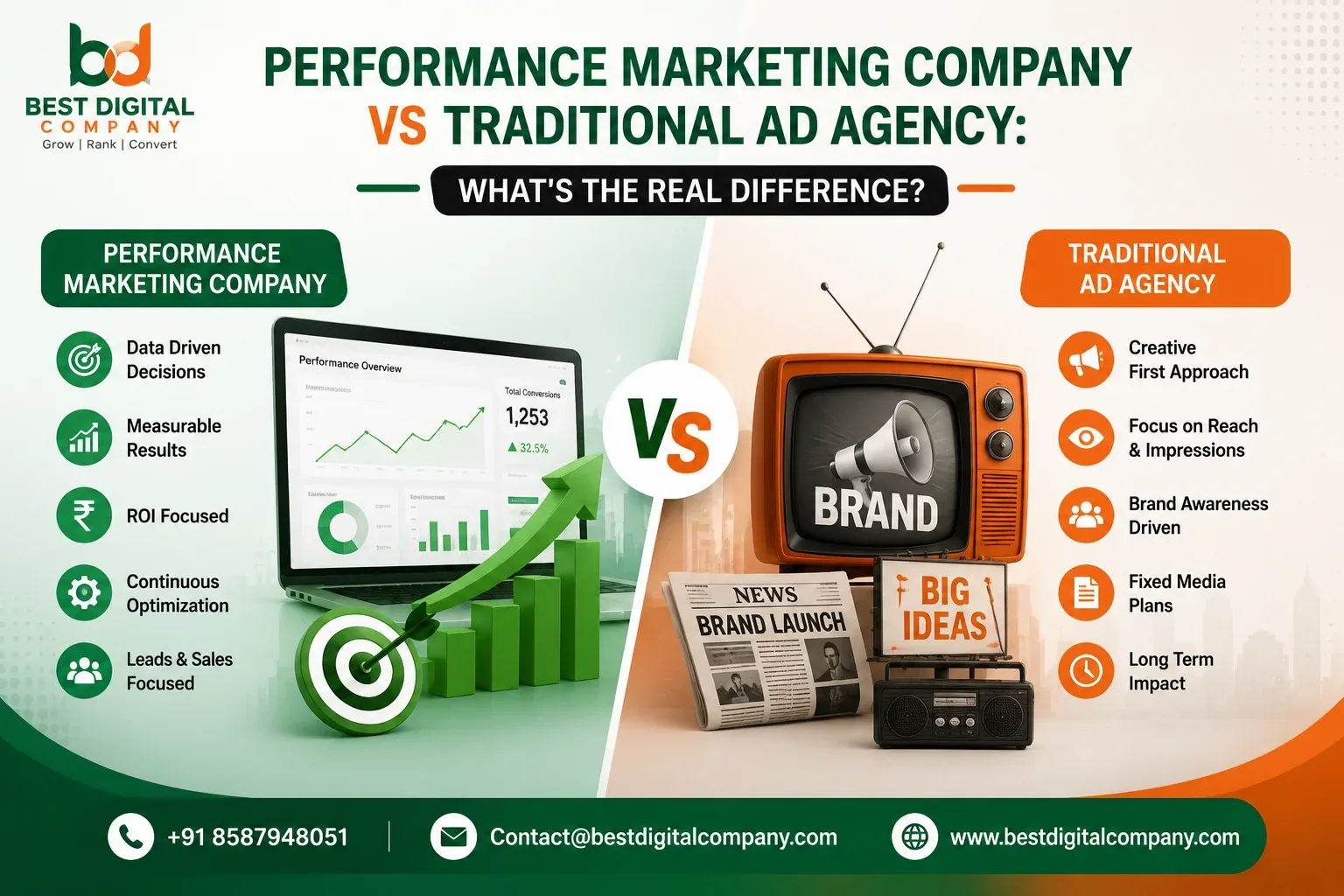
A PPC company usually refers to a larger, more process-driven organization. It typically runs paid campaigns as one service line among several SEO, web development, social media and has dedicated departments for each. You are usually assigned a named account manager who sits between you and the specialists actually touching your Google Ads or Meta Ads account.

A PPC agency, on the other hand, often leans smaller and more specialized. Some are boutique teams built entirely around paid advertising, with founders or senior strategists still directly involved in client accounts. There’s usually less internal hierarchy, which can mean faster decisions, but also a smaller bench if the team gets overloaded.

Neither structure is inherently better. They are simply built for different situations, and your ad budget is one of the clearest signals for which one you should be talking to first.

Inside a PPC Company – Team, Process, and Who Actually Touches Your Account

When you sign with a PPC company, you are usually buying into a defined process rather than a single expert’s judgment. That has real advantages once your budget crosses a certain size.

Most PPC companies structure client work in layers: an account manager who communicates with you, a strategist who plans the campaign, and specialists who handle execution across Search, Display, Shopping, or video. This layered setup means the business doesn’t grind to a halt if one team member is on leave or moves to a different project. There’s institutional memory in how campaigns are documented, reported, and handed off.

The tradeoff is that you’re often one account among many being run through a standardized playbook. Reporting formats, campaign structures, and check-in schedules tend to follow a template designed to scale across dozens of clients, not built from scratch around your specific business. For businesses with a straightforward product and a clear target audience, this rarely matters. For businesses with unusual sales cycles or niche audiences, it can feel like the process wasn’t really built with them in mind.

You can see how this kind of structured approach is usually packaged by browsing a typical PPC services offering, which is generally organized into tiers rather than fully custom scopes.

Inside a PPC Agency – Flexibility, Specialization, and Direct Access

A PPC agency tends to operate with fewer layers between you and the person actually managing your bids. In smaller, specialist agencies, it’s common to work directly with the strategist running your campaigns rather than routing every question through an account manager first.

This closeness can be a genuine advantage when your business needs fast decisions a sudden competitor move, a flash sale, a product launch that needs a campaign live within a day. Smaller agencies typically carry less internal process overhead, so changes can happen faster.

The flip side is capacity. A boutique PPC agency with a handful of specialists has a ceiling on how many accounts it can run well at once. If it takes on too many clients, response times slow down and campaigns get less attention, even though the pricing structure hasn’t changed. It’s worth asking directly how many active accounts a given specialist is currently managing before you sign anything a fair question that a confident agency should answer without hesitation.

PPC Company vs PPC Agency: Where the Cost Difference Actually Comes From

The pricing gap between these two models is not random. It comes down to overhead.

A PPC company carries the cost of account managers, dedicated reporting tools, larger office infrastructure, and multiple specialist departments. That overhead gets distributed across every client relationship, which usually means higher minimum retainers, but also more redundancy if something goes wrong internally.

A PPC agency, especially a leaner one, carries less overhead. Retainers can be lower, and some smaller agencies are willing to work with tighter monthly budgets that a bigger PPC company wouldn’t consider worth the account management time.

Both models typically charge in one of three ways: a flat monthly retainer regardless of ad spend, a percentage of your total ad spend (commonly somewhere between 10% and 20%), or a hybrid  a smaller flat fee plus a percentage once spend crosses a certain threshold. None of these structures is automatically better. A flat fee protects you as your budget scales, since the management cost doesn’t grow with it. A percentage model can align incentives, since the provider only earns more by helping you spend more effectively, though it’s worth asking how they define “effectively” before agreeing to it.

Which Model Fits a Small or Just-Starting Ad Budget

If you’re working with a modest monthly ad budget enough to test one or two campaigns rather than run a full multi-platform strategy a leaner PPC agency is usually the more practical starting point.

Larger PPC companies often set minimum retainers that make sense only once your ad spend itself is substantial enough to justify the account management layer. A smaller agency, or even a specialist freelancer working within an agency structure, can typically build a focused campaign around a tighter budget without insisting on services you don’t need yet, like dedicated creative production or multi-platform reporting dashboards.

This stage is also where getting the fundamentals right matters more than scale. If you’re building your very first customer base through digital channels, it’s worth reading our guide on how small businesses can get their first 100 customers, since paid ads at this budget level work best when paired with a clear, realistic acquisition plan rather than treated as a standalone fix.

Which Model Fits a Growing Mid-Size Budget

As your monthly ad spend grows, the conversation usually shifts from “can we afford management” to “what are we getting for it.” This is the range where the difference between a PPC company and a PPC agency starts to matter the most, because both can now justify their pricing, but the value they deliver looks different.

A PPC company tends to shine here because your budget can now support proper testing across multiple campaign types Search, Shopping, Display, and remarketing run by specialists in each area rather than one generalist handling everything. A well-run PPC agency at this budget level can compete just as effectively, but it depends heavily on whether the team has genuinely grown its capacity or is simply stretched thinner across more clients.

At this stage, reporting quality also becomes a real differentiator, since you are now making budget decisions based on the numbers you’re being shown. If a provider’s reports leave you more confused than informed, that’s worth addressing early our piece on how to create an SEO report clients actually understand covers the same reporting principles that apply just as much to paid campaigns as they do to organic performance.

It’s also the point where your landing pages start carrying real weight. A growing budget sending traffic to a page that wasn’t built to convert is money left on the table, which is why many mid-size accounts eventually pair PPC with support from a web development team to fix conversion gaps rather than just increasing ad spend to compensate.

Which Model Fits a Large or Multi-Channel Ad Budget

Once your budget supports running campaigns across several platforms at once Google, Meta, LinkedIn, YouTube a full-service PPC company generally becomes the more sustainable choice, mainly because of what it takes to run that scope well.

Multi-channel advertising isn’t just “more of the same campaign” spread across platforms. Each channel has its own bidding logic, creative requirements, and audience behavior. A PPC company with dedicated specialists per platform can manage this without one person being stretched across skill sets they only partially know. A smaller PPC agency can still deliver at this level, but only if it has genuinely built out specialist coverage rather than asking one team to cover everything.

At this budget size, paid advertising also tends to work best when it’s coordinated with your broader organic strategy rather than run in isolation. Businesses investing seriously in search engine optimization and social media marketing alongside PPC typically see paid campaigns perform better, since brand familiarity built through organic channels tends to lower the cost of paid clicks over time.

Six Questions to Ask Before You Choose a PPC Company or PPC Agency

Regardless of which model you’re leaning toward, a short list of direct questions can save you months of wasted spend:

  1. Who exactly will manage my account day to day – a named specialist, or a rotating team member depending on availability?
  2. What is your minimum monthly retainer, and does it change if my ad spend grows?
  3. How many other active accounts is my specialist currently managing?
  4. Can I see a sample report before signing, not just a description of what reporting looks like?
  5. What happens if the first month underperforms — is there a review point built into the contract, or am I locked in regardless?
  6. Do you handle landing page recommendations, or only the ad side of the campaign?

A provider that answers these clearly and specifically, rather than in vague reassurances, is usually signaling that they run a real process whether they call themselves a company or an agency.

How Best Digital Company Supports Every Budget Level

We work with businesses across this entire range, from a first-time advertiser testing a single campaign to established brands running paid ads across multiple platforms alongside SEO and social. Rather than pushing every client toward the same package, we start by understanding what your current budget can realistically support and build the campaign structure around that, not the other way around.

If your budget is still modest, we will tell you honestly whether it makes more sense to start lean and scale, rather than signing you up for a retainer sized for a bigger spend than you currently have. If you are ready to run a full multi-channel strategy, our team covers Search, Shopping, Display, Meta, and LinkedIn advertising, backed by the same reporting clarity we bring to our SEO clients. You can see current retainer structures on our PPC packages page, or reach out through our contact page for a straightforward review of what your current budget could realistically achieve before you commit to either model.


Frequently Asked Questions

Is a PPC company always more expensive than a PPC agency?

Not always, but it’s common. PPC companies carry more internal structure account managers, larger teams, dedicated reporting systems and that overhead is usually reflected in higher minimum retainers. Smaller PPC agencies often have lower minimums, though pricing varies enough that it’s worth getting quotes from both before assuming either is automatically cheaper.

Can a PPC agency handle a large, multi-platform ad budget?

Yes, if the agency has genuinely built out specialists for each platform rather than stretching a small generalist team across everything. Ask directly how many people work on each channel before assuming a smaller agency can’t scale with you.

What’s the minimum ad budget needed to work with a PPC company?

This varies by provider, but many PPC companies set retainers that only make financial sense once your ad spend itself is substantial enough to justify dedicated account management. If your budget is still small, a leaner PPC agency is usually a more practical starting point.

Do PPC companies and PPC agencies charge in the same way?

Both typically use one of three models: a flat monthly retainer, a percentage of ad spend, or a hybrid of the two. The pricing model matters more than the label ask how a provider charges before comparing them purely on the word “company” or “agency.”

Should I start with a PPC agency and move to a PPC company later?

Many businesses do exactly this. It’s common to start with a smaller, more flexible agency while testing what works, then move to a larger PPC company once ad spend and reporting needs grow beyond what a lean team can comfortably manage.

How do I know if my current provider company or agency is worth the cost?

Look past the label and focus on outcomes: are you getting account-level visibility, clear reporting tied to leads or sales, and honest communication about what’s working versus what isn’t. A provider delivering all three is worth the retainer, regardless of whether it calls itself a company or an agency.


Not sure whether a PPC company or a PPC agency fits where your business is right now? Talk to Best Digital Company for a free, no-pressure review of your current ad budget and what it can realistically support.

How to Choose the Best Social Media Marketing Agency 2026

How to Choose the Best Social Media Marketing Agency in 2026

If you have ever handed your Instagram and Facebook pages over to an agency, waited three months, and gotten nothing but a folder of “engaging” graphics and a vague monthly report, you already know why choosing the right partner matters more than choosing an agency at all.

Social media in 2026 is not the platform it was even two years ago. Algorithms reward video first, AI-generated content floods every feed, and audiences can smell a fake brand voice within seconds of scrolling past it. Picking the best social media marketing agency for your business is no longer about who posts the prettiest carousel. It is about who understands your audience, your platforms, and your revenue goals well enough to turn followers into paying customers.

This guide walks you through exactly how to evaluate and choose the best social media marketing agency for your brand in 2026, what questions to ask before you sign anything, and what separates agencies that grow businesses from agencies that just fill a content calendar.

What Does a Social Media Marketing Agency Actually Do?

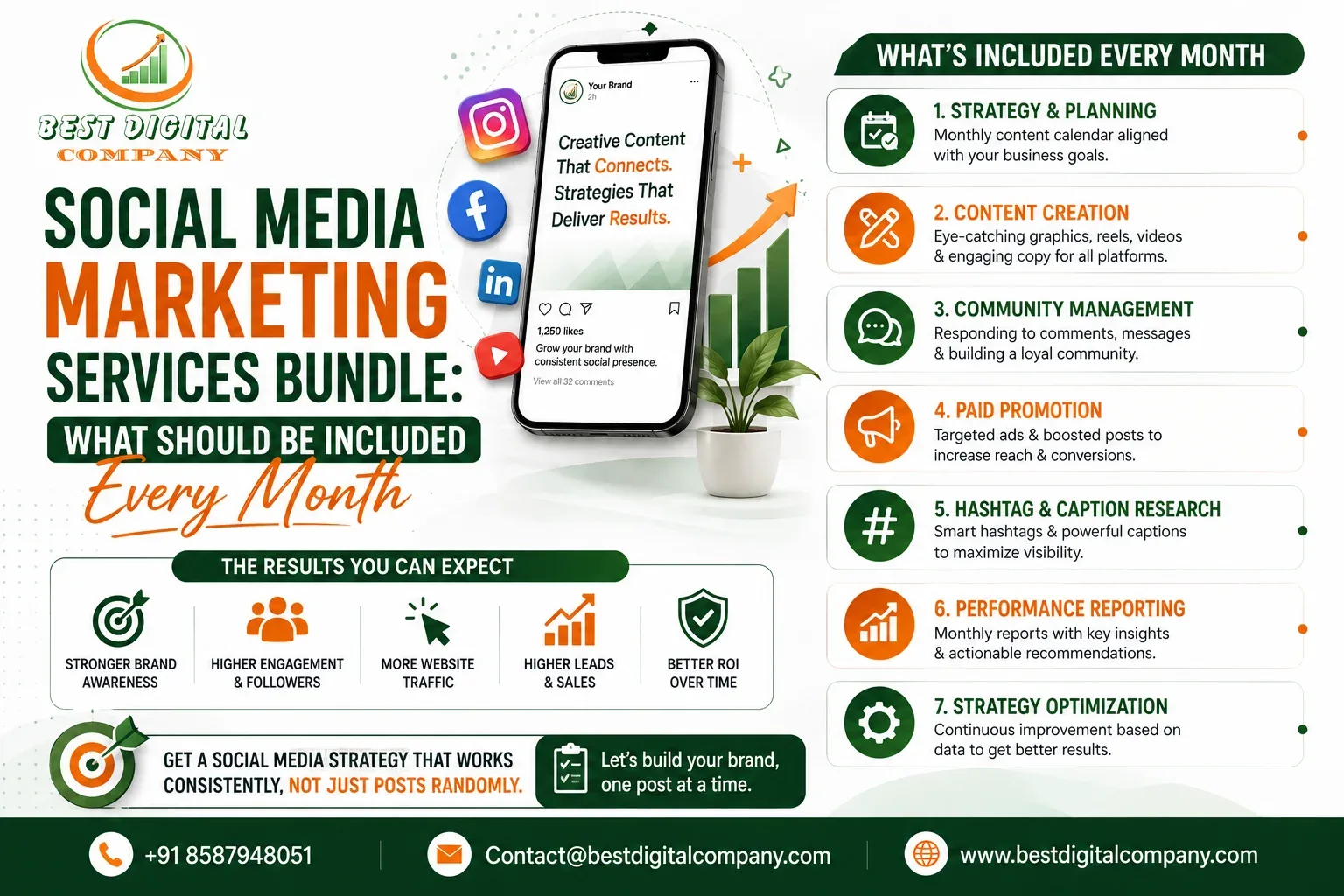
Before you can judge who is good at the job, it helps to be clear on what the job actually involves. A capable social media marketing partner typically manages:

  • Platform strategy across Instagram, Facebook, LinkedIn, YouTube Shorts, and Pinterest, depending on where your customers actually spend time
  • Content planning, scripting, design, and short-form video production
  • Community management, comments, and direct message handling
  • Paid social advertising (boosted posts, lead-gen campaigns, retargeting)
  • Analytics, reporting, and ongoing strategy adjustments based on what the data shows

Notice that “posting content” is only one item on that list. A lot of businesses hire someone to fill a calendar and call it social media marketing. The best social media marketing agency treats every post as part of a funnel, not a stand-alone piece of art.

Why “Best” Actually Means “Best Fit for You”

There is no single agency that is universally the best social media marketing agency for every industry. A boutique fashion label needs a very different approach than a B2B manufacturing company or a local clinic. Before you start shortlisting agencies, get honest about three things:

  1. Your primary goal — brand awareness, lead generation, direct sales, or community building
  2. Your platforms — where your actual customers browse, not where you personally enjoy scrolling
  3. Your budget reality — organic-only growth is slower; combining organic content with paid promotion accelerates results but costs more

Once you know these three things, evaluating agencies becomes far easier because you can filter out anyone who clearly is not built for your situation.

Key Factors to Evaluate When Choosing a Social Media Marketing Agency

1. Real Case Studies, Not Just Vanity Metrics

Ask for actual client results: follower growth is nice, but ask specifically about lead volume, click-through rate, cost per lead, or sales attributed to social campaigns. Any agency claiming to be the best social media marketing agency in your city should be comfortable showing before-and-after numbers, not just a portfolio of pretty posts.

2. Platform-Specific Expertise

An agency that treats Instagram, LinkedIn, and YouTube the same way is cutting corners. Each platform has its own algorithm behavior, content format, and audience expectation. Ask which platforms they specialize in and request examples of work on the platform that matters most to your business.

3. A Content Strategy Tied to Business Goals

Good agencies start with your business objective and work backward into a content calendar. Weak agencies start with “content ideas” and hope something sticks. During the pitch, ask them to walk you through how a single campaign would move a follower from “just watching” to “just bought.”

4. Paid and Organic Integration

Organic reach on most platforms has been shrinking for years, and 2026 is no exception. An agency that only talks about organic posting, with no plan for boosted content or paid social campaigns, is leaving growth on the table. This is closely related to how pay per click advertising works. The best agencies know how to blend paid social spend with search advertising so your brand shows up everywhere a potential customer is looking, not just one channel.

5. Transparent, Understandable Reporting

You should never have to decode a report full of jargon to know whether your money is working. Ask for a sample report before signing. If it is packed with confusing charts and no plain-language summary, that is a warning sign about how communication will go for the rest of the relationship.

6. SEO and Website Alignment

Social media does not operate in isolation. Every post that drives traffic needs somewhere solid to land. Agencies that also understand search engine optimization and website development can make sure your landing pages, bio links, and website are actually built to convert the traffic social campaigns generate. A gorgeous Instagram campaign that sends people to a slow, outdated website is money left on the table.

7. Team Structure and Communication

Find out who will actually manage your account day to day. Is it a dedicated strategist, or will your account get passed between interns as the agency scales? Ask how often you will get updates and who your single point of contact will be.

Red Flags to Watch For

Not every agency claiming to be the best social media marketing agency will actually deliver. Watch for these warning signs during your search:

  • Guaranteed follower counts — no legitimate agency can promise a specific number of followers by a specific date; anyone who does is likely relying on bot accounts or purchased followers
  • No clear reporting cadence — if they cannot tell you upfront how often you’ll receive updates, assume it will be inconsistent
  • One-size-fits-all packages — a strategy built for a restaurant should not look identical to one built for a law firm
  • Reluctance to share past client results — legitimate agencies are proud of their case studies and share them readily
  • Locked-in long-term contracts with no exit clause — flexibility matters, especially in your first few months working together

Questions to Ask Before You Sign

Bring this list to your first call with any shortlisted agency:

  1. Can you show me results from a client in my industry or a similar one?
  2. How do you measure success beyond likes and followers?
  3. Who exactly will be working on my account, and how experienced are they?
  4. How do you handle a sudden algorithm change or a campaign that underperforms?
  5. What does a typical month of deliverables look like?
  6. How does content strategy connect to my broader digital marketing, including SEO and paid ads?
  7. What is your process for approving content before it goes live?

An agency’s answers here reveal far more than any pitch deck. Vague or evasive answers usually mean vague or evasive results down the line.

Social Media Trends Shaping Agency Selection in 2026

Choosing the best social media marketing agency in 2026 also means picking a team that understands where platforms are headed, not just where they have been:

  • Short-form video remains dominant. Reels, Shorts, and native video content continue to outperform static posts across nearly every industry.
  • AI-assisted content creation is standard, but overused AI content is easy to spot. The strongest agencies use AI tools to speed up production while keeping the brand voice authentically human. The same principle search engines now apply when judging EEAT signals for written content: experience and authenticity win over generic, templated output.
  • Social search is growing. More users search directly on Instagram and TikTok before Google, which means captions, hashtags, and keywords inside posts now matter for discoverability, not just aesthetics.
  • Community management is a growth lever, not an afterthought. Agencies that respond quickly and personally to comments and messages build trust that paid ads alone cannot buy.
  • Performance marketing and organic content are merging. The line between a social media marketing agency and a performance marketing partner is blurring, since both now report on the same revenue metrics.

Understanding Pricing and Packages

Pricing for social media marketing services varies widely depending on scope, platforms, and whether paid advertising is included. Before comparing quotes, make sure you are comparing the same deliverables: number of posts per month, number of platforms covered, whether video production is included, whether paid ad management is included, and how much strategy and reporting time is built in.

Reviewing a clear breakdown of SMO packages side by side with your other marketing spend  such as SEO packages or PPC packages  helps you see the full picture of what a coordinated digital strategy actually costs, rather than evaluating social media in isolation.

Why Businesses in Delhi and Beyond Choose Best Digital Company

At Best Digital Company, we built our social media marketing services around the same principle this guide is built on: results should be visible, reportable, and tied to real business outcomes. Our team works across Search Engine Optimization, Social Media Marketing, Pay Per Click, and Website Development, which means your social campaigns are never disconnected from your search visibility or your website’s ability to convert visitors into customers.

We have written extensively about what separates agencies that just post content from agencies that grow revenue including our breakdown on why likes don’t pay the bills and what to actually look for in a partner. If you are also evaluating your broader marketing stack, our guides on choosing the best SEO company and choosing the right PPC partner cover the same evaluation approach for those channels.

You can learn more about our approach and team on our About Us page, or reach out directly through our Contact Us page to discuss what your business actually needs.

How to Make the Final Decision

Once you have shortlisted two or three agencies, use this checklist to make the final call:

  • They showed real, industry-relevant case studies
  • Their reporting sample was clear and easy to understand
  • They asked about your business goals before pitching a package
  • Their pricing matched the scope of work, with no hidden add-ons
  • They demonstrated knowledge of paid social, organic strategy, and how social ties into SEO and your website
  • You felt confident in the specific person or team who would manage your account

If an agency checks every box above, you have likely found a strong, credible partner which, at the end of the day, is what the best social media marketing agency for your business actually looks like.

Frequently Asked Questions

How do I know if an agency is genuinely the best social media marketing agency for my industry?

Look for case studies from businesses similar to yours, ask about industry-specific strategy, and request references you can actually speak with. An agency confident in its results will never hesitate to share proof.

How much should I budget for social media marketing in 2026?

Budgets vary based on the number of platforms, whether paid advertising is included, and how much content production (especially video) is needed. Request a detailed package breakdown so you know exactly what is covered before comparing prices between agencies.

How long does it take to see results from a social media marketing agency?

Organic growth typically shows meaningful traction within three to six months, while paid social campaigns can generate leads much faster, often within the first few weeks, once targeting is optimized.

Should I choose an agency that only does social media, or one that offers full digital marketing?

A full-service agency that also handles SEO, PPC, and web development can align your social strategy with your website and search visibility, which usually produces stronger, more measurable results than a social-only specialist working in isolation.

What is the biggest mistake businesses make when hiring a social media marketing agency?

Choosing based on the lowest price rather than evaluating strategy, reporting, and industry experience. A cheap package with no clear plan for lead generation often ends up costing more in wasted time and missed opportunity.

Can a social media marketing agency guarantee a certain number of followers or leads?

No legitimate agency can guarantee exact numbers, since results depend on platform algorithms, audience behavior, and market conditions. Be cautious of any agency that promises fixed follower counts or lead numbers upfront.


Choosing the best social media marketing agency in 2026 comes down to clarity: clear goals, clear reporting, and a clear connection between your social content and your actual business results. Take the time to ask the right questions, review real case studies, and pick a team that treats your brand’s growth as seriously as you do.

Best SEO Service Provider Checklist

Best SEO Service Provider Checklist: 12 Questions Before You Sign a Contract

If you have ever signed an SEO contract and then spent the next six months wondering what you actually paid for, you are not the only one. It happens more often than most agencies like to admit. A business owner sees a confident sales pitch, a nice-looking proposal with a few graphs, and a promise of “page one rankings,” and signs on the dotted line without asking the questions that actually matter.

The truth is, finding the best SEO service provider for your business is not about picking the agency with the flashiest website or the lowest monthly fee. It is about asking the right questions before any money changes hands  because once you are three months into a contract with a provider who cuts corners, walking away costs you time, money, and rankings you may never fully recover.

This checklist walks you through the 12 questions worth asking any SEO agency or freelancer before you commit. Whether you are comparing a handful of quotes or just met a provider who seems promising, these questions will tell you almost everything you need to know about how they actually work.

Why Choosing the Best SEO Service Provider Matters More Than Ever

Search engines have gotten a lot better at telling the difference between genuine expertise and content churned out to game rankings. Sites that once ranked on volume alone are losing ground to competitors who invest in real research, original insight, and pages built around what searchers actually want to know. That shift changes what “good SEO” looks like in practice.

It also means the gap between an average provider and a genuinely capable one has widened. An agency using outdated tactics  keyword stuffing, low-quality backlinks, thin content  is not just wasting your budget. It can actively hold your site back or, in worse cases, get it penalized. That’s why the vetting process matters so much before you sign anything.

1. Can They Show Real Case Studies and Verifiable Results?

Ask for specifics. Not a generic slide with a rising graph, but an actual client example: what the website looked like before, what work was done, and where the traffic or rankings stand today. A provider confident in their work will happily share this, sometimes even connecting you with a past or current client for a quick reference call.

Be cautious of agencies that only show screenshots of ranking positions without any context on the client’s industry, competition level, or timeline. Rankings without context don’t tell you much. Ask instead: “What was the organic traffic before you started, and what is it now, over what period?” A provider offering genuine search engine optimization services should be able to answer this in one sentence, not a dodge.

2. What Exactly Is Included in Their SEO Packages?

This is where a lot of confusion starts. Two agencies can both say “we offer SEO for ₹25,000 a month,” yet one is doing in-depth technical audits, content strategy, and link building, while the other is running an automated tool and calling it a day.

Before you compare prices, get an itemized breakdown of what’s actually delivered each month: how many hours of work, how many pages optimized, how much original content produced, what technical fixes are covered, and how link building is approached. If you are evaluating multiple providers, it helps to understand the difference between paying for a defined scope of work versus a fixed monthly package — we covered this distinction in more detail in our post on SEO services vs SEO packages, which is worth a read if pricing structures feel confusing right now.

3. Do They Tailor Local SEO Strategy to Your City and Industry?

If most of your customers come from a specific city or region, generic national SEO advice won’t cut it. A provider who understands local SEO will ask about your service areas, set up and optimize your Google Business Profile properly, build location-specific pages, and target searches with local intent — the kind someone types in when they are ready to buy nearby, not just browsing.

Ask directly: “How would you approach my local visibility if most of my customers are searching for a business near them?” A provider offering dedicated local SEO services in Delhi, or similar city-specific SEO for your region, should walk you through citations, review strategy, and localized content without hesitation.

4. Who Will Actually Be Working on Your Account?

This question trips up more business owners than any other. The person who pitches you in the sales meeting is often not the person doing the actual work. Ask who will be assigned to your account, what their experience level is, and how much time they’ll realistically spend on your website each month.

It is also fair to ask whether any part of the work — content writing, link outreach, technical audits — gets outsourced to a third party. There is nothing wrong with a well-managed subcontracting model, but you deserve to know who is touching your website and what quality checks are in place before anything goes live.

5. What Tools and Reporting Do They Use for Transparency?

A provider that can’t show you where your traffic, rankings, and conversions currently stand is not giving you SEO — they are giving you guesswork. Ask which tools they use for tracking (Google Search Console and Google Analytics should be non-negotiable baseline access, along with a paid tool for keyword tracking and audits).

More importantly, ask how often you’ll receive reports and what those reports actually contain. A monthly PDF with vague statements like “improved visibility” isn’t useful. You want specific numbers: keyword position changes, organic traffic trends, pages published, technical issues fixed, and a clear explanation connecting the work done to the results seen.

6. Do They Follow Ethical, Search-Engine-Approved Techniques?

This is arguably the most important question on this list, because the wrong answer here can hurt your website for years. Ask the provider directly how they approach link building. If the answer involves buying links in bulk, using private blog networks, or guaranteeing a specific number of backlinks per week regardless of quality, that’s a warning sign.

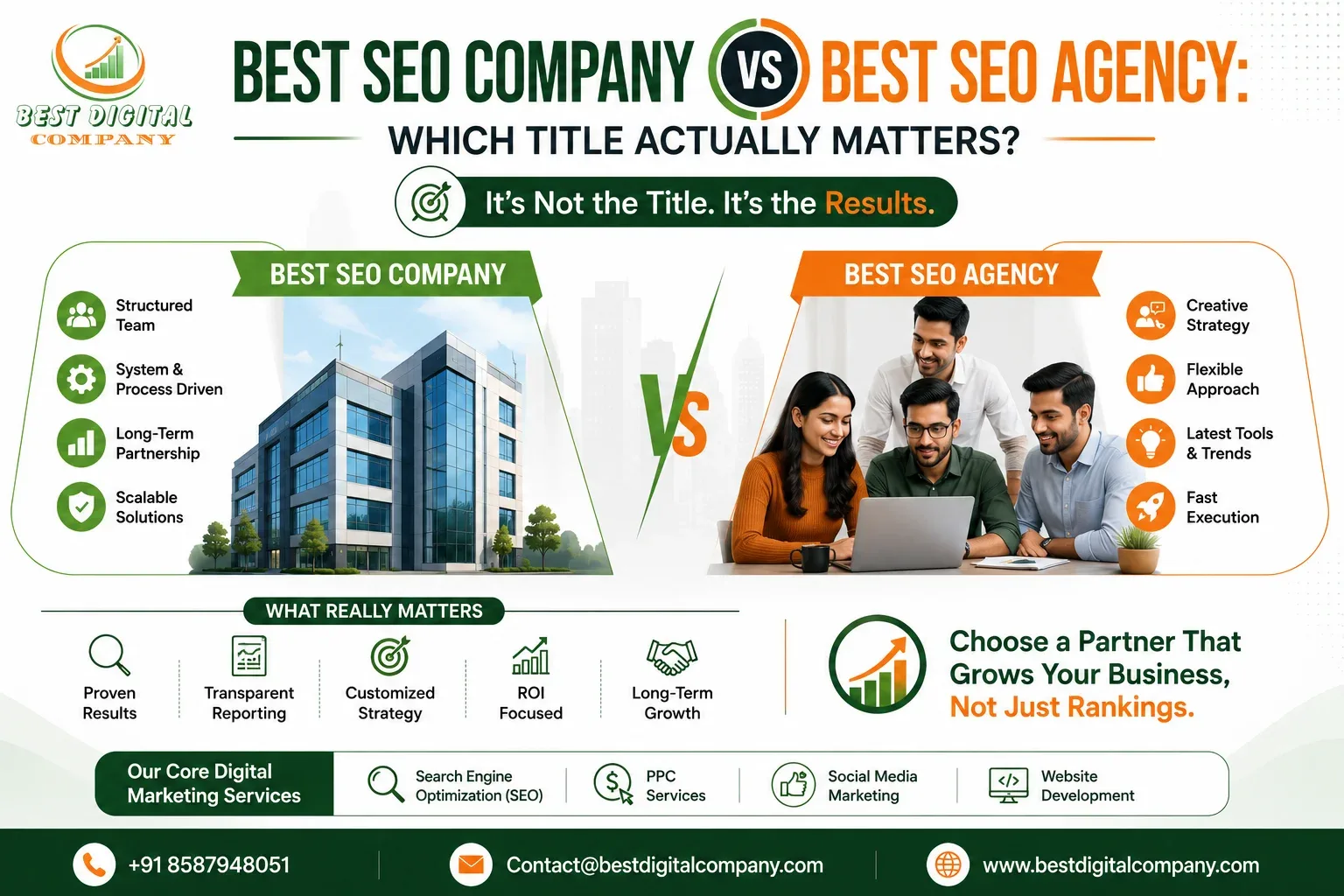
Similarly, ask about their content approach. Do they write for search engines or for actual readers? A trustworthy provider will talk about relevance, search intent, and building topical authority not “keyword density” or “stuffing.” If you’ve ever compared how a full-service agency talks about strategy versus how a smaller outfit sells packages, our earlier piece on SEO agency vs SEO company breaks down how these conversations tend to differ in practice.

7. How Do They Approach Content Strategy and Quality?

Content is where a lot of budgets quietly disappear. Ask how the provider researches topics, who writes the content, and how they ensure it’s original rather than recycled from competitor pages with a few words swapped. Ask, too, whether they involve subject-matter input from your team  because a generic article written with no knowledge of your actual business rarely performs well or builds trust with your audience.

A capable provider should describe a process: keyword and intent research, an outline built around what a real reader needs, a draft written by someone with actual subject familiarity, and a review step before publishing. If they can’t describe this process in plain terms, that is a gap worth noting.

8. What’s Their Approach to Technical SEO and Website Health?

Content and links matter, but none of it works well on a site that’s slow, poorly structured, or riddled with broken pages. Ask how they handle technical audits: site speed, mobile usability, indexing issues, structured data, duplicate content, and broken internal links.

It is also worth asking whether they ever recommend removing or consolidating old, underperforming pages rather than just adding new ones endlessly. This is a more advanced but increasingly important practice, we explained why trimming a bloated site can actually improve overall performance in our article on content pruning and its effect on SEO. A provider aware of this shows they are thinking about your site holistically, not just adding volume.

9. Can They Align SEO with Other Channels Like PPC and Social Media?

SEO rarely works in isolation anymore. If your provider also understands how paid search and social channels fit into the bigger picture, campaigns tend to reinforce each other rather than compete for the same budget and attention. Ask whether they offer, or can coordinate with, PPC advertising services or social media marketing, and how they’d use data from one channel to inform the other.

For example, paid search data can reveal which keywords convert best, informing which organic terms to prioritize. If you are curious what a well-run paid campaign actually involves month to month, our breakdown of what a performance marketing agency does for PPC is a useful companion read here.

10. What Does Their Contract Length, Pricing, and Exit Process Look Like?

Read the contract terms carefully, not just the price. Ask about the minimum commitment period, what happens if you want to cancel, and whether you retain ownership of the content, backlinks, and any accounts set up on your behalf (like Google Business Profile or Search Console access).

Be wary of providers who lock you into a long-term contract with vague deliverables and no clear exit clause. A confident provider won’t need to trap you in a contract to keep your business their results should be the reason you stay.

11. How Do They Handle Website Redesigns or New Site Migrations Alongside SEO?

If you are planning a website redesign or you are currently juggling both a new site build and SEO, ask how the provider coordinates the two. A site migration done without SEO oversight can wipe out years of rankings overnight through broken redirects, lost metadata, or restructured URLs.

Ask specifically: “If I need a new website built, do you handle that in-house, and how do you make sure SEO is not disrupted during the transition?” If they also offer website development and design, find out how their design and SEO teams actually talk to each other during a project — this coordination matters more than most business owners realize until something breaks. Our guide on what’s included in website development services is a useful reference if you’re weighing a redesign alongside your SEO plans.

12. What Does Ongoing Communication and Reporting Actually Look Like?

Finally, ask what a normal month of communication looks like once the contract is signed. Will you have a dedicated point of contact? Is there a monthly call to walk through results, or do reports just land in your inbox with no explanation? How quickly do they respond if you have an urgent question or notice something odd on your website?

This question often reveals more about a provider’s culture than any of the technical questions above. Providers who treat communication as an afterthought after the sale usually treat the actual work the same way.

Putting the Checklist Into Practice

Going through all 12 questions with two or three providers before you decide takes an extra week, maybe two. That small delay is nothing compared to months lost to a provider who wasn’t equipped to deliver. When you find a best SEO service provider who answers these questions clearly, backs claims with real data, and explains their process in plain language rather than jargon, you have likely found a partner worth signing with.

If you are currently comparing quotes and want a second opinion on a proposal you have received, or you’d like a straightforward audit of where your website currently stands, our team is happy to walk through it with you no pressure, just a clear picture of where things are today and what realistic improvement looks like.


FAQ: Best SEO Service Provider

How do I know if an SEO provider is genuinely good versus just good at sales?

Ask for verifiable, specific results tied to a timeline, request a client reference, and pay close attention to how clearly they explain their process. Vague answers about “boosting visibility” without numbers or methodology are usually a sign the substance is not there.

How much should I expect to pay the best SEO service provider for my business?

Pricing varies widely based on your industry, competition, and the scope of work involved. A small local business needs a very different investment than a national e-commerce brand. What matters more than the number itself is getting an itemized breakdown of what that price actually includes each month.

How long does it typically take to see results from SEO?

Most reputable providers will tell you that meaningful, sustainable results usually take three to six months, with continued growth over the following months. Anyone promising page-one rankings within days or weeks is either overpromising or using shortcuts that risk long-term penalties.

Should I choose a provider that only does SEO, or one offering multiple services?

Both approaches can work well. A specialist may bring deeper technical expertise, while a full-service provider can align SEO with paid ads, social media, and web design under one roof, which often makes coordination easier. The right choice depends on your current setup and how much internal coordination you’re able to manage yourself.

What is a reasonable contract length for SEO services?

Month-to-month or short-term agreements (three to six months) with clear performance check-ins are generally healthier than long, rigid annual contracts, especially early in a relationship with a new provider. This gives both sides room to evaluate fit before committing longer term.

Can I switch SEO providers without losing my rankings?

Yes, in most cases, as long as the transition is handled carefully. Make sure you retain full access to your Google Search Console, Analytics, and Google Business Profile accounts, and get a full record of any work already done backlinks built, content published, and technical changes made, so your new provider can pick up smoothly.

Best Website Designing Company Portfolio Red Flags

Best Website Designing Company Portfolio Red Flags to Watch For

If you have ever scrolled through an agency’s portfolio page and thought “these all look… the same,” you already have good instincts. A portfolio is supposed to be the one place where a design studio has nothing to hide. It is curated, polished, and hand-picked by the agency itself, so if something feels off even in this best-case showcase, imagine what the actual project delivery might look like.

Most business owners spend hours comparing pricing sheets and reading testimonials, but very few actually know how to read a portfolio critically. They see nice colors, a few logos of “clients,” and assume the job is done. That is exactly how a lot of businesses end up signing with a team that cannot deliver what was promised. This guide walks you through the specific warning signs that separate a genuinely capable best website designing company from one that is good at marketing itself but weak at actually building websites.

Why Portfolio Homework Matters Before You Hire a Best Website Designing Company

A portfolio is a sales tool first and a proof of skill second. Agencies choose what to include, how to present it, and which details to leave out. That means your job is not just to look at the pretty screenshots, it is to notice what is missing, what is repeated, and what does not add up.

Think about it this way: if a structural engineer showed you photos of buildings they claim to have designed, you would want to know whether those buildings are still standing, whether they meet code, and whether the engineer actually did the structural work or just consulted on paint colors. A website portfolio deserves the same scrutiny. A site that looks good in a screenshot can still be slow, un-indexed by search engines, impossible to update, or built on outdated code that will need to be redone in a year.

This is also where the timing of your research matters. Reviewing a portfolio properly, before you sign a contract, is far cheaper than discovering these issues after the deposit is paid and the project is already three weeks behind schedule. If you want a deeper breakdown of what a full build should include before you even get to the portfolio stage, our guide on website development services and what’s actually included is a useful companion read to this one.

Red Flag 1: Every Project Looks Suspiciously Identical

This is the single biggest tell, and yet it is the one most people miss. Open five or six projects in an agency’s portfolio. Do the layouts follow the exact same pattern? Same hero banner style, same section order, same font pairing, same stock photography style, just with a different logo pasted on top?

That is not a design system, that is a template being reused over and over with minimal customization. There is nothing wrong with agencies having an efficient process, but a genuine design team adapts structure, tone, and visual hierarchy to match each client’s industry and audience. A dental clinic, a SaaS startup, and a manufacturing company should not end up with visually interchangeable websites.

Ask directly: “Was this built from a theme, or was it custom-coded?” A confident, capable business will answer this without hesitation and can usually show you the difference between their custom builds and any budget-tier template projects they also offer.

Red Flag 2: No Real Proof of Mobile Or Cross-Device Performance

More than half of web traffic today comes from phones, yet a surprising number of portfolios only show desktop screenshots. If a portfolio does not show, or cannot show on request, how a site behaves on a mobile screen, that is a gap worth questioning.

A well-run agency will happily pull up a live link on your phone right there in the meeting and show you the menu, the checkout flow, or the contact form working smoothly on a small screen. If they cannot do this instantly, or the mobile version looks cramped and slow when you check it yourself, that is a preview of what your own project might look like.

This connects closely to something we cover in our article on choosing the best web designing company for your development project: responsive design is not an add-on feature anymore, it is table stakes, and any agency that treats it as optional is behind on basic industry standards.

Red Flag 3: Portfolio Case Studies With No Measurable Outcomes

A portfolio that only shows “before and after” screenshots without a single number attached is telling you half a story. Did traffic increase? Did the bounce rate drop? Did the client see more inquiries after launch? A design-only portfolio that never mentions outcomes suggests the agency thinks of a website as a static brochure rather than a growth tool.

This matters more than people realize because a website’s design and its search visibility are deeply connected. Page speed, clean code structure, and proper heading hierarchy all affect how easily a site can be found and ranked. If the same team also offers Search Engine Optimization, ask to see how a redesigned site performed a few months after launch. A team that pairs design with an actual optimization strategy, rather than treating them as separate departments that never talk to each other, tends to build sites that perform, not just sites that look nice on day one.

If you are curious about how design and visibility work together long after the launch date, this piece on content pruning and improving search performance is a good look at how ongoing maintenance affects a site’s long-term health.

Red Flag 4: Portfolio Links That Are Slow, Broken, or Abandoned

Here is a simple test that takes less than ten minutes: click on every single project link listed in the portfolio. You would be amazed how often at least one of them returns a 404 error, redirects to a domain-for-sale page, or takes eight seconds to load a single image.

If an agency cannot keep its own showcase links working, what confidence does that give you about ongoing maintenance for your own site? A portfolio is meant to be a living, breathing set of examples. When links rot and nobody notices for months, it usually means the same team is not checking in on client sites after launch either.

Pay attention to load speed too. Open your browser’s developer tools, or simply use a free page speed checker, on two or three of their showcased projects. Heavy, unoptimized images and bloated code are common in template-based builds and are one of the more overlooked reasons visitors bounce off a site before it even fully loads.

Red Flag 5: No Clarity on Who Actually Built the Website

Some agencies present a portfolio full of impressive logos, but when you dig a little, you discover the actual coding work was outsourced to a freelancer or a completely different subcontracted team, sometimes overseas, with little quality control. This is not automatically a dealbreaker, but it should be disclosed upfront, not discovered after the contract is signed.

Ask plainly whether the work is done in-house or handed off. There is a real difference in accountability, communication speed, and quality consistency between the two approaches, and both routes come with their own tradeoffs worth understanding before you commit. We broke this exact comparison down in detail in Website Developer Company or Freelancer? An Honest Cost & Risk Comparison, which is worth reading if transparency around delivery is a priority for you.

Red Flag 6: The Portfolio Ends the Story at “Launch Day”

A website is not a one-time purchase, it is closer to a piece of infrastructure that needs upkeep: security patches, plugin updates, content refreshes, and periodic redesigns as your business grows. If a portfolio, or the sales conversation around it, never mentions what happens after launch, ask directly about ongoing support.

Reputable teams usually have some structured offering here, whether it is a maintenance retainer or tiered packages. It is worth comparing what is actually included at each level rather than assuming “maintenance” means the same thing everywhere. Our breakdown of web development packages is a useful reference point if you want to understand what a realistic post-launch relationship should look like.

Red Flag 7: Design That Exists in a Silo, Disconnected From Marketing

A beautiful website that nobody finds is not particularly useful. One quieter red flag is a portfolio built purely around aesthetics, with zero indication that the agency thinks about how traffic actually reaches that finished product. Does the team understand how a paid campaign landing page needs a different structure than a homepage? Do they design with search visibility, page speed, and conversion paths in mind, or purely with visual trends?

An agency that also offers, or at minimum deeply understands, search engine optimization, pay per click advertising, and social media marketing tends to design websites with the full customer journey in mind, not just the homepage banner. This does not mean you need to bundle every service together, but a designer who has never had a real conversation about how their pages will actually get traffic is more likely to prioritize style over function.

How to Vet a Best Website Designing Company Beyond Just Scrolling Their Portfolio

Reading the portfolio critically is step one. Here is what separates people who get burned from people who make a confident, informed decision:

Ask for two or three references you can actually call. Not testimonials copy-pasted on the website, actual phone numbers or emails of past clients willing to talk about their experience, including the parts that were frustrating.

Request the actual build files or a walkthrough of the backend, at least in a demo environment, before signing. This tells you whether the site is built on a flexible, well-organized platform or a tangle of unlabelled code nobody, including the original developer, will want to touch again in a year.

Compare timeline promises against what past clients report. A portfolio rarely shows how long a project actually took versus what was originally quoted. This single detail, more than any visual example, tells you how realistic an agency is about its own capacity.

Look at industry-specific experience, not just volume. Ten portfolio pieces in your exact industry are worth more than fifty generic ones, because that team already understands your audience’s expectations and common pitfalls.

Notice how they talk about past mistakes. Every experienced team has had a project go sideways at some point. An agency that can honestly describe what went wrong and what they changed afterward is showing you real maturity, not weakness. One that insists every single project was flawless is usually not being fully transparent.

A Quick Pre-Signing Checklist

Before you commit budget and time to any design partner, run through this short list:

  • Click every link in the portfolio and confirm they load quickly and correctly.
  • Check at least three projects on an actual mobile device, not just a resized browser window.
  • Ask whether builds are custom-coded or template-based, and get a straight answer.
  • Confirm whether the actual coding is done in-house or outsourced.
  • Ask what happens after launch, and get specifics on support and update packages.
  • Request one or two outcome-based results, not just before-and-after visuals.
  • Talk to at least one past client directly, even briefly.

None of these steps take more than an afternoon, and together they will tell you far more than any polished pitch deck ever could.

FAQ

What is the biggest portfolio red flag when comparing website design agencies?

Repetition is the clearest warning sign. When every project in a portfolio follows the exact same layout, color pattern, and structure with only the logo swapped out, it usually means the agency is reusing a template rather than designing custom solutions for each client’s actual business needs.

Should a website design portfolio include measurable results, or is visual quality enough?

Visual quality alone is not enough. A trustworthy portfolio should also reference at least some outcome, whether that is improved load speed, better mobile usability, or growth in inquiries after launch, since a website’s real job is to perform, not just look attractive in a screenshot.

How do I check if a website in a portfolio actually loads well and performs on mobile?

Open the live link directly on your own phone rather than relying on a resized desktop browser window. Check menu behavior, form submissions, and image loading speed. You can also run any of the free, widely available page-speed checking tools to see how the site performs under real conditions.

Is it a problem if an agency outsources actual development work to freelancers?

It is not automatically disqualifying, but it should be disclosed clearly before you sign anything. Outsourced work can still be high quality, but you deserve to know who is accountable for fixes, updates, and communication once the project is underway.

Does a good website designing company also need to understand search engine optimization and paid advertising?

Not necessarily as an all-in-one package, but a design team that understands how visitors actually arrive at a site, whether through organic search, paid campaigns, or social channels, tends to build pages with a clearer purpose and better structure than one that focuses purely on visual trends.

How many portfolio examples should I ask to see before making a decision?

There is no fixed number, but quality and relevance matter more than quantity. A handful of projects in your specific industry, paired with a working link, a mobile check, and at least one client reference, will tell you more than a long list of generic screenshots ever will.


Choosing a design partner is easier when you know exactly what to look for and what to look past. If you would rather skip the guesswork, our team at Best Digital Company builds websites with both design and long-term performance in mind, and we are happy to walk you through real examples, not just a curated highlight reel. Get in touch if you would like a second opinion on a portfolio you are already considering, or want to talk through what a custom build would look like for your business.

Best PPC Company Comparison: Beyond Google Reviews

Best PPC Company Comparison: What to Look for Beyond Google Reviews

If you have ever searched for the best PPC company for your business, you already know the drill. You open five tabs, skim through star ratings, read a handful of five-star reviews that sound suspiciously similar, and end up just as confused as when you started. A 4.9-star rating tells you almost nothing about whether an agency can actually manage your ad spend responsibly, structure your campaigns correctly, or explain to you in plain language why your cost per lead went up last month.

Reviews matter, but they are only one data point, and often the least reliable one. Ratings can be gamed, review requests can be sent selectively to happy clients only, and a glowing testimonial says nothing about how an agency behaves when a campaign underperforms. This guide walks through the things that actually separate a genuinely capable pay-per-click partner from one that simply looks good on paper, so you can make a decision based on substance rather than stars.

Why Star Ratings Alone Can’t Tell You Who the Best PPC Company Is

Star ratings are easy to collect and easy to inflate. An agency can ask every satisfied client for a review while quietly ignoring the accounts that didn’t go well. A handful of five-star reviews from three months ago doesn’t tell you how that same agency is managing accounts today, or whether the account manager who impressed those clients is still even with the company.

There is also a selection bias problem. Business owners who are unhappy with results rarely leave detailed public reviews explaining what went wrong; they simply leave. So the reviews you see skew positive by default, regardless of actual performance. That doesn’t mean reviews are worthless. It means they should be treated as a starting filter, not a final verdict. Use them to build a shortlist, then dig into the details covered below before signing anything.

What Pay Per Click Actually Involves Beyond Ad Creation

Search engine advertising is often reduced to “writing an ad and picking keywords,” but that’s a small fraction of what a competent Pay Per Click partner should be doing on your account every month. Real paid advertising work includes account structure planning, negative keyword management, bid strategy testing, landing page alignment, conversion tracking setup, and ongoing budget reallocation based on what’s actually converting.

Many business owners sign a contract expecting hands-on strategy and instead get a templated setup that runs on autopilot after the first two weeks. That’s usually the point where cost per click creeps up and lead quality drops, but nobody explains why. If you want a clearer picture of what should be happening behind the scenes every single month, our earlier post on what a performance marketing agency actually does for PPC breaks down the recurring tasks a proper account manager handles, from bid adjustments to conversion audits.

When comparing companies, ask directly: what does a typical week of work on my account look like? A confident answer with specifics is a good sign. A vague answer about “optimizing campaigns” is not.

Real Experience vs. Borrowed Case Studies

Anyone can post a screenshot of a dashboard showing impressive numbers. What matters is whether that experience is verifiable and relevant to your industry. Ask the agency to walk you through an account similar to yours in size, industry, or goal, and ask what specific decisions they made and why. A team with genuine hands-on experience will talk through the reasoning: why they excluded certain match types, why they shifted budget between campaigns, why a particular landing page underperformed.

Agencies that rely on second-hand case studies, industry-wide screenshots, or numbers with no context tend to struggle when asked to explain the “why” behind a result. This is where expertise becomes visible in a way no review can capture. A company that has actually managed live budgets for years will have opinions, not just templates. They will tell you when a strategy might not work for your business rather than promising results they can’t back up.

This same principle applies across service types, not just paid ads. If you are separately evaluating organic search partners, the same logic applies when weighing an SEO agency against an SEO company titles and labels matter less than demonstrated, explainable experience.

Transparency in Reporting: The Real Test of a Pay Per Click Partner

Ask any agency for a sample report before signing anything. This single step reveals more than a dozen reviews ever could. A trustworthy pay-per-click partner should show you:

  • Actual ad spend versus budget, not just “results”
  • Click-through rate, cost per click, and cost per conversion broken down by campaign
  • Which keywords or audiences are driving conversions and which are burning budget
  • Landing page performance, not just ad performance
  • Clear notes on what changed since the last reporting period and why

If a sample report only shows impressions and clicks with no mention of cost efficiency or conversion data, that is a signal the agency is optimizing for looking busy rather than for your return on investment. Full access to your own ad account (not a shared or agency-owned account you can’t see into) is also non-negotiable. If a company hesitates to give you visibility into your own campaigns, that alone should end the conversation.

PPC Packages and Pricing Structures: What They Signal

Pricing structures tell you a lot about how a company thinks about your business. Some charge a flat management fee, some take a percentage of ad spend, and some bundle a fixed number of campaigns into tiered packages. None of these models is automatically better, but the structure should match your actual needs rather than pushing you into a bracket you don’t need yet.

Before comparing quotes, it helps to look at published PPC packages to understand what is typically included at each tier: number of campaigns managed, reporting frequency, landing page support, and account access. A package that seems cheap but excludes basic reporting or campaign optimization often costs more in wasted ad spend than a slightly higher-priced package that includes proper ongoing management.

Be cautious of any pricing that locks you into a long-term contract before you’ve even seen a single month of results. A confident, capable agency should be comfortable proving value early rather than relying on a contract to keep you locked in.

PPC Company or Performance Marketing Agency: Does the Label Change Anything?

You’ll notice some companies call themselves a “PPC company,” others prefer “performance marketing agency,” and a few just say “digital marketing agency” and list paid ads as one service among many. The label itself doesn’t guarantee competence either way. What matters is whether the team has dedicated specialists managing paid campaigns full-time, or whether it’s one generalist juggling five different services for your account.

We covered this distinction in more depth in our guide on how to choose the best PPC company for your business, including the questions worth asking about team structure and specialization. The short version: ask who specifically will manage your account day to day, how many other accounts that person handles, and whether campaign strategy is reviewed by anyone senior before it goes live. A generic title on a homepage tells you nothing about the actual team behind it.

How PPC Connects to SEO, Social Media Marketing, and Website Development

Paid advertising rarely works well in isolation. If your landing pages load slowly, aren’t mobile-friendly, or don’t match the intent of the ad someone clicked on, you’ll pay for clicks that convert poorly no matter how well the campaign itself is built. This is why the best PPC company for your business is often one that either has strong website development capabilities in-house or works closely with a team that does.

Similarly, search engine optimization and paid search are not competitors, they are complementary. Organic rankings reduce your long-term dependence on ad spend, while paid campaigns can fill the gap while your organic presence builds. And a business running social media marketing alongside paid search often gets better ad performance because audiences arriving from search already have some brand familiarity from social touchpoints.

When you are comparing agencies, ask whether their paid ad recommendations account for your overall digital presence, or whether they only look at the ad account in isolation. An agency that only talks about keywords and bids, without asking about your website’s conversion rate or your brand’s social presence, is solving half a problem.

Red Flags That Won’t Show Up in a Review

Some warning signs only become visible once you’re actually talking to an agency, not while scrolling through their review section:

Vague answers about account access. If a company is cagey about giving you admin-level access to your own Google Ads account, that’s a control issue, not a technical limitation.

No willingness to explain past underperformance. Every experienced agency has had a campaign that didn’t hit target. What matters is whether they can explain what they learned and adjusted, rather than pretending every account has been a success story.

Guaranteed results language. No legitimate agency can guarantee a specific number of leads or a specific cost per click before seeing your account, your market, and your competition. Guarantees at the pitch stage are a sales tactic, not a forecast.

One-size-fits-all proposals. If the strategy document looks identical to what they’d send any business in any industry, it probably is a template.

Reluctance to name past or current clients. Agencies with real, ongoing client relationships are usually comfortable naming at least a few, subject to confidentiality where relevant. Total secrecy across the board is worth questioning.

A Practical Checklist for Comparing PPC Companies

Before making a final decision, run each shortlisted agency through the same set of questions:

  1. Can they show a sample report with cost, conversion, and efficiency data, not just clicks and impressions?
  2. Will they give you full access and ownership of your own ad account?
  3. Can they explain a real account decision and the reasoning behind it, not just a result?
  4. Do their PPC packages match your business size and goals, or are you being upsold into a tier you don’t need?
  5. Who specifically manages the account, and how many other clients does that person handle?
  6. Do they consider your website and landing pages as part of the strategy, or only the ad platform?
  7. Are they upfront about timelines, without guaranteeing exact numbers?
  8. Do they have a documented onboarding process, or does work start with no clear plan?

Answering these questions honestly, for each agency on your list, gives you a far more reliable comparison than a star rating ever could.

Making the Final Call

Choosing the best PPC company for your business is not about finding the agency with the most five-star reviews. It’s about finding a team that’s transparent about how your money is spent, willing to show you real reporting, and capable of explaining their decisions in plain language rather than jargon. Reviews can help you build a shortlist, but the conversations you have, the reports they are willing to show you, and the questions they’re willing to answer honestly are what actually determine whether an agency will protect your ad spend or waste it.

If you’d like a second opinion on a current PPC setup, or want to see what a transparent monthly report actually looks like, our team is happy to walk you through one. You can reach out through our contact page and we’ll take a look at your account with no pressure to sign anything on the spot.

Frequently Asked Questions

How do I know if a PPC company is actually good, beyond their reviews?

Ask for a sample report that shows cost per conversion and efficiency data, not just clicks. Request full access to your own ad account, and ask the team to explain a real decision they made on a past campaign and why. Agencies with genuine experience can explain their reasoning clearly; ones relying on templates usually can’t.

Should I choose a company that only does PPC or one that offers multiple services?

Both can work well, as long as there is a dedicated specialist managing your paid campaigns rather than a generalist splitting attention across five different services. If your business also needs SEO, social media, or web development support, a broader agency can offer more coordinated strategy, provided each service still gets proper specialist attention.

What’s a reasonable budget to start with for paid search advertising?

This depends heavily on your industry, competition, and average customer value, so there is no universal number. A good agency will ask about your goals and margins before recommending a starting budget, rather than pushing you toward a fixed package regardless of your business type.

How long should I wait before judging whether a PPC campaign is working?

Most campaigns need at least four to six weeks of data before meaningful conclusions can be drawn, since search platforms need time to gather conversion data and optimize delivery. Be cautious of any agency promising strong results within the first week or two.

Is it a bad sign if an agency won’t guarantee a specific number of leads?

No, it’s actually a good sign. No legitimate agency can guarantee exact lead numbers or cost per click before analyzing your account, market, and competitors in detail. Guarantees offered during the initial sales pitch, before any account analysis, are a red flag rather than reassurance.

Do I need to also invest in SEO if I’m already running PPC ads?

Not immediately, but it is worth considering over time. Paid search delivers faster visibility while organic search takes longer to build but reduces long-term dependence on ad spend. Many businesses run both together so that paid campaigns fill the gap while organic rankings grow.

Best Social Media Marketing Agency Case Study

Best Social Media Marketing Agency Case Study: How We Doubled Engagement in 90 Days

If you have ever handed your Instagram or Facebook page to an agency and quietly wondered whether anything was actually going to change, you are asking the right question. Most business owners have a folder full of monthly reports filled with reach numbers and impressions that never quite explain why the phone is not ringing. We hear this constantly from new clients: “Our last agency posted every day, but engagement barely moved.”

This case study is our answer to that frustration. It walks through exactly what we did for a real client over a 90-day period, the mistakes we found in their existing setup, the specific changes we made, and the numbers that came out the other side engagement essentially doubled in three months, without inflating the budget or resorting to bot followers and giveaway spam.

We’re sharing this not just to show off a result, but because the process behind it is repeatable. Whether you run the account yourself, work with an in-house team, or are comparing agencies right now, the steps below will give you a clear, honest picture of what real social media marketing services look like when they’re done properly.

Why We are Publishing This as the Best Social Media Marketing Agency Case Study

There is no shortage of agencies claiming to be the best social media marketing agency in their city or niche. Almost every homepage says some version of “we grow your engagement” or “we build your brand.” The problem is that claims like these are impossible to verify from the outside, and business owners are understandably tired of vague promises.

We wanted to do something different: show the actual before-and-after numbers, explain the reasoning behind each decision, and be transparent about what took longer than expected. Good case studies are not marketing fluff, they are proof of process. If an agency can’t walk you through why a strategy worked, they probably can’t repeat it for your brand either.

The Starting Point: A Familiar, Frustrating Situation

Our client came to us running a mid-sized retail and lifestyle brand with roughly 40,000 combined followers across Instagram and Facebook. On paper, that sounds like a healthy audience. In practice, their engagement rate was sitting under 1%, which is low even by conservative industry standards.

Here’s what we found during the audit:

  • Posting was inconsistent — sometimes five posts a week, sometimes none for ten days
  • Captions were generic and rarely invited any interaction
  • Almost no use of Reels or short-form video, despite it being the format platforms were actively pushing
  • No content pillars or themes, so the feed felt scattered
  • Community management was reactive at best; comments and DMs often went unanswered for days
  • Paid boosting was used randomly on whichever post “felt important” that week, with no clear targeting logic

None of this is unusual. It’s actually the default state for most brands managing social media without a dedicated strategy, whether that’s an overworked in-house employee juggling five roles or a previous vendor coasting on a retainer. We’ve written before about this exact tension in Social Media Marketing Company vs In-House Team: Which One Actually Grows Your Brand?, and this client’s situation matched almost every red flag described there.

Setting a Clear, Measurable Goal

Before touching a single post, we sat down with the client to define what “engagement” actually meant for their business. Vanity metrics like follower count were explicitly taken off the table. Instead, we agreed to track:

  1. Engagement rate (likes, comments, shares, saves divided by reach)
  2. Comment quality and response time
  3. Share and save rate, since these signal that content is genuinely useful or relatable, not just visible
  4. Click-throughs to the website from social profiles and posts
  5. DM inquiries that could be tied back to specific campaigns

Setting these benchmarks mattered because it gave both sides a shared definition of success. This is a step that gets skipped far too often, and it is the reason many businesses feel like their social media marketing services are not delivering nobody agreed on what “working” meant in the first place.

The 90-Day Strategy: What We Actually Changed

Month 1: Foundation and Content Architecture

The first 30 days were spent rebuilding the structure the account was missing. We introduced four content pillars tied directly to what the brand’s audience cared about: product education, behind-the-scenes stories, customer transformations, and light entertainment tied to trending audio and formats.

We also fixed the posting cadence. Instead of sporadic bursts, we moved to a consistent schedule of five feed posts and four Reels per week, timed against when the client’s actual audience was online not generic “best time to post” advice pulled from a blog somewhere.

Captions were rewritten to end with a genuine question or prompt rather than a flat call to action like “shop now.” Small change, noticeably different comment behavior almost immediately.

Month 2: Doubling Down on What Worked

By week five, the data was already telling us something useful: Reels featuring the founder speaking directly to camera outperformed polished product shots by a wide margin, both in reach and in saves. Most agencies would keep the content mix “balanced” out of habit. We didn’t. We shifted the ratio toward more founder-led video content and used the freed-up time to invest in faster community management comments answered within a few hours instead of a few days, and DMs handled with real, non-templated responses.

We also introduced a small, tightly targeted paid boost budget behind only the top-performing organic posts, rather than spreading spend thin across everything. This is a principle that carries over from paid search work too we cover the logic behind it in PPC Services Explained: What a Performance Marketing Agency Really Does Every Month, and it applies just as much to social ad spend as it does to Google Ads.

Month 3: Scaling and Consistency

By the final month, the format was proven, so the focus shifted to scaling it without losing quality. We built a lightweight content calendar the client’s internal team could eventually maintain themselves, ran two small collaborations with adjacent micro-influencers in the same city, and started repurposing top comments and DMs into new content ideas effectively letting the audience write the content roadmap for us.

The Results After 90 Days

Here is what the numbers looked like at the end of the three-month engagement, compared to the 90 days before we started:

  • Engagement rate rose from 0.9% to 1.9% — essentially doubling, and well above the retail industry benchmark
  • Reel views increased by 340%, driven almost entirely by the founder-led video format
  • Saves and shares grew by 210%, which mattered more to the client than raw likes because it signaled content people actually valued enough to revisit or pass along
  • Website click-throughs from social profiles increased by 85%
  • DM inquiries tied to specific promotions rose by 60%, several of which converted into actual sales

Follower count did grow, by around 18%, but that was treated as a side effect of better content, not the goal itself. This distinction is worth repeating: engagement grew because the content earned attention, not because we bought a bigger audience.

What Made the Difference: Lessons Behind the Numbers

A few principles from this project apply to almost any brand looking to improve results, regardless of industry or platform.

Consistency beats intensity. A steady five-post weekly schedule outperformed the previous inconsistent bursts, even though the total monthly post count barely changed.

Video-first content is not optional anymore. Every major platform algorithm currently favors short-form video, and brands that resist this format are handing reach to competitors who don’t.

Community management is not an afterthought. Responding quickly and genuinely to comments and DMs had a measurable effect on how the algorithm distributed later posts, likely because early engagement signals are weighted heavily in the first hour after publishing.

Data should change the plan mid-flight. The willingness to shift the content ratio in month two, based on real performance rather than a rigid content calendar, was arguably the single biggest driver of the final result.

If any of this sounds familiar from other areas of digital marketing you have worked with, that is not a coincidence. The same discipline that improves search engine optimization results testing, measuring, adjusting based on real data instead of assumptions applies directly to social platforms as well.

How to Apply This Without Hiring an Agency Immediately

Not every business is ready to hand social media over to an outside team, and that’s a fair position. If you want to test a few of these principles yourself before making that decision, start here:

  • Pick two to three content pillars and stick to them for at least a month before judging results
  • Commit to a realistic, sustainable posting schedule rather than an ambitious one you’ll abandon in two weeks
  • Respond to every comment and DM within a few hours, not days
  • Track saves and shares alongside likes, since they’re a better signal of content quality
  • Review performance every two weeks and be willing to shift your content mix based on what the data shows, not what you personally prefer

If you’d rather compare the tradeoffs of doing this in-house versus bringing in outside help, our earlier breakdown in Social Media Marketing Company vs In-House Team: Which One Actually Grows Your Brand? walks through the cost, time, and skill gaps most businesses run into either way.

What to Look for When Choosing a Social Media Marketing Agency

This case study is a good example of what should be a baseline standard, not an exception. When you’re evaluating who should manage your brand’s social presence, ask for specifics rather than accepting broad promises:

  • Ask what metrics they track beyond followers and reach
  • Ask to see an example of how they adjusted a strategy mid-campaign based on real performance data
  • Ask how quickly they respond to comments and DMs on the accounts they manage
  • Ask whether their content strategy is tailored to your audience or templated across every client they have

We go deeper into how to vet a vendor properly in Likes Don’t Pay the Bills: How to Pick a Social Media Marketing Agency That Actually Grows Sales, which pairs well with the process outlined here.

Why This Matters Beyond a Single Case Study

It’s tempting to treat one client’s 90-day results as a one-off success story, but the underlying process is what matters. Every step in this case study the audit, the goal-setting, the content restructuring, the mid-campaign adjustments is a repeatable framework, not a lucky break tied to one brand’s audience or niche.

That is also the standard we hold ourselves to across every service we offer, from SEO and PPC to website development: set clear metrics upfront, be transparent about what’s working and what isn’t, and adjust the plan based on real data instead of guesswork.

Frequently Asked Questions

How long does it typically take to see engagement improve on social media?

Most brands start seeing measurable movement within four to six weeks, provided posting is consistent and content is adjusted based on early performance data. A full 90-day window, like the one in this case study, is usually enough to establish a repeatable pattern rather than a temporary spike.

Do I need a large budget to double my engagement rate?

Not necessarily. In this case, the paid budget was small and focused entirely on boosting already-proven organic content rather than being spread across every post. Strategy and consistency mattered more than ad spend.

What is the difference between reach and engagement, and which one should I care about more?

Reach tells you how many people saw a post; engagement tells you how many people actually cared enough to interact with it. A high-reach, low-engagement account usually signals content that isn’t resonating, even if the follower count looks impressive. Engagement is generally the better indicator of a healthy, growing brand relationship with its audience.

Should every business be posting Reels or short-form video?

For most platforms and industries, yes. Algorithms currently favor short-form video for distribution, and audiences increasingly expect it. That said, the format needs to fit your brand’s voice forced or awkward video content can hurt more than it helps, which is why testing a few formats early is worth the effort.

How do I know if my current social media management is actually working?

Look past follower count and vanity metrics. Track engagement rate, saves, shares, and any direct business outcomes like website clicks or DM inquiries. If those numbers are flat or declining while your posting volume stays the same, it’s a sign the strategy needs a real audit rather than more of the same content.

Is it better to manage social media in-house or work with a specialized agency?

It depends on your team’s bandwidth and expertise. In-house teams offer closer brand familiarity, but often lack the time or platform-specific experience to test and iterate quickly. Agencies bring dedicated strategy and cross-client pattern recognition, but need clear communication to stay aligned with your brand voice. We break this comparison down in more detail in our guide on social media marketing company vs in-house team.


If your current social media presence looks similar to where this client started inconsistent posting, flat engagement, and reports that do not translate into real business results it may be worth an honest audit before committing to another quarter of the same approach. Our team works with brands across industries to build the kind of social media marketing services that are measured by real engagement and business outcomes, not vanity numbers.

Best SEO Consultant vs SEO Agency: Which Fits You?

Best SEO Consultant vs Full-Service SEO Agency: Which Fits Your Business Stage?

If you have ever sat down to hire outside help for your rankings, you already know the confusion. One friend tells you to hire an individual expert because “agencies just outsource everything.” Another swears an agency saved his business because “one person can’t do it all.” Both are right, and both are wrong, depending entirely on where your business actually stands right now.

This is not a question with one correct answer. It is a question with one correct answer for you, based on your budget, your team size, your growth stage, and what “ranking better” actually means for your revenue. In this guide, we will walk through what a best SEO consultant really does, how that differs from working with a full-service agency, and how to figure out which one fits your business today not five years from now.

What Does a Best SEO Consultant Actually Do?

A consultant, in the truest sense, is a specialist. Think of them as a doctor you visit for a specific complaint rather than a full hospital staff managing every aspect of your health. A genuinely good SEO consultant typically works one-on-one with you, often as a freelancer or a small solo practice, and focuses on strategy, audits, and hands-on guidance rather than running an entire in-house production team.

Here is what that usually looks like in practice:

  • A deep technical audit of your website, covering crawlability, indexing issues, site speed, and structure
  • Keyword research and content strategy built specifically around your niche
  • On-page optimization recommendations (title tags, headers, internal linking, content gaps)
  • Direct, personal communication — you are usually talking to the same person every single time
  • Guidance on link building strategy, even if execution is outsourced separately

The appeal is obvious once you have experienced it: no account managers relaying messages, no junior staff learning on your dime, and no confusion about who is actually doing the thinking behind your strategy. When you hire a best SEO consultant, you are paying for judgment and experience concentrated in one person, not a whole department.

But that concentration is also the limitation. A single consultant, no matter how skilled, has finite hours in a day. They can tell you exactly what needs to happen on your site, but they usually cannot also write fifteen blog posts a month, manage your backlink outreach, build new landing pages, and run your Google Business Profile updates all at once. For businesses that need heavy execution alongside strategy, this becomes the deciding factor.

What Is a Full-Service SEO Agency, and How Is It Different?

A full-service agency flips the model. Instead of one expert wearing every hat, you get a team often a strategist, a content writer, a technical specialist, an outreach person, and a project manager coordinating all of them. It is less like visiting a specialist doctor and more like walking into a hospital where each department handles its own piece of your treatment.

This structure tends to work well when:

  • Your website needs both strategy and heavy execution (content production, link building, technical fixes) simultaneously
  • You want one point of contact managing multiple moving parts, including SEO alongside services like social media marketing, pay-per-click campaigns, or website development
  • You are scaling fast and need a team that can absorb more workload without you having to hire and coordinate freelancers yourself
  • You value having backup if one team member is on leave, the work doesn’t stall

The tradeoff is usually cost and, sometimes, a layer of communication between you and the people actually doing the work. Not every agency is guilty of this, but it is a common complaint: you sign on with a senior strategist during the sales call, then get handed off to a junior executive for the actual day-to-day work. That is not necessarily bad many junior team members do excellent work under supervisio but it’s worth knowing upfront so you can ask the right questions before signing anything.

If you want a deeper breakdown of how these two setups differ structurally, our earlier piece on SEO agency vs SEO company covers the terminology confusion many business owners run into during the hiring process.

Business Stage 1: Startups and Solo Founders

If you are a solo founder or running a small team with a limited monthly budget, a consultant is often the smarter starting point. At this stage, your website probably has a handful of glaring issues maybe your titles are not optimized, maybe Google can’t even crawl half your pages properly, maybe you have zero internal linking strategy. These are foundational problems, and a best SEO consultant can diagnose and fix the roadmap for these quickly without you committing to a large monthly retainer.

You also, frankly, don’t have the traffic volume yet to justify a six-person team working on your account. A consultant can set the direction, hand you a prioritized action list, and let you (or a part-time freelancer) execute the basics while your business grows into needing more support.

This is also the stage where local visibility often matters more than broad national rankings. If you are a startup serving a specific city, something likelocal SEO work getting your Google Business Profile right, building local citations, gathering reviews often delivers faster, more tangible results than a broad national SEO push. A consultant is usually well equipped to guide this without unnecessary overhead.

Business Stage 2: Growing Businesses With Some Revenue Stability

Once your business has consistent revenue and you are past the “will this even work” phase, the equation shifts. You now have money to reinvest into growth, and you likely need more than strategic advice — you need actual content published, actual outreach happening, actual technical fixes implemented on a schedule.

This is where many businesses start feeling the limits of a solo consultant. It is not that the consultant’s advice gets worse; it is that execution capacity becomes the bottleneck. If your consultant is telling you exactly what to do but you don’t have anyone to build it, the recommendations sit in a document, unused.

At this stage, some businesses hire a consultant plus a small execution team, essentially building their own hybrid model. Others make the jump to a full-service setup where strategy and execution live under one roof. If your growth also depends on paid traffic alongside organic rankings, it is worth reading how SEO services differ from SEO packages a distinction that matters a lot once you’re comparing agency proposals side by side and trying to figure out what you are actually paying for.

Business Stage 3: Established Businesses Scaling Aggressively

For businesses with an established market position looking to scale rankings across multiple locations, product lines, or service categories, a full-service agency generally becomes the more practical option. The sheer volume of content, technical maintenance, and ongoing optimization needed to compete at this level is difficult for one person to sustain long-term, even a highly skilled one.

At this stage, you’re also usually running SEO alongside other digital channels perhaps PPC campaigns to capture immediate demand while SEO builds long-term equity, or coordinated content that supports both organic search and social distribution. Managing all of this across separate freelancers becomes an operational headache. A team that can coordinate these channels together, rather than in isolated silos, tends to produce more consistent results and saves you the internal project-management burden.

This does not mean bigger is always better some established businesses continue working successfully with an experienced consultant who has, over time, built their own trusted network of writers and link builders. The point isn’t that agencies automatically outperform consultants at scale; it’s that the coordination overhead of scaling with independent freelancers becomes harder to manage yourself the bigger you get.

Cost Comparison: What You are Actually Paying For

Pricing conversations around SEO get murky fast, mostly because “SEO” means different things depending on who’s selling it. Here’s a general, honest breakdown of what to expect:

Consultants typically charge either an hourly rate, a project-based fee for an audit, or a smaller monthly retainer focused on strategy and oversight. You are paying for expertise and time, not headcount. This tends to be the more affordable entry point, especially for a first engagement.

Full-service agencies typically charge based on scope how much content is being produced, how many pages need optimization, how aggressive the link-building target is, and how many channels are being managed. Because you’re paying for a team’s combined output, monthly retainers are generally higher, but so is the volume of work being delivered.

Neither is inherently a “waste of money” or a “better deal.” A ₹15,000 monthly consultant engagement that fixes your technical foundation might deliver more real value than a ₹1,00,000 agency retainer that’s spread too thin across a hundred other clients. Cost only makes sense in the context of what deliverable you actually need right now.

Red Flags to Watch For, Regardless of Which You Choose

Whether you are evaluating a solo consultant or negotiating with an agency, some warning signs apply universally:

  • Guaranteed rankings within a fixed timeline (nobody controls search engine algorithms enough to promise this honestly)
  • Vague reporting that only shows keyword position screenshots without connecting the work to actual traffic or leads
  • Reluctance to explain their process when you ask direct questions
  • No clear communication cadence — you should not have to chase anyone for a monthly update
  • Heavy reliance on outdated tactics like exact-match anchor text stuffing or mass low-quality backlink purchases

A trustworthy provider, consultant or agency, will walk you through their reasoning, show you real examples of past work, and be upfront about what SEO can and cannot realistically achieve in your timeframe.

Can You Combine Both Models?

Yes, and many businesses do this successfully, particularly during a transition period. It’s fairly common for a business to bring in an independent consultant for a one-time technical audit or a second opinion, even while working with an agency for day-to-day execution. The consultant essentially acts as an outside check on the agency’s work, and a confident, transparent agency generally won’t have a problem with this arrangement.

Similarly, if you are currently working with a freelance web developer or a solo consultant and considering whether to bring on a bigger team, it can help to look at how this decision plays out for other services too. Our piece on hiring a website developer versus a freelancer walks through a very similar cost-versus-capacity tradeoff, and the underlying logic transfers directly to how you think about SEO staffing decisions.

How to Make the Decision for Your Business

Rather than asking “which is better,” ask yourself these questions honestly:

  1. Do I need a strategic roadmap right now, or do I need ongoing content and link-building execution at volume?
  2. Can my internal team (or I) execute recommendations if I only hire for strategy?
  3. Am I managing multiple digital channels that need to work together, or is search the only priority right now?
  4. What is my realistic monthly budget, and does it match the scope I’m expecting?
  5. Do I want one dedicated point of contact, or am I comfortable coordinating with a team?

Your honest answers will point you in the right direction far more reliably than any generic “agencies are better” or “consultants are better” advice you’ll find online. Every business’s SEO needs evolve as it grows, and it’s completely normal to start with one model and shift to the other later.

If you are still unsure which setup matches where your business stands today, our team is happy to walk through your website and goals with you and give you a straight answer even if that answer is “you don’t need us yet.” You can reach out through our contact page or explore our full search engine optimization services to see how we approach both strategy and execution for businesses at different stages.

Frequently Asked Questions

What is the difference between a best SEO consultant and an SEO agency?

A best SEO consultant is typically an individual expert who provides strategy, audits, and hands-on guidance directly, while an agency provides a full team handling strategy alongside execution like content production, technical fixes, and link building. Consultants suit businesses needing focused strategic direction; agencies suit businesses needing both strategy and heavy ongoing execution.

How much does hiring a best SEO consultant typically cost?

Costs vary widely based on experience and scope, but consultants generally charge hourly rates, flat project fees for audits, or smaller monthly retainers compared to full-service agencies, since you’re paying for individual expertise rather than a team’s combined output.

Is a best SEO consultant enough for a small business?

For most early-stage or small businesses, yes. A consultant can identify and prioritize the technical and content issues holding your rankings back, and many small businesses successfully execute those recommendations in-house or with a small freelance team before ever needing a full agency.

When should a business move from a consultant to a full-service agency?

Typically once execution capacity becomes the bottleneck meaning you have more strategic recommendations than you can realistically implement on your own, or you need SEO coordinated alongside other channels like PPC and social media at a larger scale.

Can a best SEO consultant and an agency work together?

Yes. It is common for businesses to bring in an independent consultant for a one-time audit or second opinion even while an agency handles day-to-day execution, and a transparent agency should have no issue with this kind of outside review.

How do I know if an SEO consultant is genuinely good at what they do?

Look for clear communication, honest timelines without guaranteed rankings, real examples of past audits or results, and a willingness to explain their reasoning rather than relying on vague reports of keyword positions alone.

SMO Services Explained: What a Social Media Optimization Company Does

SMO Services Explained: Everything a Social Media Optimization Company Does

If you have ever asked a vendor “what exactly am I paying for?” after signing up for social media help, you are not alone. Most business owners know they need a presence on Instagram, Facebook, and LinkedIn, but very few actually understand what happens behind the scenes once they hire someone to manage it. The term gets thrown around loosely, invoices arrive every month, and yet the connection between the work being done and the leads coming in often stays fuzzy.

This guide breaks down exactly what an smo service includes, what a social media optimization company actually does day to day, and how to tell if the one you are paying is doing real work or just scheduling a few posts and calling it strategy.

What Is an SMO Service, Really?

SMO stands for Social Media Optimization. It is the process of improving your social profiles, content, and engagement so that your brand shows up more often, looks more credible, and converts more followers into actual customers. Unlike a one-off ad campaign, an smo service is an ongoing discipline. It touches your profile setup, content calendar, hashtag research, community replies, analytics, and the way your brand’s voice comes across across platforms.

People sometimes confuse this with paid social advertising, but the two are different. Optimization is about the organic health of your presence how discoverable, trustworthy, and engaging your profiles are on their own while advertising is about paying to push content in front of new audiences. A serious social media marketing plan usually blends both, but optimization is the foundation that makes the paid spend work harder.

Why Businesses Are Hiring a Social Media Optimization Company in 2026

A few years ago, most small businesses treated social media as a side task something the office intern handled between other jobs. That has changed. Buyers now research brands on Instagram and LinkedIn before they ever visit a website, and a profile that looks abandoned or inconsistent quietly costs trust before a single conversation happens.

This shift is why more owners are choosing to work with a dedicated social media optimization company instead of managing it internally. A few reasons keep coming up in client conversations:

  • Consistency is hard to maintain in-house. Posting drops off the moment someone gets busy, and gaps in activity are visible to anyone who checks your profile.
  • Platforms change constantly. Instagram’s algorithm, LinkedIn’s reach rules, and Facebook’s ad policies shift often enough that keeping up requires dedicated attention, not a spare hour on a Friday.
  • Buyers expect proof, not promises. Reviews, comments, and shared posts act as informal trust signals, and a team that manages this daily can shape those signals intentionally.
  • Competitors are already investing here. Once one player in an industry starts showing up consistently with useful content, the rest usually have to catch up.

None of this means social media replaces other channels. It works best alongside a strong Search Engine Optimization foundation and, where budget allows, targeted Pay Per Click campaigns that bring in traffic while your organic presence builds over time.

Core Tasks Every SMO Service Handles

Here is where the vague marketing language usually falls apart. A genuine smo service is not just “posting content.” It is a set of specific, repeatable tasks. Here’s what should actually be happening behind your account each month.

1. Profile and Bio Optimization

Every platform has fields most businesses fill in half-heartedly bio text, category tags, contact buttons, link-in-bio tools, keywords in the “about” section. A social media optimization company audits these first because an incomplete or poorly worded profile quietly loses potential customers before content even matters.

2. Content Planning and Calendar Management

Random posting rarely works. A proper content calendar maps out themes, formats (reels, carousels, static posts, stories), and posting times based on when your specific audience is actually active not generic “best time to post” advice copied from a blog.

3. Hashtag and Keyword Research

Just like websites rank on relevant search terms, social posts get discovered through the right mix of hashtags and on-platform keywords. This research changes by platform and by season, which is why it needs regular attention rather than a one-time list.

4. Community Management

Replying to comments, DMs, and mentions within a reasonable window is part of the job, not an afterthought. A brand that responds quickly and personally builds more trust than one with perfect graphics and silent comment sections.

5. Visual Consistency and Branding

Fonts, colors, templates, and tone need to feel recognizable across every post. This is where design work overlaps with your broader brand identity, and where a team familiar with your Website Development & Designing can keep your social presence and website visually aligned.

6. Analytics and Reporting

Follower counts alone tell you very little. A serious provider tracks reach, engagement rate, saves, shares, click-throughs to your website, and  most importantly which posts are actually driving inquiries or sales. Reports should connect activity to business outcomes, not just vanity numbers.

7. Competitor and Trend Monitoring

Watching what similar brands and industry trends are doing helps spot content gaps and format opportunities before they become oversaturated.

8. Platform-Specific Formatting

What works on LinkedIn rarely works the same way on Instagram, and a caption written for Facebook often needs trimming before it fits a Twitter/X post. Rather than copy-pasting one piece of content everywhere, a proper smo service reformats messaging, image dimensions, and even tone for each platform’s audience expectations. A carousel that performs well on Instagram might need to become a single strong graphic on LinkedIn, and a casual, funny caption that works on Instagram may need a more professional rewrite before it goes on LinkedIn.

9. Influencer and Collaboration Outreach

For many brands, a small, well-chosen set of collaborations a local micro-influencer, a complementary business, or a satisfied customer willing to share their experience does more for credibility than paid ads alone. Identifying the right partners, negotiating simple terms, and tracking whether a collaboration actually drove engagement or inquiries is often part of a broader social media optimization company’s scope, even if it isn’t advertised upfront.

How an SMO Service Fits Into a Bigger Marketing Picture

Social media rarely works well in isolation. The businesses that see the strongest results usually treat their smo service as one piece of a connected system rather than a standalone task.

For example, a well-optimized Instagram or LinkedIn profile can drive traffic to blog content, which supports your on-site Search Engine Optimization efforts by generating backlinks, shares, and signals of relevance. At the same time, retargeting audiences built through organic engagement often perform better in Pay Per Click campaigns, since the audience already has some familiarity with the brand.

This is also part of why Experience, Expertise, Authoritativeness, and Trustworthiness matters beyond just your website active, credible social profiles are one of the signals that reinforce a brand’s authority across the internet, not just on a single search engine.

What’s Included in Our SMO Packages

Every business has a different starting point, some need to build a presence from zero, others already have a following but no consistent strategy behind it. That’s why our SMO Packages are structured in tiers rather than offered as one-size-fits-all bundles.

Generally, a well-structured package includes:

  • A full audit of your existing profiles and competitor benchmarking
  • A monthly content calendar tailored to your industry and audience
  • Design and copywriting for each post, reel, or carousel
  • Hashtag and caption optimization for discoverability
  • Community management within agreed response times
  • Monthly performance reporting with clear, plain-language takeaways
  • Strategy adjustments based on what the data shows, not guesswork

If you are also investing in paid search or organic rankings, it’s worth reviewing our SEO Packages alongside your social strategy, since the two often share keyword research and audience insights that make both perform better together.

Signs You Need a Social Media Optimization Company

Not every business needs to outsource this work immediately, but certain signs usually point to the fact that doing it in-house isn’t scaling anymore:

  • Posting has become inconsistent — weeks go by with no activity, then a rush of five posts in a day
  • Engagement (comments, shares, saves) has been flat or declining for months
  • Nobody on the team has time to reply to DMs or comments promptly
  • Competitors are visibly more active and are getting more visible engagement
  • You have no clear reporting on what social media is actually contributing to leads or sales
  • Content still looks like a personal account rather than a brand

If two or more of these sound familiar, it is usually a sign that the current approach has hit its ceiling.

How to Choose the Right SMO Service Provider

Not every provider offering “social media management” is actually running a real optimization process. A few questions help separate genuine expertise from surface-level services:

Do they ask about your business goals before your content style? A provider who leads with “what colors do you like” instead of “who is your customer and what do you want them to do” is likely starting from the wrong end.

Can they show reporting, not just posts? Ask to see a sample report. If it only shows follower growth without any mention of engagement quality or website traffic, that’s a red flag.

Do they understand your industry’s platform mix? A B2B service business usually needs a different platform priority (often LinkedIn-first) than a retail brand that leans heavily on Instagram and Facebook.

Are they transparent about response times and processes? Community management only works if replies happen within hours, not days.

Do they connect social media to your broader digital presence? The strongest results usually come from providers who also understand search engine optimization and can see how social activity supports the rest of your online visibility, rather than treating it as a completely separate silo.

Common Mistakes Businesses Make With SMO

Even well-intentioned businesses fall into a few recurring traps:

Posting without a strategy. Content calendars built around “what should we post today” instead of clear themes tend to feel disjointed and rarely build momentum.

Ignoring comments and messages. A beautiful feed with unanswered questions in the comments sends the opposite of the intended signal.

Chasing follower counts instead of engagement. Ten thousand followers who never interact are worth far less than a thousand who comment, share, and buy.

Copying competitors instead of adapting to your own audience. What works for one brand’s tone and audience won’t automatically translate to another, even in the same industry.

Treating social media as separate from the rest of digital marketing. Businesses that keep their social team, their SEO efforts, and their PPC campaigns working in silos often see slower, less connected results than those who let the channels inform each other. For businesses trying to build early traction, it also helps to look at broader growth fundamentals. Our guide on getting a business’s first 100 customers covers a few of those overlapping strategies in more detail.

Measuring Whether Your SMO Service Is Actually Working

It’s worth setting expectations early: social media optimization is not usually a channel that produces overnight spikes. It compounds. The metrics worth watching monthly include:

  • Follower growth rate (steady, not explosive, is usually a healthier sign)
  • Engagement rate per post relative to follower count
  • Click-throughs from bio links or story links to your website
  • Direct messages or inquiries that mention social media as the source
  • Share of voice compared to two or three direct competitors

If a provider can’t explain these numbers in plain language during a monthly call, it’s a sign the reporting process needs to change a well-run SEO report philosophy of translating data into plain business language applies just as much to social media reporting.

What Does an SMO Service Typically Cost?

Pricing varies widely depending on scope the number of platforms managed, how many posts are produced weekly, whether paid boosting is included, and how much design or video work is involved. As a general guide:

  • Starter tier: Usually covers one or two platforms, a handful of posts per week, and basic monthly reporting. Suited to small local businesses just building a presence.
  • Growth tier: Adds more platforms, higher posting frequency, reels or short video content, and more detailed engagement tracking. This is where most established small-to-mid-sized businesses land.
  • Full-scale tier: Includes multi-platform management, influencer coordination, advanced analytics, and close integration with paid campaigns and website goals.

Rather than comparing providers purely on price per month, it’s worth comparing what’s actually delivered for that price number of deliverables, response time commitments, and reporting depth all matter more than the headline number. Our SMO Packages page breaks down what’s included at each tier so there are no surprises once the contract starts.

The Human Side of Social Media Optimization

It’s easy to reduce all of this to a checklist, but the businesses that get the most out of an smo service usually treat it as a relationship, not a vendor transaction. That means sharing real updates from the business a new product, a team milestone, a customer story rather than leaving the provider to invent content from nothing. It also means giving honest feedback when a post’s tone feels off, rather than assuming the team will guess what “feels right” for the brand.

The strongest results tend to come from a back-and-forth: the provider brings platform expertise and consistency, and the business brings the real, specific details that make content feel authentic rather than generic. Neither side can do it well alone.

Final Thoughts

An smo service isn’t about picking pretty templates or posting for the sake of staying active. Done properly, it’s a structured, ongoing process profile optimization, content strategy, community management, and reporting that ties back to real business results. A capable social media optimization company treats your social presence as part of a larger digital ecosystem, working alongside your website, your search visibility, and your paid campaigns rather than in isolation.

If your current social media efforts feel scattered, or if you’ve never actually seen a report that connects activity to leads, it might be time to have that conversation with a provider who can show their process clearly rather than just their post count.


Frequently Asked Questions

What does an SMO service actually include?

It typically includes profile optimization, a structured content calendar, graphic and caption creation, hashtag research, community management, and monthly performance reporting tied to business outcomes rather than just follower counts.

Is SMO the same as social media marketing?

Not exactly. SMO focuses on optimizing your organic presence profiles, content quality, and engagement while social media marketing can also include paid promotion and advertising campaigns built on top of that foundation.

How long does it take to see results from SMO?

Most businesses start noticing steadier engagement and follower quality within two to three months, though meaningful lead generation usually builds over four to six months of consistent work.

Do I need SMO if I already run paid social ads?

Yes. Paid ads bring in visibility, but an optimized profile and consistent content give visitors a reason to trust and follow your brand once the ad has done its job of getting them there.

Which platforms should a social media optimization company focus on?

It depends on your industry and audience. B2B businesses often prioritize LinkedIn, while retail and consumer brands typically lean on Instagram and Facebook. A good provider will base this on your actual customer behavior, not a default template.

How do I know if my current SMO provider is doing a good job?

Ask for a monthly report that connects activity (posts, engagement) to outcomes (traffic, inquiries, sales). If the reporting only shows follower growth with no deeper insight, it’s worth reassessing the relationship.

Website Making Company vs DIY Builders

Website Making Company vs DIY Builders: What Small Businesses Should Know

If you run a small business, you have probably had this exact debate with yourself at 11 PM: pay a website making company to build your site properly, or just drag-and-drop your way through a DIY builder over the weekend. Both options promise the same thing, a website that brings in customers. Only one of them usually delivers on that promise once you look past the first three months.

We have built and rescued enough small business websites at Best Digital Company to know that this decision is rarely about money alone. It is about time, technical comfort, how fast you want to grow, and what happens when something breaks at 9 PM on a Friday. This article walks through the honest trade-offs, so you can pick the option that actually fits your business instead of the one that just looked cheaper in a Google ad.

What Is a Website Making Company, and What Does It Actually Do?

A website making company is a team of designers, developers, and strategists who plan, build, and maintain your website as a service not a tool you operate yourself. Instead of choosing templates and typing in your own text, you hand over your goals, your brand, and your content, and the team turns that into a functioning site built around your business, not around a generic layout.

This is different from a freelancer working solo or a piece of software you subscribe to monthly. A proper company brings in several skill sets at once: someone who understands layout and user experience, someone who writes clean code, someone who thinks about how the site will rank on search engines, and often someone who thinks about how the site connects to your marketing further down the line. If you are weighing this option against hiring a single person instead, our earlier post on website developer company or freelancer breaks down that specific comparison in more detail.

At Best Digital Company, our Website Development & Designing team handles this end to end from the first wireframe to the final launch, and the ongoing updates after that.

What Are DIY Builders, and Why Do So Many Small Businesses Start There?

DIY website builders think of the drag-and-drop platforms that let you pick a template, swap in your logo, and publish within an afternoon exist because they solve a real problem: getting something online, fast, without needing to know any code. For a business that is just testing an idea, or a solo founder who needs a placeholder site while they focus on sales calls, this can be genuinely useful.

The appeal is obvious. Low upfront cost. No waiting on anyone else’s schedule. Full control over every button and colour. For a one-page portfolio or a simple menu site for a local café, a DIY builder might honestly be enough, and we would tell you that even though it is not our service to sell.

The trouble starts when a business tries to scale past that first simple page adding products, integrating booking systems, ranking on Google for competitive local searches, or making sure the site looks and loads well on every device a customer might use.

Cost Comparison: What You Pay Upfront vs What You Pay Over Time

This is where most small business owners get surprised, because the sticker price and the real price are rarely the same number.

DIY builders usually advertise a low monthly subscription often less than the cost of a business lunch. But once you add a custom domain, remove builder branding, unlock e-commerce features, add apps for bookings or reviews, and eventually pay for a plugin or a freelancer to fix something the platform cannot do natively, that “cheap” plan adds up month after month, indefinitely, with no asset to show for it if you ever switch platforms.

A website making company typically charges a larger amount upfront (and sometimes a smaller recurring fee for hosting or maintenance), but you own a purpose-built asset designed around your business goals, not a rented template. We laid out actual cost ranges and what is typically included in our post on website development services costs and inclusions, which is worth reading before you get quotes from anyone.

The honest way to think about it: DIY is renting a small, generic space. Hiring a company is building your own space, sized and shaped for what you actually sell.

Design and Branding: Template Freedom vs Custom Identity

DIY builders give you templates. Thousands of other small businesses are using the exact same templates, sometimes in your own city, sometimes in your own industry. You can change colours and swap photos, but the underlying structure, spacing, and interaction patterns are shared across every user of that platform.

A website making company builds your site around your brand specifically your logic for how a customer moves from “just browsing” to “ready to buy,” your colour system, your tone of voice reflected in layout choices, not just text. This matters more than most business owners expect, because customers form a trust judgement about your business within seconds of landing on a page, and a site that looks like a template often reads, subconsciously, as a business that has not fully arrived yet.

If your business also depends on how you look and sound on social platforms, it is worth reading how brand consistency plays out there too our post on social media marketing company vs in-house team covers a related decision many small businesses face right after the website is live.

SEO and Visibility: The Part DIY Builders Rarely Explain Well

Here is the part that catches almost every DIY user off guard: building a website and getting that website found on Google are two completely different skills.

DIY builders have improved their basic search tools over the years you can usually edit a page title or add an image description. But real visibility work involves site structure, internal linking, page speed, mobile performance, schema markup, and a content strategy built around what your actual customers are typing into Google. Most builder platforms were not designed with this level of technical control in mind, and some actively limit how much you can adjust under the hood.

A website making company builds search visibility into the site from day one instead of bolting it on afterward. This is also why so many small businesses that start with a DIY site eventually pay a company to rebuild it once they realize the site is not showing up for the searches that matter. Our guide on how to pick the best web designing company explains what to look for specifically if visibility is a priority for you, and our Search Engine Optimization service is where we handle this work directly for clients whose site already exists but is not being found.

If you want a deeper sense of how SEO gets delivered month to month once a company takes it on, our comparison of an SEO agency vs SEO company is a useful next read, as is the breakdown of SEO services vs SEO packages if you are trying to understand what you should actually be paying for.

Speed, Performance, and Mobile Experience

More than half of small business website traffic today comes from a phone screen, often on an ordinary mobile connection, not office WiFi. A slow-loading site does not just annoy visitors  it actively pushes them back to the search results before they even see what you offer.

DIY builders run on shared, generalized infrastructure designed to serve millions of different sites through the same system. This is efficient for the platform but often means your site is carrying code and features it does not even use, which can slow things down. A website making company builds with only what your site needs, optimizes images and code specifically for your pages, and tests real load times on real devices before launch.

This difference sounds small until you notice how often a visitor leaves a slow site within the first few seconds  long before they ever read your pitch.

Functionality: What Happens When Your Business Grows

A DIY builder is often perfectly fine for a business that will always look roughly the way it does today. But most small businesses do not stay still. You add online booking. You start selling products directly. You want a customer portal, a quote calculator, or an integration with your accounting software.

DIY platforms cap out here. Their app marketplaces can bolt on some functionality, but combining several third-party apps often creates a site that is slower, buggier, and harder to manage than one built with those features in mind from the start.

A website making company can build exactly the functionality your business needs, and expand it later without starting from scratch. This is one of the biggest hidden costs of DIY: many small businesses eventually rebuild their entire site with a professional team anyway, meaning the “cheap” DIY years were really just a delay, not a saving.

Support, Security, and What Happens When Something Breaks

DIY builders offer customer support, but it is support for the platform, not for your specific business. If your booking form stops working two days before a big promotion, you are in a support queue with everyone else on that platform, explaining your problem to someone who has never seen your site before.

A website making company, especially one managing your ongoing hosting and maintenance, already knows your site’s structure, your integrations, and your history. Fixes tend to be faster because there is no explaining required. Security is handled the same way updates, backups, and monitoring built around your specific setup rather than a generic patch pushed to millions of sites at once.

For businesses relying on paid traffic to a DIY-built site, this risk multiplies. Downtime during an active ad campaign is money burned with nothing to show for it, which is part of why our post on PPC services explained stresses how closely paid advertising and site reliability are connected. Our Pay Per Click team sees this pattern often: strong ad spend undone by a site that cannot handle the traffic it generates.

So, Which One Should Your Small Business Actually Choose?

Here is the honest, unbranded answer: if your business is a personal side project, a test idea, or something you genuinely expect to stay tiny and simple, a DIY builder can be a reasonable starting point. There is no shame in starting lean.

But if your website is meant to generate leads, process sales, build long-term trust with customers, or rank for the searches your competitors are already chasing, a website making company is very likely the better investment  not because DIY tools are bad, but because they were built for simplicity, not for growth.

A useful way to test this for your own business: ask yourself whether your website is a hobby project or a growth engine. If it is the second one, treat it like the asset it is, not like a template you are borrowing.

If you are still deciding, our team atBest Digital Company is happy to look at your current site or your business goals and give you an honest read on what actually makes sense even if that answer is not “hire us.”

FAQ

Is a website making company worth it for a very small or new business?

It depends on your goals more than your size. If you need a site quickly to test an idea with almost no budget, a DIY builder can work temporarily. But if the website is meant to generate real customers from day one, a website making company saves you from rebuilding later and gets you found on search engines much sooner.

How long does it take a website making company to build a small business site?

Most straightforward small business websites take between two and six weeks, depending on how much content, design work, and functionality is involved. Complex sites with bookings, e-commerce, or custom features naturally take longer.

Can a website making company fix or improve a site I already built myself on a DIY platform?

Yes, this is a common request. Many companies, including ours, will assess your existing DIY site and either improve specific weak points like SEO structure or load speed or recommend a full rebuild if the platform itself is holding your growth back.

Do I lose control over my website if I hire a company instead of using a DIY builder?

No, a reputable website making company should give you access to edit your own content, hand over ownership of the design files and domain, and explain exactly what you can update yourself versus what requires their support.

What is the biggest mistake small businesses make when choosing between the two options?

Comparing only the upfront price. The real comparison should include SEO performance, load speed, ongoing support, and how much the site can grow with the business because a cheaper site that needs replacing in a year is rarely the cheaper option in the end.

Pay Per Click Company Red Flags

Pay Per Click Company Red Flags: 7 Signs You are Wasting Ad Spend

If you have ever logged into your Google Ads dashboard on a Monday morning and felt a small knot in your stomach before the numbers even load, you already know what this article is about. You are spending money every single day, the clicks are coming in, and yet the phone is not ringing the way it should. Somewhere between the invoice you paid and the leads you expected, something is leaking.

More often than not, that leak has a name: the pay per click company you hired to protect your budget is the one quietly draining it. Not always out of dishonesty. Sometimes it is simple neglect, a junior team member juggling too many accounts, or an agency that never had a real strategy beyond turning campaigns on and hoping for the best.

This guide walks through seven warning signs that tell you your ad spend is not being managed the way it should be, why each one matters more than it sounds, and what a business owner can realistically do about it. If you manage paid advertising in-house, work with a freelancer, or have signed a retainer with a full-service agency, these signs apply to you.

Why Choosing the Right Pay Per Click Company Matters More Than the Discount

Paid advertising is one of the few marketing channels where you can see results within days instead of months. That speed is exactly why it is so easy to get burned. A poorly managed campaign does not fail quietly over a year, like weak content might. It fails loudly, in real time, with your card getting charged the entire way down.

A capable pay per click company treats your budget like it is their own money. They obsess over cost per lead, they test relentlessly, and they tell you the truth even when the truth is “this campaign is not working yet, here is why.” The moment any of that discipline disappears, the red flags below start to show up.

Red Flag #1: You Don’t Have Access to Your Own Ad Account

This is the single biggest warning sign, and it is also the easiest one to check right now. Open your Google Ads or Meta Ads account settings and look at who owns it. If the account was created under the agency’s own login and you were never added as an admin, you do not actually own your advertising history, your audience data, or your account’s performance record.

Here is why that matters: if you ever decide to leave, you leave with nothing. Every conversion tracked, every audience built from remarketing, every quality score earned over months of optimisation stays locked inside an account you cannot access. Some agencies do this innocently, out of convenience. Others do it deliberately, because it makes clients harder to walk away from.

A trustworthy partner will always set up the account under your business’s ownership and add themselves as a manager, not the other way around. If you are unsure how this should look, our ownPay Per Click team walks every client through account ownership before a single rupee is spent on ads.

Red Flag #2: Reports Are Full of Vanity Metrics, Not Business Outcomes

Clicks. Impressions. Reach. These numbers look impressive in a monthly report, and they are also the easiest numbers to inflate without actually growing your business. A campaign can generate thousands of clicks and still produce zero paying customers if the targeting is broad, the keywords are irrelevant, or the offer does not match search intent.

Ask yourself a simple question the next time a report lands in your inbox: does this document tell me how many leads or sales came from this spend, and at what cost? If the answer is buried, missing, or replaced with phrases like “great engagement” and “strong visibility,” that is a sign the agency is measuring the wrong things, or hiding the right ones.

A reliable pay per click company will always tie reporting back to cost per lead, cost per acquisition, and return on ad spend, because those are the numbers that actually decide whether your business grows or shrinks.

Red Flag #3: Every Client Gets the Same Cookie-Cutter Campaign Structure

Paid advertising has a strategy problem that shows up often: agencies build one campaign template and reuse it across every client, regardless of industry, competition, or customer journey. A real estate business, a dental clinic, and an e-commerce store do not convert the same way, and running identical ad structures for all three is a guaranteed way to waste budget on at least two of them.

Signs of this include generic keyword lists that were clearly copied from a template, ad copy that reads like it could belong to any business in any city, and a complete absence of industry-specific research before launch. This is closely related to how search visibility gets built as well; if you have ever compared how Search Engine Optimization and paid campaigns should work together, you already know that both need to reflect how your specific customers actually search, not a generic assumption of how “most people” search.

We covered a related comparison in an earlier piece on our blog, PPC Services Explained: What a Performance Marketing Agency Really Does Every Month, which breaks down what genuinely customised account management should look like month over month.

Red Flag #4: Nobody Is Talking About Your Landing Pages

A pay per click company that only focuses on the ad and ignores where the click actually lands is only doing half the job. You can have the most relevant keyword, the sharpest ad copy, and a perfect quality score, and still lose the sale if the person clicks through to a slow, confusing, or outdated page.

If your agency has never asked about your landing page load speed, mobile experience, or the clarity of your call-to-action, that is a gap worth questioning. Conversion rate optimisation is not a separate service that happens somewhere else; it is part of the same job as managing the ad spend, because the ad and the page are two halves of the same transaction.

This is also where good Website Development work quietly protects your ad budget. A page that loads in under three seconds and clearly states what you are offering will always outperform a beautiful but bloated page, no matter how well the campaign underneath it is built.

Red Flag #5: You’re Locked Into a Long Contract With No Exit Clause

Long-term contracts are not automatically a bad sign; consistency does matter in paid advertising, and campaigns often need two to three months to gather enough data to optimise properly. The red flag is a contract with no performance benchmarks, no review points, and no reasonable way out if the results genuinely are not there after a fair testing period.

Ask directly: what happens if this is not working after ninety days? A confident agency will have an answer ready, because they expect their own work to hold up to scrutiny. An agency that gets defensive, vague, or suddenly brings up “the market” or “the algorithm” as an excuse before you have even asked a hard question is telling you something important about how they plan to handle future conversations.

Red Flag #6: Negative Keywords and Wasted Clicks Are Never Discussed

This one is technical, but it has an outsized impact on your budget. Negative keywords are the terms you tell the platform not to show your ads for, and they are one of the fastest ways to stop paying for clicks that were never going to convert. A clothing brand selling premium jackets, for example, needs to exclude searches like “free,” “cheap,” or “jacket repair near me,” or their budget quietly bleeds out on browsers who were never buyers.

If a monthly review has never once mentioned search term reports, wasted spend, or negative keyword lists, there is a good chance nobody has looked closely at where your clicks are actually coming from. This is basic account hygiene, and its absence over several months usually points to a set-it-and-forget-it approach rather than active management.

Red Flag #7: Communication Feels One-Sided and Reactive

The final sign is less about numbers and more about how the relationship feels. Do you have to chase your account manager for updates? Are calls rescheduled repeatedly? Does every question get answered days later, if at all? Paid advertising moves fast, and a partner who is not proactively flagging both wins and problems is not actually managing your account in real time.

A pay per click company worth keeping will reach out when something changes, whether that is a cost increase, a new competitor bidding on your keywords, or an opportunity worth testing. Silence, especially when your money is being spent daily, is rarely a good sign.

What Good Pay Per Click Management Actually Looks Like

None of this is meant to make paid advertising sound like a minefield. When it is managed properly, it remains one of the most direct ways to generate qualified leads on demand. The difference between a campaign that wastes money and one that fuels growth usually comes down to a handful of habits: transparent account access, honest reporting tied to business outcomes, ongoing keyword and negative keyword management, attention to landing pages, and communication that does not require chasing.

If you are also weighing whether to bring this in-house, hire a freelancer, or work with a dedicated team, our earlier guide on How to Choose the Best PPC Company for Your Business in 2026 goes deeper into that specific decision and the trade-offs involved with each option.

It is also worth remembering that paid campaigns rarely work in isolation. Businesses that pair paid advertising with organic visibility and active social presence tend to see lower costs over time, because branded search traffic and social proof both make paid clicks convert better. If your current setup only touches paid ads and nothing else, it may be worth exploring how Social Media Marketing can support the same campaigns you are already running. Similarly, businesses often ask us how paid strategy compares against organic-first approaches, a topic we unpacked in SEO Agency vs SEO Company: Is There Really a Difference?, since the two channels tend to work best together rather than as substitutes.

A Quick Checklist Before You Sign With Any Pay Per Click Company

Before your next renewal or your first contract, run through this short list:

  • Do you have full admin access to your own ad accounts?
  • Does the monthly report show cost per lead and return on ad spend, not just clicks?
  • Has the agency researched your industry specifically, or reused a generic template?
  • Is your landing page part of the conversation, or only the ad itself?
  • Is there a clear plan if results are not there after a fair testing window?
  • Are negative keywords and wasted spend reviewed regularly?
  • Do you get updates without having to ask first?

If you answered no to two or more of these, it is worth having a direct conversation with your current provider, or exploring options that are built around transparency from day one. Reasonable providers will also offer clear, tiered options rather than one flat number; our PPC Packages page breaks down what is typically included at each level, so there are no surprises later.

Frequently Asked Questions

How do I know if my pay per click company is overcharging me for management fees?

 Compare the management fee against the total ad spend it covers. Most transparent providers charge a percentage of spend or a flat monthly fee that is disclosed upfront, along with a breakdown of what is included, such as campaign setup, ongoing optimisation, and reporting. If the fee structure has never been explained clearly, ask for it in writing.

What is a reasonable amount of time to give a new campaign before judging results?

Most search campaigns need at least four to six weeks to gather enough data for the platform’s algorithm to optimise properly, and eight to twelve weeks to show a clearer trend in cost per lead. Judging a campaign after the first week almost always leads to premature and inaccurate conclusions.

Should I ever manage pay per click campaigns myself instead of hiring an agency?

It depends on your time, budget, and how quickly you need results. Managing campaigns in-house can work for small, simple accounts, but it requires ongoing learning as platform rules change frequently. For larger budgets or multiple channels, a dedicated team usually recovers its own cost through better targeting and reduced wasted spend.

What is the difference between a pay per click company and a full-service digital marketing agency?

A dedicated pay per click company typically focuses only on paid advertising across platforms like Google Ads and Meta Ads. A full-service agency usually bundles paid ads with services such as search engine optimisation, social media management, and web development, which can help when channels need to work together rather than in isolation.

Can switching agencies hurt my existing campaign performance?

There can be a short adjustment period while a new team reviews historical data and adjusts strategy, but this is usually far less damaging than continuing with an underperforming account. Ask any new provider how they handle the transition, including migrating conversion tracking and historical audience data, before you make the switch.

Final Thought

Wasted ad spend rarely announces itself with a single dramatic mistake. It shows up slowly, through small gaps that add up over months: an account you cannot access, a report that never quite answers your questions, a landing page nobody optimised, a conversation that always feels one step behind. Spotting these seven signs early gives you the chance to fix the relationship or find a partner who treats your budget with the seriousness it deserves.

If you would like a second opinion on your current campaigns, our team is happy to review your account structure and reporting at no cost, and tell you plainly whether your spend is working as hard as it should be.