
If you have ever sat through a sales call where someone rattled off “SMO,” “SMM,” “organic reach,” and “engagement funnel” in the same breath, you know the feeling. You nodded along, said “sounds good,” and hung up still unsure what you were actually about to pay for. You are not alone. Almost every business owner we speak with has, at some point, confused an SMOcompany with an SMO agency and assumed the two terms meant the exact same thing, only to realize later that the kind of partner they hired shaped everything from their monthly bill to the results they saw on Instagram and LinkedIn.
The truth is, these two terms are often used interchangeably in casual conversation, but in practice, they can point to very different working styles, pricing structures, and levels of hands-on attention. Getting this distinction right before you sign a contract can save you months of frustration and a fair amount of money. This guide breaks down exactly what separates an SMO company from an SMO agency, when each one makes sense for your business, and what questions to ask before you commit your marketing budget to either.
What Does an SMO Company Actually Do?
Social Media Optimization, or SMO, is the practice of improving a brand’s presence across social platforms so that it earns more visibility, engagement, and ultimately, business. An SMO company typically refers to a business built around process, scale, and repeatable systems. Think of it as a structured operation with dedicated teams for content creation, scheduling, analytics, and community management, often working across dozens of clients at once using established workflows.
Because an SMO company operates at scale, it usually offers clearly defined packages: a certain number of posts per week, a set number of platforms, monthly reporting, and standardized pricing tiers. This structure works well for businesses that want predictable costs and a proven system rather than a highly customized, boutique-style approach. If you have looked at packages like the ones listed on our SMO packages page, you have probably noticed this tiered structure already, where each plan bundles a specific mix of deliverables so you know exactly what you are getting each month.
The upside of working with an SMO company is consistency. You know what to expect, the reporting is standardized, and the systems in place mean fewer surprises. The trade-off is that you may get slightly less individual strategic attention compared to a smaller, more specialized setup, simply because the team is managing a larger volume of accounts.
What Is an SMO Agency, and How Is It Different?
An SMO agency, on the other hand, tends to lean more toward strategy, creativity, and a closer working relationship with each client. Agencies are often smaller, more nimble teams that position themselves as an extension of your in-house marketing function rather than a vendor delivering a fixed package. They spend more time understanding your brand voice, your competitors, your audience psychology, and then build a custom content calendar and campaign strategy around those specifics.
This does not mean an SMO agency skips process entirely. Good agencies still track metrics, still report on performance, and still follow a plan. But the emphasis shifts from “here is what’s included in your package” to “here is the strategy we built specifically for your business, and here is why.” You will usually see this reflected in how an agency talks about your brand: less about post counts, more about audience behavior, content pillars, and campaign goals tied to actual business outcomes like leads and sales, not just likes and followers.
If your business has a niche audience, a complex product, or a story that needs careful positioning, the agency model’s flexibility can be a genuine advantage. It comes at a cost, though. Because the work is more customized, agency retainers can run higher than standardized company packages, and turnaround times may vary depending on how deep the strategy work goes.
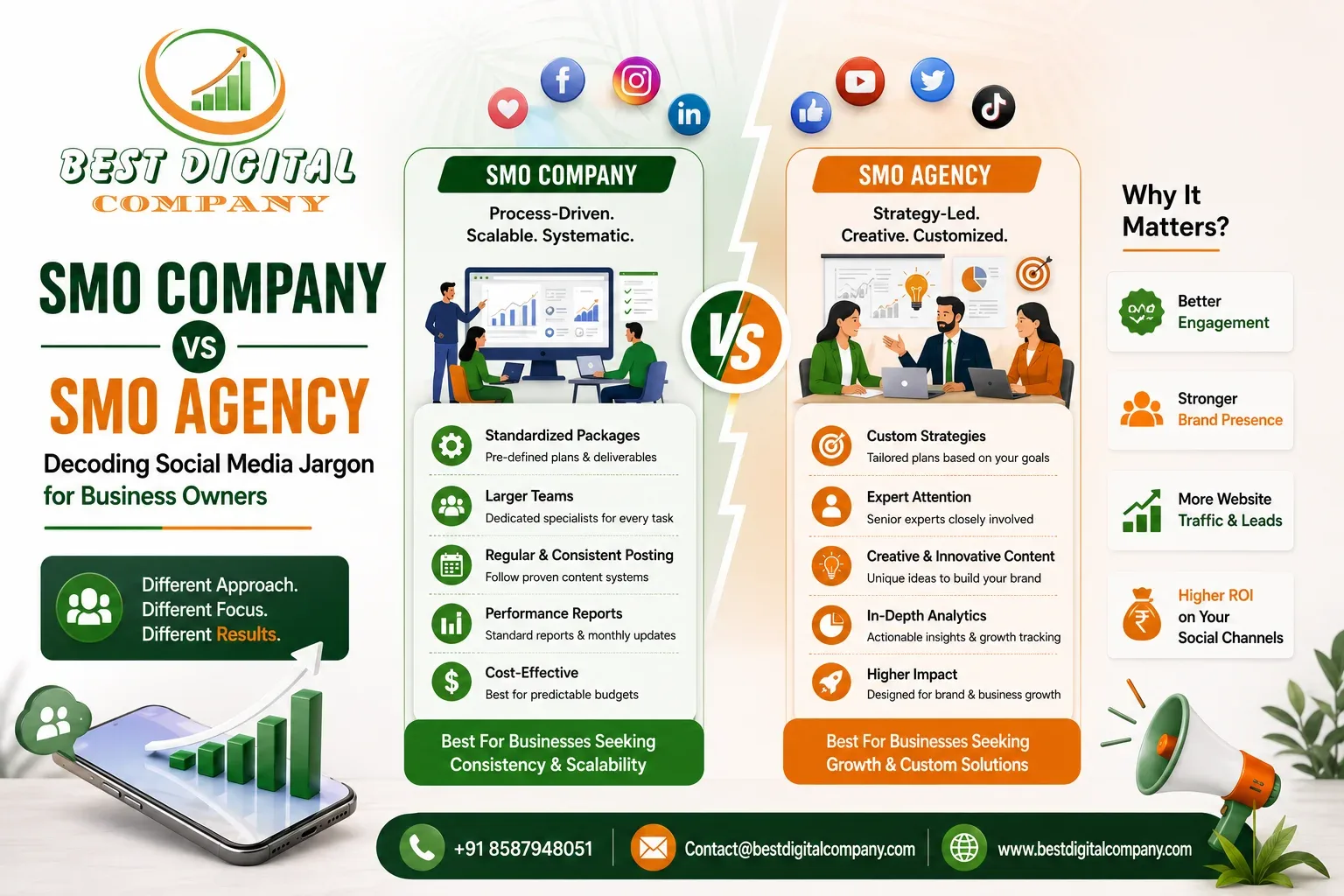
SMO Company vs SMO Agency: Key Differences Business Owners Should Know
Here is a side-by-side look that should make the distinction easier to hold in your head the next time you are comparing proposals.
| Factor | SMO Company | SMO Agency |
| Working style | Process-driven, scalable | Strategy-driven, customized |
| Pricing | Tiered, fixed packages | Retainer, often variable |
| Client relationship | Structured account management | Closer, consultative partnership |
| Best suited for | Predictable, repeatable social presence | Complex brands needing tailored positioning |
| Reporting | Standardized templates | Often deeper, goal-specific insights |
| Flexibility | Lower, based on package tier | Higher, adjusts as strategy evolves |
Neither model is objectively better. A well-run SMO company can deliver excellent, consistent results for a business that just needs steady, professional social media management. A skilled SMO agency can unlock significantly more nuanced growth for a brand that needs its social presence tightly woven into a broader marketing narrative. The right choice depends entirely on what your business needs right now, not on which label sounds more impressive on a proposal document.
When Should You Hire an SMO Company Instead of an SMO Agency?
If your priority is getting a professional, consistent social media presence up and running without reinventing the wheel every month, a company-style setup usually fits better. This works particularly well for:
- Small and mid-sized businesses that need reliable posting, basic community management, and clean monthly reporting without a heavy strategic overhaul.
- Businesses with a limited marketing budget that need cost predictability more than deep customization.
- Companies that already have a clear brand identity and just need someone to execute consistently across platforms.
- Owners who prefer a straightforward package over ongoing strategy discussions.
This is also a good fit if social media is one piece of a larger marketing puzzle you are managing alongside SEO, paid ads, or website development, and you would rather have one steady, dependable partner handling execution while you focus on the bigger picture. If that sounds like your situation, our Social Media Marketing services page walks through exactly how a structured approach like this comes together month to month.
When an SMO Agency Makes More Sense
On the flip side, an agency-style partner tends to be worth the higher investment when:
- Your industry is competitive or highly niche, and generic content simply will not cut through the noise.
- You are launching a new brand or repositioning an existing one, and your social presence needs to be built around a specific narrative from scratch.
- You need social media tightly integrated with campaigns, product launches, or seasonal promotions rather than run as a standalone activity.
- Your business sells a considered purchase, something people research before buying, where trust-building content matters more than volume.
If you have already read our earlier piece on how to pick a social media marketing agency that actually grows sales, you will recognize a similar theme here: the agency model earns its higher price tag only when it is actually translating engagement into pipeline, not just racking up likes that never convert into paying customers.
Red Flags to Avoid When Choosing Either
Regardless of which model you lean toward, certain warning signs should make you pause before signing anything.
Vague deliverables. If a proposal says “social media management” without specifying platforms, post frequency, content types, or reporting cadence, ask for clarity before you commit. This applies equally whether you are evaluating a structured company package or a custom agency retainer.
Vanity-metric obsession. Be cautious of any partner, company or agency, that leads every conversation with follower counts and likes rather than engagement quality, click-throughs, or lead generation. Growth on paper means little if it does not move your business forward.
No content ownership clarity. Ask upfront who owns the creative assets, captions, and account access once the engagement ends. This detail gets overlooked constantly and causes real headaches later.
Cookie-cutter strategy pitched as “custom.” If an agency claims full customization but their proposal reads almost identically to what a friend in a completely different industry received, that is worth questioning.
No connection to business goals. A good SMO partner, whether structured as a company or an agency, should be able to explain how their work supports actual outcomes: inquiries, bookings, sales, or brand recall that shows up in your bottom line, not just a busier feed.
How Social Media Optimization Fits Into Your Broader Digital Marketing Strategy
One thing that often gets lost in the SMO company versus SMO agency debate is that social media rarely works in isolation. The businesses that get the best return on their social spend usually treat it as one connected piece of a larger digital marketing system rather than an activity that lives on its own island.
For instance, content that performs well on social platforms often benefits from the same keyword and audience research used in search engine optimization, since understanding what your audience is searching for helps shape what they will actually stop scrolling for. Similarly, high-performing organic posts can be repurposed as pay-per-click creative once you know which messages resonate, stretching your ad budget further instead of starting from a blank page every campaign. And none of this matters much if the traffic your social presence generates lands on a slow, outdated website; a strong website development and design foundation is what actually converts that social traffic into inquiries and sales.
This is also why it helps to think about your first months of visibility holistically. If you are a newer business still building your customer base, our guide on how small businesses can get their first 100 customers covers how social presence, search visibility, and paid campaigns typically need to work together rather than being treated as separate line items competing for budget.
Questions to Ask Before You Sign a Contract
Whether you are leaning toward a company or an agency, walk into the conversation with these questions ready:
- What exactly is included each month? Get specifics on post counts, platforms, content types (reels, carousels, static posts), and whether paid boosting is part of the package or billed separately.
- Who creates the content, and who approves it before it goes live? Understand the review process so nothing gets published without your sign-off.
- How is success measured, and how often will I see reports? Push for metrics tied to business impact, not just impressions.
- What happens if the strategy is not working after 60 or 90 days? A confident partner will have a clear answer, not a vague reassurance.
- Can I see examples of similar work in my industry? This helps you gauge whether you are getting a templated approach or genuine expertise.
- How is account ownership handled if we part ways? Get this in writing before day one, not after a dispute arises.
These same questions apply beyond social media, too. If you are also evaluating search partners around the same time, the framework in our post on choosing the best SEO company mirrors much of this thinking, since the underlying goal, avoiding vague promises and demanding measurable accountability, stays the same across every digital marketing decision you make.
Why Credibility and Transparency Matter More Than the Label
At the end of the day, whether a business calls itself an SMO company or an SMO agency matters far less than how transparently they operate and how consistently they deliver. A trustworthy partner will walk you through their process, show you real examples of past work, explain their reporting in plain language, and set expectations honestly rather than promising overnight virality. That kind of transparency is also a big part of what search engines increasingly reward when brands publish content about their own services, since demonstrated expertise and honest communication build the kind of trust that both customers and algorithms recognize. If you want a deeper look at how that trust factor plays into visibility, our earlier piece on improving experience, expertise, authority, and trust for better rankings breaks down exactly why credibility has become such a central part of how businesses get discovered online.
At Best Digital Company, we work with businesses across Delhi and beyond, offering both the structured reliability of packaged social media management and the deeper, campaign-specific strategy work that a more consultative, agency-style engagement requires. Rather than forcing every client into one model, we start by understanding what stage your business is at and what social media actually needs to accomplish for you, then build the engagement around that answer instead of a one-size-fits-all template.
Making the Right Choice for Your Business
There is no universally correct answer to the SMO company versus SMO agency question. A growing local business that needs dependable, professional posting and community management every month will likely get more value, and better cost predictability, from a company-style package. A brand entering a competitive market, launching something new, or trying to build a distinct voice around a considered purchase will often benefit more from the closer strategic partnership an agency model provides.
What matters most is being honest with yourself about your current stage, your budget, and how much hands-on strategy your business genuinely needs right now. Ask direct questions, request real examples, and choose a partner, whichever label they use, that measures success the same way you do: by business results, not just by how busy your feed looks.
Frequently Asked Questions
Is an SMO company cheaper than an SMO agency?
Generally, yes. Because an SMO company operates on standardized packages and repeatable processes across many clients, pricing tends to be more predictable and often more affordable than a custom agency retainer, which reflects the additional strategy and creative work involved.
Can a small business benefit from working with an SMO agency instead of an SMO company?
Absolutely, especially if the business operates in a competitive niche or needs help defining its brand voice from the ground up. The higher investment can pay off when strategic positioning matters as much as consistent posting.
Do SMO companies also handle paid social media advertising?
Many do, though it is often offered as an add-on rather than a default inclusion. Always confirm whether paid promotion, boosted posts, or ad management are part of your package or billed separately.
How long does it take to see results from social media optimization?
Most businesses start noticing meaningful engagement and audience growth within two to three months, though measurable business outcomes like leads or sales typically take longer and depend heavily on your industry, content quality, and consistency.
Should social media optimization be handled by the same team managing my SEO and website?
It does not have to be, but there are real advantages when it is. Coordinated messaging across social, search, and your website tends to perform better than disconnected efforts managed by separate, uncoordinated teams.
What is the biggest mistake business owners make when choosing between the two?
Choosing based on price or brand name alone, without asking what is actually included, how success will be measured, and whether the partner’s past work matches your industry and goals.
Still unsure whether a structured SMO company package or a custom SMO agency strategy is the right fit for your business? Get in touch with our team for a straightforward conversation about where your social media presence stands today and what it will actually take to move the needle.

Add a Comment