

If you have ever paid an agency a fixed monthly fee for social media and then wondered, three months later, what you actually got for the money, you are asking a fair question. A lot of businesses sign up for “social media management” without ever seeing a clear breakdown of deliverables. They get a few posts, maybe a story here and there, and a vague promise of “growth.” Then the invoice arrives again.
The problem usually is not the platform or the budget. It is that most people never see what a properly built monthly package should contain. Once you know what belongs in a real bundle, it becomes much easier to compare vendors, spot corners being cut, and hold your marketing partner accountable for results instead of activity.
This guide breaks down exactly what a complete package of social media marketing services should include every single month, why each piece matters, and how to tell when you are being sold busywork instead of a strategy.
What a Complete Social Media Marketing Services Package Actually Covers
Before comparing quotes or packages, it helps to separate the work into categories. A monthly retainer for social media is rarely just “posting.” It is a combination of planning, creation, distribution, paid promotion, community management, and reporting. When any one of these pieces is missing, the whole strategy tends to feel disconnected posts go out, but nobody is watching how people respond to them, or ads run without any organic content backing them up.
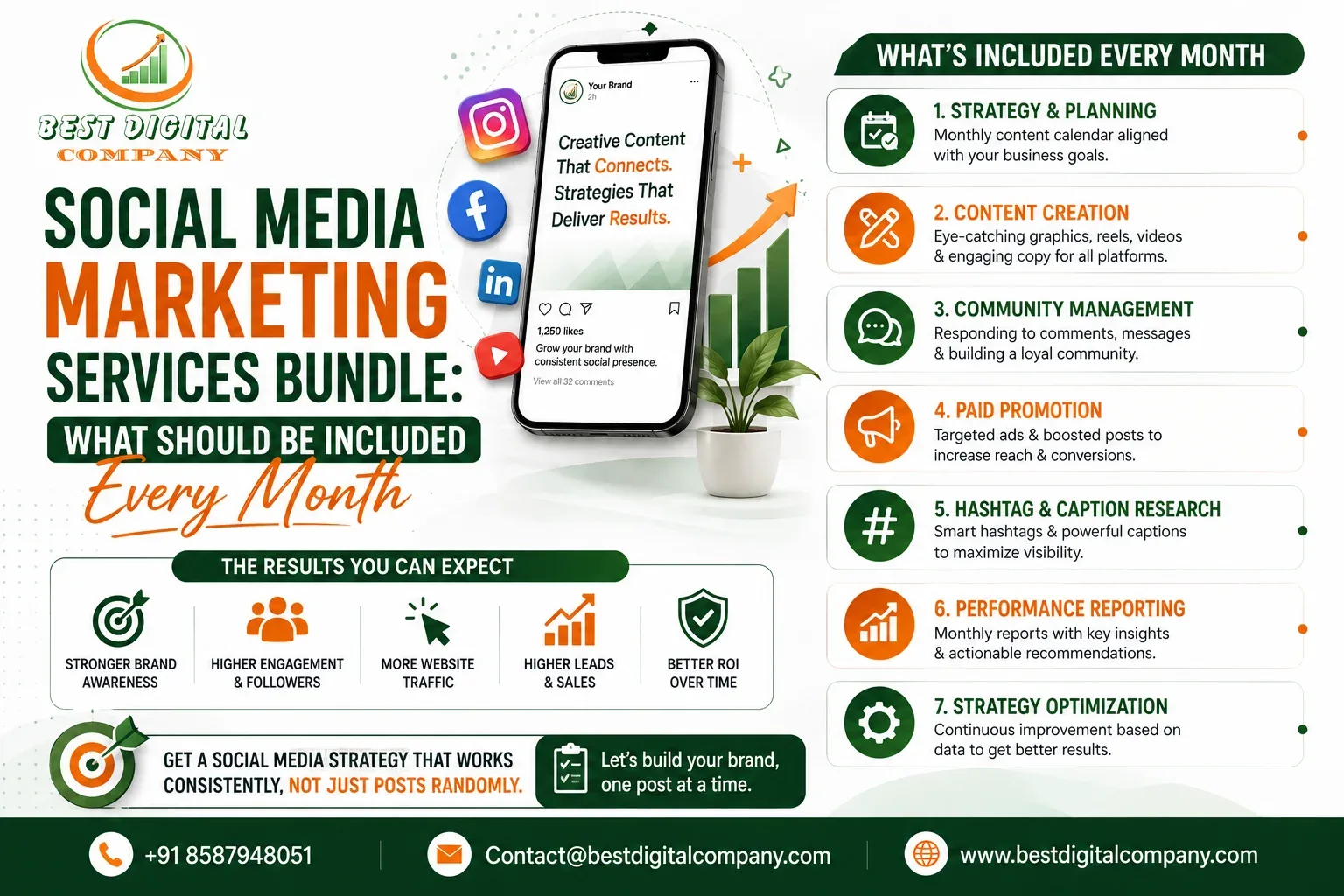
A well-structured bundle of social media marketing services typically includes:
- A monthly content calendar built around business goals, not random trending topics
- Original graphics, short videos, and copywriting for each platform
- Community management, meaning replies to comments and messages
- Paid promotion or boosted posts where the budget allows
- Hashtag and caption research specific to the industry
- Monthly performance reporting with clear next steps
- Ongoing strategy adjustments based on what the data shows
Each of these deserves a closer look, because the details are where the real difference between a strong package and a weak one shows up.
Content Planning: The Foundation Before Anything Gets Posted
Content planning is the part clients rarely see, which is exactly why it gets skipped by agencies trying to cut corners. A proper plan starts with a monthly theme or set of goals maybe it is pushing a new product line, building local awareness, or supporting a seasonal sale and then maps content around that goal rather than posting whatever is easiest to produce.
This planning stage should answer a few practical questions before a single graphic is designed:
- What is this month’s business priority, and how does social media support it?
- Which platforms actually reach this audience, and which ones are a waste of effort?
- What mix of formats (reels, carousels, static posts, stories) makes sense for the goal?
- How does this month’s content connect to what was posted last month, so the page tells a consistent story instead of a scattered one?
Without this step, a monthly bundle turns into a content mill: posts that look fine individually but do not build toward anything. If a monthly proposal jumps straight from “how many posts do you want” to a content calendar with no discussion of goals, that is usually a sign the planning stage was skipped entirely.
Content Creation and Copywriting Inside Social Media Marketing Services
Once the plan is set, the creative work begins and this is usually the largest visible chunk of any monthly package. It should cover:
Design and video production. Static graphics, carousel posts, short-form reels, and story templates that match brand colors and tone. A business that sells industrial equipment should not have the same visual style as a boutique clothing brand, yet a surprising number of agencies use the same templates across every client.
Captions and copy. Every post needs writing that fits the platform. A LinkedIn caption aimed at other businesses reads very differently from an Instagram caption aimed at everyday shoppers. If every platform is getting the exact same copy pasted across it, that is not a real multi-platform strategy — it is one post published in five places.
Hashtag and keyword research. This should be revisited monthly, not set once and reused forever. Trends shift, and hashtags that worked six months ago can lose relevance or even attract the wrong audience.
Platform-specific formatting. A vertical reel is not the same asset as a square feed post, and a package that simply resizes one image for every platform is cutting a corner that shows up in lower reach.
This is also where a package should overlap with broader brand and web presence work. If your social pages are promoting a website that has not been touched in years, the mismatch is obvious to visitors. Businesses that are still deciding between a professional build and a template-based approach may find it worth reading what small businesses should know when comparing a website making company to DIY builders before assuming the content strategy alone will carry the brand.
Community Management: The Part That Gets Skipped Most Often
Posting content is only half the job. The other half is what happens after a post goes live — replying to comments, answering direct messages, and handling reviews or complaints that show up publicly. This is called community management, and it is the piece most frequently missing from budget packages because it takes ongoing attention rather than a one-time deliverable.
A monthly bundle should specify:
- Response time expectations for comments and messages (same day, within 24 hours, etc.)
- Who handles sensitive or negative comments, and what tone they use
- Whether the team is monitoring mentions and tags, not just the main page
- How user-generated content, like a customer photo or tag, gets acknowledged or reshared
Ignoring this part of the work is one of the fastest ways to damage trust. A page with polished posts but unanswered questions from three weeks ago tells visitors that nobody is actually managing the account, no matter how good the graphics look.
Paid Promotion Should Be Planned, Not an Afterthought
Organic reach on most platforms has shrunk over the years, which means a portion of almost every serious monthly package now needs to include paid boosting or targeted ad spend. This does not have to mean a massive advertising budget even a modest amount, spent correctly, can extend the reach of a strong post far beyond followers alone.
A monthly plan should be specific about:
- Which posts are being boosted and why (a product launch usually deserves paid support; a routine update usually does not)
- What audience targeting is being used, and whether it is being refined over time
- Whether the ad budget is separate from the management fee, and how much of it goes to the platform versus the agency
Social advertising and search advertising often get confused, but they solve different problems and are usually managed differently. If you are also running or considering pay-per-click advertising alongside your social presence, it is worth understanding how the two connect, and it helps to know the warning signs that a pay-per-click provider is wasting your ad spend, since some of the same red flags vague reporting, no clear targeting logic, budget spent without a plan show up in poorly managed social ad accounts too.
Reporting: Numbers That Actually Mean Something
A monthly report should do more than list how many posts went out. Post counts measure effort, not results. A useful report connects activity to outcomes and should include:
- Follower growth, but framed against engagement quality rather than a raw number alone
- Reach and impressions by platform, so you can see where the audience is actually responding
- Engagement rate (likes, comments, shares, saves) rather than just total likes
- Click-throughs to the website or landing pages, when applicable
- A short written summary explaining what worked, what didn’t, and what changes are planned for next month
This last part is where many packages fall short. A spreadsheet full of numbers with no interpretation puts the burden of understanding the data back on the client. A proper report should read almost like a short letter: here is what happened, here is why, and here is what we are adjusting.
How Social Media Marketing Services Should Connect With the Rest of Your Marketing
Social media rarely works well in isolation. The strongest monthly bundles are built with an awareness of what else is happening in a business’s marketing its website, its search visibility, and any paid campaigns running elsewhere.
For example, if a business is also investing in search engine optimization, the social team should know what keywords and pages are being pushed so that social content can point traffic toward the right landing pages rather than just the homepage. Similarly, a business investing in website development should make sure the site can actually handle the traffic social campaigns are meant to drive there is little point in a beautifully produced reel if it links to a page that loads slowly or looks outdated.
This kind of coordination is often the difference between an agency and a freelancer working in isolation. If you are deciding who should manage these moving pieces together, it can help to read aboutthe real difference (or lack of one) between an agency and a company, since similar distinctions apply when comparing social media providers as well.
The Jargon Problem: SMO, SMM, and What They Actually Mean for Your Package
Anyone shopping for a monthly package will run into a mix of acronyms SMM, SMO, engagement funnels, organic reach often used interchangeably by salespeople in ways that make the pitch sound more sophisticated than the actual deliverable. Before signing anything, it is worth understanding what these terms mean in practice rather than nodding along on a sales call.
Two resources worth reading side by side are a breakdown of what a social media optimization company actually does day to day, and a comparison of how an SMO company differs from an SMO agency. Both cut through the jargon and make it easier to match the terms in your contract to the actual work being promised.
Platform-Specific Deliverables to Look For
Not every platform deserves the same treatment, and a monthly package should reflect that. A few examples of what to expect, broken down by platform:
Instagram — a mix of feed posts, reels, and stories, plus highlight cover design and regular use of interactive story features like polls or questions.
Facebook — event promotion, review monitoring, and community group engagement where relevant, alongside standard feed content.
LinkedIn — a more professional tone, employee or founder spotlights, and industry commentary rather than promotional posts alone.
Pinterest — for visually driven businesses, pin creation linked back to product pages or blog content, since Pinterest traffic tends to behave more like search traffic than typical social traffic.
A package that treats every platform identically, with the same three posts a week copied across all of them, is not really tailored — it is templated. Ask any vendor to walk through exactly what differs between platforms in their plan.
Red Flags in a Monthly Social Media Marketing Services Bundle
A few warning signs tend to repeat across weak packages:
- No mention of community management or response times
- Reports that only show follower counts, with no engagement or conversion data
- The same content copied word-for-word across every platform
- No clear owner for paid ad spend, or ad budget quietly folded into the management fee without disclosure
- A content calendar that changes every month with no connection to a longer-term goal
- Vague answers when asked “what exactly do we get for this price”
If two or more of these show up in a proposal, it is worth asking pointed follow-up questions before signing a contract.
Questions to Ask Before Signing a Monthly Package
Before committing to any provider, it helps to get specific, written answers to a short list of questions:
- How many original posts, reels, and stories are included per platform, per month?
- Who writes the captions, and are they tailored per platform?
- Is community management included, and what is the expected response time?
- Is paid ad spend separate from the management fee, and how is it reported?
- What does the monthly report look like, and can we see a sample?
- How often is strategy reviewed and adjusted based on performance?
- Is there a minimum contract length, and what happens if results are not meeting expectations?
A provider that can answer these clearly, ideally in writing, is far more likely to deliver a coherent monthly package than one that gives general reassurances without specifics.
Bringing It All Together
A strong monthly bundle of social media marketing services is not measured by how many posts go live. It is measured by whether planning, creative work, community management, paid promotion, and reporting all connect to a clear goal and whether that goal ties back into the rest of a business’s marketing, from its website to its search visibility to any paid campaigns running elsewhere.
If your current package only checks one or two of these boxes, it may be worth a conversation about what is missing before renewing another month at the same price. And if you are comparing providers from scratch, ask to see a sample content calendar and a sample monthly report before you sign anything that single request tends to reveal more than any sales pitch.
If you want a package built around your specific goals rather than a generic template, you can see how a structured approach comes together on our social media marketing services page, or compare tiers directly through our monthly social media packages.
Frequently Asked Questions
What is usually included in a monthly social media marketing services package?
A complete package typically includes content planning, graphic and video creation, platform-specific copywriting, community management, paid promotion where budget allows, and a monthly performance report with recommendations for the following month.
How many posts should be included per month?
This varies by platform and industry, but most active accounts need a mix of three to six feed posts per week per platform, along with regular stories and at least a few short-form videos. What matters more than the raw number is whether the content is planned around a goal rather than posted at random.
Is paid advertising part of social media marketing services, or is it separate?
It depends on the provider. Some packages include a management fee for handling ads, with the actual ad spend billed separately to the platform. Others fold a small ad budget into the overall fee. Either approach can work, but it should always be disclosed clearly in writing.
Do I need a different strategy for each platform?
Generally yes. Audiences behave differently on Instagram, Facebook, LinkedIn, and Pinterest, and content that performs well on one often falls flat on another. A package that reuses identical content everywhere is usually cutting corners rather than saving effort.
How do I know if my current package is underdelivering?
Compare what you are receiving against the categories covered in this article planning, creation, community management, paid promotion, and reporting. If your reports only show follower counts with no engagement data, or if comments and messages go unanswered for days, those are strong signs the package is incomplete.
Should social media work be coordinated with SEO and paid search?
It helps a great deal. When social content, search engine optimization, and pay-per-click campaigns are planned together, they reinforce each other social posts can drive traffic to pages built to rank, and paid campaigns can retarget people who already engaged with social content. Managing these in silos often wastes budget on both sides.

Add a Comment