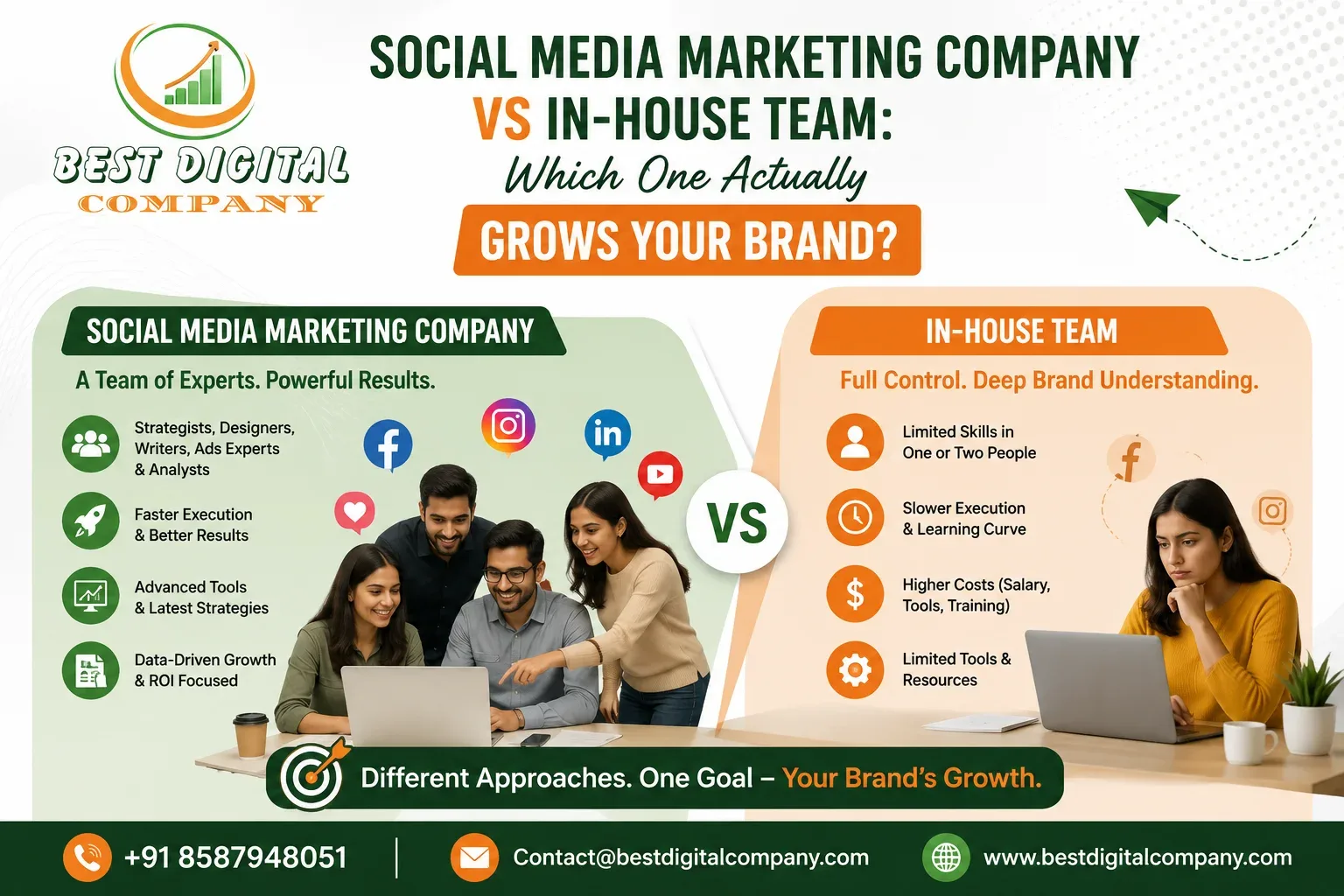
Performance Marketing Company vs Traditional Ad Agency

Performance Marketing Company vs Traditional Ad Agency: What is the Real Difference?

If you have sat through a pitch meeting recently, you have probably heard both phrases thrown around like they mean the same thing. “We are a full-service agency.” “We are performance-driven.” “We focus on ROI.” Somewhere in that word salad, most business owners quietly nod along and hope the invoice at the end of the month will explain what they actually bought.

It won’t.

The confusion is understandable. Traditional ad agencies and a performance marketing company both promise to grow your brand, both build campaigns, and both send you decks full of charts. But the way they get paid, the way they measure success, and the way they treat your budget are fundamentally different. One is built around a philosophy of “creative first, measure later.” The other is built around a philosophy of “measure everything, then create around what works.” Confusing the two can cost you months of budget and a marketing plan that looks good in a boardroom but does nothing for your bank account.

This article breaks down exactly how these two models differ, where each one genuinely shines, and how to figure out which approach actually fits the stage your business is at right now.

What a Performance Marketing Company Actually Does

A performance marketing company builds every campaign around a measurable action: a lead form filled, a product purchased, a call placed, an app installed. Nothing gets a green light unless it can be tracked back to a number. If a social post, a landing page, or an ad creative isn’t contributing to that number, it gets changed or dropped, usually within days rather than months.

This is a very different mindset from “brand awareness” campaigns, where success is judged by impressions, reach, or how many people saw the ad. A performance-focused team treats visibility as a means to an end, not the end itself. The question is never “did people see this?” It’s “did people act on this, and can we afford to keep doing it at scale?”

In practice, this usually means combining a few disciplines under one roof:

  • Paid advertising across Google, Meta, and other platforms, managed with tight budget controls and daily optimization
  • Landing page testing to see which version actually converts visitors into leads or customers
  • Search visibility work so that organic traffic supports paid spend instead of competing against it
  • Analytics and attribution to trace every rupee spent back to a result

If any of that sounds familiar, it is because it overlaps heavily with services like pay per click management and search engine optimization except the performance model ties them together under one shared scoreboard: revenue, not vanity metrics.

What a Traditional Ad Agency Actually Does

A traditional ad agency has a different starting point. The work usually begins with a brand strategy session, mood boards, a creative concept, and a media plan built around reach and frequency. The goal is to build recognition and emotional association with a brand over time, the kind of work you see in television commercials, billboards, and large-scale brand campaigns.

There is real craft in this. A good traditional agency can shape how a brand sounds, looks, and feels across every touchpoint. Automobile launches, FMCG brands, and large consumer campaigns still rely heavily on this model because the goal isn’t an immediate click, it’s staying power in a customer’s memory.

The tradeoff is measurement. Reach, impressions, and brand recall studies are far harder to tie directly to sales. A traditional campaign might genuinely be working, shaping perception and consideration, while looking “flat” on a spreadsheet for months. That’s fine for a company with a large budget and a long runway. It’s much riskier for a business that needs leads or sales this quarter, not brand equity in three years.

Performance Marketing Company vs Traditional Ad Agency: The Core Differences

Let is put the two side by side, because the differences show up in almost every part of how the work actually happens.

How Success Gets Measured

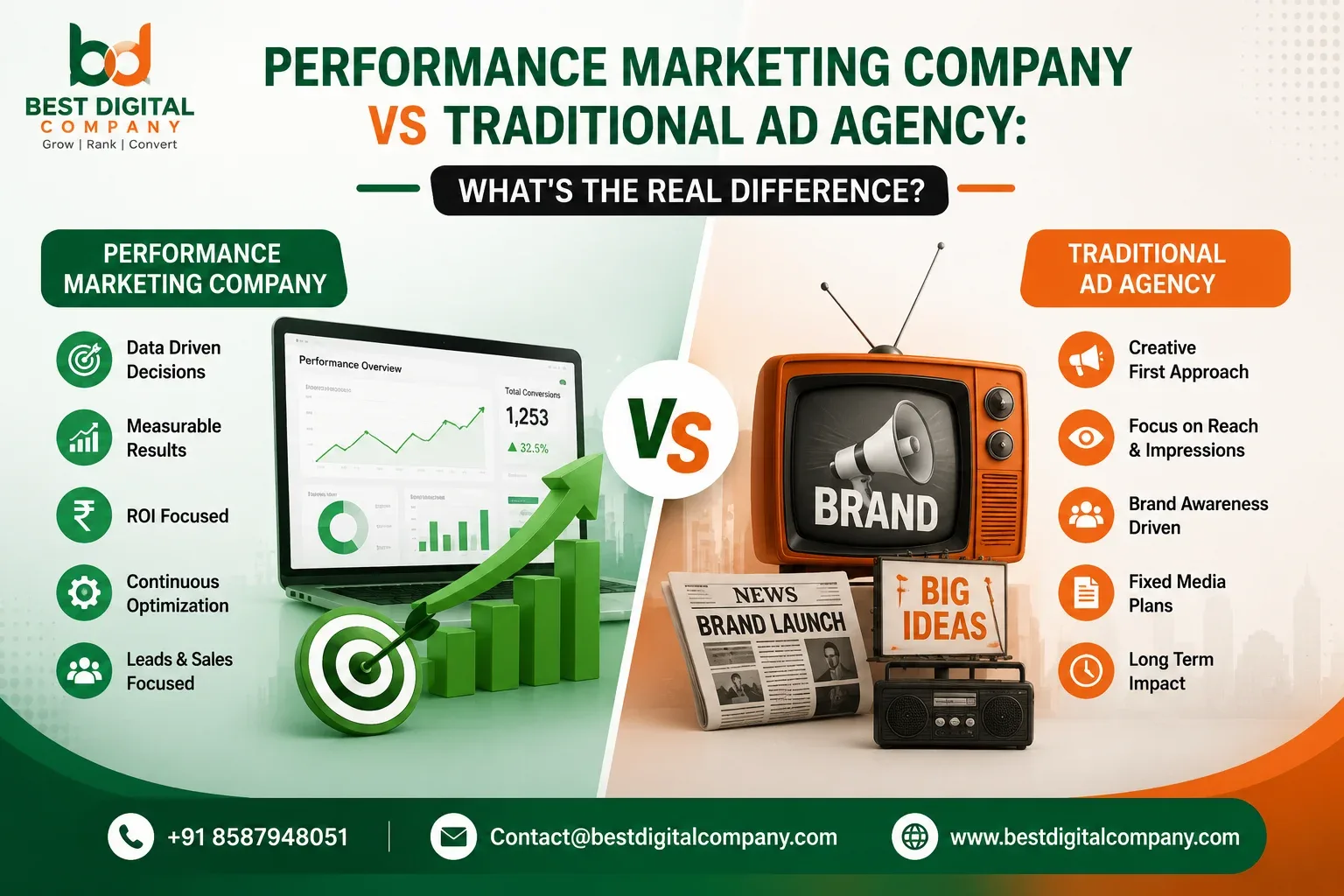
A performance marketing company reports on cost per lead, cost per acquisition, conversion rate, and return on ad spend. A traditional ad agency reports on reach, impressions, brand recall, and share of voice. Neither number is “fake,” but they answer completely different questions. One tells you whether the campaign made money. The other tells you whether people noticed.

How Budgets Are Handled

Performance budgets are usually flexible and reallocated weekly, sometimes daily, based on what’s converting. If a Google Ads keyword group is outperforming a Meta campaign, budget shifts there almost immediately. Traditional ad agency budgets tend to be locked into a media plan for a full quarter or campaign cycle, because television slots, print placements, and large creative productions don’t allow for that kind of daily flexibility.

How Pricing Works

This is one of the biggest practical differences. Traditional agencies commonly charge a retainer or a percentage of ad spend, regardless of the direct outcome. A performance marketing company is far more likely to tie at least part of its fee to results, whether that’s cost per lead targets or agreed conversion benchmarks. This alone changes the incentive structure of the entire relationship.

Speed of Optimization

A performance team might test five ad variations in a week and kill the two that underperform by day three. A traditional agency, working within a bigger creative and production cycle, usually can’t move that fast, and honestly, isn’t trying to. Big brand campaigns need consistency, not constant tweaking.

The Skills Involved

Traditional agencies lean heavily on creative directors, copywriters, and media planners. Performance marketing companies lean on paid media specialists, conversion rate optimizers, and analysts who live inside dashboards. Some businesses actually need both, which is why understanding what a google ads expert does day to day versus what a full agency team handles can help you decide who to bring in first.

Why This Distinction Matters More in 2026

A few years ago, this line was blurrier because most agencies claimed to do everything. But tighter marketing budgets, more advanced tracking tools, and increased pressure to show real business impact have pushed the industry to specialize. Business owners today are asking sharper questions before signing contracts: what did last month’s spend actually generate, and can you prove it.

That shift favors performance-based models because they were built for exactly this kind of scrutiny. A performance marketing company lives and dies by dashboards that show, in real time, whether spend is translating into leads or sales. There’s nowhere to hide behind a nicely produced brand video if the conversion numbers aren’t there.

This doesn’t mean brand-building is dead. It means most small and mid-sized businesses, especially those without a multi-year runway, are better served starting with performance-driven work and adding brand campaigns once there’s steady revenue to protect.

Where a Traditional Ad Agency Still Makes Sense

It would be misleading to say the traditional model is obsolete, because it is not. There are situations where it is genuinely the smarter choice:

  • Large product launches that need mass awareness before any purchase intent even exists
  • Established brands protecting market position rather than chasing immediate conversions
  • Categories with long sales cycles, like real estate or enterprise software, where a single ad rarely leads to an instant sale
  • Businesses with the budget and patience to invest in recall and reputation over a longer horizon

If your business fits one of these, blending brand-building with performance tactics, rather than picking only one, often produces the best long-term outcome.

Where a Performance Marketing Company Wins

On the other hand, a performance-first approach tends to be the better fit when:

  • You need leads or sales within weeks, not quarters
  • Your budget is limited and every rupee needs to be justified
  • You are a local business, e-commerce store, or service provider competing on visibility and conversions rather than mass brand recognition
  • You want clear reporting that ties spend directly to outcomes rather than abstract reach numbers

This is also where the overlap with a company’s broader digital presence matters. Paid campaigns rarely perform in isolation. A performance marketing company usually pairs paid ads with organic visibility work, active social media marketing, and a website that’s actually built to convert the traffic being paid for. Sending expensive clicks to a slow, cluttered, or outdated site is one of the fastest ways to waste an ad budget, which is why website development and design often ends up being part of the same conversation, not a separate project handled months later.

A Practical Example

Picture two businesses running the exact same monthly ad budget.

Business A hires a traditional ad agency. They get a polished campaign concept, a media plan spread across a few platforms, and monthly reporting focused on impressions and reach. Three months in, brand awareness has genuinely improved, but leads are inconsistent, and nobody can say with certainty which specific ad or platform is driving actual inquiries.

Business B hires a performance marketing company. Within the first two weeks, three ad variations are tested, the underperforming ones are paused, and budget is shifted toward the landing page generating the most form fills. By month two, the cost per lead has dropped, and the reporting shows exactly which keyword, ad, and platform combination is producing the best return.

Neither business made a wrong choice in principle, they just had different goals. But if Business B actually needed sales this quarter, the performance approach clearly served that need faster and more transparently.

Red Flags to Watch For, Regardless of Which Model You Choose

Whether you’re evaluating a traditional agency or a performance marketing company, a few warning signs apply across the board. Vague reporting that only shows impressions when you asked about leads. Long-term contracts with no clear exit or review point. A refusal to explain exactly how your budget is being spent across platforms. These issues aren’t unique to one model, they’re signs of a vendor relationship that isn’t built on transparency. If any of this sounds familiar from past experience, it is worth reading through common warning signs when evaluating a pay-per-click partner before signing another contract.

How to Choose the Right Fit for Your Business

Instead of asking “which one is better,” a more useful question is: what does my business actually need right now?

If you need measurable leads, tighter cost control, and fast optimization, a performance marketing company is almost certainly the better starting point. If you’re building a long-term brand with a bigger budget and a longer timeline, blending brand strategy with performance tactics tends to work better than choosing purely one lane.

The businesses that get the most value usually don’t treat this as a permanent, one-time decision either. They start with performance-focused work to build a stable base of leads and revenue, then layer in brand-building campaigns once there’s enough consistent income to support a longer-term investment.

Final Thoughts

The difference between a performance marketing company and a traditional ad agency isn’t just terminology, it’s a difference in philosophy, pricing, speed, and accountability. One is built to prove its worth in numbers you can check weekly. The other is built to shape how your brand is remembered over time. Neither approach is automatically wrong, but picking the one that matches your business stage, budget, and timeline will save you months of second-guessing and a lot of unclear invoices.

If you’re trying to figure out which model fits your business, or you want a team that can move between performance-driven campaigns and long-term brand growth as your needs change, it helps to talk through your specific goals with a team that works across search engine optimization, paid media, social platforms, and website performance, rather than one narrow specialty.


Frequently Asked Questions

What exactly is a performance marketing company?

It’s an agency or team that builds campaigns around measurable actions, like leads, sales, or app installs, rather than general brand visibility. Every rupee spent is expected to tie back to a trackable result.

Is a performance marketing company cheaper than a traditional ad agency?

Not necessarily cheaper, but usually more efficient with budget in the short term, since underperforming campaigns get cut quickly instead of running for a full quarter regardless of results.

Can a traditional ad agency also do performance marketing?

Some can, if they have dedicated paid media and analytics teams. But many traditional agencies are structured around creative and media planning, not real-time optimization, so it’s worth asking directly how they handle tracking and reporting before assuming they can.

How fast can I expect results from a performance marketing company?

Early signals, like click-through rates and initial lead volume, often show up within the first two to three weeks. Meaningful, stable results usually take six to eight weeks as campaigns are tested and refined.

Do small businesses need a traditional ad agency at all?

Most small and mid-sized businesses are better served starting with performance-driven work, since it delivers measurable leads faster on a limited budget. Brand-building campaigns tend to make more sense once there’s steady revenue to protect.

What should I ask before hiring either type of agency?

Ask exactly how success will be measured, how often budgets are reviewed, what reporting looks like, and whether there’s a minimum contract lock-in. Clear answers to these questions usually separate a trustworthy partner from a vague one.
Social Media Marketing Services Bundle

Social Media Marketing Services Bundle: What Should Be Included Every Month

If you have ever paid an agency a fixed monthly fee for social media and then wondered, three months later, what you actually got for the money, you are asking a fair question. A lot of businesses sign up for “social media management” without ever seeing a clear breakdown of deliverables. They get a few posts, maybe a story here and there, and a vague promise of “growth.” Then the invoice arrives again.

The problem usually is not the platform or the budget. It is that most people never see what a properly built monthly package should contain. Once you know what belongs in a real bundle, it becomes much easier to compare vendors, spot corners being cut, and hold your marketing partner accountable for results instead of activity.

This guide breaks down exactly what a complete package of social media marketing services should include every single month, why each piece matters, and how to tell when you are being sold busywork instead of a strategy.

What a Complete Social Media Marketing Services Package Actually Covers

Before comparing quotes or packages, it helps to separate the work into categories. A monthly retainer for social media is rarely just “posting.” It is a combination of planning, creation, distribution, paid promotion, community management, and reporting. When any one of these pieces is missing, the whole strategy tends to feel disconnected posts go out, but nobody is watching how people respond to them, or ads run without any organic content backing them up.

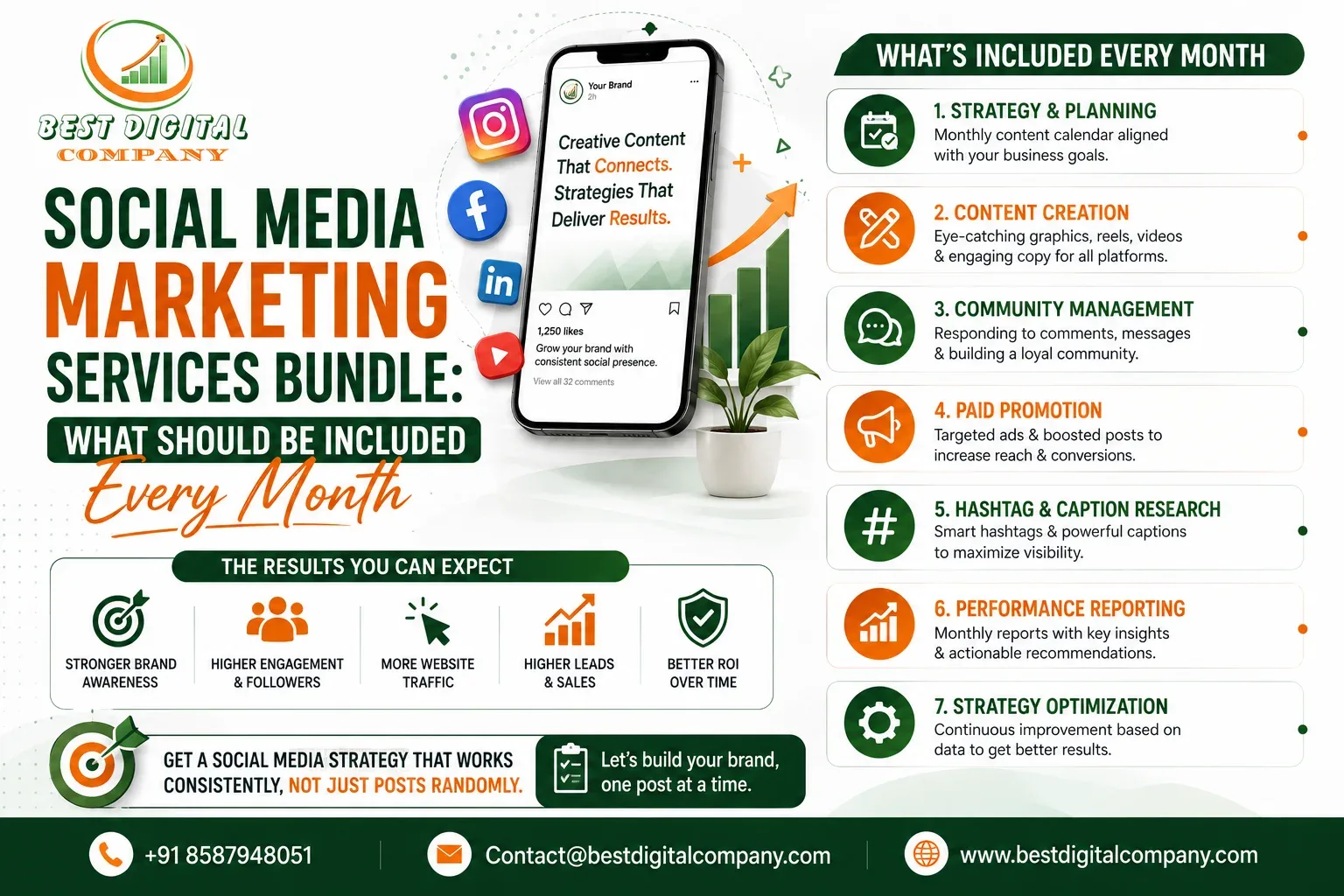
A well-structured bundle of social media marketing services typically includes:

  • A monthly content calendar built around business goals, not random trending topics
  • Original graphics, short videos, and copywriting for each platform
  • Community management, meaning replies to comments and messages
  • Paid promotion or boosted posts where the budget allows
  • Hashtag and caption research specific to the industry
  • Monthly performance reporting with clear next steps
  • Ongoing strategy adjustments based on what the data shows

Each of these deserves a closer look, because the details are where the real difference between a strong package and a weak one shows up.

Content Planning: The Foundation Before Anything Gets Posted

Content planning is the part clients rarely see, which is exactly why it gets skipped by agencies trying to cut corners. A proper plan starts with a monthly theme or set of goals maybe it is pushing a new product line, building local awareness, or supporting a seasonal sale and then maps content around that goal rather than posting whatever is easiest to produce.

This planning stage should answer a few practical questions before a single graphic is designed:

  • What is this month’s business priority, and how does social media support it?
  • Which platforms actually reach this audience, and which ones are a waste of effort?
  • What mix of formats (reels, carousels, static posts, stories) makes sense for the goal?
  • How does this month’s content connect to what was posted last month, so the page tells a consistent story instead of a scattered one?

Without this step, a monthly bundle turns into a content mill: posts that look fine individually but do not build toward anything. If a monthly proposal jumps straight from “how many posts do you want” to a content calendar with no discussion of goals, that is usually a sign the planning stage was skipped entirely.

Content Creation and Copywriting Inside Social Media Marketing Services

Once the plan is set, the creative work begins and this is usually the largest visible chunk of any monthly package. It should cover:

Design and video production. Static graphics, carousel posts, short-form reels, and story templates that match brand colors and tone. A business that sells industrial equipment should not have the same visual style as a boutique clothing brand, yet a surprising number of agencies use the same templates across every client.

Captions and copy. Every post needs writing that fits the platform. A LinkedIn caption aimed at other businesses reads very differently from an Instagram caption aimed at everyday shoppers. If every platform is getting the exact same copy pasted across it, that is not a real multi-platform strategy — it is one post published in five places.

Hashtag and keyword research. This should be revisited monthly, not set once and reused forever. Trends shift, and hashtags that worked six months ago can lose relevance or even attract the wrong audience.

Platform-specific formatting. A vertical reel is not the same asset as a square feed post, and a package that simply resizes one image for every platform is cutting a corner that shows up in lower reach.

This is also where a package should overlap with broader brand and web presence work. If your social pages are promoting a website that has not been touched in years, the mismatch is obvious to visitors. Businesses that are still deciding between a professional build and a template-based approach may find it worth reading what small businesses should know when comparing a website making company to DIY builders before assuming the content strategy alone will carry the brand.

Community Management: The Part That Gets Skipped Most Often

Posting content is only half the job. The other half is what happens after a post goes live — replying to comments, answering direct messages, and handling reviews or complaints that show up publicly. This is called community management, and it is the piece most frequently missing from budget packages because it takes ongoing attention rather than a one-time deliverable.

A monthly bundle should specify:

  • Response time expectations for comments and messages (same day, within 24 hours, etc.)
  • Who handles sensitive or negative comments, and what tone they use
  • Whether the team is monitoring mentions and tags, not just the main page
  • How user-generated content, like a customer photo or tag, gets acknowledged or reshared

Ignoring this part of the work is one of the fastest ways to damage trust. A page with polished posts but unanswered questions from three weeks ago tells visitors that nobody is actually managing the account, no matter how good the graphics look.

Paid Promotion Should Be Planned, Not an Afterthought

Organic reach on most platforms has shrunk over the years, which means a portion of almost every serious monthly package now needs to include paid boosting or targeted ad spend. This does not have to mean a massive advertising budget even a modest amount, spent correctly, can extend the reach of a strong post far beyond followers alone.

A monthly plan should be specific about:

  • Which posts are being boosted and why (a product launch usually deserves paid support; a routine update usually does not)
  • What audience targeting is being used, and whether it is being refined over time
  • Whether the ad budget is separate from the management fee, and how much of it goes to the platform versus the agency

Social advertising and search advertising often get confused, but they solve different problems and are usually managed differently. If you are also running or considering pay-per-click advertising alongside your social presence, it is worth understanding how the two connect, and it helps to know the warning signs that a pay-per-click provider is wasting your ad spend, since some of the same red flags vague reporting, no clear targeting logic, budget spent without a plan show up in poorly managed social ad accounts too.

Reporting: Numbers That Actually Mean Something

A monthly report should do more than list how many posts went out. Post counts measure effort, not results. A useful report connects activity to outcomes and should include:

  • Follower growth, but framed against engagement quality rather than a raw number alone
  • Reach and impressions by platform, so you can see where the audience is actually responding
  • Engagement rate (likes, comments, shares, saves) rather than just total likes
  • Click-throughs to the website or landing pages, when applicable
  • A short written summary explaining what worked, what didn’t, and what changes are planned for next month

This last part is where many packages fall short. A spreadsheet full of numbers with no interpretation puts the burden of understanding the data back on the client. A proper report should read almost like a short letter: here is what happened, here is why, and here is what we are adjusting.

How Social Media Marketing Services Should Connect With the Rest of Your Marketing

Social media rarely works well in isolation. The strongest monthly bundles are built with an awareness of what else is happening in a business’s marketing its website, its search visibility, and any paid campaigns running elsewhere.

For example, if a business is also investing in search engine optimization, the social team should know what keywords and pages are being pushed so that social content can point traffic toward the right landing pages rather than just the homepage. Similarly, a business investing in website development should make sure the site can actually handle the traffic social campaigns are meant to drive there is little point in a beautifully produced reel if it links to a page that loads slowly or looks outdated.

This kind of coordination is often the difference between an agency and a freelancer working in isolation. If you are deciding who should manage these moving pieces together, it can help to read aboutthe real difference (or lack of one) between an agency and a company, since similar distinctions apply when comparing social media providers as well.

The Jargon Problem: SMO, SMM, and What They Actually Mean for Your Package

Anyone shopping for a monthly package will run into a mix of acronyms SMM, SMO, engagement funnels, organic reach often used interchangeably by salespeople in ways that make the pitch sound more sophisticated than the actual deliverable. Before signing anything, it is worth understanding what these terms mean in practice rather than nodding along on a sales call.

Two resources worth reading side by side are a breakdown of what a social media optimization company actually does day to day, and a comparison of how an SMO company differs from an SMO agency. Both cut through the jargon and make it easier to match the terms in your contract to the actual work being promised.

Platform-Specific Deliverables to Look For

Not every platform deserves the same treatment, and a monthly package should reflect that. A few examples of what to expect, broken down by platform:

Instagram — a mix of feed posts, reels, and stories, plus highlight cover design and regular use of interactive story features like polls or questions.

Facebook — event promotion, review monitoring, and community group engagement where relevant, alongside standard feed content.

LinkedIn — a more professional tone, employee or founder spotlights, and industry commentary rather than promotional posts alone.

Pinterest — for visually driven businesses, pin creation linked back to product pages or blog content, since Pinterest traffic tends to behave more like search traffic than typical social traffic.

A package that treats every platform identically, with the same three posts a week copied across all of them, is not really tailored — it is templated. Ask any vendor to walk through exactly what differs between platforms in their plan.

Red Flags in a Monthly Social Media Marketing Services Bundle

A few warning signs tend to repeat across weak packages:

  • No mention of community management or response times
  • Reports that only show follower counts, with no engagement or conversion data
  • The same content copied word-for-word across every platform
  • No clear owner for paid ad spend, or ad budget quietly folded into the management fee without disclosure
  • A content calendar that changes every month with no connection to a longer-term goal
  • Vague answers when asked “what exactly do we get for this price”

If two or more of these show up in a proposal, it is worth asking pointed follow-up questions before signing a contract.

Questions to Ask Before Signing a Monthly Package

Before committing to any provider, it helps to get specific, written answers to a short list of questions:

  1. How many original posts, reels, and stories are included per platform, per month?
  2. Who writes the captions, and are they tailored per platform?
  3. Is community management included, and what is the expected response time?
  4. Is paid ad spend separate from the management fee, and how is it reported?
  5. What does the monthly report look like, and can we see a sample?
  6. How often is strategy reviewed and adjusted based on performance?
  7. Is there a minimum contract length, and what happens if results are not meeting expectations?

A provider that can answer these clearly, ideally in writing, is far more likely to deliver a coherent monthly package than one that gives general reassurances without specifics.

Bringing It All Together

A strong monthly bundle of social media marketing services is not measured by how many posts go live. It is measured by whether planning, creative work, community management, paid promotion, and reporting all connect to a clear goal and whether that goal ties back into the rest of a business’s marketing, from its website to its search visibility to any paid campaigns running elsewhere.

If your current package only checks one or two of these boxes, it may be worth a conversation about what is missing before renewing another month at the same price. And if you are comparing providers from scratch, ask to see a sample content calendar and a sample monthly report before you sign anything that single request tends to reveal more than any sales pitch.

If you want a package built around your specific goals rather than a generic template, you can see how a structured approach comes together on our social media marketing services page, or compare tiers directly through our monthly social media packages.


Frequently Asked Questions

What is usually included in a monthly social media marketing services package?

A complete package typically includes content planning, graphic and video creation, platform-specific copywriting, community management, paid promotion where budget allows, and a monthly performance report with recommendations for the following month.

How many posts should be included per month?

This varies by platform and industry, but most active accounts need a mix of three to six feed posts per week per platform, along with regular stories and at least a few short-form videos. What matters more than the raw number is whether the content is planned around a goal rather than posted at random.

Is paid advertising part of social media marketing services, or is it separate?

It depends on the provider. Some packages include a management fee for handling ads, with the actual ad spend billed separately to the platform. Others fold a small ad budget into the overall fee. Either approach can work, but it should always be disclosed clearly in writing.

Do I need a different strategy for each platform?

Generally yes. Audiences behave differently on Instagram, Facebook, LinkedIn, and Pinterest, and content that performs well on one often falls flat on another. A package that reuses identical content everywhere is usually cutting corners rather than saving effort.

How do I know if my current package is underdelivering?

Compare what you are receiving against the categories covered in this article planning, creation, community management, paid promotion, and reporting. If your reports only show follower counts with no engagement data, or if comments and messages go unanswered for days, those are strong signs the package is incomplete.

Should social media work be coordinated with SEO and paid search?

It helps a great deal. When social content, search engine optimization, and pay-per-click campaigns are planned together, they reinforce each other social posts can drive traffic to pages built to rank, and paid campaigns can retarget people who already engaged with social content. Managing these in silos often wastes budget on both sides.

Best SEO Company vs Best SEO Agency

Best SEO Company vs Best SEO Agency: Which Title Actually Matters?

A client called us last month with a strange question. She had shortlisted three vendors for her website’s rankings project. One called itself the best SEO company in its city. Another described itself as the best SEO agency for growing brands. The third just said “SEO experts” and left it at that. Her question was simple: does the label on the homepage actually tell you anything about the work you’ll get?

It is a fair question, and one we get asked more often than you’d think. Business owners spend hours comparing pricing sheets, reading testimonials, and scrolling through portfolios, but very few stop to ask whether the words “company” and “agency” carry any real weight. So let’s settle it properly, without the jargon, using what we’ve actually seen work (and fail) across dozens of client projects.

What Do “Best SEO Company” and “Best SEO Agency” Really Mean?

Strip away the marketing gloss, and both phrases describe the same basic thing: a team of people who get paid to improve how a website performs in search results. There’s no legal registry that decides who qualifies as a “company” versus an “agency.” A one-person freelance setup can legally call itself a company. A twenty-person team with account managers, strategists, and writers can call itself an agency, or vice versa. The words are self-assigned, not government-issued.

What actually separates one provider from another isn’t the noun in their name. It is the structure behind the work: how the team is organized, what processes they follow, how they report progress, and whether they treat your business as a long-term relationship or a one-time transaction. We’ve written more on this exact distinction in our post on SEO agency vs SEO company: is there really a difference, which digs into the operational side. This piece takes a different angle. We are looking specifically at why the title itself keeps showing up in search queries, and whether chasing that title is a smart way to shortlist a partner.

Why Business Owners Search for a Best SEO Company Before Signing a Contract

People type “best SEO company” into Google for a reason that has very little to do with grammar. They are trying to reduce risk. Hiring someone to handle your website’s visibility feels like handing over the keys to your storefront if it goes wrong, you lose customers, not just money. So the word “best” becomes a shortcut for “safe,” “proven,” or “won’t disappear after the first invoice.”

The problem is that this search habit rewards marketing copy, not necessarily capability. A provider that has invested in a polished website and consistent content will rank higher for that phrase than one that’s simply better at the actual work. This is exactly why we always tell prospective clients to look past the headline and into the substance: case studies with real numbers, a documented process for search engine optimization, and clarity on what’s included at each pricing tier through something like a published SEO packages page. If a provider is transparent enough to show you exactly what you’re paying for before you even ask, that’s a stronger signal than any self-awarded title.

What Makes an SEO Agency Earn the Word “Best” Instead of Just Claiming It

If the title is self-assigned, how does anyone actually earn the description “best SEO agency”? In our experience working with clients across different industries, three things tend to separate the agencies that deserve the label from the ones that just print it on a banner.

First, they can explain their reasoning, not just their results. Anyone can show you a graph where traffic went up. Fewer providers can walk you through why it went up which pages were optimized, which keywords were targeted, and which technical issues were fixed first. When a team can explain their decisions in plain language, it usually means they understand the work rather than following a template.

Second, they adapt the strategy to the business, not the other way around. A restaurant in one neighborhood and a B2B software company have almost nothing in common in terms of what “good SEO” looks like. A provider chasing the “best agency” label with a one-size-fits-all package is optimizing for their own delivery speed, not your outcome.

Third, they treat local relevance as part of the strategy, not an afterthought. If your customers are searching from a specific city or region, generic national tactics rarely move the needle. This is where services like local SEO in Delhi or region-specific work such as SEO services in Punjab and SEO services in Haryana matter a genuinely capable agency builds location intent into the plan instead of bolting it on later.

Company vs Agency: Does the Title Change the Service You Get?

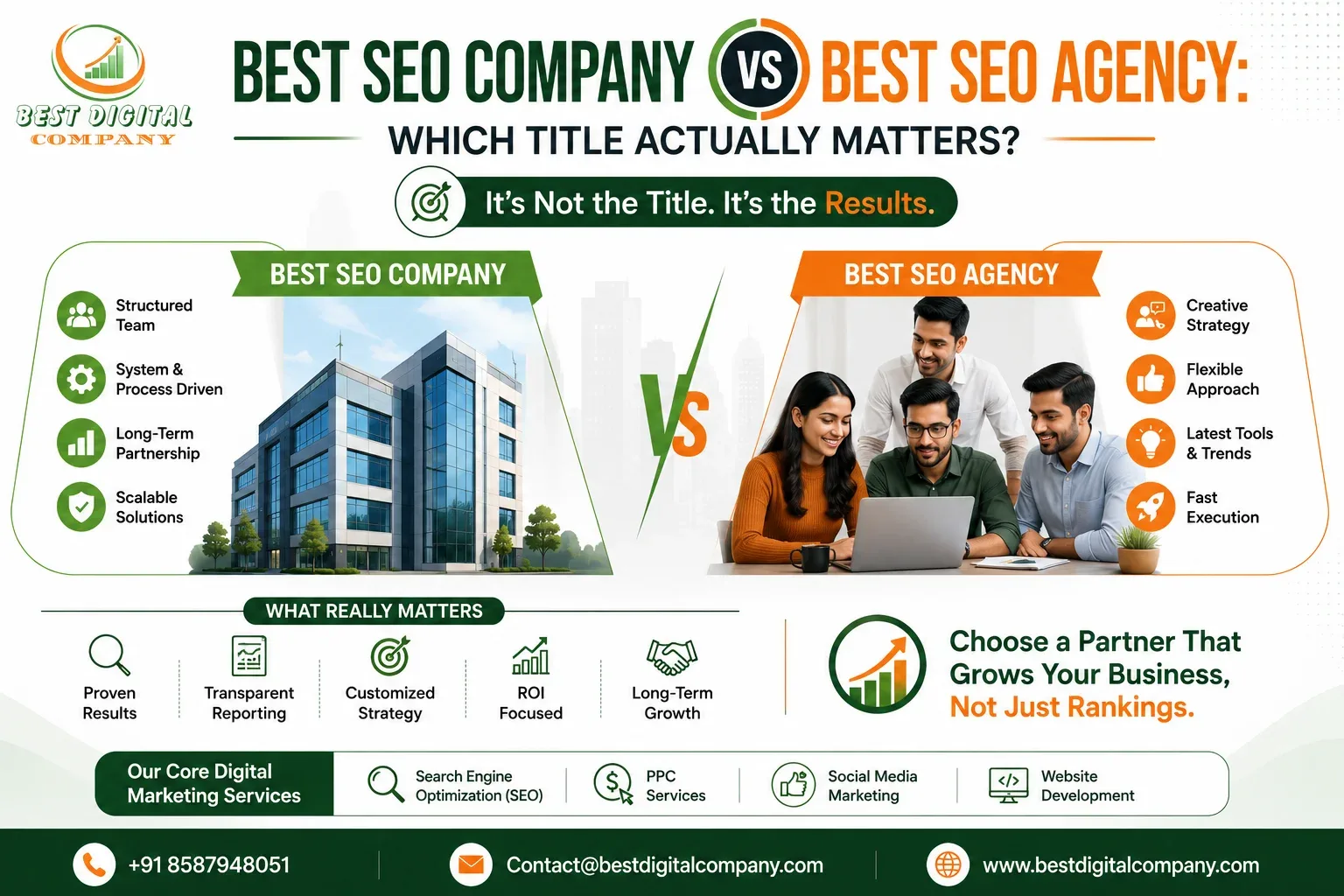
Short answer: not by itself. Longer answer: the title can hint at internal structure, but it’s not a reliable predictor.

Providers who lean on the word “company” sometimes emphasize process, documentation, and predictable deliverables think monthly reports, fixed scopes, and clear timelines. Providers who lean on “agency” sometimes emphasize creative strategy, campaign thinking, and closer collaboration with your marketing team. But these are tendencies, not rules. We’ve seen tightly-run “agencies” with better reporting discipline than some self-described “companies,” and we’ve seen the reverse just as often.

We covered this operational comparison in detail in SEO agency vs SEO company: is there really a difference worth a read if you want the nuts-and-bolts version. The short version for this article: judge the contract, the team you’ll actually work with, and the reporting cadence. Don’t judge the noun on the homepage.

Signs You are Looking at a Genuinely Strong SEO Partner, Not Just a Cheap Vendor

Price is usually the first filter people apply, and it is understandable budgets are real. But price alone tells you almost nothing about quality. Here are signals we’d actually trust, based on what tends to separate strong partners from ones that underdeliver:

  • They ask about your business before quoting a number. A provider that sends a price within minutes of your first message, without asking what you sell, who your customers are, or what “success” looks like for you, is pricing a generic package, not your situation.
  • They are upfront about timelines. Genuine search engine optimization work takes months to show compounding results. Anyone promising page-one rankings in two weeks is either exaggerating or planning to use tactics that risk a penalty later.
  • They can show you work for a business similar to yours. Not identical similar in scale and market. A provider that’s only ever worked with e-commerce brands might not have the right playbook for a local service business, and vice versa.
  • They explain content decisions, not just technical ones. Search visibility today depends heavily on whether your content actually answers what people are searching for. If a provider only talks about backlinks and meta tags and never mentions the quality or usefulness of your content, that’s a gap worth asking about.
  • Their own site practices what it preaches. If a provider’s website has SEO service in Delhi or similar pages that are genuinely well-structured, load fast, and read like they were written for humans first, that’s a small but honest signal about how they’ll treat your project.

How Experience and Real Expertise Separate a Strong Partner From the Rest

This is where the conversation moves past labels entirely. What actually protects your investment isn’t whether a provider calls itself a company or an agency. It is whether the people doing the work have genuine, demonstrable experience.

Ask direct questions: How long has this team been running search campaigns? What industries have they worked across? Who specifically will be handling your account a senior strategist or a junior executive learning on your budget? A provider that answers these questions clearly, and is willing to introduce you to the actual person managing your account, is operating with a level of transparency that self-titled “bests” rarely bother with.

We’ve built our own approach around this idea. You can read more about our background and how our team is structured on our About Us page. We’d rather a prospective client judge us on that than on any adjective in our name.

Trustworthiness also shows up in smaller, easy-to-check details: does the provider have a real, physical presence rather than just a domain name? Do they answer questions honestly, including telling you when something won’t work for your business? Do their past clients confirm what the case studies claim? None of this requires you to decode the difference between “company” and “agency” it just requires you to ask a few direct questions and pay attention to how honestly they’re answered.

Beyond Search Visibility: Why the Best Digital Partner Rarely Does Just One Thing

Here’s something that gets missed in the company-versus-agency debate: search visibility rarely operates in isolation anymore. A business that only improves its rankings but ignores everything else in its digital presence often plateaus quickly.

Paid visibility, for instance, works alongside organic growth rather than competing with it. If you’re comparing providers, it’s worth checking whether they also offer Pay Per Click management, and whether they can explain how the two strategies support each other instead of running as separate, disconnected efforts. We broke down what a paid campaign actually involves month to month in PPC services explained: what a performance marketing agency really does every month, and how to evaluate providers for that specific service in how to choose the best PPC company for your business.

The same logic applies to your social presence. Search rankings and social engagement influence each other more than most business owners realize brand searches, referral traffic, and content sharing all play a role. If audience engagement matters to your growth, it’s worth reading likes don’t pay the bills: how to pick a social media marketing agency that actually grows sales alongside your evaluation of anysocial media marketing provider.

And none of this matters if the website itself is slow, poorly structured, or hard to navigate. Rankings can only send visitors to a page that’s actually built to convert them. That is why website development is often the quiet foundation underneath every SEO conversation. We’ve written about this exact trade-off in website developer company or freelancer: an honest cost and risk comparison and in website development services: how to pick the best web designing company, both worth reading if your site needs work alongside your search strategy.

Red Flags: Titles That Sound Impressive but Mean Nothing

A few warning signs worth flagging, because they show up constantly in this industry:

  • Guaranteed rankings. No provider controls how search engines rank pages. Anyone promising a specific position by a specific date is either overpromising or planning shortcuts that could hurt your site later.
  • Vague reporting. If monthly updates are just screenshots of a dashboard with no explanation, you’re not getting a partner you are getting a subscription.
  • No mention of content quality. A provider fixated only on technical fixes and backlinks, with no plan for the actual words on your pages, is missing the part of the strategy that increasingly determines whether a page performs well at all.
  • Recycled proposals. If the strategy document they send you could apply to literally any business in any industry, it probably was written for exactly that purpose.
  • A portfolio with no verifiable clients. Case studies with blurred names, unnamed “confidential clients” across the board, or stock-photo testimonials deserve extra scrutiny.

None of these red flags have anything to do with whether the provider calls itself a company or an agency. They are about substance, and substance is genuinely checkable if you ask the right questions.

How to Actually Evaluate a Provider, Regardless of What They Call Themselves

If you are currently comparing options, here’s a practical sequence that tends to work better than searching for a title:

  1. List what you actually need. Is it purely organic visibility, or do you also need paid campaigns, social management, or a website rebuild? Clarity here prevents you from being upsold on services you don’t need.
  2. Ask for a strategy specific to your business, not a generic package. If they can’t produce one without weeks of “discovery calls” and payment upfront, be cautious.
  3. Request references, not just testimonials. A quick call with an existing client tells you more than any homepage badge.
  4. Clarify who does the actual work. Some providers sell you on senior expertise, then hand your account to someone with far less experience.
  5. Check their reporting sample. Ask to see an anonymized version of a monthly report before signing anything.
  6. Compare pricing structures honestly, using something like our breakdown in SEO services vs SEO packages: what should you actually pay for as a reference point for what reasonable inclusions look like.

This process takes an extra hour or two, but it protects a budget that will otherwise run for months before you find out whether it was working.

Our Take: Does the Title Actually Matter?

Honestly, no not in the way most people assume. The word on the homepage tells you how a provider wants to be perceived, not how they’ll actually perform. What matters is the evidence behind the claim: real client history, a documented process, honest communication about timelines, and a team willing to explain their thinking instead of hiding behind jargon.

If there’s one thing worth taking from this article, it’s this: stop searching for the “best” title and start searching for proof. Ask for it directly. Any provider confident in their own work will hand it over without hesitation.

Frequently Asked Questions

Is there an official difference between an SEO company and an SEO agency?

No. Neither term is regulated or legally defined. Businesses choose whichever word fits their branding, so the label alone doesn’t indicate size, quality, or specialization.

How can I tell if a provider genuinely deserves to be called the best in their field?

Look at documented case studies with real numbers, ask for client references you can actually contact, and request a strategy tailored to your business rather than a generic package. Providers confident in their work rarely hesitate to share this information.

Should I choose based on price or experience?

Experience should weigh more heavily. A cheaper option that lacks a clear process often costs more in the long run through wasted months, missed opportunities, or corrective work needed after ineffective tactics.

Does hiring one provider for search visibility, paid ads, and social media together make sense?

Often, yes. These channels influence each other, and a team that coordinates all three tends to produce more consistent results than juggling separate vendors who don’t communicate with each other.

How long does it typically take to see results from an SEO campaign?

Meaningful, sustainable improvement usually takes a few months, depending on the competitiveness of your industry and the starting condition of your website. Anyone promising results within days should be questioned carefully.

What is the single biggest mistake businesses make when hiring an SEO partner?

Choosing based on the lowest price or the most polished-sounding title, without asking to see how the provider actually works, reports progress, and adapts strategy to different types of businesses.


Looking for a team that’s more focused on results than on titles?

Get in touch with us and we will walk you through exactly how we’d approach your website no generic packages, no guarantees we can’t back up.

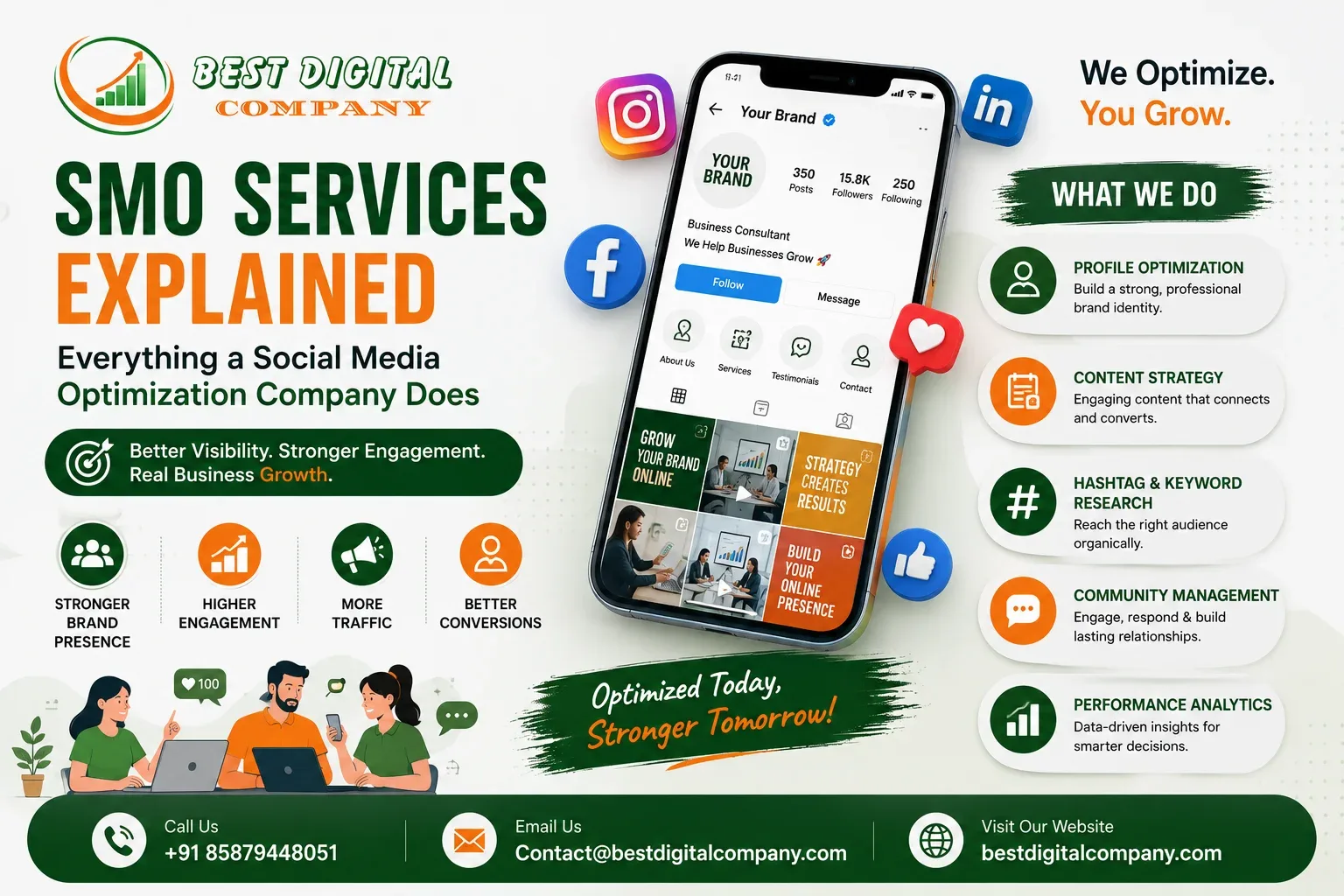
SMO Services Explained: What a Social Media Optimization Company Does

SMO Services Explained: Everything a Social Media Optimization Company Does

If you have ever asked a vendor “what exactly am I paying for?” after signing up for social media help, you are not alone. Most business owners know they need a presence on Instagram, Facebook, and LinkedIn, but very few actually understand what happens behind the scenes once they hire someone to manage it. The term gets thrown around loosely, invoices arrive every month, and yet the connection between the work being done and the leads coming in often stays fuzzy.

This guide breaks down exactly what an smo service includes, what a social media optimization company actually does day to day, and how to tell if the one you are paying is doing real work or just scheduling a few posts and calling it strategy.

What Is an SMO Service, Really?

SMO stands for Social Media Optimization. It is the process of improving your social profiles, content, and engagement so that your brand shows up more often, looks more credible, and converts more followers into actual customers. Unlike a one-off ad campaign, an smo service is an ongoing discipline. It touches your profile setup, content calendar, hashtag research, community replies, analytics, and the way your brand’s voice comes across across platforms.

People sometimes confuse this with paid social advertising, but the two are different. Optimization is about the organic health of your presence how discoverable, trustworthy, and engaging your profiles are on their own while advertising is about paying to push content in front of new audiences. A serious social media marketing plan usually blends both, but optimization is the foundation that makes the paid spend work harder.

Why Businesses Are Hiring a Social Media Optimization Company in 2026

A few years ago, most small businesses treated social media as a side task something the office intern handled between other jobs. That has changed. Buyers now research brands on Instagram and LinkedIn before they ever visit a website, and a profile that looks abandoned or inconsistent quietly costs trust before a single conversation happens.

This shift is why more owners are choosing to work with a dedicated social media optimization company instead of managing it internally. A few reasons keep coming up in client conversations:

  • Consistency is hard to maintain in-house. Posting drops off the moment someone gets busy, and gaps in activity are visible to anyone who checks your profile.
  • Platforms change constantly. Instagram’s algorithm, LinkedIn’s reach rules, and Facebook’s ad policies shift often enough that keeping up requires dedicated attention, not a spare hour on a Friday.
  • Buyers expect proof, not promises. Reviews, comments, and shared posts act as informal trust signals, and a team that manages this daily can shape those signals intentionally.
  • Competitors are already investing here. Once one player in an industry starts showing up consistently with useful content, the rest usually have to catch up.

None of this means social media replaces other channels. It works best alongside a strong Search Engine Optimization foundation and, where budget allows, targeted Pay Per Click campaigns that bring in traffic while your organic presence builds over time.

Core Tasks Every SMO Service Handles

Here is where the vague marketing language usually falls apart. A genuine smo service is not just “posting content.” It is a set of specific, repeatable tasks. Here’s what should actually be happening behind your account each month.

1. Profile and Bio Optimization

Every platform has fields most businesses fill in half-heartedly bio text, category tags, contact buttons, link-in-bio tools, keywords in the “about” section. A social media optimization company audits these first because an incomplete or poorly worded profile quietly loses potential customers before content even matters.

2. Content Planning and Calendar Management

Random posting rarely works. A proper content calendar maps out themes, formats (reels, carousels, static posts, stories), and posting times based on when your specific audience is actually active not generic “best time to post” advice copied from a blog.

3. Hashtag and Keyword Research

Just like websites rank on relevant search terms, social posts get discovered through the right mix of hashtags and on-platform keywords. This research changes by platform and by season, which is why it needs regular attention rather than a one-time list.

4. Community Management

Replying to comments, DMs, and mentions within a reasonable window is part of the job, not an afterthought. A brand that responds quickly and personally builds more trust than one with perfect graphics and silent comment sections.

5. Visual Consistency and Branding

Fonts, colors, templates, and tone need to feel recognizable across every post. This is where design work overlaps with your broader brand identity, and where a team familiar with your Website Development & Designing can keep your social presence and website visually aligned.

6. Analytics and Reporting

Follower counts alone tell you very little. A serious provider tracks reach, engagement rate, saves, shares, click-throughs to your website, and  most importantly which posts are actually driving inquiries or sales. Reports should connect activity to business outcomes, not just vanity numbers.

7. Competitor and Trend Monitoring

Watching what similar brands and industry trends are doing helps spot content gaps and format opportunities before they become oversaturated.

8. Platform-Specific Formatting

What works on LinkedIn rarely works the same way on Instagram, and a caption written for Facebook often needs trimming before it fits a Twitter/X post. Rather than copy-pasting one piece of content everywhere, a proper smo service reformats messaging, image dimensions, and even tone for each platform’s audience expectations. A carousel that performs well on Instagram might need to become a single strong graphic on LinkedIn, and a casual, funny caption that works on Instagram may need a more professional rewrite before it goes on LinkedIn.

9. Influencer and Collaboration Outreach

For many brands, a small, well-chosen set of collaborations a local micro-influencer, a complementary business, or a satisfied customer willing to share their experience does more for credibility than paid ads alone. Identifying the right partners, negotiating simple terms, and tracking whether a collaboration actually drove engagement or inquiries is often part of a broader social media optimization company’s scope, even if it isn’t advertised upfront.

How an SMO Service Fits Into a Bigger Marketing Picture

Social media rarely works well in isolation. The businesses that see the strongest results usually treat their smo service as one piece of a connected system rather than a standalone task.

For example, a well-optimized Instagram or LinkedIn profile can drive traffic to blog content, which supports your on-site Search Engine Optimization efforts by generating backlinks, shares, and signals of relevance. At the same time, retargeting audiences built through organic engagement often perform better in Pay Per Click campaigns, since the audience already has some familiarity with the brand.

This is also part of why Experience, Expertise, Authoritativeness, and Trustworthiness matters beyond just your website active, credible social profiles are one of the signals that reinforce a brand’s authority across the internet, not just on a single search engine.

What’s Included in Our SMO Packages

Every business has a different starting point, some need to build a presence from zero, others already have a following but no consistent strategy behind it. That’s why our SMO Packages are structured in tiers rather than offered as one-size-fits-all bundles.

Generally, a well-structured package includes:

  • A full audit of your existing profiles and competitor benchmarking
  • A monthly content calendar tailored to your industry and audience
  • Design and copywriting for each post, reel, or carousel
  • Hashtag and caption optimization for discoverability
  • Community management within agreed response times
  • Monthly performance reporting with clear, plain-language takeaways
  • Strategy adjustments based on what the data shows, not guesswork

If you are also investing in paid search or organic rankings, it’s worth reviewing our SEO Packages alongside your social strategy, since the two often share keyword research and audience insights that make both perform better together.

Signs You Need a Social Media Optimization Company

Not every business needs to outsource this work immediately, but certain signs usually point to the fact that doing it in-house isn’t scaling anymore:

  • Posting has become inconsistent — weeks go by with no activity, then a rush of five posts in a day
  • Engagement (comments, shares, saves) has been flat or declining for months
  • Nobody on the team has time to reply to DMs or comments promptly
  • Competitors are visibly more active and are getting more visible engagement
  • You have no clear reporting on what social media is actually contributing to leads or sales
  • Content still looks like a personal account rather than a brand

If two or more of these sound familiar, it is usually a sign that the current approach has hit its ceiling.

How to Choose the Right SMO Service Provider

Not every provider offering “social media management” is actually running a real optimization process. A few questions help separate genuine expertise from surface-level services:

Do they ask about your business goals before your content style? A provider who leads with “what colors do you like” instead of “who is your customer and what do you want them to do” is likely starting from the wrong end.

Can they show reporting, not just posts? Ask to see a sample report. If it only shows follower growth without any mention of engagement quality or website traffic, that’s a red flag.

Do they understand your industry’s platform mix? A B2B service business usually needs a different platform priority (often LinkedIn-first) than a retail brand that leans heavily on Instagram and Facebook.

Are they transparent about response times and processes? Community management only works if replies happen within hours, not days.

Do they connect social media to your broader digital presence? The strongest results usually come from providers who also understand search engine optimization and can see how social activity supports the rest of your online visibility, rather than treating it as a completely separate silo.

Common Mistakes Businesses Make With SMO

Even well-intentioned businesses fall into a few recurring traps:

Posting without a strategy. Content calendars built around “what should we post today” instead of clear themes tend to feel disjointed and rarely build momentum.

Ignoring comments and messages. A beautiful feed with unanswered questions in the comments sends the opposite of the intended signal.

Chasing follower counts instead of engagement. Ten thousand followers who never interact are worth far less than a thousand who comment, share, and buy.

Copying competitors instead of adapting to your own audience. What works for one brand’s tone and audience won’t automatically translate to another, even in the same industry.

Treating social media as separate from the rest of digital marketing. Businesses that keep their social team, their SEO efforts, and their PPC campaigns working in silos often see slower, less connected results than those who let the channels inform each other. For businesses trying to build early traction, it also helps to look at broader growth fundamentals. Our guide on getting a business’s first 100 customers covers a few of those overlapping strategies in more detail.

Measuring Whether Your SMO Service Is Actually Working

It’s worth setting expectations early: social media optimization is not usually a channel that produces overnight spikes. It compounds. The metrics worth watching monthly include:

  • Follower growth rate (steady, not explosive, is usually a healthier sign)
  • Engagement rate per post relative to follower count
  • Click-throughs from bio links or story links to your website
  • Direct messages or inquiries that mention social media as the source
  • Share of voice compared to two or three direct competitors

If a provider can’t explain these numbers in plain language during a monthly call, it’s a sign the reporting process needs to change a well-run SEO report philosophy of translating data into plain business language applies just as much to social media reporting.

What Does an SMO Service Typically Cost?

Pricing varies widely depending on scope the number of platforms managed, how many posts are produced weekly, whether paid boosting is included, and how much design or video work is involved. As a general guide:

  • Starter tier: Usually covers one or two platforms, a handful of posts per week, and basic monthly reporting. Suited to small local businesses just building a presence.
  • Growth tier: Adds more platforms, higher posting frequency, reels or short video content, and more detailed engagement tracking. This is where most established small-to-mid-sized businesses land.
  • Full-scale tier: Includes multi-platform management, influencer coordination, advanced analytics, and close integration with paid campaigns and website goals.

Rather than comparing providers purely on price per month, it’s worth comparing what’s actually delivered for that price number of deliverables, response time commitments, and reporting depth all matter more than the headline number. Our SMO Packages page breaks down what’s included at each tier so there are no surprises once the contract starts.

The Human Side of Social Media Optimization

It’s easy to reduce all of this to a checklist, but the businesses that get the most out of an smo service usually treat it as a relationship, not a vendor transaction. That means sharing real updates from the business a new product, a team milestone, a customer story rather than leaving the provider to invent content from nothing. It also means giving honest feedback when a post’s tone feels off, rather than assuming the team will guess what “feels right” for the brand.

The strongest results tend to come from a back-and-forth: the provider brings platform expertise and consistency, and the business brings the real, specific details that make content feel authentic rather than generic. Neither side can do it well alone.

Final Thoughts

An smo service isn’t about picking pretty templates or posting for the sake of staying active. Done properly, it’s a structured, ongoing process profile optimization, content strategy, community management, and reporting that ties back to real business results. A capable social media optimization company treats your social presence as part of a larger digital ecosystem, working alongside your website, your search visibility, and your paid campaigns rather than in isolation.

If your current social media efforts feel scattered, or if you’ve never actually seen a report that connects activity to leads, it might be time to have that conversation with a provider who can show their process clearly rather than just their post count.


Frequently Asked Questions

What does an SMO service actually include?

It typically includes profile optimization, a structured content calendar, graphic and caption creation, hashtag research, community management, and monthly performance reporting tied to business outcomes rather than just follower counts.

Is SMO the same as social media marketing?

Not exactly. SMO focuses on optimizing your organic presence profiles, content quality, and engagement while social media marketing can also include paid promotion and advertising campaigns built on top of that foundation.

How long does it take to see results from SMO?

Most businesses start noticing steadier engagement and follower quality within two to three months, though meaningful lead generation usually builds over four to six months of consistent work.

Do I need SMO if I already run paid social ads?

Yes. Paid ads bring in visibility, but an optimized profile and consistent content give visitors a reason to trust and follow your brand once the ad has done its job of getting them there.

Which platforms should a social media optimization company focus on?

It depends on your industry and audience. B2B businesses often prioritize LinkedIn, while retail and consumer brands typically lean on Instagram and Facebook. A good provider will base this on your actual customer behavior, not a default template.

How do I know if my current SMO provider is doing a good job?

Ask for a monthly report that connects activity (posts, engagement) to outcomes (traffic, inquiries, sales). If the reporting only shows follower growth with no deeper insight, it’s worth reassessing the relationship.

SMO Company vs SMO Agency: Which One Fits Your Business?

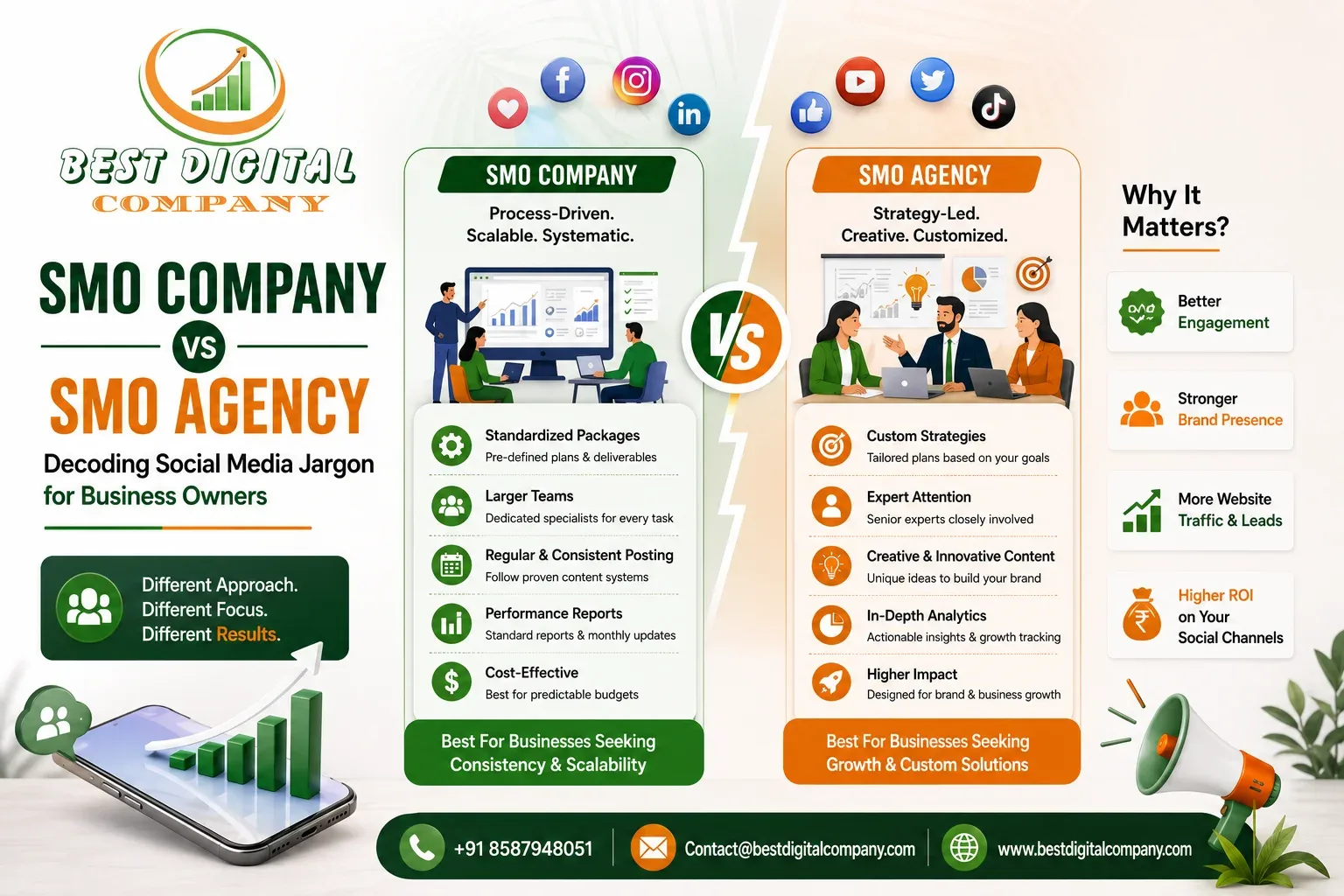
SMO Company vs SMO Agency: Decoding Social Media Jargon for Business Owners

If you have ever sat through a sales call where someone rattled off “SMO,” “SMM,” “organic reach,” and “engagement funnel” in the same breath, you know the feeling. You nodded along, said “sounds good,” and hung up still unsure what you were actually about to pay for. You are not alone. Almost every business owner we speak with has, at some point, confused an SMOcompany with an SMO agency and assumed the two terms meant the exact same thing, only to realize later that the kind of partner they hired shaped everything from their monthly bill to the results they saw on Instagram and LinkedIn.

The truth is, these two terms are often used interchangeably in casual conversation, but in practice, they can point to very different working styles, pricing structures, and levels of hands-on attention. Getting this distinction right before you sign a contract can save you months of frustration and a fair amount of money. This guide breaks down exactly what separates an SMO company from an SMO agency, when each one makes sense for your business, and what questions to ask before you commit your marketing budget to either.

What Does an SMO Company Actually Do?

Social Media Optimization, or SMO, is the practice of improving a brand’s presence across social platforms so that it earns more visibility, engagement, and ultimately, business. An SMO company typically refers to a business built around process, scale, and repeatable systems. Think of it as a structured operation with dedicated teams for content creation, scheduling, analytics, and community management, often working across dozens of clients at once using established workflows.

Because an SMO company operates at scale, it usually offers clearly defined packages: a certain number of posts per week, a set number of platforms, monthly reporting, and standardized pricing tiers. This structure works well for businesses that want predictable costs and a proven system rather than a highly customized, boutique-style approach. If you have looked at packages like the ones listed on our SMO packages page, you have probably noticed this tiered structure already, where each plan bundles a specific mix of deliverables so you know exactly what you are getting each month.

The upside of working with an SMO company is consistency. You know what to expect, the reporting is standardized, and the systems in place mean fewer surprises. The trade-off is that you may get slightly less individual strategic attention compared to a smaller, more specialized setup, simply because the team is managing a larger volume of accounts.

What Is an SMO Agency, and How Is It Different?

An SMO agency, on the other hand, tends to lean more toward strategy, creativity, and a closer working relationship with each client. Agencies are often smaller, more nimble teams that position themselves as an extension of your in-house marketing function rather than a vendor delivering a fixed package. They spend more time understanding your brand voice, your competitors, your audience psychology, and then build a custom content calendar and campaign strategy around those specifics.

This does not mean an SMO agency skips process entirely. Good agencies still track metrics, still report on performance, and still follow a plan. But the emphasis shifts from “here is what’s included in your package” to “here is the strategy we built specifically for your business, and here is why.” You will usually see this reflected in how an agency talks about your brand: less about post counts, more about audience behavior, content pillars, and campaign goals tied to actual business outcomes like leads and sales, not just likes and followers.

If your business has a niche audience, a complex product, or a story that needs careful positioning, the agency model’s flexibility can be a genuine advantage. It comes at a cost, though. Because the work is more customized, agency retainers can run higher than standardized company packages, and turnaround times may vary depending on how deep the strategy work goes.

SMO Company vs SMO Agency: Key Differences Business Owners Should Know

Here is a side-by-side look that should make the distinction easier to hold in your head the next time you are comparing proposals.

FactorSMO CompanySMO Agency
Working styleProcess-driven, scalableStrategy-driven, customized
PricingTiered, fixed packagesRetainer, often variable
Client relationshipStructured account managementCloser, consultative partnership
Best suited forPredictable, repeatable social presenceComplex brands needing tailored positioning
ReportingStandardized templatesOften deeper, goal-specific insights
FlexibilityLower, based on package tierHigher, adjusts as strategy evolves

Neither model is objectively better. A well-run SMO company can deliver excellent, consistent results for a business that just needs steady, professional social media management. A skilled SMO agency can unlock significantly more nuanced growth for a brand that needs its social presence tightly woven into a broader marketing narrative. The right choice depends entirely on what your business needs right now, not on which label sounds more impressive on a proposal document.

When Should You Hire an SMO Company Instead of an SMO Agency?

If your priority is getting a professional, consistent social media presence up and running without reinventing the wheel every month, a company-style setup usually fits better. This works particularly well for:

  • Small and mid-sized businesses that need reliable posting, basic community management, and clean monthly reporting without a heavy strategic overhaul.
  • Businesses with a limited marketing budget that need cost predictability more than deep customization.
  • Companies that already have a clear brand identity and just need someone to execute consistently across platforms.
  • Owners who prefer a straightforward package over ongoing strategy discussions.

This is also a good fit if social media is one piece of a larger marketing puzzle you are managing alongside SEO, paid ads, or website development, and you would rather have one steady, dependable partner handling execution while you focus on the bigger picture. If that sounds like your situation, our Social Media Marketing services page walks through exactly how a structured approach like this comes together month to month.

When an SMO Agency Makes More Sense

On the flip side, an agency-style partner tends to be worth the higher investment when:

  • Your industry is competitive or highly niche, and generic content simply will not cut through the noise.
  • You are launching a new brand or repositioning an existing one, and your social presence needs to be built around a specific narrative from scratch.
  • You need social media tightly integrated with campaigns, product launches, or seasonal promotions rather than run as a standalone activity.
  • Your business sells a considered purchase, something people research before buying, where trust-building content matters more than volume.

If you have already read our earlier piece on how to pick a social media marketing agency that actually grows sales, you will recognize a similar theme here: the agency model earns its higher price tag only when it is actually translating engagement into pipeline, not just racking up likes that never convert into paying customers.

Red Flags to Avoid When Choosing Either

Regardless of which model you lean toward, certain warning signs should make you pause before signing anything.

Vague deliverables. If a proposal says “social media management” without specifying platforms, post frequency, content types, or reporting cadence, ask for clarity before you commit. This applies equally whether you are evaluating a structured company package or a custom agency retainer.

Vanity-metric obsession. Be cautious of any partner, company or agency, that leads every conversation with follower counts and likes rather than engagement quality, click-throughs, or lead generation. Growth on paper means little if it does not move your business forward.

No content ownership clarity. Ask upfront who owns the creative assets, captions, and account access once the engagement ends. This detail gets overlooked constantly and causes real headaches later.

Cookie-cutter strategy pitched as “custom.” If an agency claims full customization but their proposal reads almost identically to what a friend in a completely different industry received, that is worth questioning.

No connection to business goals. A good SMO partner, whether structured as a company or an agency, should be able to explain how their work supports actual outcomes: inquiries, bookings, sales, or brand recall that shows up in your bottom line, not just a busier feed.

How Social Media Optimization Fits Into Your Broader Digital Marketing Strategy

One thing that often gets lost in the SMO company versus SMO agency debate is that social media rarely works in isolation. The businesses that get the best return on their social spend usually treat it as one connected piece of a larger digital marketing system rather than an activity that lives on its own island.

For instance, content that performs well on social platforms often benefits from the same keyword and audience research used in search engine optimization, since understanding what your audience is searching for helps shape what they will actually stop scrolling for. Similarly, high-performing organic posts can be repurposed as pay-per-click creative once you know which messages resonate, stretching your ad budget further instead of starting from a blank page every campaign. And none of this matters much if the traffic your social presence generates lands on a slow, outdated website; a strong website development and design foundation is what actually converts that social traffic into inquiries and sales.

This is also why it helps to think about your first months of visibility holistically. If you are a newer business still building your customer base, our guide on how small businesses can get their first 100 customers covers how social presence, search visibility, and paid campaigns typically need to work together rather than being treated as separate line items competing for budget.

Questions to Ask Before You Sign a Contract

Whether you are leaning toward a company or an agency, walk into the conversation with these questions ready:

  1. What exactly is included each month? Get specifics on post counts, platforms, content types (reels, carousels, static posts), and whether paid boosting is part of the package or billed separately.
  2. Who creates the content, and who approves it before it goes live? Understand the review process so nothing gets published without your sign-off.
  3. How is success measured, and how often will I see reports? Push for metrics tied to business impact, not just impressions.
  4. What happens if the strategy is not working after 60 or 90 days? A confident partner will have a clear answer, not a vague reassurance.
  5. Can I see examples of similar work in my industry? This helps you gauge whether you are getting a templated approach or genuine expertise.
  6. How is account ownership handled if we part ways? Get this in writing before day one, not after a dispute arises.

These same questions apply beyond social media, too. If you are also evaluating search partners around the same time, the framework in our post on choosing the best SEO company mirrors much of this thinking, since the underlying goal, avoiding vague promises and demanding measurable accountability, stays the same across every digital marketing decision you make.

Why Credibility and Transparency Matter More Than the Label

At the end of the day, whether a business calls itself an SMO company or an SMO agency matters far less than how transparently they operate and how consistently they deliver. A trustworthy partner will walk you through their process, show you real examples of past work, explain their reporting in plain language, and set expectations honestly rather than promising overnight virality. That kind of transparency is also a big part of what search engines increasingly reward when brands publish content about their own services, since demonstrated expertise and honest communication build the kind of trust that both customers and algorithms recognize. If you want a deeper look at how that trust factor plays into visibility, our earlier piece on improving experience, expertise, authority, and trust for better rankings breaks down exactly why credibility has become such a central part of how businesses get discovered online.

At Best Digital Company, we work with businesses across Delhi and beyond, offering both the structured reliability of packaged social media management and the deeper, campaign-specific strategy work that a more consultative, agency-style engagement requires. Rather than forcing every client into one model, we start by understanding what stage your business is at and what social media actually needs to accomplish for you, then build the engagement around that answer instead of a one-size-fits-all template.

Making the Right Choice for Your Business

There is no universally correct answer to the SMO company versus SMO agency question. A growing local business that needs dependable, professional posting and community management every month will likely get more value, and better cost predictability, from a company-style package. A brand entering a competitive market, launching something new, or trying to build a distinct voice around a considered purchase will often benefit more from the closer strategic partnership an agency model provides.

What matters most is being honest with yourself about your current stage, your budget, and how much hands-on strategy your business genuinely needs right now. Ask direct questions, request real examples, and choose a partner, whichever label they use, that measures success the same way you do: by business results, not just by how busy your feed looks.


Frequently Asked Questions

Is an SMO company cheaper than an SMO agency?

Generally, yes. Because an SMO company operates on standardized packages and repeatable processes across many clients, pricing tends to be more predictable and often more affordable than a custom agency retainer, which reflects the additional strategy and creative work involved.

Can a small business benefit from working with an SMO agency instead of an SMO company?

Absolutely, especially if the business operates in a competitive niche or needs help defining its brand voice from the ground up. The higher investment can pay off when strategic positioning matters as much as consistent posting.

Do SMO companies also handle paid social media advertising?

Many do, though it is often offered as an add-on rather than a default inclusion. Always confirm whether paid promotion, boosted posts, or ad management are part of your package or billed separately.

How long does it take to see results from social media optimization?

Most businesses start noticing meaningful engagement and audience growth within two to three months, though measurable business outcomes like leads or sales typically take longer and depend heavily on your industry, content quality, and consistency.

Should social media optimization be handled by the same team managing my SEO and website?

It does not have to be, but there are real advantages when it is. Coordinated messaging across social, search, and your website tends to perform better than disconnected efforts managed by separate, uncoordinated teams.

What is the biggest mistake business owners make when choosing between the two?

Choosing based on price or brand name alone, without asking what is actually included, how success will be measured, and whether the partner’s past work matches your industry and goals.


Still unsure whether a structured SMO company package or a custom SMO agency strategy is the right fit for your business? Get in touch with our team for a straightforward conversation about where your social media presence stands today and what it will actually take to move the needle.

Social Media Marketing Company vs In-House Team: Which One Actually Grows Your Brand?

Social Media Marketing Company vs In-House Team: Which One Actually Grows Your Brand?

If you have sat in a Monday meeting arguing about whether to hire a social media manager or sign with an agency, you already know this decision is not as simple as it looks on paper. Both options promise the same outcome more visibility, more engagement, more customers yet they get there in very different ways, at very different costs, and with very different risks.

This is one of the most common questions we hear from founders and marketing heads: should we build our own team, or bring in a specialist? There is no single right answer for every business, but there is a right answer for your business, and by the end of this article you will know how to find it.

We will break down what each option really involves, compare them honestly on cost, speed, expertise, and control, and help you decide whether a social media marketing company or an internal team is the smarter investment for where your brand stands today.

What Does a Social Media Marketing Company Actually Do?

A lot of business owners picture a social media marketing company as “the people who post on Instagram.” That is a small fraction of the job. A capable agency typically handles:

  • Platform strategy — deciding which channels actually matter for your audience instead of trying to be everywhere at once
  • Content planning, design, copywriting, and video production
  • Community management, comments, and direct messages
  • Paid social campaigns and budget optimization
  • Analytics, reporting, and monthly strategy adjustments
  • Trend monitoring so your brand does not get left behind when platforms change their algorithms

Agencies work across many clients and industries at once, which means they are constantly testing what works and what does not. When one client’s campaign teaches them something new, every other client benefits from that learning too. This is the real advantage behind social media marketing services you are not paying for one person’s opinion, you are paying for a system built on hundreds of campaigns.

If you want to see how this looks in practice, our own social media marketing service page walks through the exact process we follow for clients, from audience research to paid promotion.

What an In-House Team Brings to the Table

An in-house team is built differently. Instead of one specialist juggling many brands, you get one or more people who live and breathe your brand every single day. The benefits here are real:

  • Deep product knowledge that takes months to build with an outside partner
  • Instant access for approvals, shoots, or last-minute changes
  • Full alignment with sales, customer service, and leadership
  • A team that grows with the company culture instead of treating you as one account among many

The catch is that social media today is not a one-person job anymore. A single hire is rarely a strategist, designer, copywriter, video editor, paid ads specialist, and analyst all at once. Most in-house setups either hire multiple specialists (which gets expensive fast) or ask one generalist to wear every hat (which usually shows in the quality of output within a few months).

Social Media Marketing Company vs In-House Team: Cost Comparison

This is usually where the decision actually gets made, so let’s look at real numbers instead of vague statements.

Hiring in-house for even a lean setup,  one social media manager, part-time design support, and occasional ad spend management typically means salaries, employee benefits, software subscriptions (scheduling tools, design tools, analytics tools), training time, and the cost of a wrong hire if it does not work out. Add a second or third specialist for video, paid ads, or copywriting, and the monthly cost climbs quickly, often before you have posted a single piece of content.

Working with a social media marketing company usually means one predictable monthly fee that already includes strategy, content creation, scheduling tools, reporting, and a full team of specialists working behind the scenes. There is no hiring cost, no training period, and no software stack to manage separately. You can review exactly what this looks like on our SMO packages page, where pricing and deliverables are laid out clearly instead of hidden behind a sales call.

For early-stage and mid-sized businesses, outsourcing almost always wins on pure cost efficiency. For large enterprises with big budgets and complex, multi-brand needs, a hybrid model (which we cover below) often makes more financial sense.

Speed, Skills, and Tools: Where Social Media Marketing Services Win

Social media does not wait for anyone. Algorithms shift, new formats appear, and audience behavior changes faster than most internal teams can keep up with while also handling their day-to-day workload.

This is where social media marketing services genuinely pull ahead:

Access to a full team, not one person. When you hire an agency, you are not hiring an individual — you are hiring a strategist, a designer, a copywriter, a video editor, and an ads specialist, all working together on your account.

Tools you would otherwise pay for separately. Scheduling platforms, design software, analytics dashboards, and reporting tools all cost money individually. Agencies already own these, and the cost is spread across their client base.

Faster adaptation to platform changes. Because agencies manage dozens of accounts, they notice algorithm shifts and trend changes days or weeks before a single in-house employee monitoring one brand would catch them.

No hiring risk. If a freelancer or new hire does not work out, you start the search over. With an agency, if one team member leaves, the client relationship and institutional knowledge stay intact because the agency itself holds the account, not one individual.

If you are already investing in other channels like paid search, it is worth checking whether your traffic strategy is aligned. Our earlier guide on how to choose the best SEO company covers similar red flags to watch for when evaluating any outsourced marketing partner, not just social media.

When an In-House Team Makes More Sense

Outsourcing is not automatically the right answer for every brand, and a good agency should tell you that honestly instead of selling you services you do not need.

An in-house team tends to make more sense when:

  • Your brand requires daily, real-time engagement — think news outlets, live event brands, or customer-support-heavy accounts
  • You have the budget to hire a genuinely skilled, multi-disciplinary team rather than a single generalist
  • Your product or industry is so specialized that outside teams would need months to reach the same depth of knowledge
  • Social media is core to your business model, not a supporting channel

If your business fits here, the smartest move is often still to bring in outside expertise for training, strategy audits, or paid campaign management, while your internal team handles day-to-day execution. That is where the next model comes in.

The Hybrid Model: Best of Both Worlds

Many growing brands do not choose one or the other — they combine both. A common structure looks like this:

  • An internal team member manages day-to-day posting, community replies, and brand voice
  • An outside social media marketing company handles strategy, paid campaigns, content batches, analytics, and periodic audits
  • Both sides share a monthly reporting rhythm so nothing falls through the cracks

This setup gives you the responsiveness of an internal presence with the depth and tools of a specialist partner, often at a lower total cost than a fully staffed internal department. It is a model we set up regularly for clients who have outgrown a single social media hire but are not ready for a five-person internal team.

How to Choose the Right Social Media Marketing Company

If you decide outsourcing is the better fit, choosing the right partner matters just as much as the decision to outsource in the first place. Here is what to actually check before signing anything:

Ask for real case studies, not just follower counts. Growth in followers means very little if it does not translate into inquiries, sales, or measurable engagement.

Check how they report results. A trustworthy partner shows you clear numbers in plain language, not a wall of jargon designed to look impressive. We wrote a full breakdown of this in our guide on creating an SEO report clients actually understand, and the same principle applies directly to social media reporting.

Understand who actually works on your account. Some agencies hand new clients to junior staff while senior strategists only appear in the sales pitch. Ask directly who will be managing your content day to day.

Look for transparency around EEAT and authentic content. Google and audiences alike now reward brands that show real experience and expertise rather than generic, templated posts. Our article on improving EEAT for better rankings explains why authenticity has become a ranking and trust factor, not just a nice-to-have.

Avoid vague monthly retainers with no defined deliverables. A clear scope of work protects both sides and sets honest expectations from day one.

We covered many of these same warning signs in more detail in our earlier post, Likes Don’t Pay the Bills: How to Pick a Social Media Marketing Agency That Actually Grows Sales, which is worth reading alongside this one if you are actively comparing agencies right now.

Real Signs Your Brand Needs Social Media Marketing Services

Sometimes the decision becomes obvious once you recognize the pattern. It is probably time to bring in outside help if:

  • Your posting has become inconsistent because whoever manages it also has five other jobs
  • Engagement has been flat or declining for months with no clear explanation
  • You have never run a properly structured paid social campaign, only boosted posts
  • Your competitors are visibly more active, more polished, and growing faster online
  • Nobody on your team can explain what your last campaign actually achieved in numbers

If two or more of these sound familiar, that is usually a sign your business has outgrown whatever informal setup got you this far. Brands at this stage often see the fastest turnaround, since the groundwork already exists , it just needs a structured strategy behind it. This mirrors what we found while researching how small businesses get their first 100 customers, where consistent, strategic social presence came up again and again as a growth driver, not just a branding exercise.

So, Which One Actually Grows Your Brand?

Here is the honest answer: neither option is universally better. A social media marketing company wins on cost efficiency, speed, tools, and access to a full team of specialists, which is why it is usually the smarter starting point for small and mid-sized brands. An in-house team wins on daily responsiveness and deep product knowledge, which matters more for large, complex, or highly specialized businesses.

What actually grows a brand is not the label on the org chart ,it is consistency, strategy grounded in real data, and content that reflects genuine expertise rather than guesswork. Whichever route you choose, make sure someone is asking the hard questions: What are we trying to achieve? How will we know if it is working? And who is actually accountable for the results?

If you are still weighing the decision, it often helps to get an outside opinion on where your current setup stands before committing budget either way. You can see our full range of social media marketing services, along with transparent pricing, on our social media marketing page, or reach out to our team for a straightforward audit of what is and is not working for your brand right now.


FAQ

Is a social media marketing company more expensive than hiring in-house?

Usually not. A single in-house hire rarely covers strategy, design, copywriting, paid ads, and analytics all at once. Once you add the salaries, tools, and training needed to cover all of that internally, most small and mid-sized businesses find that outsourced social media marketing services cost less for a comparable often better  level of output.

How long does it take to see results from a social media marketing company?

Most brands start seeing measurable engagement improvements within four to eight weeks, with stronger lead or sales impact typically visible around the three-month mark, once content, targeting, and paid campaigns have had time to be tested and refined.

Can a social media marketing company work alongside our existing in-house team?

Yes, and this hybrid setup is increasingly common. An internal team member can manage daily posting and community replies while an outside partner handles strategy, paid campaigns, and reporting, giving you both responsiveness and specialist expertise.

What should I look for before signing with a social media marketing company?

Ask for real case studies tied to business outcomes, clarity on who will manage your account day to day, transparent monthly reporting, and a defined scope of deliverables rather than a vague retainer.

Do small businesses actually need social media marketing services, or can they manage it themselves?

It depends on bandwidth and goals. If posting is consistent, results are trackable, and someone has the time to do it properly, self-management can work early on. Once growth stalls or the workload competes with running the actual business, structured social media marketing services usually deliver faster, more measurable growth.

Does switching from in-house to an agency (or vice versa) hurt existing social media growth?

Not if the transition is planned properly. A good agency will review your existing content, audience data, and brand voice before making changes, so continuity is maintained rather than starting from zero.

Best Social Media Marketing Agency Guide

Likes Don’t Pay the Bills: How to Pick a Social Media Marketing Agency That Actually Grows Sales

If you have ever typed “social media marketing company near me” into Google at midnight after another week of posting into silence, you are not alone. Almost every business owner we talk to has lived through the same story: someone on the team posts a few reels, boosts a post with ₹500, waits, and nothing happens. Followers stay flat. Enquiries do not come in. Eventually someone says, “maybe we need an agency,” and the search begins.

This guide is for that moment. We are not going to give you a fluffy definition of social media marketing. We are going to walk you through what a real social media marketing company actually does, how to separate a genuine social media marketing agency from someone who just schedules posts, and what to expect once you hire the best social media marketing agency for your business. By the end, you will know exactly what questions to ask before you sign a contract with any social media agency.

What Does a Social Media Marketing Company Actually Do?

A lot of business owners assume social media management is just “posting content.” That is a small piece of a much bigger job. A proper social media marketing company handles strategy, content planning, design, copywriting, scheduling, community management, paid promotion, and reporting all working toward one goal: turning followers into enquiries and enquiries into customers.

Here is what that actually looks like month to month:

  • Researching your audience and competitors before a single post is designed
  • Building a content calendar tied to your business goals, not random trends
  • Writing captions that sound like a person, not a template
  • Designing creatives that match your brand, not generic stock templates
  • Running and optimizing paid campaigns on Meta, Instagram, and LinkedIn
  • Responding to comments and messages so leads do not go cold
  • Reporting on what actually moved the needle, not just vanity likes

If an agency’s pitch stops at “we will post 3 times a week,” that is content scheduling, not marketing. A real agency ties every post back to visibility, trust, and leads, the same way we approach it with the social media marketing services we run for our own clients.

Why Every Business Needs a Social Media Marketing Agency in 2026

Five years ago, social media was optional for a lot of businesses. That is not true anymore. In 2026, a customer researching your business will check your Instagram or LinkedIn before they check your website. If your last post is from eight months ago, that silently tells them you might not be active, reliable, or even still in business even if none of that is true.

A social media marketing agency solves three problems most business owners cannot solve on their own:

  1. Time. Running a business and running a content calendar at the same time rarely works. Something slips, and it is usually social media.
  2. Consistency. Algorithms reward accounts that post steadily, not accounts that post 15 times in a week and then disappear for a month.
  3. Strategy. Posting without a plan gets likes. Posting with a plan gets enquiries. That difference is the entire value of hiring professionals.

This is the same reason businesses invest in structured growth instead of guesswork, something we have written about before in how small businesses can get their first 100 customers. Social presence is one of the fastest, most affordable ways to get in front of those first customers.

Social Media Marketing Services vs SMO Services: What’s the Difference

This confuses a lot of people, so let’s clear it up plainly.

Social media marketing services cover the full picture: strategy, content, paid ads, influencer outreach, community management, and performance tracking across platforms like Instagram, Facebook, LinkedIn, and Pinterest. It is a growth function.

Smo service, short for social media optimization, is more focused. It is about optimizing your profiles, content, hashtags, posting times, and engagement patterns so your organic reach improves without paid spend. Think of it as the “on-page SEO” of social media — cleaning up and structuring what you already have so it performs better.

A well-run smo agency usually folds SMO into the broader marketing plan rather than treating it as a separate service. If you’re comparing quotes and one only offers profile optimization while another offers a complete strategy including paid promotion, you are not comparing the same thing, even if both call themselves an SMO company.

How to Spot the Best Social Media Marketing Agency (A Practical Checklist)

There is no shortage of freelancers and agencies claiming to be the best social media marketing agency in your city. Claims are cheap. Here is what actually separates a serious agency from a risky one.

1. They ask about your business before talking about packages

If the first conversation is entirely about pricing tiers and follower counts, that is a red flag. A good agency asks about your customers, your sales cycle, your competitors, and your goals before recommending anything.

2. They show you real, verifiable work

Ask for actual client handles or case studies, not just screenshots of engagement numbers. Anyone can screenshot a chart. Real work can be checked.

3. They explain strategy in plain language

If you ask why they are recommending Instagram over LinkedIn for your business and the answer is vague, that is a problem. A capable social media agency should be able to explain their reasoning the way we explain SEO reasoning in our guide on how to choose the best SEO company with logic, not buzzwords.

4. They set expectations honestly

Anyone promising “10,000 followers in 30 days” for a small local business is either exaggerating or planning to use fake followers. Genuine growth takes weeks to show trends and months to compound.

5. They report on outcomes, not just activity

Posts published and stories uploaded are activity. Enquiries, website clicks, saves, shares, and message conversations are outcomes. The best social media marketing agency reports on both, but leads with the second.

What to Expect From a Professional SMO Company

Once you hire a proper Smo company, the first 30 to 60 days usually look like this:

Week 1–2: Audit and strategy. Your existing profiles, content, competitors, and audience are studied before anything new is posted. This is also when goals get defined clearly — brand awareness, leads, or both.

Week 3–4: Content system setup. A content calendar, brand tone, visual templates, and posting schedule are built. This is where an SMO agency earns its fee; a clear system prevents the random, inconsistent posting that got you here in the first place.

Month 2 onward: Execution and optimization. Content goes live consistently, engagement is monitored daily, and paid campaigns (if part of the package) are tested and refined based on real data, not guesswork.

Throughout this process, a trustworthy agency documents decisions and shares results transparently, the same principle we apply across every service, which is why building trust and credibility matters so much, something we broke down in detail in how to improve trust signals for better rankings. The same idea applies to social proof: consistency and honesty build authority faster than shortcuts ever will.

Signs You Need to Switch Your Social Media Agency

Sometimes the issue is not social media itself, it is who is running it. Watch for these warning signs:

  • You cannot get a straight answer when you ask what results your spend has produced
  • Content looks identical to what they post for other clients in unrelated industries
  • Engagement is high, but enquiries and website traffic have not moved at all
  • You have not seen a report in over a month
  • Every suggestion is “post more,” with no explanation of what to post or why

If two or more of these sound familiar, it may be time to look elsewhere. Switching is not a failure on your part plenty of businesses go through one or two agencies before finding the right fit.

How Social Media Marketing Services Work at Best Digital Company

We built our approach around one idea: social media should feel like an extension of your sales process, not a separate island. When businesses come to us, our social media marketing services typically include:

  • Platform strategy based on where your actual customers spend time
  • Content creation — captions, creatives, reels, and carousels — built around your brand voice
  • Paid promotion planning for faster, targeted reach
  • Community management so no comment or DM goes unanswered
  • Monthly reporting that ties activity back to real business outcomes

We also pair this with structured, budget-friendly options through our SMO packages, so businesses of different sizes can start with a plan that fits where they are today and scale it as results come in.

Because social presence rarely works in isolation, we often combine it with search engine optimization and pay-per-click campaigns, so a customer who discovers you on Instagram can also find you easily when they search for you on Google a week later.

Common Mistakes Businesses Make When Hiring a Social Media Marketing Company

Even good businesses make avoidable mistakes here. The most common ones we see:

Chasing the cheapest quote. A ₹3,000-a-month package usually means templated content and no real strategy. You often end up paying twice once for the cheap package, again for the agency that fixes it later.

Judging success by follower count alone. Ten thousand followers who never enquire are worth less than 800 followers who trust your brand and message you regularly.

Expecting instant results. Social media compounds. Month one usually looks quiet. Month four is usually where trends become visible, assuming the strategy is sound.

Not defining what “success” means before starting. If you and your agency have not agreed on whether success means leads, sales, brand awareness, or all three, you will both be judging performance by different, unspoken standards.

Handing over the account and disappearing. The businesses that get the most out of a social media marketing agency stay involved approving content direction, sharing product updates, and giving feedback on what customers are actually asking about.

How Social Media Optimization Ties Into Your Overall Growth Strategy

Social media rarely works well as a standalone effort. The businesses that grow fastest treat their social media optimization company work as one piece of a larger, connected system. A customer might first see you on Instagram, later search for your business name on Google, click through to your website, and only then decide to call. If your website is slow, outdated, or hard to navigate at that final step, all the work your social team put in gets wasted.

That is why it is worth pairing social growth with a website that can actually convert visitors, something covered in our web development services, and with local visibility efforts like the ones outlined in our local SEO checklist for small businesses. Social media brings people in the door. Everything else determines whether they stay.

Final Thoughts

Choosing the right partner for your brand’s social presence is less about who has the flashiest portfolio and more about who takes the time to understand your business before making promises. Whether you are searching for a Smo agency, comparing social media marketing services, or simply trying to figure out why your current posting routine is not producing enquiries, the fundamentals stay the same: clear strategy, honest reporting, and consistency over time.

If you would like a straightforward audit of where your social presence stands today, our team is happy to walk you through it no jargon, no inflated promises, just a clear look at what is working and what is not.


Frequently Asked Questions

What does a social media marketing company actually charge in India?


Pricing varies widely based on the number of platforms, content volume, and whether paid promotion is included. Basic packages often start in the low thousands per month, while full-service plans with paid campaigns, reels production, and dedicated account management cost more. It is worth comparing what is actually included rather than the number alone.

How long does it take to see results from a social media marketing agency?


Most businesses start seeing engagement trends within four to six weeks and measurable enquiry growth within two to three months. Timelines depend on your industry, starting point, and whether paid promotion is part of the plan.

Is SMO the same as social media marketing?


Not exactly. SMO (social media optimization) focuses on improving your existing profiles and content for better organic reach. Social media marketing is the broader function that includes SMO along with strategy, paid promotion, and content creation from scratch.

Which platforms should my business focus on first?


It depends on where your customers actually spend time. A B2B service business often gets more traction on LinkedIn, while a retail or food brand usually performs better on Instagram and Facebook. A good agency will recommend platforms based on your audience, not a one-size-fits-all list.

Can a small business afford professional social media marketing services?


Yes. Most agencies, including ours, offer tiered packages so smaller businesses can start with a focused plan covering the essentials consistent content and basic optimization and scale up to paid campaigns and advanced reporting once results start showing.

How do I know if my current social media agency is actually working?


Look past likes and followers. Check whether website clicks, direct messages, and enquiries have increased since you started. A transparent agency will show you this data every month without you having to ask.

Do I need a separate SEO and social media strategy, or should they work together?


They work best together. Social media builds visibility and trust, while search engine optimization ensures people can find and verify your business once they go looking for it. Running both in coordination usually produces faster, more reliable results than treating them as separate efforts.