What is GEO? Generative Engine Optimization Guide 2026

What is GEO (Generative Engine Optimization)? Complete Guide for 2026

If you have noticed your website traffic behaving strangely this year, you are not imagining it. Fewer people are clicking through ten blue links anymore. Instead, they are typing a question into ChatGPT, Gemini, or Google’s AI Overviews and getting a complete answer without ever visiting a website. For business owners who have spent years building rankings the old-fashioned way, this shift feels unsettling. Where did the traffic go, and how do you get found in an answer that AI generates instead of a page it lists?

That is exactly what Generative Engine Optimization, or GEO, is built to solve.

In this guide, we will break down what GEO actually means, why it is different from the optimization work most agencies have done for the last decade, and how a business can realistically prepare for a search landscape where answers are generated, not just displayed. We will also look at how this connects to the fundamentals that already matter, like Search Engine Optimization, Website Development, and content structure, because GEO does not replace these disciplines. It builds on top of them.

What Exactly Is Generative Engine Optimization?

Generative Engine Optimization is the practice of structuring, writing, and promoting content so that AI-driven answer engines can understand it, trust it, and choose to cite or summarize it. Instead of optimizing purely to rank a page, GEO optimizes for a mention. It focuses on getting a brand’s information pulled into a generated response by tools like ChatGPT, Perplexity, Google’s AI Overviews, and Microsoft Copilot.

Think of it this way. Traditional search returns a list of links and lets the user decide which one to click. Generative search reads across many sources, synthesizes an answer, and often hands the user a finished response with a few citations attached. If your content is not one of those citations, you simply do not exist in that conversation, even if your website ranks well in traditional listings.

This does not mean classic optimization is dead. It means there is now a second, parallel goal sitting alongside it: making sure AI systems can find, parse, and trust your content well enough to quote it.

Why GEO Is Different from Traditional Search Engine Optimization

For years, ranking well meant chasing keywords, building backlinks, and optimizing page titles for click-through rate. Those levers still matter, but generative engines evaluate content differently in a few important ways.

They read for meaning, not just keywords. Large language models process entire passages and try to extract the most useful, accurate, and well-supported answer to a question. Keyword density has far less influence than clear, direct explanations.

They reward extractable structure. Content that answers a question in the first two or three sentences of a section, followed by supporting detail, gets pulled into summaries more easily than content that buries the answer under long introductions.

They weigh trust signals heavily. Author expertise, citations, consistency across the web, and real-world credibility carry more weight than they used to, because the AI is essentially vouching for your content when it repeats it to a user.

They pull from multiple sources at once. A generated answer might combine a sentence from your page, a statistic from a competitor, and a definition from a reference site. Being one of several sources is normal. The goal of GEO is to be a source the model trusts enough to include, not necessarily the only one.

This is why businesses that already invest in strong Search Engine Optimization tend to have a head start with GEO. Clean site structure, accurate information, and authoritative content are the foundation both systems are built on.

How AI Search Engines Actually Choose What to Cite

There is no single ranking formula the way there is with traditional search, but patterns have become clear over the last year as AI Overviews and chat-based assistants matured.

Generative engines tend to favor content that:

  • Directly answers a specific question within the first few lines
  • Comes from a source with demonstrated topical history, not a one-off post
  • Uses clear formatting like headers, short paragraphs, and lists that are easy to parse
  • Is corroborated by other credible sources saying something similar
  • Includes original data, case studies, or specifics rather than generic statements
  • Has been recently updated, since freshness signals still matter to AI crawlers

Notice that most of these overlap heavily with what makes content genuinely useful to a human reader. That overlap is intentional. AI models are trained to prefer content that resembles what a knowledgeable person would write, not content engineered purely to game a ranking system.

GEO vs SEO: Do You Need Both?

Yes, and treating them as competing strategies is one of the most common mistakes businesses make in 2026.

Search Engine Optimization still governs whether your website gets crawled, indexed, and ranked at all. Generative engines like Google’s AI Overviews are built on top of the same index that traditional search results come from. If your site has poor technical health, thin content, or weak authority, it is unlikely to be picked up by the generative layer either, because the underlying data was never surfaced to begin with.

GEO adds a second layer on top: making sure that once your content is discoverable, it is also usable and quotable by an AI system. A well-optimized page that ranks on page one can still be skipped over in a generated answer if it does not answer the question clearly enough. Conversely, a smaller site with tightly written, well-structured answers can sometimes get cited in an AI response even without ranking in the top three organic positions.

If your business is deciding where to start, our Search Engine Optimization services build the technical and content foundation first, since GEO cannot succeed on a site that search engines cannot properly read.

The Core Pillars of a Winning GEO Strategy

A practical GEO approach usually rests on four pillars.

1. Structural clarity. Content is broken into scannable sections with descriptive headings, so both readers and AI parsers can quickly locate the answer to a specific question.

2. Demonstrated expertise. The content reflects real experience, not a rewritten summary of what other pages already say. First-hand examples, data, and specific numbers signal that a human with actual knowledge produced the piece.

3. Consistent brand presence. AI models cross-reference information across multiple sources. A business that is mentioned consistently and accurately across its own website, directories, social profiles, and press coverage builds a stronger trust footprint than one that only exists in one place.

4. Technical accessibility. The website itself needs to be fast, mobile-friendly, and free of crawl barriers. This is where solid Website Development practices matter, because a slow or poorly coded site can quietly block both traditional and generative crawlers from reading your content properly.

Content Structure That AI Models Prefer

If you take away one practical habit from this guide, make it this: answer the question before you explain the context.

Most business blogs are still written the way articles were written a decade ago, starting with a broad introduction, some background, and only arriving at the actual answer three or four paragraphs in. Generative engines are far more likely to extract a clean, direct answer sitting near the top of a section.

A useful pattern looks like this:

  • State the direct answer in one or two sentences immediately under the heading
  • Follow with supporting explanation, data, or context
  • Use bullet points for lists of steps, features, or comparisons
  • Keep paragraphs short, ideally three to five sentences
  • Avoid repeating the same explanation in different words further down the page, since duplicated phrasing dilutes the clarity a model is trying to extract

This is also good practice for readers, not just algorithms. People skim. Giving them the answer immediately, then the depth afterward, respects their time whether they are human or an AI summarizing your page for someone else.

Why EEAT Matters More in the GEO Era

Google’s EEAT framework, which stands for Experience, Expertise, Authoritativeness, and Trustworthiness, has quietly become the backbone of generative citation decisions as well. This makes sense. If an AI system is going to repeat your claim to a user as if it were fact, it needs some basis for trusting that claim.

Experience shows up when content includes specifics that only someone who has actually done the work would know, like a particular tool setting, a real timeline, or a mistake learned from a live project.

Expertise is demonstrated through accurate, well-organized explanations that go beyond surface-level summaries.

Authoritativeness builds over time through consistent publishing on a topic, backlinks from credible sources, and recognition from other sites in the same industry.

Trustworthiness depends on transparency: clear authorship, accurate contact information, honest claims, and content that does not overpromise.

Businesses that have historically treated their blog as an afterthought are now finding that this is exactly the kind of content generative engines skip over. Thin, generic posts rarely get cited because they rarely say anything a model cannot already generate on its own. Original insight is what earns a citation.

Technical Foundations: Website Development and Site Health for GEO

None of the content strategy above matters if a website is technically difficult for a crawler to read. AI crawlers, much like traditional search bots, need clean HTML, reasonable load times, and a logical site structure to properly extract information.

Before investing heavily in GEO content, it’s worth auditing:

  • Page speed on both mobile and desktop
  • Whether content is rendered in a way crawlers can actually read, avoiding heavy reliance on JavaScript for core text
  • Clean heading hierarchy, using one H1 and logically nested H2s and H3s
  • Structured data markup, so machines can understand what type of content a page contains
  • Mobile responsiveness, since a large share of AI-assisted searches now happen on mobile devices

If your team went through a recent launch, revisiting our website launch checklist is a good way to confirm these basics are covered before layering GEO work on top. And if you are still comparing providers for this kind of technical work, our guide on choosing the best website development agency and SEO company walks through what actually separates a capable partner from an agency that just talks a good game.

The Role of Social Media Marketing in Generative Engine Optimization

Social platforms feed into the same trust ecosystem that generative engines draw from. When a brand is consistently discussed, tagged, and referenced across Instagram, LinkedIn, and other platforms, it builds a pattern of recognition that AI models can pick up on when assessing whether a source seems credible.

This does not mean social posts get cited directly very often. It means active, well-run Social Media Marketing contributes to the broader signal of a real, active, trusted business rather than a site that exists in isolation. Brands that show up consistently across channels tend to appear more frequently in generated answers about their industry, simply because there is more corroborating evidence tying their name to their expertise.

If your current social presence has looked quiet lately, it might be worth revisiting why. Our piece on SMO services and why brands are taking social seriously again covers exactly this shift, including why follower counts alone were never the real goal.

How Pay Per Click Fits Into a GEO-First Strategy

It is fair to ask whether paid advertising still matters when so much attention is going toward earning organic citations in AI answers. The honest answer is yes, though its role has shifted slightly.

Pay Per Click campaigns remain one of the fastest ways to generate visibility, leads, and data while GEO and organic strategies mature over months, not days. PPC also gives businesses immediate, measurable insight into which questions and phrases their actual customers are searching for, insight that can directly inform which topics deserve deeper, citation-worthy content.

In practice, a strong Pay Per Click campaign and a strong GEO content strategy support each other. Paid data tells you what people are asking. GEO content answers that question so clearly that AI systems want to repeat it. For businesses weighing where to allocate budget, our breakdown on choosing a PPC agency that actually grows your business is a useful starting point.

Internal Linking, Topical Authority, and GEO

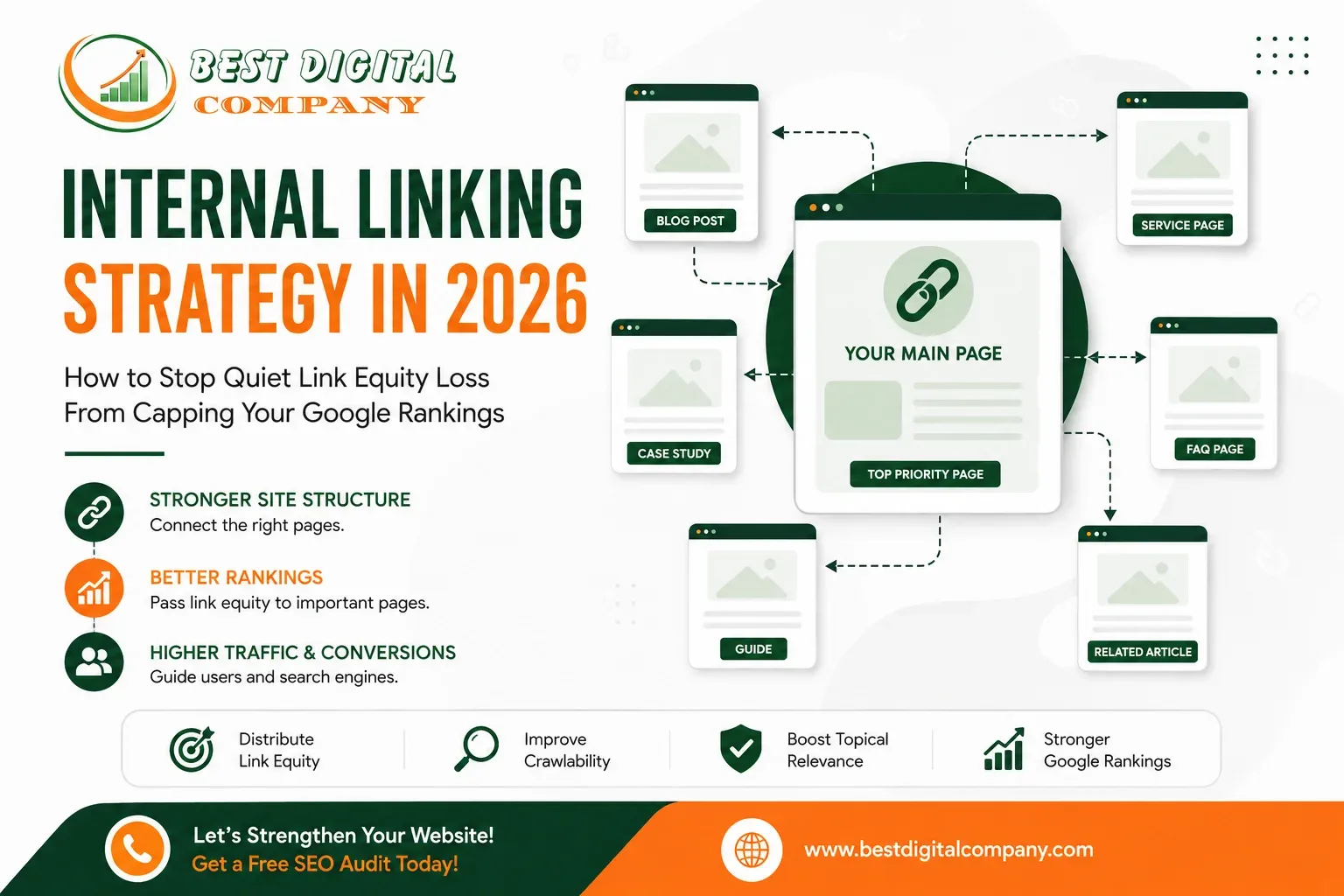
One detail that often gets overlooked in GEO discussions is internal linking. When pages on a website reference and link to each other in a logical way, it signals topical depth. A single article about a topic looks like a guess. Ten interconnected articles covering the same subject from different angles look like genuine expertise, and that pattern of depth is something both traditional crawlers and generative models can detect.

A well-planned internal linking structure also helps distribute authority to the pages that matter most, rather than letting it dilute across dozens of disconnected posts. We covered this in detail in our guide on internal linking strategy for 2026, which explains how to stop link equity from quietly leaking away from your most important pages.

Step-by-Step GEO Checklist for 2026

If you are starting from scratch, here is a practical sequence to follow.

  1. Audit your existing content for pages that already rank reasonably well but read like generic summaries rather than original insight.
  2. Rewrite key pages so the direct answer appears within the first few sentences of each major section.
  3. Add real specifics, including data points, examples, and named experience, wherever a claim is made.
  4. Fix technical barriers on your site that might prevent crawlers from reading your content properly.
  5. Strengthen your author and brand presence with consistent information across your website, social profiles, and any directories your business is listed in.
  6. Build internal links between related articles so topical depth is obvious to anyone, human or machine, exploring your site.
  7. Monitor how your brand appears in AI-generated answers for your core topics, and adjust content where you notice gaps.
  8. Keep publishing consistently, since a single well-optimized page rarely outperforms a body of consistently strong content over time.

Common GEO Mistakes Businesses Make

A few patterns show up again and again with businesses that struggle to gain any traction in generated answers.

Writing for the algorithm instead of the reader. Content stuffed with keywords but light on real answers tends to get ignored by both traditional rankings and AI summaries.

Ignoring page speed and technical health. No amount of well-written content helps if a crawler cannot properly access it in the first place.

Publishing once and forgetting the page. Generative engines favor content that stays current. A three-year-old article with outdated statistics is less likely to be trusted than a recently reviewed one.

Treating GEO as separate from SEO. As covered earlier, these two disciplines share the same foundation. Neglecting one weakens the other.

Overlooking internal linking and site structure. A collection of disconnected blog posts signals less authority than a clearly organized content hub covering a topic from multiple angles.

How to Measure GEO Success

Measuring GEO is still evolving, since there is no universal dashboard equivalent to traditional ranking trackers yet. That said, a few practical indicators are worth tracking.

  • Manually searching your core topics in AI tools like ChatGPT, Gemini, and Copilot to see whether your brand or content is mentioned
  • Watching referral traffic from AI platforms in your analytics, which many tools now track separately
  • Tracking branded search volume, since being mentioned in an AI answer often drives people to search your business name directly afterward
  • Reviewing which pages earn backlinks and citations from other credible sites, since this remains a strong trust signal for both traditional and generative systems

Consistent tracking over several months gives a far clearer picture than a single snapshot, since AI answer patterns shift as models get updated.

Final Thoughts

Generative Engine Optimization is not a replacement for the fundamentals that have always mattered in digital marketing. It is an extension of them, shaped by the fact that a growing share of searches now end in a generated answer rather than a list of links. Businesses that already invest in clear writing, honest expertise, solid technical foundations, and a consistent brand presence across the web are naturally better positioned for this shift than those chasing shortcuts.

The businesses that will struggle most in the next few years are the ones treating their website and content as a box to check rather than a genuine resource. The ones that will do well are the ones willing to write like they actually know what they are talking about, because that is precisely the kind of content generative engines are built to recognize and repeat.

If you are unsure where your website currently stands with either traditional rankings or AI visibility, an audit is usually the fastest way to find out what is working and what needs attention first.


Frequently Asked Questions

What does GEO stand for in digital marketing?

GEO stands for Generative Engine Optimization. It refers to optimizing content so that AI-driven platforms like ChatGPT, Gemini, and Google’s AI Overviews can understand, trust, and cite it when generating answers for users.

Is GEO replacing traditional Search Engine Optimization?

No. GEO builds on top of solid Search Engine Optimization rather than replacing it. A technically sound, well-indexed website is still the foundation both traditional rankings and AI-generated answers rely on.

How is GEO different from regular content writing?

GEO content is structured so the direct answer to a question appears early, uses clear formatting, and includes real, specific detail rather than generic explanations. This makes it easier for AI systems to extract and quote accurately.

Does social media affect GEO?

Indirectly, yes. Consistent, active Social Media Marketing helps build a recognizable, trustworthy brand presence across the web, which contributes to the overall trust signals AI systems consider when choosing what to cite.

Should small businesses worry about GEO yet?

Yes, since AI-generated answers are already influencing a meaningful share of searches. Businesses that wait until this becomes mainstream will be starting from further behind than those who begin adjusting their content and site structure now.

Can Pay Per Click help while I build a GEO strategy?

Yes. Pay Per Click campaigns provide immediate visibility and useful data on what your audience is actually searching for, which can guide the topics your GEO content should prioritize.

How long does it take to see results from GEO efforts?

Similar to traditional optimization, GEO results build gradually over months rather than days, since AI systems rely on accumulated trust signals, consistent publishing, and technical health rather than one-time changes.

Do I need a developer to prepare my website for GEO?

In most cases, yes, at least for the technical audit. Clean Website Development practices, including fast load times and crawlable content, are necessary before content-level GEO work can have its full impact.
How to Create an SEO Report Clients Actually Understand

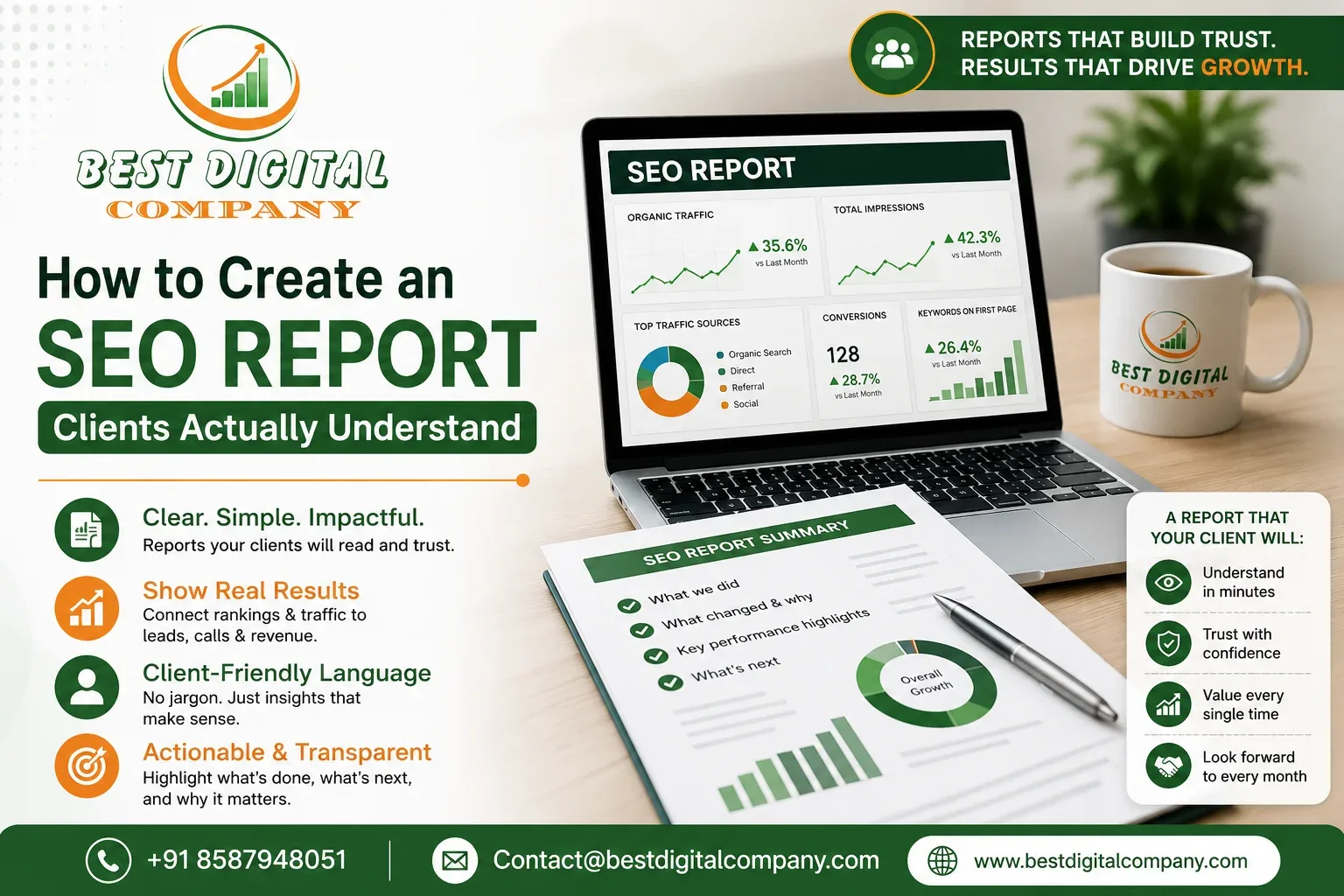
How to Create an SEO Report Clients Actually Understand

If you have ever sent a client a report full of keyword positions, crawl stats, and backlink counts, only to get a one-line reply that says “looks good, thanks,” you already know the problem. The client didn’t read it. Or they read it and understood none of it. Either way, the report did its job on paper but failed at the one thing it was supposed to do: help the client feel confident that their money is working.

At Best Digital Company, we have sat across the table from business owners in Delhi and Noida who paid a previous agency for months and still couldn’t explain what they were getting for it. Not because the work wasn’t happening, but because nobody ever translated the work into language a business owner actually uses. That gap between “we did SEO” and “here’s what changed for your business” is where client relationships quietly fall apart, and it’s completely avoidable.

This guide walks through how to build a search engine optimization report that a client with zero technical background can open, understand in five minutes, and actually trust.

Why Most Search Engine Optimization Reports Fail to Communicate Value

Most reports are built for the person who did the work, not the person who’s paying for it. They list ranking positions for fifty keywords, show a graph of “organic sessions,” and mention things like crawl errors, canonical tags, or Core Web Vitals scores without ever connecting them to something the client cares about.

Here’s the thing: a business owner doesn’t wake up wanting better keyword rankings. They want more calls, more form submissions, more product sales, or more foot traffic. Rankings and traffic are the mechanism. Revenue and leads are the reason they hired you. A report that leads with the mechanism instead of the reason will always feel like noise, no matter how accurate the data is.

There’s also a trust problem. Clients who don’t understand a report tend to assume one of two things: either the agency is hiding something, or nothing meaningful happened that month. Neither is good for retention, even when the underlying work was solid.

Start With the Business Outcome, Not the Metric

The single biggest shift that makes a report land is changing the order of information. Instead of opening with technical data, open with what changed for the business.

A useful structure looks like this:

  1. What we did this month (in plain language)
  2. What changed as a result (leads, calls, sales, inquiries)
  3. Why it changed (the supporting data)
  4. What’s next and why it matters

Notice that the supporting data comes third, not first. Rankings, traffic numbers, and technical fixes are evidence for a claim, not the claim itself. When you say “we improved your visibility for three high-intent search terms, which contributed to a 22% increase in contact form submissions,” the ranking movement becomes proof, not the headline.

This is also where clear intent matters. A report shouldn’t try to impress the client with volume of activity. It should answer one question directly: is this working, and how do we know?

What to Include in a Search Engine Optimization Report Clients Actually Understand

A report doesn’t need fewer sections to be clearer. It needs the right sections, explained simply. Based on what actually gets read and understood by clients who aren’t marketers, these are the components worth including every time.

A one-paragraph summary. Two to four sentences at the very top, written the way you’d explain it out loud to a friend who runs a business. No jargon, no acronyms.

Visibility, not just rankings. Instead of a table of fifty keyword positions, group them into categories: “search terms your customers use to find you,” and show how many moved up, stayed steady, or need more work. Position 4 versus position 7 means little to a client. “You now show up on the first page for four more searches related to your services” means something.

Traffic tied to source. Show how many people visited from organic search versus other channels, and briefly explain what “organic” means the first time you use it. Don’t assume the term is common knowledge, because for most clients, it isn’t.

Leads and conversions. This is the section clients scroll to first, whether you put it first or not. Calls, form fills, chat messages, product purchases — whatever counts as a win for that specific business.

Technical health, summarized. If your team fixed broken links, improved page speed, or resolved indexing issues, describe the outcome, not the process. “Your site now loads twice as fast on mobile” lands better than “we optimized render-blocking resources.”

Content published or updated. Name the pages or posts, link to them, and explain in one sentence why each one matters for the business’s goals.

What’s next. Every report should end with a short, specific plan for the coming month, not a vague promise of “continued optimization.”

If you’re formalizing this into a repeatable process, our search engine optimization service page outlines the exact deliverables we build reporting around, and our SEO packages show how reporting frequency and depth scale with the size of an engagement.

How Internal Linking Progress Shows Up in a Report Clients Understand

Internal linking is one of the hardest things to explain to a non-technical client, because the benefit is indirect. Nobody clicks on a link and thinks “my customer journey improved.” But internal linking has a direct, explainable effect on how easily new pages get discovered and how much authority flows to the pages that actually convert.

The trick is translating internal linking work into a business story rather than a technical one. Instead of saying “we added 14 internal links across the blog to the service pages,” say something like: “We connected your best-performing blog content directly to your service pages, so visitors reading about a topic can move straight to booking a call instead of leaving to search elsewhere.” That’s a customer journey improvement, and clients understand customer journeys.

We go into more depth on how this compounds over time in our earlier piece on internal linking strategy, which explains why new content that isn’t linked properly tends to sit invisible for months. In a client report, a short callout referencing this kind of structural work even one sentence builds credibility because it shows the strategy has a reason behind it, not just activity for activity’s sake.

Reporting on Pay Per Click and Social Media Marketing Alongside Organic Results

Many clients run more than one channel at once, and a report that only talks about organic search while ignoring how paid and social activity interact with it misses half the picture. If a client is also running Pay Per Click campaigns, their report should briefly note how paid and organic performance compare, since clients often want to know whether they can eventually reduce ad spend as organic visibility grows.

The same applies to Social Media Marketing. If social posts are driving traffic or brand searches that later convert through organic search, that’s worth one line in the report. It shows the channels are working together instead of existing in separate silos, which is usually what a client is quietly hoping to see.

We’ve written previously about what business owners should expect from PPC services providers, and it echoes a lot of what applies to reporting: clarity beats complexity every time. If your agency also handles Pay Per Click or social media marketing for a client, a combined summary section even three or four lines does more for retention than three separate, disconnected documents. Our piece on SMO services in Delhi and Mumbai covers a similar case where a client couldn’t connect social activity to actual sales until the reporting was simplified and tied to real outcomes.

Why Website Development Work Belongs in Your Reporting Too

Search performance and site infrastructure are more connected than most clients realize, and this is one area where reports tend to skip over important context entirely. If your team made changes through website development and designing work faster load times, a cleaner mobile layout, restructured navigation that work directly affects how the site performs in search and how visitors behave once they arrive.

Rather than leaving these updates out because they seem like a separate project, fold them in with a plain explanation of the outcome. “Your homepage now loads in under two seconds instead of five, which reduces the number of visitors who leave before the page finishes loading” is something any client can grasp immediately.

We discussed this connection in more detail in our guide on choosing the best website development agency and the best SEO company, which explains why treating design and search as separate conversations often leads to slower results. If you are managing both web development and search work for a client, or offering it through our web development packages, your monthly report is the natural place to show how the two are working together rather than competing for budget.

Turning Numbers Into a Narrative With Visuals

Text-heavy reports lose people fast, even when the writing is clear. A simple line graph showing organic traffic over six months tells a client more in two seconds than a paragraph of explanation. The goal isn’t to make the report look more advanced; it’s to reduce the effort required to understand it.

A few practical guidelines that consistently work well:

  • Use one chart per metric that matters, not a dashboard dump of every available data point.
  • Label charts in plain language (“Website Visitors From Google Search”) instead of platform terminology (“Organic Sessions”).
  • Show a trend line over at least three months rather than a single month in isolation, since one month rarely tells the full story.
  • Highlight the number that matters most in larger text, and let supporting numbers sit smaller around it.

If you are reporting on landing page performance specifically, our earlier post on SEO landing pages that convert is a good companion resource, since a landing page report often needs its own mini-version of this same visual approach: traffic in, conversions out, and the story connecting the two.

How Often Should You Send a Report to Clients?

Monthly reporting works for most ongoing engagements, since search performance rarely moves dramatically week to week, and weekly updates can create pressure to show change that hasn’t happened yet. That said, a short mid-month check-in even a two-line email can prevent a client from feeling like they’re waiting in the dark, especially during the first ninety days of a new engagement when results are still building.

New websites are a special case. If you’re managing search work for a site that just launched, expectations need to be set early, because visibility takes time to build even with strong execution. We cover this timeline in detail in our guide on ranking a new website in 90 days, and it’s worth referencing similar language in an early report so the client understands why month one looks different from month four.

For e-commerce clients specifically, reporting frequency often needs to include sales-specific metrics from day one, since product visibility and conversion behavior move differently than for service-based businesses. Our e-commerce SEO guide breaks down which numbers matter most for online stores, many of which deserve their own line in a monthly report rather than being folded into general traffic figures.

Common Mistakes That Make Reports Feel Untrustworthy

A few habits quietly undermine trust even when the underlying SEO work is genuinely good.

Reporting on vanity metrics without context. A number like “10,000 impressions” means nothing without a comparison point or an explanation of what it represents.

Repeating the same template every month without acknowledging what actually happened. Clients notice when a report feels copy-pasted, and it signals that nobody is actually looking closely at their account.

Overusing jargon to sound expert. Terms like domain authority, crawl budget, or canonicalization might be accurate, but if a client has to Google your own report to understand it, the report has failed.

Burying bad news or skipping months with weak results. Clients trust agencies that explain a dip honestly far more than ones who go quiet during a rough month. A short, honest explanation for instance, referencing a known industry shift, like when we discussed how meta descriptions and ranking factors are often misunderstood builds more credibility than silence ever will.

Never connecting the report to the original goals. If a client came to you wanting more phone calls, every report should circle back to that goal, even in months where the number didn’t move much.

If you are setting up a new website and want reporting to start on solid footing from day one, our website launch SEO checklist is a useful reference for making sure the technical foundation is actually reportable you can’t show progress on something that was never measured correctly in the first place.

A Simple Monthly Report Template You Can Reuse

For teams looking for a repeatable structure, this format has worked consistently across different types of clients:

  1. Summary – Three to four sentences on what happened and what it means.
  2. Business results – Leads, calls, sales, or inquiries, with a short comparison to the previous month.
  3. Visibility – Grouped search term performance, described in plain terms.
  4. Traffic – Where visitors came from, with one simple chart.
  5. Work completed – Content published, pages improved, technical fixes made, described by outcome.
  6. Other channels – Brief note on paid or social performance if applicable.
  7. Next month’s plan – Two or three specific priorities, not a vague list.

Choosing a digital marketing company that already reports this way saves a lot of back-and-forth later. If you’re evaluating agencies in Delhi or Noida and want to know what questions to ask about reporting before signing a contract, our guide on choosing a digital marketing company in Delhi and Noida covers exactly that.

Final Thoughts

A report is a communication tool before it’s a data tool. The agencies that keep clients longest aren’t necessarily the ones with the best rankings; they’re the ones whose clients actually understand what’s happening with their money every single month. Leading with outcomes, translating technical work into plain language, and being honest about slow months will do more for a client relationship than any dashboard ever will.

If your current reports feel like they’re written for search engines instead of for the people paying the bill, it might be time to rebuild the format from scratch rather than adding more data to an already confusing document.


FAQ

How often should an SEO report be sent to clients?

Monthly reporting is standard for most ongoing engagements, since meaningful movement in search visibility typically takes several weeks to show up clearly. Short interim updates can help during the first few months of a new engagement, but weekly reports often create pressure to show change before it’s realistically possible.

What metrics matter most to clients who aren’t marketers?

Leads, calls, form submissions, and sales matter more than any other number in the report. Visibility and traffic figures are useful supporting evidence, but they should always be connected back to a business outcome rather than presented on their own.

Should technical SEO work be included in client reports?

Yes, but described by outcome rather than process. Instead of listing technical fixes in developer language, explain what changed for the visitor faster load times, easier navigation, or pages becoming visible in search that weren’t before.

How do you explain a month with no ranking improvement?

Honestly and with context. Explain what was worked on, why results may take longer, and what’s planned next. Clients generally respond better to a clear explanation of a slow month than to a report that quietly skips over it.

Can one report cover SEO, paid ads, and social media together?

Yes, and for clients running multiple channels, a combined summary section often builds more trust than three separate documents, since it shows the channels are being managed as one connected strategy rather than in isolation.

What’s the biggest mistake agencies make with client reporting?

Writing the report for someone with technical knowledge instead of the actual reader. Most clients are business owners, not marketers, and a report full of jargon even if accurate fails at its core job of building confidence and trust.

Local SEO Checklist for Small Businesses

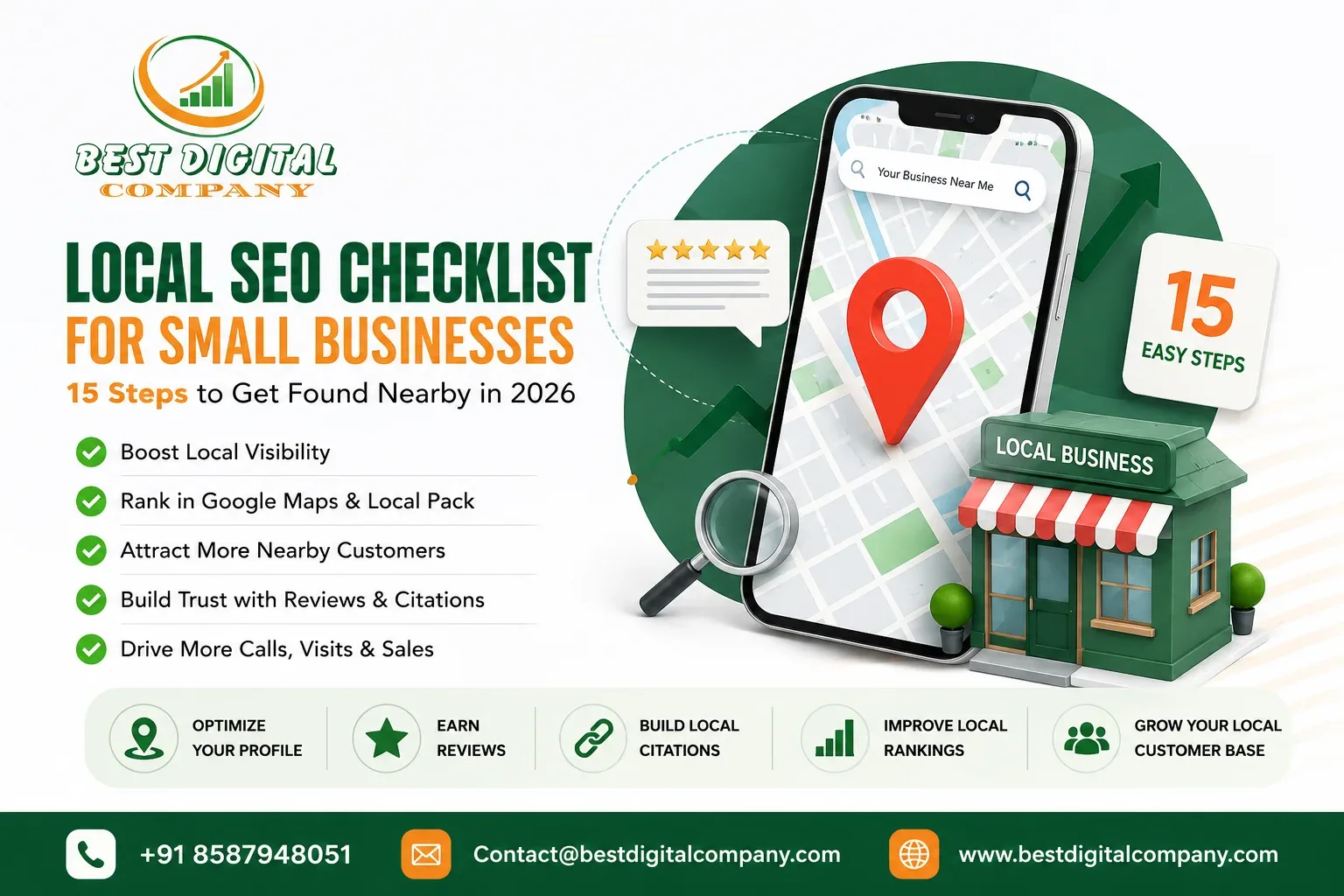
Local SEO Checklist for Small Businesses: 15 Steps to Get Found Nearby in 2026

If you run a small business, most of your customers aren’t searching for you by name. They are typing things like “bakery near me,” “plumber in Noida,” or “best salon in Delhi” and picking from whatever Google shows them first. If your business doesn’t show up in that list, it does not matter how good your product or service is you are invisible to the exact people who are ready to buy from you today.

That’s what local SEO solves. It is the process of making sure search engines understand where your business is located, what it does, and why it deserves to be shown to people searching nearby. Done right, it puts your business in front of customers at the exact moment they are looking for what you offer.

This checklist walks through the practical steps small business owners can take to improve their visibility in local search results no jargon, no fluff, just the things that actually move the needle. Whether you are a single-location shop or manage a handful of branches across a city, this guide will help you build a solid local search presence.


Table of Contents

  1. Claim and Verify Your Google Business Profile
  2. Get Your NAP Consistency Right
  3. Choose the Right Business Categories
  4. Optimize Your Website for Local Search
  5. Build Location-Specific Landing Pages
  6. Earn and Manage Customer Reviews
  7. Build Local Citations and Directory Listings
  8. Create Locally Relevant Content
  9. Strengthen Your Internal Linking
  10. Optimize for Mobile and Page Speed
  11. Use Local Structured Data (Schema Markup)
  12. Build Local Backlinks
  13. Track Your Local Rankings and Traffic
  14. Common Local SEO Mistakes to Avoid
  15. Frequently Asked Questions

1. Claim and Verify Your Google Business Profile

Your Google Business Profile (formerly Google My Business) is the single most important asset in local search. It is the listing that shows up on the map, in the local pack, and on Google Maps when someone searches for a business like yours nearby.

To set it up properly:

  • Claim your profile and complete the verification process (usually by postcard, phone, or email)
  • Fill out every section: business hours, phone number, website, service area, and business description
  • Choose accurate categories that match what you actually do
  • Upload real photos of your storefront, team, and products not stock images
  • Keep your profile updated whenever hours or services change, especially around holidays

A profile that’s only 60% filled out tells Google (and customers) that the business isn’t actively managed. A complete, regularly updated profile signals that you’re a real, active business worth trusting.


2. Get Your NAP Consistency Right

NAP stands for Name, Address, and Phone number. It sounds simple, but inconsistent NAP details across the web are one of the most common reasons small businesses struggle with local visibility.

If your business is listed as “Sharma Electronics” on your website but “Sharma Electronics Pvt Ltd” on Justdial and “Sharma Electronics Store” on Facebook, search engines struggle to confirm these are the same business. That confusion works against you.

Steps to fix this:

  • Pick one exact format for your business name, address, and phone number
  • Update your website, Google Business Profile, and all directory listings to match exactly
  • Avoid abbreviations in one place and full words in another (like “St.” vs “Street”)
  • Recheck old listings every few months, especially after an office move or number change

3. Choose the Right Business Categories

Category selection is easy to overlook, but it directly affects which searches your business appears in. If you run a digital marketing agency, for example, listing yourself under a broad category like “Marketing Agency” instead of more specific ones like “Search Engine Optimization” or “Social Media Marketing” limits how often you show up for the exact searches your ideal customers are running.

  • Choose one primary category that best matches your core business
  • Add secondary categories for the other services you genuinely offer
  • Avoid stuffing in unrelated categories just to appear in more searches, it can hurt trust signals rather than help them

4. Optimize Your Website for Local Search

Your Google Business Profile gets people interested, but your website is what convinces them to actually reach out. It needs to clearly communicate where you’re located and what you do, right from the homepage.

  • Mention your city and service areas naturally in your page titles, headings, and body content
  • Include your address and phone number in the website footer on every page
  • Make sure your Services page clearly outlines what you offer, with dedicated pages for each core offering
  • Keep your contact page simple, with a working map embed and clickable phone number

5. Build Location-Specific Landing Pages

If you serve multiple cities or neighborhoods, generic pages won’t cut it. A business offering search engine optimization services in both Delhi and Noida, for instance, benefits far more from two well-written, location-specific pages than one page trying to cover both.

  • Create a dedicated page for each city or region you actively serve
  • Write unique content for each page ,don’t just swap the city name in a copy-paste template
  • Include local landmarks, client examples, or case studies specific to that area where possible
  • Link these pages clearly from your main navigation or services menu

This approach mirrors what many agencies already do well. Our own post on choosing the right digital marketing company in Delhi and Noida breaks down exactly how location context changes what customers are actually looking for.


6. Earn and Manage Customer Reviews

Reviews are one of the strongest trust signals in local search, and they influence real customers just as much as they influence rankings. A business with 80 genuine, recent reviews will almost always outperform one with five old reviews, even if the second business is technically “better.”

  • Ask happy customers directly for a review right after a positive interaction
  • Make it easy ,send a direct link to your Google Business Profile review page
  • Respond to every review, good or bad, professionally and promptly
  • Never buy fake reviews. Google actively detects and penalizes this, and it damages long-term trust

Handling reviews well isn’t a one-time task. It’s an ongoing part of how small businesses manage their online reputation, and it ties directly into the kind of social media marketing efforts that keep a brand’s presence active and trustworthy.


7. Build Local Citations and Directory Listings

A citation is any online mention of your business name, address, and phone number, even without a link. Local directories like Justdial, Sulekha, IndiaMART, and industry-specific listings all count as citations, and they reinforce your business’s legitimacy to search engines.

  • List your business on major general directories first
  • Add relevant industry-specific directories for your niche
  • Keep the details consistent with your NAP guidelines from step 2
  • Remove or update any duplicate or outdated listings you find

8. Create Locally Relevant Content

Blogging isn’t just for large companies. For small businesses, it’s one of the most affordable ways to show up for searches that a static website page simply can’t target. Content that speaks to local challenges, questions, and events tends to build trust with both readers and search engines.

Some ideas:

  • Answer common questions your local customers actually ask
  • Write about industry trends specific to your city or region
  • Share results or case studies from real local clients
  • Cover seasonal or local events relevant to your business

For example, our post on SMO services in Delhi and Mumbai works well because it speaks directly to business owners in those specific markets rather than offering generic advice.


9. Strengthen Your Internal Linking

Internal linking connects the pages on your own website so that both users and search engines can find related information easily. When done thoughtfully, it also helps distribute authority from your strongest pages to newer or less visible ones.

  • Link from blog posts to relevant service pages, like your PPC services or web development pages
  • Link between related blog posts so readers can go deeper into a topic
  • Use descriptive anchor text instead of generic phrases like “click here”
  • Avoid linking to the same page from every single post, spread the links naturally

If you want a deeper look at how this works, our guide on internal linking strategy covers how uneven link distribution quietly caps a website’s ranking potential.


10. Optimize for Mobile and Page Speed

Most local searches happen on a phone, often while someone is out and about looking for a nearby option right now. If your website loads slowly or looks broken on mobile, you will lose that visitor before they even see what you offer.

  • Test your website on an actual phone, not just a browser resize
  • Compress images so pages load quickly on mobile data
  • Make phone numbers and addresses tap-to-call and tap-to-navigate
  • Keep forms short and easy to fill out on a small screen

A slow or clunky website undoes the effort put into every other part of this checklist, which is why website development and designing is treated as a core part of local SEO work, not a separate project.


11. Use Local Structured Data (Schema Markup)

Structured data, often called schema markup, is code added to your website that helps search engines understand exactly what your business is, where it’s located, and what it offers. It doesn’t change how your page looks to visitors, but it gives search engines clearer signals.

  • Add LocalBusiness schema with your name, address, phone number, and hours
  • Include review schema if you display testimonials on your site
  • Add FAQ schema on pages that answer common customer questions
  • Use a schema testing tool to check for errors after implementation

This is usually a one-time technical setup, but it pays off continuously once it’s in place.


12. Build Local Backlinks

Backlinks from other reputable local websites act as a vote of confidence for your business. A mention from a local news site, a partnership with another nearby business, or a feature in a community blog all carry real weight.

  • Partner with complementary local businesses for cross-promotion
  • Sponsor local events or organizations that link back to your site
  • Reach out to local bloggers or journalists covering your industry
  • Join local business associations or chambers of commerce that list members online

13. Track Your Local Rankings and Traffic

None of this matters if you can’t tell whether it’s working. Tracking gives you the feedback loop needed to know what to keep doing and what to fix.

  • Monitor your Google Business Profile insights for calls, direction requests, and profile views
  • Track keyword rankings for your city and service-specific terms
  • Watch your website traffic from local searches over time
  • Set a monthly or quarterly check-in to review progress, not just a one-time setup

14. Common Local SEO Mistakes to Avoid

  • Ignoring the Google Business Profile after setup: it needs regular updates, not a one-time entry
  • Inconsistent NAP details across the web, which confuses both customers and search engines
  • Thin or duplicate content across location pages that offers no real value to readers
  • Chasing fake reviews, which can lead to penalties and damaged trust
  • Neglecting mobile experience, even though most local searches happen on phones
  • No internal linking strategy, leaving valuable pages isolated and hard to discover

Frequently Asked Questions

What is local SEO and why does it matter for small businesses?

Local SEO is the practice of optimizing your online presence so your business shows up when nearby customers search for products or services you offer. For small businesses, it matters because most customers choose from whichever nearby options appear first, making visibility directly tied to walk-ins, calls, and sales.

How long does it take to see results from local SEO?

Most small businesses start noticing improvements within two to four months, though this depends on competition in the area, how complete the Google Business Profile is, and how consistently the checklist steps are followed. Local SEO is a gradual process rather than an instant fix.

Do I need a website if I already have a Google Business Profile?

Yes. A Google Business Profile helps you get discovered, but a website is what builds trust, explains your services in detail, and often plays a role in ranking factors that a profile alone can’t cover.

How many Google reviews does a small business need?

There’s no fixed number, but businesses with a steady stream of recent, genuine reviews generally perform better than those with very few or outdated ones. Consistency over time matters more than hitting a specific count.

Can I do local SEO myself, or do I need an agency?

Many of the basics, like completing your Google Business Profile and requesting reviews, can be done in-house. More technical elements, like schema markup, citation management, and content strategy, are often handled faster and more effectively with professional support.

What’s the difference between local SEO and regular SEO?

Regular SEO focuses on ranking for broader, often national or global searches. Local SEO specifically targets searches with local intent, such as “near me” queries or city-specific terms, and relies heavily on tools like Google Business Profile and local citations that general SEO doesn’t use.

Does having multiple locations help or hurt local SEO?

It can help significantly if each location has its own optimized Google Business Profile and dedicated landing page. It can hurt if locations are managed inconsistently, with mismatched NAP details or duplicate content across pages.

How important are online reviews compared to other local SEO factors?

Reviews are one of several important factors, alongside profile completeness, citations, and website relevance. No single factor guarantees rankings on its own, but reviews influence both visibility and a customer’s decision to actually choose your business.


Conclusion

Local SEO isn’t a one-time project you finish and forget. It’s an ongoing set of habits: keeping your profile updated, staying consistent across the web, earning genuine reviews, and creating content that actually helps the people searching for you. Small businesses that treat it this way, rather than as a checkbox exercise, tend to see steady, compounding results over time.

If you’d rather have this handled by people who work on local visibility every day, our team can review your current setup and build a plan around what your business actually needs. Get in touch with Best Digital Company to talk through where your local search presence stands today.

How Can Doctors Rank #1 on Google?

How Can Doctors Rank #1 on Google?

A patient in pain rarely calls three clinics and compares brochures. They open their phone, type something like “best orthopedic doctor near me” or “dentist in Delhi open now,” and pick from whatever Google shows them first. If your clinic is not part of that first screen, it doesn’t matter how skilled you are or how many years you have spent in practice. A large share of patients will never even learn you exist.

This is the reality most doctors are living with in 2026, whether they have admitted it to themselves or not. Word-of-mouth referrals still matter, but they no longer carry a practice the way they did a decade ago. Search has quietly become the new waiting room, and the doctors who understand this are the ones building steady, predictable patient inflow month after month.

So the real question is not whether you need to show up on Google. It’s how. This guide walks through what actually moves a doctor or clinic toward the top of search results without shortcuts, without guarantees, and without the kind of exaggerated promises that tend to backfire in healthcare marketing.

Why Ranking on Google Matters More for Doctors Than for Most Businesses

Healthcare searches are different from most other searches. Someone Googling “running shoes” is browsing. Someone Googling “cardiologist near me chest pain” is often anxious, in discomfort, or acting on a family member’s behalf. Google knows this, and it treats medical and health-related pages with far more scrutiny than it treats, say, a restaurant listing.

That’s precisely why doctors who invest properly in search visibility tend to see outsized results compared to other industries. There’s less noise, patients research heavily before booking, and trust signals carry real weight in the decision. A well-optimized clinic website isn’t a luxury add-on anymore. It’s closer to a digital reception desk that never closes.

What Are Patients Actually Searching For?

Before any technical work begins, it helps to understand search intent in plain terms, what the person typing the query actually wants.

Most patient searches fall into a few clear buckets:

  • Symptom-based searches — “why does my knee hurt when I climb stairs”
  • Doctor or specialty searches — “best dermatologist in [city]”
  • Comparison searches — “orthopedic vs physiotherapist for back pain”
  • Local, ready-to-book searches — “dentist near me open on Sunday”
  • Reassurance searches — “is [procedure] safe,” “[medicine] side effects”

A clinic that only has a homepage and a contact page is only ever competing for that third bucket, the ready-to-book searches. Everything else, which is often a much larger volume of traffic, goes to whichever website actually answered the question. This is where a proper content strategy comes in, something we will get to shortly.

Start With a Website Built for Trust, Not Just Looks

Many clinics still treat their website as a digital business card- a home page, a few photos, a phone number, and little else. That approach rarely ranks well anymore, and more importantly, it does not reassure a nervous patient.

A strong medical website needs:

  • Fast loading speed, especially on mobile, since most patients search from their phones
  • Clear doctor profiles with qualifications, years of experience, and areas of specialization
  • Secure browsing (HTTPS) and a clean, professional design
  • Easy appointment booking, ideally in two clicks or fewer
  • Accurate contact details and clinic timings that match Google exactly

This is where working with an experienced Website Development & Designing team makes a genuine difference. A site that’s built with healthcare visitors in mind clear navigation, readable fonts, no clutter, mobile-first layout tends to keep patients on the page longer, and that behavior signal matters to Google over time.

If your clinic’s website was built years ago and hasn’t been touched since, our website launch checklist is a useful starting point for spotting what’s outdated.

On-Page Optimization: The Foundation Doctors Often Skip

This is the part of search engine optimization that happens directly on your website’s pages — titles, headings, images, and page structure. It’s unglamorous work, but skipping it is one of the most common reasons clinic websites stay invisible.

A few fundamentals that consistently make a difference:

  • Page titles and headings should describe exactly what the page offers — for example, “Knee Replacement Surgeon in Delhi” rather than a vague “Welcome to Our Clinic”
  • Meta descriptions should be written for the patient reading them, not stuffed with keywords (Google has been clear that these descriptions aren’t a direct ranking factor, but they strongly influence whether someone clicks — we broke this down in detail in our guide on meta descriptions)
  • Images of the clinic, equipment, or team should have descriptive alt text, both for accessibility and for image search visibility
  • Internal links between related pages — for instance, a symptom page linking to the relevant doctor’s profile — help both patients and Google understand your site’s structure

If you’re building new service pages for specific conditions or treatments, our piece on creating landing pages that actually convert covers how to structure these so visitors don’t just read and leave,they book.

Proper Search Engine Optimization work ties all of this together into one coherent strategy rather than a set of disconnected fixes.

Local SEO: Where Most Clinics Win or Lose

For a doctor or clinic, local visibility usually matters more than ranking nationally. Very few patients will travel across a city for a general physician when three others are closer.

The single most important tool here is your Google Business Profile (formerly Google My Business). A well-maintained profile can outperform an entire website in terms of the calls and visits it generates. To get this right:

  1. Claim and fully verify your listing
  2. Use your exact clinic name — avoid stuffing it with extra keywords
  3. Select every relevant medical category (general physician, cardiologist, dentist, and so on)
  4. Add real photos of the clinic, waiting area, and team
  5. Keep hours, address, and phone number identical across your website and profile
  6. Post updates regularly — health camps, new services, holiday timings
  7. Respond to every review, positive or negative, in a calm and professional tone

Consistency across directories matters too. If your clinic’s name, address, or phone number differs even slightly between your website, Google listing, and other directories like Justdial or Practo, it creates confusion that search engines pick up on. Doctors serving patients across Delhi and nearby areas like Noida and Gurugram often benefit from making sure each location, if there’s more than one, has its own accurately optimized profile.

Content That Educates: Blogging for Doctors

Google has repeatedly emphasized helpful, people-first content, and nowhere does that matter more than in healthcare. A blog isn’t just a box to tick for search engines. It’s often the first real interaction a nervous patient has with your clinic, long before they pick up the phone.

Useful content formats for a medical practice include:

  • Plain-language explainers of common conditions and when to see a doctor
  • Pre- and post-procedure guidance
  • Myth-busting posts around widely misunderstood treatments
  • Seasonal health advisories relevant to your city or region
  • FAQs answering the exact questions patients type into Google

The key is depth and honesty rather than volume. A handful of genuinely useful, doctor-reviewed articles will consistently outperform dozens of thin, generic posts. Each new post should also link back to relevant service pages and older articles something we cover in more depth in our internal linking strategy guide, which explains how a clinic site can lose ranking potential simply by linking poorly between its own pages.

Building E-E-A-T: Why Google Trusts Some Medical Sites More Than Others

Google evaluates health content against a stricter bar than almost any other topic, using what’s commonly known as E-E-A-T — Experience, Expertise, Authoritativeness, and Trustworthiness. For a doctor’s website, this translates into concrete, practical steps:

  • Experience — show real patient outcomes, case types handled, and years in practice
  • Expertise — display medical degrees, certifications, and specialty training clearly on doctor profile pages
  • Authoritativeness — get mentioned or linked from recognized medical associations, hospitals, or health directories where possible
  • Trustworthiness — keep contact information transparent, disclose consultation fees where appropriate, and never make guaranteed-cure claims

It’s worth being direct here: no ethical clinic should promise guaranteed results for any treatment, and no genuine SEO process guarantees an overnight top ranking either. Both medicine and search visibility involve variables that shift from case to case and from month to month. What’s achievable is steady, measurable improvement built on real credentials and real patient trust.

Social Media: Supporting Search Visibility, Not Replacing It

Search engines increasingly look at signals beyond your website including whether your clinic has an active, credible presence elsewhere online. This is where Social Media Marketing plays a supporting role.

For a medical practice, social platforms work best for:

  • Sharing short health tips and awareness content
  • Introducing doctors and staff to build familiarity before a first visit
  • Answering common patient questions in short video or carousel formats
  • Highlighting real (consent-given) patient experiences and testimonials

Clinics in cities like Delhi and Mumbai have found that consistent, informative posting rather than purely promotional content builds far more patient trust over time. We’ve seen this play out with brands in our SMO services overview, where informative content consistently outperformed sales-heavy posts.

Paid Search: A Faster, Parallel Path

Organic ranking takes time, often several months of consistent work. For clinics that need visibility sooner a newly opened practice, or a doctor entering a competitive specialty Pay Per Click advertising through Google Ads can fill that gap while the organic strategy builds momentum.

Done correctly, Pay Per Click campaigns for healthcare should:

  • Target specific, high-intent searches like “root canal specialist near me”
  • Use location targeting tightly around the clinic’s actual service area
  • Link to a dedicated landing page for that specific treatment, not just the homepage
  • Track calls and form submissions, not just clicks, since that’s what actually matters for a clinic

Our detailed breakdown on choosing the right PPC agency is worth reading if you’re considering paid ads alongside your organic strategy. The two tend to work best in tandem rather than as substitutes for one another.

Online Reviews: The Trust Signal Patients Read First

Before a patient calls, they almost always check reviews. This single factor influences both click-through rates and, indirectly, rankings, since Google factors review volume, recency, and rating into local search results.

A few practical habits help here:

  • Ask satisfied patients for a review right after a positive visit, rather than weeks later
  • Never offer payment or incentives for reviews. This violates platform policies and damages trust if discovered
  • Respond to every review professionally, including less favorable ones
  • Address recurring complaints (wait times, staff behavior) as operational fixes, not just PR problems

Common Mistakes Doctors Make When Trying to Rank

A few patterns show up again and again with clinics that struggle to gain visibility:

  • Copying content from medical reference sites word-for-word, which search engines increasingly detect and penalize
  • Ignoring mobile experience, even though most patient searches happen on phones
  • Inconsistent business information across the website, Google listing, and directories
  • Chasing quick-fix promises from agencies that guarantee a #1 ranking within days — this isn’t how modern search algorithms work
  • Publishing once and forgetting, rather than treating content and reviews as an ongoing process

How Long Does It Actually Take?

Doctors often ask for a specific timeline, and honesty matters here: there isn’t a fixed number that applies to every clinic. Competitive specialties in large cities generally take longer than niche practices in smaller towns. Most clinics that follow a consistent strategy, proper website structure, local optimization, regular content, and review management. Start seeing meaningful movement within three to six months, with stronger results building over a year. Anyone promising a guaranteed date for a #1 position is overstating what’s realistic.

A Realistic Starting Checklist for Doctors

If you are beginning this process today, here’s a sensible order of priorities:

  1. Fix your Google Business Profile completely
  2. Ensure your website loads quickly and works well on mobile
  3. Add clear, accurate doctor and treatment information
  4. Publish a small number of genuinely useful patient-focused articles
  5. Build a simple, honest review-collection habit
  6. Consider paid ads only once your core site is solid, not as a replacement for it

Frequently Asked Questions

How long does it take for a doctor’s website to rank on Google?

Most clinics see initial movement within three to six months of consistent work, though this varies by specialty, city, and competition.

Do I need a blog on my clinic website?

Yes ,a blog that answers real patient questions helps demonstrate expertise and gives Google more relevant content to show searchers.

Is Google Business Profile more important than my website for local visibility?

Both matter, but for local, “near me” searches, an optimized Google Business Profile often drives the fastest visible results.

Can I guarantee a #1 ranking for my clinic?

No ethical agency can guarantee a specific position, since rankings depend on many factors, including competitors’ activity and ongoing algorithm updates.

Should doctors run Google Ads if they already rank organically?

It can still help, particularly for competitive keywords or when launching a new service, since paid and organic visibility often work well together.

How important are patient reviews for search rankings?

Very important for local searches, review volume, rating, and recency all factor into how prominently a clinic appears.

What’s the biggest mistake clinics make with their websites?

Treating the website as a one-time project instead of something that needs regular updates, new content, and accurate information.

Does social media affect Google rankings directly?

Not directly in most cases, but an active, credible social presence builds the kind of trust and awareness that supports overall visibility.

Is it enough to just list my clinic on directories like Practo or Justdial?

Directory listings help, but they work best alongside a strong website of your own, not as a replacement for one.

How often should a clinic update its website content?

Reviewing and refreshing key pages every few months, along with adding new articles regularly, keeps the site relevant and accurate.

Final Thoughts

Ranking on Google as a doctor isn’t about one clever trick. It’s the sum of many smaller things done consistently: a trustworthy website, accurate local listings, genuinely useful content, active reviews, and patience with the timeline. Clinics that treat this as an ongoing practice, rather than a one-time project, are the ones that stay visible year after year.

If you’d like help auditing where your clinic’s website currently stands and building a realistic roadmap toward better visibility, our team at Best Digital Company works with healthcare practices across Delhi and NCR on exactly this. Get in touch for a straightforward conversation about where your practice stands today and what’s realistically achievable from here.


Social Media Caption

Struggling to get new patients to find your clinic online? Ranking #1 on Google is not luck, it’s a strategy. Read our latest guide on how doctors can build real, lasting visibility.

WordPress SEO Checklist 2026: Complete Step-by-Step Guide

WordPress SEO Checklist: A Complete Guide to Ranking Your Site in 2026

If you run a WordPress website, you already know the platform gives you a head start with SEO. It is clean, flexible, and plugin-friendly. But a head start is not the same as a finish line. We have reviewed hundreds of WordPress sites over the years, and the pattern is almost always the same: the site looks good, the content is decent, yet Google traffic stays flat for months.

The reason is rarely one big mistake. It is usually a dozen small gaps stacking up quietly a missing alt tag here, a slow-loading image there, thin content on a page that should have been the strongest one on the site. This checklist walks through everything that actually moves the needle for WordPress SEO in 2026, from the technical basics to content, internal linking, and the trust signals Google now expects from every website.

Why a WordPress SEO Checklist Matters in 2026

Google’s algorithm has changed shape over the past couple of years. Ranking well today depends less on keyword stuffing and more on whether your site genuinely helps the person searching. Page experience, content depth, and topical authority all carry real weight now.

That shift matters more for WordPress sites than people realize, because the platform makes it easy to publish quickly and easy to skip steps. A checklist keeps you honest. If you’re setting up a brand-new site, our guide on how to rank a new website on Google in 90 days breaks down the early milestones in more detail. This article focuses on the ongoing checklist you should run through for every WordPress site, whether it’s brand new or five years old.

Pre-Launch and Technical Foundations for WordPress SEO

Before worrying about keywords, get the technical groundwork right. A site built on a shaky foundation will struggle no matter how good the writing is.

  • Choose a fast, reliable host. Shared hosting that slows down under traffic will quietly cap your rankings.
  • Install an SEO plugin (Yoast, Rank Math, or similar) and configure it properly instead of leaving default settings in place.
  • Set up an XML sitemap and submit it through Google Search Console.
  • Fix your permalink structure early. Clean URLs like /wordpress-seo-checklist/ perform better than long strings of numbers.
  • Enable HTTPS across the entire site, not just the homepage.
  • Check mobile responsiveness on every template and page builder section, not just the homepage layout.
  • Compress and lazy-load images so pages don’t drag on mobile connections.

If your site is still in the planning stage, we cover the full pre-launch process in our website launch SEO checklist, which pairs well with this guide once your site is live and you’re moving into ongoing optimization.

Website Development Choices That Affect SEO Long-Term

A lot of SEO problems trace back to decisions made during development, long before content ever gets written. Theme bloat, poorly coded page builders, and unnecessary plugins all add weight that slows a site down and confuses crawlers.

When we handle website development and designing for clients, SEO is built into the process rather than bolted on afterward. That means clean code, a logical site structure, schema markup added at the template level, and a design that doesn’t need ten plugins just to load a homepage. If you’re currently comparing agencies or trying to figure out what actually separates a good development partner from an average one, our post on choosing the best website development agency and the best SEO company walks through the questions worth asking before you sign a contract.

On-Page SEO Checklist for WordPress Posts and Pages

This is where most of the day-to-day work happens. Every page and post on your site should pass through this checklist before you hit publish.

  • One clear focus topic per page. Don’t try to rank the same page for five unrelated ideas.
  • A descriptive, front-loaded title tag that reflects what the page actually delivers.
  • A single H1 that matches the page’s core topic, with H2s and H3s used to organize sections logically.
  • Descriptive URL slugs that are short and readable.
  • Image alt text that describes the image accurately, not just repeated keywords.
  • Internal links to related pages and services, added naturally within the content.
  • A clear call to action so visitors know what to do next.

Search engine optimization isn’t a one-time task you complete and forget. It’s a habit you build into how content gets written and published every single week. If you want a deeper breakdown of how search engine optimization works as an ongoing strategy rather than a single project, that page walks through our full approach.

Meta Titles, Descriptions, and Why They Still Matter

There’s been a lot of debate about whether meta descriptions still influence rankings directly. The honest answer is that Google doesn’t use them as a direct ranking signal, but they still shape whether someone clicks your listing over a competitor’s. A well-written meta description earns the click; the click-through rate that follows can indirectly support your visibility over time.

We dug into this exact question in our post on what Google says about meta descriptions and what it means for your website. The short version: write meta descriptions for humans first, keep them under roughly 155 characters, and make sure every page has a unique one instead of letting WordPress auto-generate a repeated snippet from your content.

Internal Linking Strategy for WordPress Websites

Internal linking is one of the most underused tools in WordPress SEO, mostly because it feels like a small detail compared to writing new content. In reality, it’s one of the fastest ways to help both users and Google understand which pages on your site matter most.

A good WordPress internal linking checklist looks like this:

  • Link from new blog posts back to your core service pages, not just to other blog posts.
  • Avoid orphan pages that no other page links to.
  • Use descriptive anchor text instead of “click here” or “read more.”
  • Periodically audit older posts and add links to newer, relevant content.
  • Make sure your most important pages receive the most internal links, not your oldest ones by default.

We go into much more depth on this in our guide to internal linking strategy in 2026, including how link equity quietly leaks away on sites that never revisit their older content.

WordPress SEO for E-commerce and WooCommerce Stores

If your WordPress site runs on WooCommerce, the checklist gets a little longer. Product pages, category pages, and filtering systems all create their own SEO challenges.

  • Write unique product descriptions instead of using the manufacturer’s copy, which is often duplicated across dozens of other stores.
  • Optimize category pages with real, helpful content above the product grid, not just a one-line description.
  • Fix duplicate content issues caused by filtering and sorting parameters using canonical tags.
  • Add schema markup for products, reviews, and pricing so listings can show rich results.
  • Keep checkout and product pages fast, since cart abandonment often ties directly back to load speed.

Our full breakdown in SEO for e-commerce stores covers the complete process for store owners who want organic search traffic to actually convert into sales, not just visits.

SEO Landing Pages and Conversion-Focused Content

Ranking a page and converting a visitor are two different problems, and WordPress SEO checklists often stop at the first one. A page can rank on page one and still fail to generate leads if the layout is confusing or the offer isn’t clear.

Every landing page on your WordPress site should have one primary goal, a headline that matches the search intent that brought the visitor there, and a form or contact point that’s easy to find without scrolling endlessly. We wrote a detailed guide on how to create SEO landing pages that actually convert, which pairs well with this checklist if your traffic numbers look healthy but your leads don’t match up.

Social Media Marketing and SMO Signals Around Your WordPress Site

SEO doesn’t live in isolation anymore. While social shares aren’t a direct Google ranking factor, an active social presence supports brand searches, referral traffic, and the kind of consistent brand signals that search engines associate with a legitimate, trustworthy business.

Adding share buttons to your WordPress posts, keeping your social profiles linked and updated, and cross-promoting new blog content are all small habits that add up. Our social media marketing services focus on building that consistent presence, and our post on SMO services in Delhi and Mumbai shares a real example of how neglected social channels quietly hold back a brand’s overall growth.

Using PPC and Organic SEO Together

Some business owners treat pay-per-click advertising and organic optimization as competing strategies. In practice, they work better together. PPC data tells you which keywords actually convert, and that data can directly inform which topics deserve dedicated pages on your WordPress site.

If you’re running or considering pay-per-click campaigns alongside your organic efforts, keep an eye on which ad keywords produce the most conversions, then build supporting content around those same topics. Our post on PPC services and how to pick the right agency explains how the two channels can share data instead of operating in separate silos.

E-E-A-T Checklist for WordPress Content

Google’s quality guidelines put real weight on experience, expertise, authoritativeness, and trust. For a WordPress site, this isn’t abstract — it shows up in specific, checkable details.

  • Author bios on every blog post, with real names and relevant credentials.
  • An About page that explains who runs the site and why visitors should trust it.
  • Original insights, not just rehashed summaries of what’s already ranking.
  • Accurate, up-to-date information, especially on pages covering pricing, services, or industry practices.
  • Genuine contact details, including a physical address and phone number where relevant.
  • First-hand examples drawn from real client work or direct experience, rather than generic advice that could apply to any website.

None of this is complicated, but it’s often skipped because it doesn’t feel like “real” SEO work. It is. Trust signals are part of what separates a site Google is comfortable recommending from one it treats with caution.

Local SEO Checklist for WordPress Businesses

If your business serves a specific city or region, local signals matter just as much as your on-page checklist. This includes a fully completed Google Business Profile, consistent name-address-phone details across directories, and location-specific content that speaks to the actual market you serve rather than generic, one-size-fits-all copy.

We’ve seen this play out directly with clients in Delhi and Noida, where local competition is dense and generic content simply doesn’t cut through. Our guide on choosing the right digital marketing company in Delhi and Noida covers what local businesses should actually look for in a partner, and the same principles apply to how you should structure your own local landing pages.

Common WordPress SEO Mistakes to Avoid

A few mistakes show up again and again, regardless of industry or site size:

  • Too many plugins running at once, slowing the site and creating conflicts.
  • Duplicate title tags across multiple pages, often caused by default theme settings.
  • Ignoring Core Web Vitals until traffic has already started to decline.
  • Publishing thin content just to hit a weekly quota, rather than covering topics thoroughly.
  • Never auditing old posts, leaving outdated information live for years.
  • Skipping schema markup, which limits how your listings can appear in search results.
  • Treating SEO as a one-time project instead of an ongoing part of running the site.

Fixing even three or four of these on an existing WordPress site tends to produce a noticeable shift within a few months.

Final Thoughts

A WordPress SEO checklist isn’t about chasing every new tactic that shows up online. It’s about being disciplined with the fundamentals: fast technical performance, clear on-page structure, genuine internal linking, honest trust signals, and content written for the person reading it rather than for an algorithm. Do that consistently, and rankings tend to follow.

If you’d rather have this handled by a team that works through this exact checklist for a living, our services cover everything from technical audits to full website development, and you can reach out through our contact page to talk through where your site currently stands.


Frequently Asked Questions

How often should I update my WordPress SEO checklist?

Review your checklist at least once a quarter. Google’s guidelines and page experience standards shift often enough that a checklist from a year ago may already be missing a step or two.

Do I need a separate SEO plugin, or does WordPress handle this on its own?

WordPress gives you a solid starting point, but a plugin like Yoast or Rank Math makes it far easier to manage titles, descriptions, sitemaps, and schema without editing code directly.

How many blog posts do I need before Google starts sending consistent traffic?

There’s no fixed number. What matters more is consistency and depth a smaller number of well-researched, genuinely useful posts will usually outperform a large volume of thin, rushed content.

Does page speed really affect WordPress rankings that much?

Yes. Page experience is a confirmed part of Google’s evaluation, and slow-loading pages tend to see higher bounce rates, which compounds the problem further.

Should I focus on new content or updating old posts first?

If your site already has a reasonable number of posts, start by updating and internally linking your existing content. It’s often faster to see results from improving what you already have than from starting from scratch.

Is WooCommerce SEO different from regular WordPress SEO?

The core principles are the same, but WooCommerce sites need extra attention on product descriptions, category pages, and duplicate content caused by filtering and sorting options.

How do I know if my WordPress site has E-E-A-T issues?

Check whether your posts have real author bios, whether your About and Contact pages are complete, and whether your content reflects genuine, first-hand knowledge rather than generic advice found elsewhere.

Website Redesign Checklist: 15 Steps to Follow

Website Redesign Checklist: What to Fix Before You Break Your Rankings

Every few months, a business owner writes to us with the same nervous question: “We are redesigning our website. Should we be worried about losing our Google traffic?” The honest answer is yes, if the redesign is handled carelessly. We have seen brands lose sixty to seventy percent of their organic traffic in a single week because someone changed the URL structure without setting up redirects, or removed old content because it “looked outdated” without checking which pages were actually bringing in leads.

A redesign is not just a visual refresh. It touches your site structure, your page speed, your on-page SEO, your tracking setup, and sometimes your entire content library. If even one of these pieces is handled without a plan, the new website can look better and perform worse at the same time.

This checklist walks through everything we personally verify before, during, and after a redesign project, whether we are rebuilding a five-page business site or restructuring a hundred-page e-commerce store.

Why Website Redesigns Go Wrong So Often

Most redesign failures don’t come from bad design. They come from treating the redesign as a design-only project when it is really a design, development, and SEO project rolled into one.

A typical failure pattern looks like this: the design team builds a beautiful new site in a staging environment. The development team migrates it live on a Friday evening to “avoid disruption.” Nobody exports the old URL list. Nobody checks which pages had backlinks. Nobody sets up redirects. By Monday, Google is returning 404 errors for pages that used to rank on page one, and the client is asking why calls have stopped coming in.

None of this is unusual. It is, in fact, the default outcome unless someone owns the technical and search side of the migration from day one. That is usually where an agency offering full-stack search engine optimization support earns its keep, because the person managing rankings needs to be involved before the new site goes live, not after traffic drops.

Pre-Redesign Audit: Know What You’re Replacing

Before a single new page is designed, you need a complete record of what already exists. Skipping this step is the single biggest reason redesigns backfire.

Export Your Full URL List

Crawl your existing site with a tool like Screaming Frog or Sitebulb and export every indexed URL. This becomes your master checklist for the migration. You will use it later to map old URLs to new ones and to confirm nothing gets orphaned.

Identify Your Top-Performing Pages

Pull your last twelve months of data from Search Console and analytics. Note which pages bring in the most organic clicks, which ones convert visitors into leads, and which ones carry the most backlinks. These pages need special handling during the rebuild; their content, headings, and URLs should not be touched carelessly, and if the URL must change, a redirect is non-negotiable.

Audit Existing Content Quality

Not every old page deserves to survive the redesign. Some pages are thin, outdated, or were written years ago in a way that no longer matches how people actually search today. This is a good moment to decide what gets kept, what gets merged, and what gets retired with a redirect to a more relevant page. We covered this kind of structural cleanup in our piece on internal linking strategy, since a redesign is often the perfect time to fix link equity that has been leaking for years.

Document Current Technical Setup

Record your current page speed scores, your XML sitemap location, your robots.txt rules, your schema markup, and your analytics and tag manager setup. All of this needs to be recreated, and often improved, on the new site.

Planning the New Site Structure

Once you know what you’re working with, the next step is deciding what the new site should look like structurally, not visually.

Map Old URLs to New URLs

This is the step people skip and regret the most. Every existing URL that will change needs a corresponding 301 redirect mapped to its closest equivalent on the new site. A spreadsheet with two columns, old URL and new URL, should exist before development starts, not after launch.

Keep URL Structure Simple and Logical

If you’re rebuilding your site around your service offerings, this is a good time to make sure each core service has its own clean, dedicated URL rather than being buried under a generic “services” page. A business offering location-based services, for instance, benefits from a clear structure where a page like SEO Services in Mumbai sits on its own dedicated URL instead of a paragraph inside a broader page.

Plan Your Navigation Around User Intent

Your main menu should reflect what visitors are actually trying to do on your site, not how your internal teams are organized. Group services logically, keep the menu shallow, and make sure your most important pages are reachable within two clicks from the homepage.

Decide on CMS and Hosting Early

If you’re switching content management systems or hosting providers as part of the redesign, this decision affects almost everything downstream, from how redirects are implemented to how fast pages load. Make this decision before design work begins, not during development.

On-Page SEO: What Must Carry Over

A new design should never mean starting your on-page optimization from zero. Everything that was working needs to be preserved or improved.

Title Tags and Meta Descriptions

Every page needs a unique title tag and meta description that reflects what the page is actually about. If a page was previously ranking well for a specific search term, keep that intent front and center in the new title rather than replacing it with generic branded copy.

Heading Structure

Each page should have one clear H1 that states the page’s purpose, followed by a logical H2 and H3 structure underneath. Designers sometimes remove headings in favor of stylized text blocks that look nice but carry no semantic structure. This is a common redesign mistake that quietly damages how search engines understand the page.

Internal Linking Between Services and Blog Content

A redesign is the ideal moment to fix internal linking gaps. If your business serves multiple regions, each regional page should link to related service pages and relevant blog content, and vice versa. For example, a business targeting SEO Services in Punjab should have that page linked from relevant blog posts about regional search strategy, and that page in turn should link back to supporting content like your guide onlaunching a new website. Search engines use these internal pathways to understand which pages matter most on your site, and visitors use them to find related information without leaving.

Image Alt Text and File Names

Every image uploaded during the redesign should have a descriptive file name and alt text. This matters both for accessibility and for how search engines interpret page content, and it is one of the easiest things to overlook when a design team is focused purely on visual polish.

Schema Markup

Structured data for your organization, services, reviews, and FAQs should be rebuilt and tested on the new site. If your old site had schema that was helping you appear with rich results, losing that during a redesign is a completely avoidable step backward.

Technical Foundations You Cannot Skip

Design and content matter, but the technical layer decides whether any of it gets seen at all.

Mobile Responsiveness

Test every template on actual phones, not just a browser’s device emulator. Check that buttons are tappable, forms are usable, and text doesn’t require zooming. A large share of traffic today arrives on mobile devices, and a design that only looks good on a desktop monitor is an incomplete design.

Page Speed and Core Web Vitals

Compress images before upload, minimize unnecessary scripts, and avoid heavy animation libraries that slow down first paint. Run the new site through PageSpeed Insights before launch, not after, so problems get caught while developers are still actively working on the build.

SSL and Security

Confirm the new site runs on HTTPS from day one, and that mixed content warnings from old HTTP resources have been cleaned up. This is a basic requirement, but it still gets missed on rushed migrations.

XML Sitemap and Robots.txt

Generate a new sitemap that reflects your final URL structure and submit it in Search Console once the site goes live. Double-check robots.txt so that staging-only rules, like blocking the entire site from being crawled, don’t accidentally carry over to production. This single mistake, a leftover “disallow all” rule, has taken down more redesigned sites overnight than almost any other technical error.

404 Handling and Broken Link Checks

Crawl the new site after launch to catch broken internal links, missing images, and pages returning errors. Fix these within days, not weeks, since search engines re-crawl frequently and repeated errors can affect how much of your site gets indexed.

Content Strategy During a Redesign

Redesigns often become an excuse to rewrite everything at once, which is riskier than it sounds.

Don’t Rewrite Everything at Once

If a page is already ranking and converting, resist the urge to rewrite it purely because it doesn’t match the new visual template. Update the layout and design, but preserve the core content, headings, and messaging that were working. Content and design are separate problems, and treating them as one often leads to rewriting away the exact things that were driving results.

Fill Content Gaps Identified in the Audit

Use the audit phase to identify topics your competitors cover that you don’t. A redesign is a natural point to add new service pages, expanded FAQs, or supporting blog content that fills these gaps, rather than treating the new design as purely cosmetic.

Keep a Consistent Publishing Voice

If multiple people are writing new page copy during the redesign, make sure the tone stays consistent across the site. A visitor moving from your homepage to a service page to a blog post should feel like they’re reading content from the same team, not a patchwork of different writers with different styles.

Tracking, Analytics, and Post-Launch Monitoring

The work isn’t done when the new site goes live. The first thirty days after launch decide whether the redesign was a success or a setback.

Reinstall and Verify Analytics

Confirm Google Analytics, Search Console, and any conversion tracking scripts are correctly installed on the new site before it goes live, and test that form submissions, calls, and other conversion events are firing properly. It’s common for tracking codes to get lost during a platform migration, leaving you blind to performance for weeks.

Monitor Search Console Daily for the First Two Weeks

Watch for crawl errors, sudden drops in indexed pages, or unexpected changes in click-through data. Catching a problem on day two is far easier to fix than catching it on day twenty, after rankings have already started slipping.

Compare Before and After Performance

Set a baseline using your pre-redesign data and compare it against the same period post-launch. Traffic dips of a few percentage points during the transition are normal and usually recover. Sudden, sharp drops usually point to a technical issue, most often a redirect mapping mistake or an indexing block that needs immediate attention.

Keep Redirects in Place Long-Term

301 redirects from old URLs should stay active for at least a year, ideally longer, since backlinks and bookmarks from external sites can point to old URLs indefinitely. Removing redirects too early can quietly cut off traffic and link equity that took years to build.

Bringing Design and SEO Teams Together

The single most useful thing you can do during a redesign is make sure your design agency and your search strategy team are talking to each other from the very first planning meeting, not exchanging files after the fact. Many businesses hire a design-first agency without any structured plan for preserving rankings, and by the time an SEO specialist gets involved, the damage from missing redirects or stripped-out content is already done.

If your business serves specific regions, this coordination matters even more. A company relying on visibility through pages like SEO Services in Haryana needs those regional pages carried through the redesign with their structure, internal links, and local relevance intact, not rebuilt from scratch as an afterthought. The same applies to any business that depends on paid channels alongside organic search; a redesign that changes landing page URLs without updating campaign links can quietly break paid traffic tracking through your PPC campaigns at the exact same time your organic rankings are being tested.

A Simplified Redesign Checklist

To bring everything together, here is the condensed version we actually walk through with clients before any redesign project begins:

  • Export a full list of current URLs and their performance data
  • Identify top-performing pages that need special protection during migration
  • Audit existing content and decide what to keep, merge, or retire
  • Map every old URL to its new equivalent with 301 redirects
  • Plan a simple, logical URL and navigation structure
  • Preserve and improve title tags, meta descriptions, and heading structure
  • Rebuild internal links between service pages and blog content
  • Add descriptive alt text to every image
  • Test mobile responsiveness on real devices
  • Check page speed and Core Web Vitals before launch
  • Confirm SSL is active and there’s no mixed content
  • Generate a new XML sitemap and check robots.txt carefully
  • Reinstall and test all analytics and conversion tracking
  • Monitor Search Console daily for the first two weeks post-launch
  • Keep redirects active long-term, not just for a few weeks

Frequently Asked Questions

How long does a typical website redesign take?

This depends heavily on site size, but a small business site usually takes four to eight weeks from planning to launch, while larger sites with dozens of pages can take two to four months, especially if content needs to be rewritten or restructured alongside the visual redesign.

Will my rankings definitely drop after a redesign?

Not necessarily. A short-term fluctuation of a few days to a few weeks is common as search engines re-crawl and re-index the new site, but a well-planned redesign with proper redirects and preserved content should not cause a lasting drop. Significant, sustained drops almost always point to a technical mistake rather than an unavoidable side effect.

Do I need to redirect every single old URL?

Yes, every URL that changes needs a redirect, even ones you think don’t get much traffic. Old pages can still hold backlinks, bookmarks, or indexed positions that you’re not actively monitoring, and a missing redirect turns into a dead end for both users and search engines.

Should I rewrite all my content during a redesign?

Only where it’s actually needed. If a page is ranking well and converting visitors, changing its visual template is enough; rewriting the content at the same time introduces unnecessary risk. Save full rewrites for pages that were already underperforming or outdated.

What’s the biggest mistake businesses make during a redesign?

Treating it purely as a design project and involving search strategy only after the new site is already built. By that point, structural decisions that affect rankings, like URL structure and redirects, have already been made and are expensive to undo.

Can I redesign my site without losing my Google reviews and local listings?

Yes, but this needs to be planned. Google Business Profile listings, schema markup for reviews, and NAP (name, address, phone) consistency across directories should be checked after launch to confirm nothing broke during the technical migration.

Final Thought

A website redesign is one of the few projects where good design and good search strategy have to move in lockstep. Get the visuals right but ignore the technical and SEO side, and you’ll end up with a beautiful site that nobody can find. Get the checklist above right, and you get both: a modern site that represents your brand well, and one that keeps doing the quiet work of bringing in traffic and leads while you focus on running the business.

Why Your Google Business Profile Is Not Ranking

Why Your Google Business Profile Is Not Ranking

If you have typed your own business name into Google and felt a small sinking feeling because a competitor showed up above you, or because your listing didn’t appear in the map pack at all, you are not alone. We hear this almost every week from shop owners, clinics, restaurants, and service providers across Delhi and Noida. They have claimed their profile, added a logo, maybe posted a photo or two, and then waited. And waited. Nothing changes.

A Google Business Profile is one of the few free assets a local business gets directly from Google, yet most owners treat it like a digital business card and forget about it. The truth is that ranking in local search results works a lot like ranking a website. It rewards consistency, real activity, and trust signals built over time, not a one-time setup.

In this guide, we will walk through the real, practical reasons your profile might be invisible or stuck below competitors, and what actually moves the needle. This is not a list of quick hacks. It is the same process we use when a client comes to us frustrated that their business “used to show up” or “never shows up at all.”

Common Reasons Your Google Business Profile Isn’t Showing Up

Before fixing anything, it helps to understand what Google is actually trying to measure. Local ranking depends on three broad pillars: relevance (does your profile match what the person searched for), distance (how close you are to the searcher), and prominence (how well-known and trusted your business appears to be, both online and offline).

Most businesses lose points on prominence and relevance, not distance, since you cannot control where a customer is standing. That means the fixable part is almost always about how complete, active, and trustworthy your profile looks compared to competitors sitting above you.

A profile that hasn’t been touched in six months, has three photos, no recent reviews, and a generic category is going to lose to a competitor who posts updates, replies to every review, and has filled out every available field. This is not a coincidence. It is Google rewarding effort and evidence of a real, active business.

Incomplete or Inconsistent Business Information Is Costing You Trust

The single most common issue we find when auditing a profile is inconsistency. Your business name, address, and phone number (often shortened to NAP by marketers) need to match exactly across your Google listing, your website, and any directory that mentions you. If your website footer says “Suite 4B” and your Google listing says “Unit 4B,” that tiny mismatch can create doubt in Google’s systems about whether these are really the same business.

Here is what we usually check first during an audit:

  • Is the business name on the profile identical to the legal or trading name used on the website and signage, without keyword stuffing added to it?
  • Is the address formatted the same way everywhere it appears online?
  • Is the phone number the same one used on the website’s contact page and in call tracking, if any is used?
  • Are business hours updated for holidays and special closures?

If your website itself has structural or technical problems, these inconsistencies multiply. This is one of the reasons a proper website launch process matters so much; our team put together a detailed website launch SEO checklist specifically because so many sites go live with these small details overlooked, and they end up haunting local rankings for months afterward.

Weak Reviews and Reputation Signals Hold You Back

Reviews are not just a trust signal for customers, they are one of the strongest prominence signals Google uses to decide who deserves to rank. A business with 12 reviews at a 4.9 average is going to struggle against a competitor with 300 reviews at 4.6, even if your service is genuinely better.

What surprises most owners is that it is not only the star rating that matters. Google’s systems appear to read the actual text of reviews, matching keywords customers use naturally, like the service they booked or the neighborhood they are writing from. A steady stream of recent reviews mentioning your services in normal language does more for relevance than any keyword you could stuff into your business description.

We recommend three practical habits here:

  1. Ask happy customers for a review at the natural end of a transaction, not weeks later through a generic bulk text message.
  2. Respond to every review, positive or negative, professionally and promptly. An unanswered negative review sitting there for a year signals neglect.
  3. Never offer incentives in exchange for reviews. Google’s guidelines are strict about this, and it can put your entire profile at risk of suspension.

Reputation management is closely tied to how a brand behaves across other channels too. If your social presence looks abandoned while your competitor is actively engaging followers, it reinforces the same impression of inactivity. This is exactly the gap we described in our piece on why brands are finally taking social media marketing seriously in 2026, because customers, and increasingly Google’s own systems, treat an active social presence as another proof point that a business is real and cared for.

Category and Description Choices That Quietly Hurt Relevance

Choosing the wrong primary category is one of the most underrated mistakes we see. A dentist listed under “Doctor” instead of “Dentist,” or a boutique gym listed under “Gym” when “Personal Trainer” better reflects the actual service, will struggle to appear for the exact searches that matter most.

Your primary category should describe what you fundamentally are, not everything you offer. Secondary categories exist for the additional services. If you try to cram every service into the primary category or the business name field, Google can flag this as an attempt to manipulate rankings, which does more harm than good.

The business description field is another place owners either leave blank or fill with keyword-stuffed sentences that read like they were written for a search engine crawler rather than a person. Write it the way you would describe your business to a new customer standing in front of you. Mention your services naturally, your location, and what makes you different. This is the same principle behind good on-site search engine optimization: content written for people, that happens to also satisfy search intent, consistently performs better than content written purely to game rankings.

Weak Website Signals Are Dragging Your Profile Down

Your Google Business Profile does not exist in isolation. It links back to your website, and Google cross-references that website constantly to validate relevance and trust. If your website is slow, not mobile-friendly, or missing basic structured information about your business, it drags down the profile that points to it.

We often find that businesses with strong profiles but weak websites hit a ceiling in rankings they cannot explain. The profile looks perfect, but the linked website has no local schema markup, thin content, or broken internal navigation. A well-built site, supported by proper web development practices, gives Google far more confidence that your business is legitimate and established.

Internal linking on your website plays a bigger role here than most business owners realize. When your service pages, location pages, and blog content link to each other logically, it helps search engines understand the full picture of your business rather than treating each page as an isolated island. We go into this in more depth in our guide on internal linking strategy, which explains how link equity moves through a site and why scattered, disorganized linking quietly caps your visibility.

Landing pages matter too, particularly if you are running any paid traffic toward your business. A page that fails to convert visitors reflects poorly on user engagement metrics, and Google does pay attention to how people behave once they land somewhere from a search result. If your current pages are not converting well, this piece on SEO landing pages that actually convert is worth reading alongside this one.

Ignoring Google Posts, Photos, and Regular Activity

Google Business Profile has a built-in feature called Posts that lets you share updates, offers, and events directly on your listing, similar to a mini social feed. Very few businesses use it consistently, and that inactivity is visible. A profile with no posts in the last few months, compared to a competitor posting weekly updates, sends a clear signal about which business is actively maintained.

Photos work the same way. Listings with fresh, regularly updated photos of the interior, exterior, products, staff, and completed work tend to earn more clicks and more trust than static profiles with five-year-old images. Customers judge a business visually before they ever walk in, and Google’s own data has shown that profiles with more photos receive noticeably more requests for directions and website clicks than those without.

This is really an extension of good social media marketing habits. If your team already creates content for Instagram or Facebook, repurposing the best of it as Google Posts and profile photos takes very little extra effort and keeps your listing looking active without creating new work from scratch.

Duplicate Listings, Suspensions, and Verification Problems

Sometimes the issue isn’t ranking at all, it’s visibility. Duplicate listings are surprisingly common, especially for businesses that have moved locations, rebranded, or had multiple people create profiles over the years without realizing one already existed. When Google detects duplicates, it can suppress both, or rank neither well, because it cannot confidently decide which one is authoritative.

Suspensions are another silent killer. A profile can be suspended for guideline violations like a keyword-stuffed business name, incentivized reviews, or an unverified address, and the business owner may not even notice for weeks because the listing simply stops showing up rather than displaying an obvious error message.

If you suspect either problem, search for your business name plus your city and check carefully whether more than one listing appears, and confirm your profile still shows a verified badge in your dashboard. These fixes are foundational. No amount of new content or reviews will help a profile that is duplicated or suspended.

How Paid Visibility Can Support You While Organic Fixes Take Hold

Local ranking fixes are not instant. Category corrections, review growth, and consistency cleanup typically take weeks to show measurable movement. During that period, a well-targeted local pay per click campaign can keep your business visible to nearby customers actively searching for what you offer, without waiting for organic signals to catch up.

This is not a replacement for fixing the underlying profile issues, it is a bridge. We have seen the best results when businesses run PPC campaigns alongside profile cleanup rather than choosing one over the other. If you want a deeper look at how to choose the right local PPC approach without wasting budget, our guide on PPC services and how to pick an agency that actually grows your business walks through exactly what to look for.

A Practical Checklist to Fix and Improve Your Google Business Profile

Rather than trying to fix everything at once, work through these in order:

  1. Verify accuracy first. Confirm your business name, address, phone number, and hours match exactly across your website and profile.
  2. Correct your category. Choose the most specific primary category available, and add relevant secondary categories without overloading them.
  3. Rewrite your business description. Make it sound human, specific to your location and services, and free of keyword stuffing.
  4. Audit for duplicates and suspensions. Search your business name plus city and check your dashboard for a verified status.
  5. Build a review habit. Ask consistently, respond to every review, and never pay for or incentivize them.
  6. Post regularly. Aim for at least one Google Post a week, even if it’s a repurposed social update.
  7. Refresh your photos quarterly with real, current images of your business.
  8. Strengthen your website. Fix load speed, mobile usability, and make sure your site’s structure and internal linking clearly reflect your services and location.
  9. Consider supporting organic efforts with local PPC while these changes take effect.

None of these steps are secret. What separates businesses that rank from the ones that don’t is usually just consistency, applied over months rather than days. If you have already tried a few of these and are still not seeing movement, it may be worth a professional audit rather than continuing to guess. We cover what to actually look for in an agency, rather than empty promises of guaranteed rankings, in our guide to choosing the right digital marketing company in Delhi and Noida.

Final Thoughts

A Google Business Profile that isn’t ranking is rarely broken beyond repair. It is almost always under-maintained. Google is simply looking for evidence that a business is real, active, accurately represented, and trusted by the people who have actually visited it. Every fix described above is really just a way of giving Google that evidence more clearly and more consistently than the competitor currently sitting above you.

If your website itself needs attention alongside your profile, whether that’s better search engine optimization foundations or a full rebuild, it is worth treating both as part of the same local visibility strategy rather than separate projects. The businesses that rank consistently are the ones that treat their online presence as a whole, not a checklist item to complete once and forget.


Frequently Asked Questions

How long does it take for a Google Business Profile to start ranking after fixes are made?

Most businesses start noticing small improvements within three to six weeks of correcting core details like category, description, and consistency issues. Review growth and photo updates tend to compound over a longer period, often three to four months, before their full effect on ranking becomes visible.

Does the number of reviews matter more than the star rating?

Both matter, but a higher volume of recent, genuine reviews tends to carry more weight for visibility than a slightly higher average rating with very few reviews. A steady flow of new reviews also signals ongoing customer activity, which Google factors into prominence.

Can I change my business category without losing my current ranking?

Yes, and in most cases a more accurate category improves relevance rather than hurting it. There may be a short adjustment period as Google recalculates relevance for the new category, but an accurate category almost always performs better long-term than a mismatched one.

Why does my competitor with fewer reviews outrank me?

Ranking depends on more than reviews alone. Category accuracy, proximity to the searcher, completeness of the profile, website quality, and recent activity like posts and photos all combine to determine position. A competitor may be winning on one or several of these factors even with fewer reviews.

Is it against the rules to ask customers for reviews?

No, asking is allowed and encouraged. What is not allowed is offering money, discounts, or any incentive in exchange for a review, or asking customers to leave only positive reviews. A simple, honest request at the right moment is the safest and most effective approach.

Will paid advertising fix a poor Google Business Profile ranking?

Paid advertising can increase visibility for your business immediately, but it does not fix the underlying organic ranking issues on your profile. Think of it as a temporary bridge that keeps you visible to customers while you work through the organic fixes described above.

My profile shows my business is suspended. What should I do first?

Review your listing for any recent changes, such as an edited business name, category, or address, that might have triggered a guideline flag. Correct anything that looks like a violation, then use Google’s official reinstatement request process through the Business Profile dashboard. Avoid creating a new listing while a suspension is under review, as this often leads to duplicate listing issues later.

How to Choose the Best Website Development Agency and the Best SEO Company in 2026

How to Choose the Best Website Development Agency and the Best SEO Company in 2026

Every week, someone reaches out to us with the same underlying question, just phrased differently. Sometimes it’s “who’s the best website development agency near me,” and sometimes it’s “we need the best SEO company because our traffic has flatlined.” What’s interesting is that these two questions almost always end up connected. A site that’s built well but never gets found is a wasted investment. A site that ranks well but confuses or loses visitors the moment they land on it is just as wasteful.

We’ve worked on both sides of this problem for years, building sites from scratch and rescuing rankings on sites someone else built badly. This piece is meant to help you evaluate both types of partners honestly, without the usual sales pitch language that makes every agency sound identical on paper.

What a Website Development Agency Should Actually Deliver

A lot of businesses assume website development is just about how a site looks. It isn’t. Design is the visible 20%. The other 80% is structure, speed, mobile behavior, and how easily search engines can read the site once it’s live.

When we talk to clients about web development, we are not just talking about layouts and color palettes. We’re talking about clean code, fast load times, proper heading structure, and a site architecture that doesn’t fight against SEO later. This matters more than people expect. We’ve reviewed dozens of sites where the design team and the SEO team never once spoke to each other, and it shows in how long the site takes to rank once it’s finally live. If this sounds familiar, our guide on the website launch checklist before going live walks through exactly what typically gets missed.

A genuinely capable development team will ask you questions before they touch a single line of code .Questions about your customers, your competitors, and your growth goals for the next two years, not just the next two months. If an agency jumps straight to showing you templates, that’s usually a sign they’re building a website, not a business asset.

Signs You’re Looking at a Genuine SEO Company (Not Just a Reseller)

There are a lot of businesses calling themselves an SEO company right now, and the range in quality is enormous. Some run legitimate strategy built on content, technical fixes, and consistent link building. Others buy cheap backlink packages in bulk and hope nobody checks the results six months later.

A few things separate the two. A real SEO partner will actually audit your site before promising anything. They’ll look at your existing content, your technical setup, and your competitors before quoting you a number or a timeline. If you’re curious what a proper audit uncovers, our breakdown on how to rank a new website on Google in 90 days shows the kind of groundwork that has to happen before rankings move at all.

Another sign worth watching for is whether they talk about topical depth or just keywords. Search engines in 2026 reward sites that demonstrate real subject-matter coverage, not single pages stuffed with a phrase repeated a dozen times. We wrote in detail about this shift in our piece on building topical authority, and it’s one of the biggest reasons thin, one-off content strategies are losing ground.

If you run an online store specifically, the priorities shift slightly again product pages, category structure, and reviews all carry more weight than they do for a typical service business. Our SEO guide for e-commerce stores covers that in more depth if that’s closer to your situation.

Why the “Best” Agency Isn’t Always the One with the Biggest Portfolio

Here’s something we’ve noticed after years of client conversations: business owners often equate “best” with “biggest name” or “most case studies on the homepage.” In reality, fit matters more than size. A large agency juggling hundreds of accounts may not give a mid-sized business the attention it needs. A smaller, specialized team focused on both development and search often ends up being more responsive and more invested in the outcome.

This is also why the decision between fixing your website first or investing in SEO first comes up so often. We addressed that exact dilemma in website redesign versus SEO optimization: which should you do first, because the honest answer depends on your specific starting point, not a one-size-fits-all rule.

The Cost of Treating Development and SEO as Separate Projects

We’ve seen this pattern too many times to ignore it: a business hires one team to build the site and, months later, hires a completely different team to fix the rankings. The second team then spends the first few weeks undoing decisions the first team never should have made broken URL structures, missing metadata, slow-loading images, duplicate content across pages.

When development and search strategy are planned together from day one, you skip that entire rebuilding phase. Your pay-per-clickcampaigns land on pages that are actually built to convert, your social media marketing traffic doesn’t bounce off a slow homepage, and your organic content has a technical foundation that supports it instead of working against it. Businesses that get their traffic without users ever clicking through in the traditional sense also need to think about this early. Our piece on zero-click marketing explains how visibility now extends well beyond your website itself.

What This Looks Like in Practice

If your website currently generates visitors but very few actual inquiries, the problem is rarely traffic. It’s usually the experience once someone arrives. We’ve covered this at length in why business websites fail to generate leads, and the fixes are often smaller than business owners expect a clearer call to action, faster load speed, or a landing page actually designed around one specific goal rather than trying to say everything at once. Our guide on building SEO landing pages that convert goes into the specific structure that tends to work.

And if you’re running a regional business, location matters more in this evaluation than most owners realize. What works for a business competing nationally looks different from what works for a business trying to dominate a specific city or state something we saw play out clearly while working with businesses across Punjab building their first real digital presence.

Frequently Asked Questions

How do I know if an agency is genuinely good at both website development and SEO, or just good at one?

Ask to see examples of sites they’ve built that are also ranking well organically, not just sites that look good in a portfolio. A team that’s strong in only one area will usually have plenty of design work to show but very little proof of sustained rankings, or the reverse strong rankings on outdated, clunky websites.

Is it better to hire one agency for both development and SEO, or two separate specialists?

 In most cases, one team handling both works out better because it removes the handoff gap where technical decisions made during development end up hurting SEO later. If you do go with separate teams, make sure they’re willing to actually communicate with each other during the build.

How long does it typically take to see results from SEO after a new website launch?

Most businesses start seeing measurable movement somewhere between two and four months, with stronger results building over six to twelve months. Anyone promising rankings within days is either overselling or using tactics that won’t hold up long term.

What’s a reasonable budget range for combined website development and SEO services?

 This varies widely based on the size of the site, the competitiveness of your industry, and your city or region. A basic informational site with light SEO will cost far less than an e-commerce platform competing in a crowded market. It’s worth getting a scoped quote based on your actual goals rather than comparing generic package prices across agencies.

Do I need a new website if my current one already ranks reasonably well?

Not necessarily. If your site ranks decently but converts poorly, a redesign focused on user experience and conversion paths might matter more than a full rebuild. If the site has deep technical issues holding back rankings, a rebuild alongside an SEO strategy usually makes more sense than patching an outdated foundation.

How do I evaluate an SEO company’s past results without just trusting their word for it?

 Ask for specific, verifiable examples a website URL, the approximate timeline, and what changed. Legitimate agencies are usually comfortable sharing this level of detail. Vague claims about “massive growth” without any specifics are worth treating with caution.


Choosing between agencies is rarely about finding the flashiest portfolio. It’s about finding a team that treats your website and your search visibility as one connected system, not two separate line items on an invoice. If you’d like a second opinion on where your current site and search strategy stand, get in touch with our team and we’ll walk you through what we’d actually prioritize first.

Choosing the Right Digital Marketing Company in Delhi & Noida:

Choosing the Right Digital Marketing Company in Delhi & Noida:

Every second business owner we meet in Delhi and Noida has already worked with an agency before us and not always happily. Wasted ad spend, generic monthly reports, and promises of “guaranteed rankings” that never materialized. If that sounds familiar, you’re not alone, and you’re also not wrong to be cautious.

This guide walks through what actually matters when you’re hiring a digital marketing company in Delhi, how PPC and organic strategies differ, and the questions you should be asking before you sign anything. No fluff, no jargon for the sake of sounding smart just what we’ve learned from running campaigns for businesses across Delhi NCR.

What a Digital Marketing Agency in Delhi Should Actually Deliver

A digital marketing agency in Delhi worth its fee does three things well: it understands your local market, it builds a strategy around your specific business goals (not a template), and it reports results in numbers you can act on leads, calls, and revenue, not just “impressions.”

Delhi is a crowded, competitive market. Whether you run a clinic in South Delhi, a manufacturing unit in Okhla, or a retail brand in Karol Bagh, your competitors are already investing in search visibility and paid ads. A good digital marketing service in Delhi doesn’t just chase rankings for the sake of it it ties every SEO and ad decision back to what actually grows your business. If you want to see how we approach this end-to-end, our Search Engine Optimization services page breaks down the process in more detail.

Digital Marketing Company in Delhi NCR: Why Location Still Matters

Even in a digital-first world, location context matters more than people assume. A digital marketing company in Delhi NCR that understands the buying behavior across Gurugram, Faridabad, Noida, and Delhi proper can build campaigns that speak to each audience differently. A B2B software company in Gurugram doesn’t need the same messaging as a home services business in Ghaziabad.

This is also where local SEO plays a bigger role than most business owners expect. If you’ve recently launched a new site or are rebuilding one, it’s worth reading our post on how to rank a new website on Google in 90 days. It covers the groundwork that has to happen before any agency’s promises hold weight.

A digital marketing agency in New Delhi should also be transparent about what’s realistic. Nobody can promise a first-page ranking in two weeks. What they can promise is a documented plan, consistent execution, and monthly proof of progress.

Digital Marketing Company in Noida: What Makes the Market Different

Noida has grown into its own ecosystem IT parks, startups, real estate developers, and a growing base of D2C brands. A digital marketing company in Noida needs to understand this mix, because the strategy for a SaaS startup in Sector 62 looks nothing like the strategy for a real estate developer targeting NRI buyers.

When businesses ask us what separates an average digital marketing agency in Noida from a genuinely good one, it usually comes down to depth of reporting and willingness to say “this isn’t working, let’s pivot” instead of continuing a campaign just because a contract says so.

If you’re evaluating who to work with, look at how a prospective best digital marketing company in Noida talks about failure. Every campaign has underperforming elements at some point. The honest agencies flag them early instead of burying them in a 40-slide monthly deck. Our breakdown on why business websites fail to generate leads is a good starting point if your site is getting traffic but not conversions.

PPC Services in Delhi: The Fastest Way to Test Demand

Search engine optimization takes time to compound. If you need visibility now a product launch, a seasonal push, a new location opening  PPC services in Delhi are usually the faster route. Pay-per-click lets you show up at the top of results the moment a campaign goes live, and you only pay when someone actually clicks.

The catch is that PPC is unforgiving of bad setup. Wrong keyword match types, missing negative keywords, and poorly structured campaigns burn through budgets fast without producing leads. This is where working with an actual PPC agency in Delhi not a freelancer running one campaign template for every client  makes the difference. You can see how we structure paid campaigns on our Pay Per Click services page.

What a Google AdWords Expert in Delhi Should Be Checking Weekly

A genuine Google AdWords expert in Delhi isn’t someone who sets up a campaign and checks it once a month. Search terms reports, quality score trends, impression share, and conversion tracking accuracy all need regular attention  ideally weekly, especially in the first 60 to 90 days of a new account.

Ask any agency claiming AdWords expertise these specific questions:

  • How do you structure campaigns — by product, by service, or by match type?
  • What’s your process for finding and adding negative keywords?
  • How do you validate that conversion tracking is actually firing correctly?
  • Do you A/B test ad copy, or run one version indefinitely?

If they can’t answer these clearly, they’re not managing your account with the rigor a ppc expert in delhi should bring.

How to Identify the Best PPC Agency in Delhi

There’s no shortage of agencies claiming to be the best PPC agency in Delhi. What separates the credible ones from the rest usually shows up in three places:

  1. Transparency on spend — you should always know exactly where your budget is going, down to the campaign level.
  2. Realistic timelines — anyone promising instant, massive ROI on day one is either exaggerating or hasn’t set proper expectations.
  3. Landing page involvement — running ads to a weak landing page wastes budget. A serious ppc agency in delhi will flag this and either fix it or work with your web team. Our guide on creating SEO landing pages that actually convert explains why this step gets skipped so often, and what it costs businesses when it does.

PPC Services in Delhi NCR: Managing Campaigns Across a Spread-Out Market

Delhi NCR isn’t one market, it’s several stitched together. PPC services in Delhi NCR need geo-targeting precision, because a campaign that performs well in Central Delhi might completely underperform in Noida or Gurugram due to different competition levels and cost-per-click benchmarks.

This is one of the more overlooked parts of paid advertising in this region. Businesses often run one flat campaign across the entire NCR and wonder why results are inconsistent. Segmenting by location, adjusting bids by area performance, and reviewing device-level data separately for each zone usually solves this.

Performance Marketing Agency Delhi: Looking Past Vanity Metrics

There’s a meaningful difference between an agency that runs ads and a performance marketing agency Delhi businesses actually see growth from. Performance marketing means every rupee spent is tracked back to a business outcome a form fill, a call, a sale not just clicks or impressions.

This requires proper analytics setup, conversion tracking across platforms, and a willingness to kill underperforming campaigns quickly instead of letting them run because “it’s early days” for the third month in a row. If your current setup feels more like guesswork than a system, it might be worth revisiting your overall digital foundation our post on website redesign vs SEO optimization covers a related decision many businesses face before scaling ad spend.

SEO and PPC Work Better Together, Not in Isolation

One thing we tell every client: don’t treat organic search and paid ads as separate departments. The keywords that convert well in PPC often tell you exactly what to target organically, and vice versa. A digital marketing agency Delhi businesses trust will look at both channels together, not run them as two disconnected services billed separately with no shared data.

If you’re building out a longer-term content and search strategy alongside paid campaigns, our piece on building topical authority in SEO is a useful companion read, especially if you’re trying to reduce paid dependency over time.

Questions to Ask Before Hiring Any Agency

Before signing with any digital marketing company in Delhi, Noida, or anywhere in the NCR region, ask for:

  • A sample of past reporting (not just a pitch deck)
  • Direct access to your own ad accounts and analytics — you should own your data
  • A clear breakdown of what’s included in the monthly fee versus ad spend
  • References from clients in a similar industry or business size to yours

Agencies that hesitate on any of these are worth a second thought.


Frequently Asked Questions

How much does a digital marketing agency in Delhi typically charge?

Costs vary widely based on scope a small business running local SEO and basic PPC might spend far less than an enterprise brand running multi-channel campaigns. Most agencies offer tiered packages, so it’s worth comparing what’s actually included rather than just the headline price. You can check our PPC packages for a sense of typical structuring.

What’s the difference between SEO and PPC services in Delhi?

SEO builds long-term, unpaid visibility in search results through content, technical optimization, and authority building .It takes months to show full results but keeps delivering without ongoing ad spend. PPC gets you immediate visibility through paid ads, but visibility stops the moment you pause spending. Most businesses benefit from running both together.

How do I know if a PPC agency in Delhi is managing my account properly?

Ask for regular access to your Google Ads account, request search term reports, and check whether they’re actively adding negative keywords and adjusting bids. If reporting is vague or infrequent, that’s a warning sign.

Is a digital marketing company in Noida different from one based in Delhi?

Not fundamentally in service quality, but a team familiar with the Noida business landscape. IT companies, startups, real estate tends to build more relevant strategies for that specific audience compared to a generic, one-size-fits-all approach.

How long does it take to see results from digital marketing in Delhi NCR?

PPC can show traffic and leads within days of launch. SEO typically needs three to six months for meaningful, sustained movement, depending on competition and the current state of your website. Anyone promising instant organic rankings isn’t being upfront with you.

Do I need both an SEO and a PPC expert, or can one team handle both?

A team with dedicated specialists for each channel who still collaborate closely usually performs better than a single generalist handling everything, especially once your budget and traffic grow.

What should I look for in a Google AdWords expert in Delhi?

Look for someone who talks about conversion tracking accuracy, quality score, and campaign structure not just “we run ads for you.” Ask how they’ve handled underperforming campaigns for past clients.


Have questions about setting up SEO, PPC, or a combined growth strategy for your business in Delhi or Noida? Get in touch with our team and we’ll walk you through what a realistic plan looks like for your budget.

Internal Linking Strategy in 2026: Improve Rankings & SEO

Internal Linking Strategy in 2026: How to Stop Quiet Link Equity Loss From Capping Your Google Rankings

Not every page deserves equal water pressure. Your homepage, primary service pages, and best-converting content should sit at the top of that flow. The problem is that most sites do the opposite by default: new blog posts link to the newest blog posts, while the commercial pages that actually drive revenue get steadily cut off from new internal signals. Over time, search engines start treating the freshest content as the most important content simply because it’s the only thing still receiving internal support.

Internal Link Decay: A Three-Year Snapshot

This is the slow-moving problem most audits uncover, and it rarely trips any alarm in standard SEO tools.

Year one

Ten blog posts go live, each linking to the core service page. The structure is clean and easy to follow.

Year two

Fifty more posts publish. Writers link to whatever was published most recently, since that’s top of mind. Nobody circles back to update the original ten. The service page’s share of internal links starts shrinking relative to the rest of the site.

Year three

Another hundred posts arrive. The earliest content is now several pages deep in the blog archive. Authority that should be concentrating on commercial pages is instead scattered across dozens of low-priority articles.

Nothing breaks. No crawl error appears. The site simply becomes structurally weaker, one publishing cycle at a time.

Nine Reasons Internal Link Value Erodes

Publishing without revisiting older content.

Most editorial calendars are built entirely around new output, with no recurring step for strengthening what’s already live.

Site redesigns.

Navigation, footers, and category pages often get rebuilt for aesthetics or usability, and the SEO impact on internal link flow is an afterthought rather than a planning input.

Unclustered content.

Without topic clusters, related articles compete against each other for the same keywords instead of reinforcing one clear cornerstone page.

Internal links that still point at redirected URLs.

Redirects technically work, but every hop adds friction. Pointing links directly at the final URL is cleaner for both crawlers and users.

Orphan pages.

A page with zero internal links pointing to it is nearly invisible to both visitors and crawlers, regardless of how good the content is.

Pagination soaking up authority.

On large blogs or ecommerce catalogs, deep paginated archives can absorb more internal link equity than the priority pages they’re meant to support.

Generic anchor text.

“Click here” and “learn more” tell search engines almost nothing about the destination page; descriptive, specific anchor text does real work.

An overgrown footprint of low-value URLs.

Tag archives, author pages, and duplicate filtered URLs quietly consume crawl budget and link equity without returning much ranking value.

Treating publication as the finish line.

Content that’s never revisited gradually falls out of the internal link graph, even if the information in it is still accurate.

How This Shows Up in Your Rankings

Weak internal linking rarely produces a dramatic ranking drop that’s part of why it goes unnoticed. Instead, you tend to see a plateau: important pages stop gaining ground, new content takes longer to index, organic traffic becomes inconsistent without an obvious cause, and conversion pages see fewer visits even as overall traffic looks stable.

The instinct in this situation is usually to buy more backlinks. In our experience, restructuring internal links first is the faster, cheaper fix you’re reallocating authority you already have rather than trying to acquire more from scratch.

Signs Worth Checking on Your Own Site

A few patterns we look for during audits: older posts that haven’t been touched in over a year, service or product pages with very few internal links pointing to them, redirect chains scattered through the site, valuable pages buried more than three clicks from the homepage, and new articles that never reference your cornerstone content. Any one of these is common; several together usually points to a structural problem worth fixing.

Frequently Asked Questions

What is an internal linking strategy?

It’s the deliberate process of connecting related pages on your site with relevant hyperlinks, so both visitors and search engines can navigate your content efficiently and understand which pages matter most.

Why do internal links matter for SEO?

They help search engines discover new pages, understand how topics relate, and decide which pages deserve the most visibility while also improving on-site navigation and engagement for real visitors.

What exactly is internal link decay?

It’s the gradual loss of internal link support to important pages as a site grows and publishes new content without maintaining older pages, which weakens authority distribution over time.

How often should internal links be audited?

Every three to six months is a reasonable cadence for most sites frequent enough to catch orphan pages and redirect chains before they accumulate.

How many internal links should one blog post include?

There’s no fixed quota. Aim for links that genuinely help the reader, which in practice tends to land somewhere between five and fifteen for a thorough article.

Do internal links directly improve rankings?

Not on their own but they materially improve how search engines crawl, understand, and prioritize your content, which supports rankings when paired with solid content and technical SEO.

What’s an orphan page, and does it need fixing?

It’s a page with no internal links pointing to it, making it hard for crawlers and users to find regardless of content quality. Linking it from relevant pages is usually a quick, high-value fix.

How does Best Digital Company approach this?

We run structural audits to map orphan pages, redirect chains, and weak linking patterns, then build a prioritized plan to redirect internal authority toward the pages that actually drive business results as part of our broader SEO Services in Delhi and beyond.


This article reflects audit methodology used at Best Digital Company as of 2026. For a site-specific internal linking audit, reach out to our team.

By Naveen Kumar,

Senior SEO Strategist at Best Digital Company

8+ years auditing enterprise and small-business websites across India, the UK, and the US.