Why Your Business Is Not Showing on Google Maps & Fix

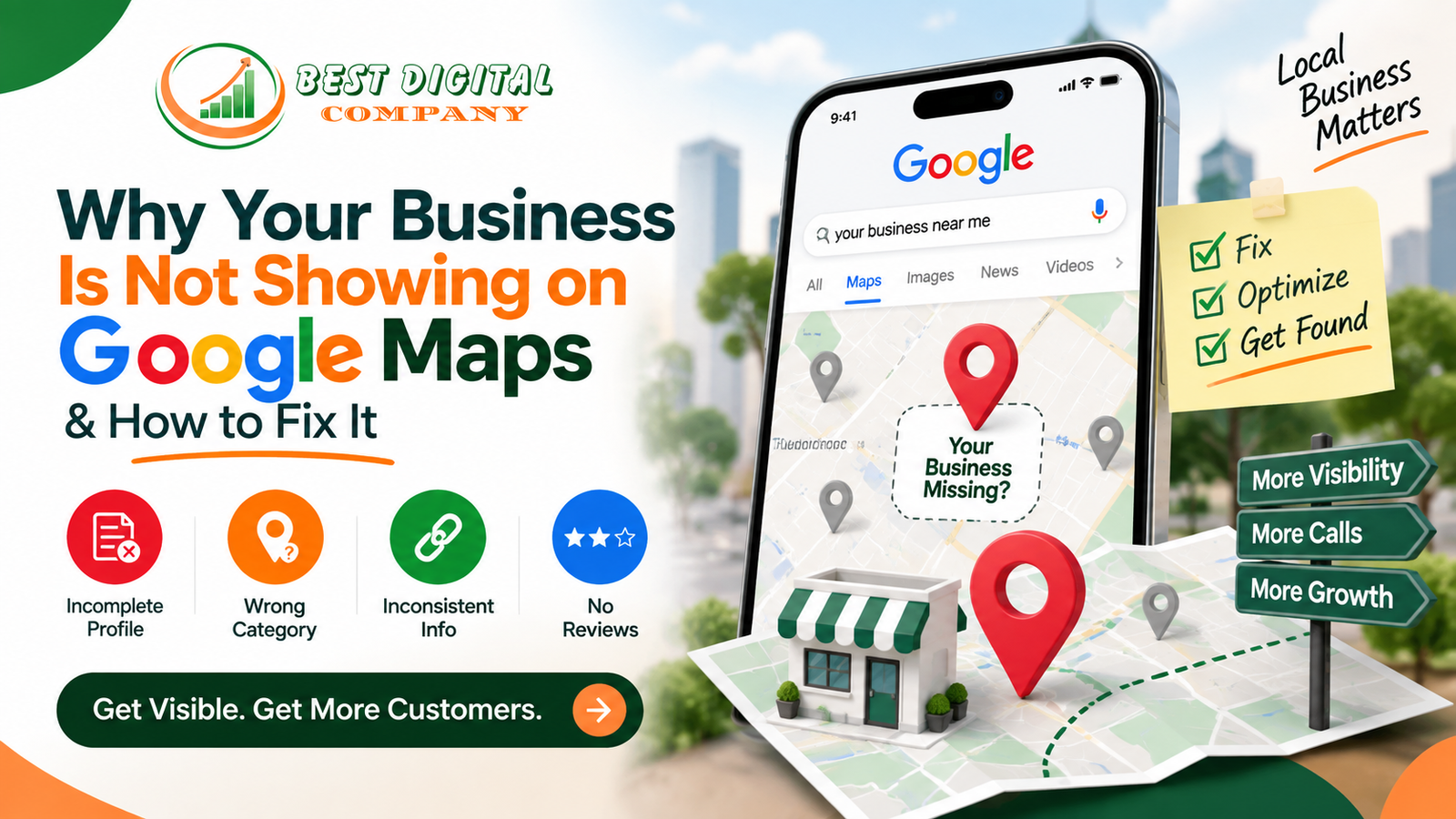
Why Your Business Is Not Showing on Google Maps & How to Fix It

If you have typed your own business name into Google and felt that small drop in your stomach when nothing came up on the map, you are not alone. Every week, we get calls from shop owners, clinics, restaurants, and service providers who say some version of the same thing: “We used to show up, and now we don’t,” or “My competitor two streets away is ranking, and I’m nowhere to be found.”

It is a frustrating problem because, on the surface, it feels random. You have a real shop, real customers, and a real address — so why is Google treating you like you do not exist? The good news is that this almost never happens by accident. Google Maps rankings follow a fairly consistent set of rules, and once you understand what is going wrong, fixing it is usually straightforward.

In this guide, we will walk through exactly why a business is not showing on Google Maps, the technical and content-related reasons behind it, and the practical steps you can take to get back in front of local customers. This comes from years of hands-on local optimization work with businesses across Delhi, Noida, and Gurugram, so the fixes here are based on what has actually worked, not just theory.

What It Really Means When a Business Is Not Showing on Google Maps

Before jumping into fixes, it helps to understand what “not showing up” actually looks like in practice, because it is rarely all-or-nothing.

Sometimes it means your listing does not appear at all when someone searches your business name directly. Other times, it means you are missing from the local map pack — that group of three businesses with pins that appears above the regular results when someone searches something like “electrician near me” or “dentist in Sector 62.” And occasionally, it means your listing shows up, but only when people search your exact business name, never for the services or products you actually offer.

Each of these situations points to a different underlying cause, and understanding which one applies to you is the first step toward a real fix, not a guess.

Common Reasons Your Business Is Not Showing on Google Maps

There is rarely a single cause. In our experience working with local businesses, it is usually a combination of two or three of the following issues stacking on top of each other.

1. Your Google Business Profile Is Incomplete or Unverified

This is the most common reason, by far. Google needs a certain baseline of information before it will confidently place your business on the map for relevant searches. If your profile is missing your business category, hours, phone number, website, or photos, Google has less reason to trust and display it. An unverified listing is treated even more cautiously — in many cases, it will not show up in map results at all until verification is complete.

2. Your Business Category Is Wrong or Too Broad

Choosing “Store” instead of “Bakery,” or “Consultant” instead of “Tax Preparation Service,” seems harmless, but it directly affects which searches your listing is eligible to appear for. Google matches searcher intent to business categories very literally. If your primary category does not match what people are actually searching for, you will be invisible for those exact queries even if everything else about your profile is perfect.

3. Inconsistent Business Information Across the Web

Google cross-checks your business name, address, and phone number (often called NAP) against other places it finds your business mentioned online — directories, your own website, social profiles, and citation sites. If your address is written one way on your website and a different way on a directory listing, that inconsistency chips away at Google’s confidence in your listing, which can quietly suppress your visibility.

4. No Reviews, or a Review Pattern That Looks Unnatural

Businesses with zero reviews, or with a handful of reviews all posted on the same day, tend to rank lower and can, in some cases, trigger extra scrutiny from Google. Reviews are one of the strongest trust signals Google uses to decide who deserves a spot in local results.

5. Weak or Missing Local Signals on Your Website

Your Google Business Profile does not operate in isolation. Google also looks at your actual website to confirm the business is legitimate, active, and relevant to the area it serves. A site with no mention of your service area, thin content, or missing structured data around your business location weakens the connection between your website and your map listing.

6. Suspensions, Guideline Violations, or Duplicate Listings

Sometimes a listing gets suspended for violating Google’s guidelines — this can happen from keyword-stuffing your business name (for example, adding “best plumber Delhi” into your actual business name field) or having duplicate listings for the same location. If this has happened, your listing may be hidden entirely until the issue is resolved.

7. You Are New, and Google Simply Has Not Built Trust Yet

If your listing is genuinely new, it can take a few weeks of consistent activity — reviews coming in, photos being added, a complete profile — before Google starts showing it reliably. This is normal, and patience combined with the right groundwork usually resolves it.

How Local SEO Fixes the Problem Long-Term

Once you know why your business is not showing on Google Maps, the fix almost always runs through a structured local SEO approach rather than a single quick tweak. This is one of the reasons we built our Local SEO services in Delhi around exactly this problem — businesses that look strong on paper but are invisible where it counts, in local map results.

Local SEO is not just about the Google Business Profile itself. It involves aligning three things at once: your Google listing, your website, and the mentions of your business across the web. When these three pieces are consistent and complete, Google’s confidence in your listing grows, and visibility tends to follow. Trying to fix only one piece — say, adding more photos to your profile while your website still has no address or service pages — rarely produces lasting results, because Google is looking at the whole picture, not just one part of it.

Optimizing Your Google Business Profile the Right Way

If you take away one action item from this guide, make it this: your Google Business Profile deserves the same attention you would give your actual storefront.

Start with the basics. Fill in every field Google offers — business hours, service areas, attributes (such as wheelchair accessibility or outdoor seating), and a detailed business description that naturally mentions what you do and where you serve customers, without stuffing it with repeated keywords. Choose your primary category carefully, and add secondary categories only if they genuinely apply.

Photos matter more than most owners realize. Listings with a healthy number of recent, real photos tend to get more attention from both Google’s algorithm and actual customers browsing results. Add pictures of your storefront, your team, your products, and your workspace, and update them periodically rather than uploading a batch once and forgetting about it.

Verification should be completed properly and promptly. If your listing has been sitting unverified, that alone could explain your absence from map results.

Finally, treat your Google Business Profile as a living page, not a one-time setup. Post updates, respond to questions, and keep hours accurate, especially around holidays. Google rewards activity because it signals that a business is real and currently operating.

The Role of On-Page SEO and Website Signals

Your website plays a bigger role in Google Maps visibility than most business owners expect. Search engines look for confirmation that the address on your Google profile matches a real, active business with a real web presence.

This is where solid SEO services in Delhi make a measurable difference. A well-optimized website includes clear location pages, an embedded map, your NAP information in the footer, and content that naturally references the neighborhoods or cities you serve. If your website currently has none of this, it is one of the more overlooked reasons your business is not showing on Google Maps, even if your profile itself looks fine.

Schema markup is another piece worth mentioning here, even briefly. Adding LocalBusiness structured data to your website gives search engines a clean, machine-readable confirmation of your name, address, phone number, and hours, which reinforces everything your Google Business Profile is already telling them.

Why Reviews and Local Citations Matter More Than You Think

Reviews do two jobs at once: they build trust with the algorithm, and they build trust with actual customers deciding between you and the business next to you on the map.

A simple, sustainable system works best here. Ask satisfied customers for reviews at the natural moment after a good experience — right after a completed service, a successful purchase, or a positive interaction. Respond to every review, positive or negative, because that response activity itself is a signal Google tracks. Avoid review gating or incentivized reviews that violate platform policies, since this is one of the fastest ways to trigger a suspension.

Citations — mentions of your business name, address, and phone number on other reputable sites like local directories, industry associations, or news mentions — reinforce the same information Google already has. The goal is not volume for its own sake; the goal is consistency. Ten accurate citations will do more for you than fifty inconsistent ones.

How Social Media Activity Supports Local Visibility

It is easy to think of social media and Google Maps as unrelated, but they work together more than people assume. An active, consistent social presence signals that a business is genuinely operating, which indirectly supports the trust signals Google is already evaluating.

This is part of why we pair local optimization work with Social Media Marketing services for many of our Delhi-based clients. When your business is visibly active on Instagram or Facebook, sharing real photos, responding to comments, and maintaining consistent branding and location tagging, it reinforces the same story your Google profile is telling. It also gives customers another path to find and recognize your business, which supports the overall picture Google is trying to build about your legitimacy.

If you want a deeper look at how this plays out specifically in Delhi, our earlier piece on SMO services in Delhi breaks down how local businesses are using social platforms to support their growth beyond just search visibility.

Using Paid Ads While Your Local SEO Builds Momentum

Local SEO takes time. Even when everything is fixed correctly, it can take several weeks for Google to fully recognize the changes and reflect them in map rankings. If you need visibility right now — for a new location opening, a seasonal push, or simply because leads have dried up —Pay Per Click advertising through Google’s Local Services or Local Search campaigns can put you in front of nearby customers immediately while the organic groundwork is still being laid.

Think of this as a bridge rather than a replacement. Paid visibility gets you seen today; local SEO makes sure you keep being seen once the campaign budget runs out.

Why Your Website Itself Needs to Be in Good Shape

A business is not showing on Google Maps for another reason that gets overlooked constantly: the website linked to the profile is slow, outdated, broken, or simply does not load properly on a phone. Google factors in the overall health and credibility of the website connected to a business listing, and a poor website experience undercuts the trust you have worked to build everywhere else.

If your site has not been touched in years, was built on an outdated platform, or does not work well on mobile devices, it is worth revisiting through proper Website Development and Designing. A clean, fast, mobile-friendly site with clear service and location pages does more than convert visitors — it reinforces every other signal you are sending to Google about your business being active and legitimate.

The Bigger Picture: AI Search and How Local Discovery Is Changing

It is worth mentioning that local discovery is not staying static. Search behavior is shifting toward AI-driven answers and summaries, and this is starting to influence how people find local businesses too. We covered this shift in detail in our post on how AI search is changing SEO, and the same principles apply here: consistent, accurate, well-structured business information is becoming even more important, not less, as AI systems pull together answers from multiple sources.

If you are curious about how traditional optimization compares with these newer approaches, our breakdown of GEO vs SEO explains where the two overlap and where they differ. The short version for local businesses: get your Google Business Profile, website, and citations right first. That foundation is exactly what both traditional search and newer AI-driven discovery tools rely on.

A Practical Checklist to Fix Google Maps Visibility

Here is a condensed sequence you can work through, roughly in order of impact:

  1. Confirm your Google Business Profile is verified and fully complete, including category, hours, description, and service areas.
  2. Correct your business category if it does not match what customers actually search for.
  3. Audit your business name, address, and phone number across your website and any directories, and fix inconsistencies.
  4. Add recent, genuine photos and keep them updated.
  5. Build a steady, honest flow of customer reviews and respond to all of them.
  6. Check your website for a clear address, embedded map, and location-specific content.
  7. Add LocalBusiness schema markup to your website if it is missing.
  8. Make sure your website loads quickly and works properly on mobile devices.
  9. Stay active on social media with consistent branding and location details.
  10. Consider a short-term paid campaign if you need visibility immediately while these fixes take effect.

None of these steps are complicated on their own. The difficulty is usually in doing all of them consistently and in the right order, which is exactly where a lot of business owners run out of time.

When It Makes Sense to Bring in Professional Help

Some business owners can work through this checklist themselves over a weekend. Others are running a business full-time and simply do not have the hours to audit citations, fix schema markup, and manage a review strategy on top of everything else.

If you are in the second group, working with an experienced local team can shorten the timeline significantly. Our Digital Marketing Agency covering Delhi NCR has handled this exact situation repeatedly for businesses across Delhi, Noida, and Gurugram, combining local SEO, website fixes, and social presence into one coordinated plan instead of treating each piece separately.

Frequently Asked Questions

Why is my business not showing on Google Maps at all, even when I search the exact name?

This usually points to a verification issue, a suspended listing, or a duplicate profile competing for the same business. Start by checking your Google Business Profile dashboard for any alerts or pending verification steps.

How long does it take for a business to start showing on Google Maps after fixing these issues?

It varies, but most businesses see meaningful movement within two to six weeks after completing their profile, correcting citations, and building a steady stream of reviews. Newer businesses or ones recovering from a suspension may take a bit longer.

Can a wrong business category really stop me from appearing in local searches?

Yes. Category selection directly affects which searches your listing is eligible to appear in, so an inaccurate or overly generic category can quietly keep you out of relevant results even if the rest of your profile looks complete.

Does having no reviews mean my business will not show up on Google Maps?

Not having reviews will not automatically hide your listing, but it does put you at a disadvantage compared to competitors with an active review history, since reviews are one of the stronger trust signals Google uses when ranking local results.

Is it possible to fix Google Maps visibility without touching my website?

You can make some progress by optimizing the Google Business Profile alone, but lasting results usually require your website to reinforce the same information — matching address details, location-relevant content, and basic technical health like mobile speed.

Should I run paid ads if my business is not showing on Google Maps?

Paid campaigns can help you stay visible to nearby customers while your organic local optimization takes effect, but they work best as a short-term supplement rather than a permanent replacement for fixing the underlying visibility issues.

What is the fastest single fix if I only have time to do one thing this week?

Completing and verifying your Google Business Profile, including an accurate category and a filled-out business description, tends to produce the most noticeable improvement for the least effort.

Final Thoughts

Being invisible on Google Maps is almost never a sign that something is fundamentally wrong with your business — it is usually a handful of fixable gaps between what Google needs to see and what it is currently seeing. Complete your profile, get your business information consistent everywhere it appears, keep collecting honest reviews, and make sure your website backs up the story your listing is telling.

If you have worked through the checklist above and are still not seeing movement, it may be worth a second set of eyes on your profile and website to spot what is being missed. That is exactly the kind of audit our team runs for local businesses every week, and it is often faster to fix than owners expect once the real cause is identified.
AI Search SEO 2026: How It's Changing SEO for Business

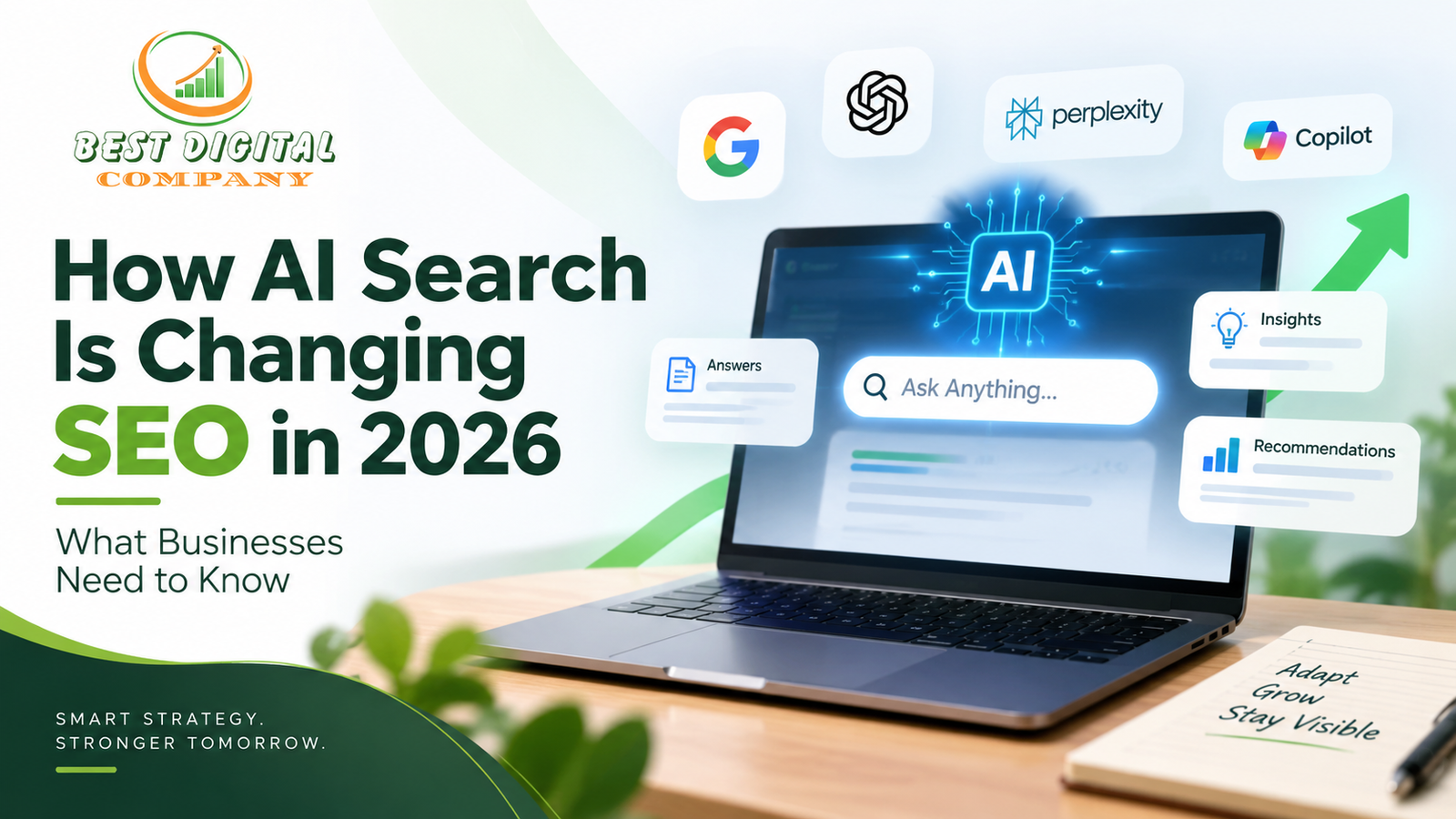
How AI Search Is Changing SEO in 2026: What Businesses Need to Know

Type a question into Google today and there is a good chance you will not click a single blue link before you get an answer. An AI-generated summary sits right at the top, pulling information from several sources at once, and a growing number of people stop reading right there. Add to that the rise of ChatGPT, Perplexity, and Copilot as everyday research tools, and it becomes clear that the way people “search” has quietly changed shape.

For business owners who spent years learning how to rank a page on Google, this shift can feel unsettling. The rules that worked in 2020 or even 2023 do not fully apply anymore. But this is not the end of search visibility — it is a new phase of it. Understanding AI search SEO now is what will separate businesses that keep showing up in front of customers from those that quietly disappear from view over the next couple of years.

This guide breaks down what has actually changed, why it matters, and what a business whether it runs a single local shop or manages a national brand should be doing differently in 2026.

What Is AI Search SEO and Why 2026 Is a Turning Point

AI search SEO refers to the practice of optimizing content, structure, and authority signals so that a brand gets picked up not just in traditional organic listings, but also inside AI-generated answers, chat-based assistants, and summary boxes that appear before or instead of a standard list of website links.

The difference sounds small until you look at the numbers. Search engines are no longer just indexing pages and ranking them by relevance and links. They are reading, summarizing, and synthesizing information from multiple pages to construct a single answer. That answer often satisfies the user’s question completely, which means there is no guarantee of a click at all.

2026 is being treated as a turning point for a few reasons:

  • AI-generated summaries now appear on a large share of everyday queries, not just complex research questions.
  • Conversational assistants have become a genuine alternative entry point for shopping, comparing services, and getting recommendations.
  • Search engines are placing far more weight on demonstrated expertise and trustworthiness, not just keyword matching.
  • Voice search and multi-step conversational queries are pushing content to answer follow-up questions, not just the first one.

None of this means classic SEO principles are dead. It means the target has expanded. You are no longer optimizing for one results page — you are optimizing for how machines understand, trust, and repeat what you say about your own business.

How AI Search Engines Actually Decide What to Show

It helps to understand the mechanics before changing a content strategy. AI-powered search tools generally work in two overlapping ways.

Retrieval-based answers. Tools like Google’s AI Overviews and Bing’s Copilot pull from indexed web pages in real time (or near real time), select the passages that best answer the query, and stitch them into a readable summary with citations. This means your page still needs strong traditional optimization clear headings, fast load times, structured data because the AI has to find and understand your content before it can use it.

Trained knowledge plus retrieval. Tools like ChatGPT and Perplexity blend what they learned during training with live web lookups. For a business, this means your reputation across the internet reviews, mentions in industry publications, consistent business information, social proof  matters just as much as your own website content. The AI is not only asking “what does this page say,” it is effectively asking “how many trustworthy places already say the same thing about this business.”

This is why AI search SEO is less about chasing a single trick and more about building a consistent, well-documented, genuinely useful presence across your website and the wider internet.

Why Old-School SEO Tactics Alone No Longer Work

A lot of businesses are still running the same playbook they used five years ago: stuff a keyword into a title tag, publish a few hundred words, build some backlinks, wait. That approach used to be enough to get a page ranking on a results page. It is no longer enough to get a business mentioned inside an AI-generated answer.

Here is what has changed on the ground:

  • Thin content gets skipped. AI systems are trained to summarize genuinely useful information. A page that repeats the keyword five times but says very little tends to get ignored in favor of a competitor’s more detailed, well-organized page.
  • Generic, templated writing is easy to detect. Search engines have gotten noticeably better at identifying content that reads like it was mass-produced without a real person’s input, and they now actively favor pages that show original thinking, direct experience, and a clear point of view.
  • Keyword density matters far less than clarity of intent. AI models are built to understand meaning, not just match words. A page that clearly answers “how much does SEO cost in Delhi” in plain language will often outperform a page dense with keyword repetition but light on a direct answer.
  • Backlinks alone don’t build trust the way they used to. Links still matter, but AI search tools also weigh things like consistent business details across the web, credible mentions, and demonstrated expertise in the subject.

The businesses adapting well right now are the ones treating their website like a genuine resource for their audience not a container for keywords.

What AI Search SEO Means for Content Strategy in 2026

If AI tools are summarizing your content instead of just linking to it, your content has to be built differently.

Answer the actual question, early and clearly. Structure content so the core answer appears near the top, with supporting detail underneath. AI summarization tools tend to favor content that states its point plainly rather than building up to it over several paragraphs.

Write like a person who has actually done the work. Specific numbers, real examples, and small details that only come from direct experience are what make content genuinely useful — and they are also what current search systems are actively trying to reward, as part of a broader push toward human-written, experience-based content rather than generic filler.

Structure for scanning and citation. Use clear headings, short paragraphs, and organized lists where they genuinely help the reader. AI systems tend to pull cleanly formatted sections into their summaries far more easily than dense blocks of text.

Cover the full topic, not just the headline keyword. If someone is researching AI search SEO, they are also likely wondering about related questions cost, timeline, tools, risks. Covering these naturally within one well-organized piece, rather than spreading thin content across a dozen shallow pages, tends to perform better.

Update content regularly. AI systems favor pages that reflect current information. A page written in 2022 that still references outdated statistics or old platform names signals staleness, both to readers and to the systems evaluating trustworthiness.

The Growing Role of Professional SEO Services in an AI-First World

A common misconception is that AI search reduces the need for SEO expertise. In practice, it has raised the bar. Getting a business surfaced inside an AI-generated answer requires technical groundwork (structured data, crawlability, page speed), consistent content strategy, and ongoing authority-building all at once.

This is exactly why working with an experienced Search Engine Optimization partner matters more now than it did a few years ago. A capable SEO team is not just chasing rankings on a results page anymore; it is managing how a brand is represented across the entire information ecosystem that AI models draw from your website, your Google Business Profile, third-party reviews, and industry mentions.

For businesses that operate across multiple cities, this also means location-specific strategy still has a place. Companies exploring SEO services in Haryana or comparing options like an SEO company in Gurugram versus an SEO agency in Gurgaon are often trying to solve the same underlying problem: how do we stay visible when the way people search keeps shifting under our feet. The city-level detail changes, but the fundamentals of AI search SEO — clarity, trust signals, and consistent information apply everywhere.

Why Local SEO Still Matters in the Age of AI Search

It’s tempting to assume that AI search is a global, generic phenomenon that erases the value of local optimization. The opposite is closer to the truth. When someone asks an AI assistant “who’s a reliable digital marketing agency near me” or “best SEO company in my city,” the assistant still relies heavily on localized signals Google Business Profile accuracy, local reviews, and location-specific content to shape its answer.

This is why local SEO in Delhi remains a distinct discipline rather than something AI search has made irrelevant. If your business information is inconsistent across directories, or your Google Business Profile hasn’t been updated in a year, AI-driven answers are less likely to trust or recommend you regardless of how good your website content is.

Businesses researching options like SEO services in Punjab, or comparing an SEO expert in Bangalore against a freelancer, are usually trying to answer the same question from a different city: who can actually keep our business visible as search itself keeps changing. The honest answer is that local groundwork accurate listings, genuine local reviews, location-relevant content is now a foundation for AI search SEO, not a separate, optional add-on.

How Social Media Signals Influence AI Search Visibility

Search and social media used to be treated as separate channels with separate strategies. That line has blurred considerably. AI search tools increasingly factor in social proof mentions, engagement patterns, and brand consistency across platforms when deciding how much to trust a business.

This doesn’t mean a viral post will get you cited in an AI answer. It means that an active, consistent, and credible social presence contributes to the overall trust picture that AI systems are trying to build about your brand. A well-run Social Media Marketing strategy that keeps your business name, offerings, and customer interactions consistent across Instagram, Facebook, and LinkedIn adds another layer of verifiable information that supports your visibility in AI-driven search.

Businesses that have historically treated their SMO strategy as separate from their SEO efforts are increasingly finding value in aligning the two same messaging, same service descriptions, same location details because that consistency is now part of what determines whether AI models treat a brand as a credible source.

Pay Per Click and AI Search: Do Ads Still Matter?

With AI-generated answers taking up more space at the top of results pages, many business owners are asking whether paid advertising is still worth the investment. The short answer is yes, but its role is shifting.

As organic visibility becomes harder to guarantee inside AI summaries especially in competitive industries Pay Per Click advertising offers something AI search SEO cannot: a controlled, immediate placement in front of ready-to-buy customers. Businesses that have used Google Ads to generate faster leads are finding that a combined strategy solid organic content built for AI search alongside targeted PPC campaigns provides more consistent visibility than relying on either channel alone.

Think of it this way: AI search SEO builds long-term trust and visibility that compounds over time. PPC fills the gap while that trust is being built, and continues to deliver targeted traffic even after your organic presence matures.

Website Development, Technical SEO, and AI Crawlability

Content quality matters, but AI-driven search tools also need to physically access and understand your website before any of that content can help you. This is where technical foundations come back into focus.

A slow, poorly structured, or outdated website creates real friction for both traditional search crawlers and the newer AI systems trying to retrieve information. Clean HTML structure, fast load times, mobile responsiveness, and properly implemented structured data (schema markup) all make it easier for AI tools to correctly interpret what your business does and who it serves.

This is precisely why Website Development and Designing has become inseparable from a modern SEO strategy rather than a one-time setup task. A business with excellent content sitting on a slow, cluttered, or badly coded website is fighting an uphill battle that no amount of writing can fully offset.

Building E-E-A-T for AI Search SEO Success

Google’s long-standing quality framework experience, expertise, authoritativeness, and trustworthiness has become even more central in an AI-driven search environment. These four elements are essentially what AI systems are trying to measure, in different forms, when they decide which sources to trust and cite.

A few practical ways businesses can strengthen this:

  • Show real experience. Case studies, project results, and specific outcomes (not vague claims) demonstrate that you’ve actually done the work you’re writing about.
  • Credit real authors. Content attributed to a named person with relevant background carries more weight than anonymous or generic “admin” posts.
  • Keep information accurate and current. Outdated statistics, dead links, or old service details undermine trust quickly.
  • Earn mentions from credible third parties. Reviews, press mentions, and citations from other reputable sites all feed into how trustworthy your business appears to both human readers and AI systems.
  • Be transparent about who you are. Clear “About Us” information, verifiable contact details, and a consistent business address across the web all contribute to trust signals that AI-driven evaluation increasingly relies on.

None of this is new advice, exactly but it has moved from “good practice” to genuinely essential as AI systems take on a larger role in deciding which businesses get recommended.

Practical Steps Businesses Should Take Right Now

Rather than trying to overhaul everything at once, most businesses see the best results by working through a few priorities in order:

  1. Audit existing content for genuine usefulness. Identify thin, outdated, or purely keyword-stuffed pages and either rewrite them with real depth or remove them.
  2. Fix technical gaps. Confirm your site loads quickly, works well on mobile, and has proper schema markup so AI crawlers can understand it easily.
  3. Strengthen local listings. Make sure your business name, address, phone number, and service details are identical across your website, Google Business Profile, and directories.
  4. Build a consistent cross-channel presence. Align your website content with your social media messaging so AI systems see one consistent story about your business.
  5. Invest in original, experience-based content. Prioritize depth and real examples over volume. A handful of thorough, well-researched pages will outperform dozens of shallow ones.
  6. Monitor how your brand appears in AI answers. Periodically ask AI tools questions related to your industry and location to see whether and how your business shows up.

Businesses that treat this as an ongoing process, rather than a one-time fix, are the ones building durable visibility as AI search continues to evolve through 2026 and beyond.

Frequently Asked Questions

What exactly is AI search SEO?

AI search SEO is the practice of optimizing a website’s content, structure, and off-site reputation so that it gets picked up not only by traditional search rankings but also by AI-generated answers, summaries, and conversational search tools like AI Overviews, ChatGPT, and Perplexity.

Is traditional SEO no longer relevant in 2026?

Traditional SEO fundamentals quality content, technical performance, and backlinks are still relevant. What has changed is that they are no longer sufficient on their own. Businesses now also need to focus on clarity, demonstrated expertise, and consistent trust signals across the web to be picked up by AI-driven search.

Will AI search reduce website traffic?

For some types of informational queries, yes — users may get their answer directly from an AI summary without clicking through. However, businesses that build genuinely useful, well-structured content often still get cited and clicked, particularly for queries where the user wants more detail, pricing, or a specific local recommendation.

How long does it take to see results from AI search optimization?

Similar to traditional SEO, meaningful results typically take a few months of consistent effort, since AI systems rely partly on accumulated trust signals reviews, mentions, and content depth  that build up gradually rather than overnight.

Does local SEO still matter if AI handles most searches now?

Yes. AI assistants rely heavily on accurate, localized information business listings, reviews, and location-specific content to answer location-based queries. Local SEO remains a core part of getting recommended by AI tools for “near me” type searches.

Should small businesses worry about AI search changes?

Small and local businesses are actually well positioned to benefit, since AI search tools tend to favor genuine, specific, experience-based content over generic corporate copy something smaller businesses can often produce more naturally than larger competitors.

Final Thoughts

AI search is not replacing the need for good SEO — it is raising the standard for what “good” actually means. The businesses that will do well through the rest of 2026 are the ones building genuinely useful content, keeping their technical foundation solid, staying consistent across every channel where customers might encounter them, and treating trust as something to be earned deliberately rather than assumed.

If you are unsure where your business currently stands in this shifting landscape, a practical first step is a clear-eyed audit of your website, content, and online presence followed by a strategy built around how people (and the AI tools they now use) actually search today.

Local SEO in Delhi

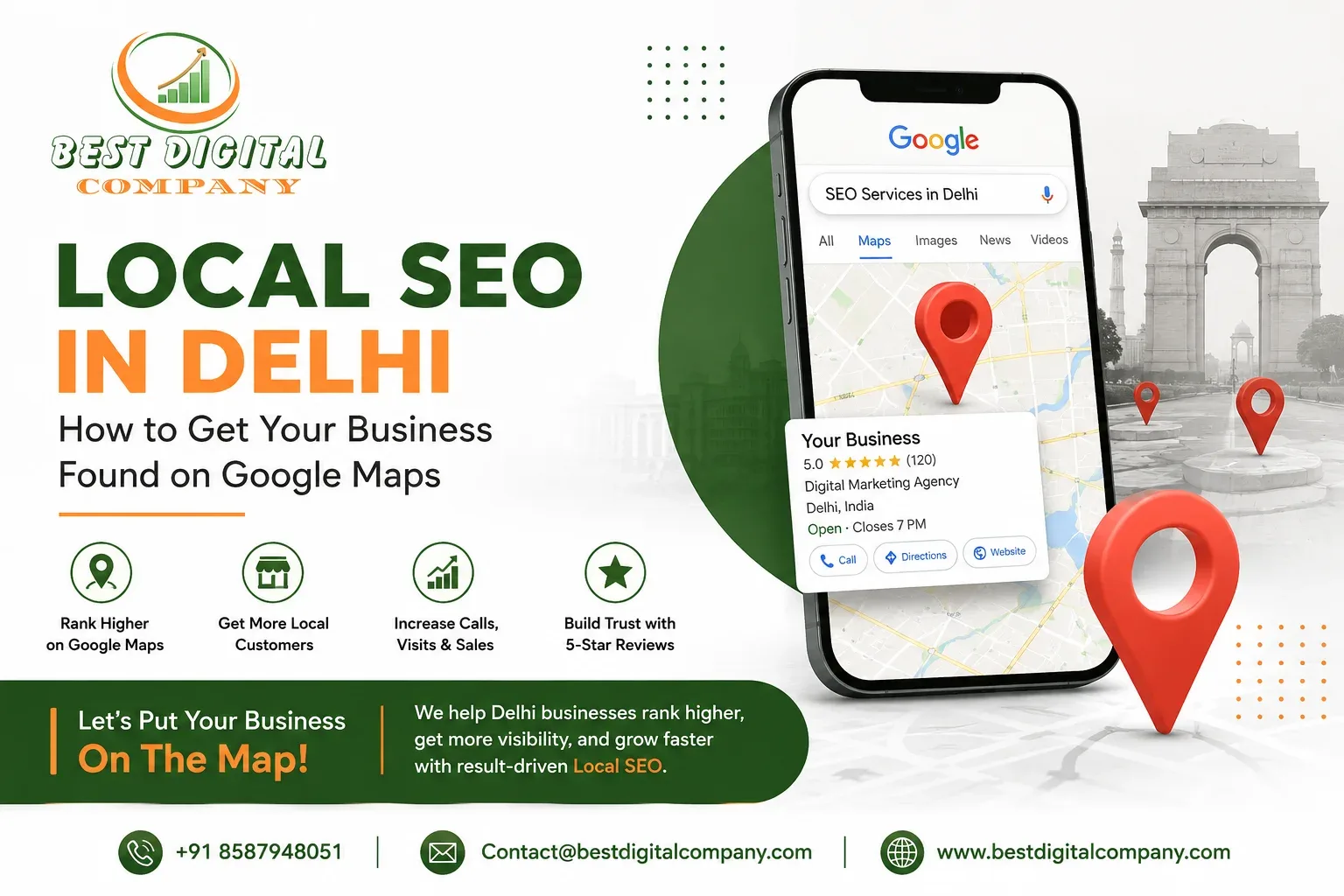
Local SEO in Delhi: How to Get Your Business Found on Google Maps

If you run a shop, clinic, restaurant, or service business anywhere from Connaught Place to Dwarka, there’s a good chance most of your new customers are finding you the same way: they open Google, type something like “near me,” and pick from whatever shows up on the map. That map pack, sitting right above the regular results, is where local buying decisions are made in seconds. If your business is not there, you are not losing a little visibility, you are losing the customer who was already ready to walk in or call.

This is exactly why have shifted so heavily toward local optimization over the past few years. A national ranking strategy doesn’t help a dentist in Rohini or a boutique in Karol Bagh. What helps is showing up when someone nearby is actively looking. In this guide, we will walk through what local SEO actually involves, how Google Maps visibility works, and the practical steps that move a business from invisible to found without the jargon and without the guesswork.

What Is Local SEO and How Is It Different From Regular SEO Services in Delhi

Traditional SEO focuses on ranking a website for broad, often national, search terms. Local SEO does something narrower and, for most small and mid-sized businesses, more valuable: it makes sure your business shows up when someone in your city or neighbourhood searches for what you offer.

The difference matters because Google treats these two types of searches differently. A search for “best CRM software” pulls up websites based on content depth, authority, and backlinks. A search for “SEO company in Delhi” or “AC repair near me” pulls up a mix of map listings and websites, weighted heavily by proximity, relevance, and how well a business has verified its presence on Google.

That’s why a lot of Delhi businesses that invest in a general Search Engine Optimization plan without a local layer end up disappointed. Their website might rank fine for informational searches, but they’re still invisible on the map when a customer three kilometres away is searching with buying intent. Local SEO closes that gap. It’s not a replacement for regular SEO — it’s a companion strategy that works alongside it, and if you want a broader look at how the two connect, our dedicated page onSEO Service in Delhi breaks that relationship down further.

Google Business Profile: The Foundation of Google Maps SEO

If there’s one thing that determines whether your business appears on the map, it’s your Google Business Profile (formerly Google My Business). This single, free listing carries more weight for local visibility than almost anything else you can do.

A few things matter here more than people expect:

Accurate categories. Pick the primary category that most precisely matches what you do, not the broadest one. A “family dentist” ranks differently than a general “dentist” category for certain searches, and choosing the wrong one quietly limits how often you appear.

Complete, honest information. Business hours, service areas, phone number, and a real address all need to match what’s on your website. Gaps or inconsistencies here don’t just confuse customers — they signal to Google that the listing might not be reliable.

Photos that are actually yours. Stock images or borrowed photos hurt more than they help. Real photos of your storefront, team, and work build trust with both customers and Google’s systems, which increasingly reward listings that show genuine activity.

Regular updates. Profiles that post updates, respond to questions, and add fresh photos tend to outperform ones that were set up once and forgotten. Google Maps SEO rewards businesses that treat their profile as a living page, not a static directory entry.

Getting this foundation right is usually the single highest-impact step in any local SEO Delhi campaign, and it’s often the first thing we audit when a client comes to us frustrated about not showing up in the map pack.

On-Page Signals Support Local SEO Delhi Efforts

Your Google Business Profile does not work in isolation — Google cross-checks it against your website. This is where on-page local SEO comes in, and it’s a step a lot of businesses skip entirely.

At minimum, your website should include:

  • A clear mention of your city and neighbourhood in page titles, headings, and body content, written naturally rather than stuffed in
  • A dedicated location or service-area page if you serve multiple parts of Delhi NCR
  • Your business name, address, and phone number displayed consistently, ideally in the footer of every page
  • Schema markup (structured data) that tells search engines exactly what kind of business you are and where you’re located
  • Fast loading times and mobile-friendly design, since most local searches happen on a phone while someone is already out and about

We built our own Local Seo in Delhi service page around exactly this structure, and it’s the same framework we apply for clients across different industries, from clinics to retail chains. The goal isn’t to cram keywords into every paragraph. It’s to make the geographic and service intent unmistakable to both the reader and the algorithm.

Building Citations and Local Links That Strengthen Google Maps SEO

Citations are simply mentions of your business name, address, and phone number on other websites — directories, local news sites, industry associations, and review platforms. They might sound old-fashioned in an age of AI-driven search, but they still carry real weight for one simple reason: consistency across the web tells Google your business is legitimate and stable.

The mistake most businesses make is listing their address slightly differently on every platform — “Rd” on one site, “Road” on another, a missing suite number somewhere else. Individually these look trivial, but collectively they create doubt in Google’s local ranking systems about which version is accurate.

A cleaner approach is to:

  1. Audit your existing listings on major directories and fix mismatches
  2. Prioritise Delhi-specific and India-wide directories relevant to your industry over generic global ones
  3. Earn a handful of genuine local backlinks from a trade association, a local blog, a chamber of commerce rather than chasing volume
  4. Keep your NAP (name, address, phone) identical everywhere, including on your website footer and social profiles

This kind of cleanup rarely feels exciting, but it’s often the quiet difference between a business that ranks steadily and one that fluctuates in and out of the map pack for no obvious reason.

Reviews and Reputation: Why They Influence Google Maps SEO

Ask any business owner in Delhi who’s watched their map ranking improve, and reviews usually come up early in the conversation. Google factors in both the quantity and the recency of reviews, along with how you respond to them.

A profile with 40 reviews and a 4.6 rating, where the owner replies to almost everyone, typically outperforms a profile with 100 reviews that has not been touched in a year. Responsiveness signals an active, trustworthy business which is precisely what Google Maps SEO is designed to surface.

A few practical habits help here:

  • Ask happy customers for a review right after a positive interaction, rather than in a generic follow-up email weeks later
  • Reply to every review, including the critical ones, calmly and specifically
  • Never buy reviews or use review-gating tools that filter out negative feedback before it’s posted — Google’s guidelines prohibit this, and getting caught can suppress a listing entirely
  • Mention specific services or neighbourhoods naturally when replying, since this reinforces relevance without looking manufactured

Reputation management isn’t a side task anymore. For most Delhi businesses competing in a crowded map pack, it’s become as important as the technical groundwork.

Choosing the Right SEO Company in Delhi for Local Growth

Delhi has no shortage of agencies claiming to guarantee the number-one spot on Google Maps within weeks. That promise alone is usually a red flag — no reputable SEO Company In Delhi can guarantee rankings, because Google’s algorithm accounts for hundreds of signals that no agency fully controls.

What you should look for instead:

A clear, documented process. Ask what they’ll actually do in the first 30, 60, and 90 days. Vague answers about “optimising everything” usually mean there isn’t a real plan.

Local case studies, not just generic ones. A company that’s ranked businesses specifically within Delhi NCR understands the competitive landscape here far better than one working from a template built for a different city.

Transparent reporting. You should be able to see your Google Business Profile insights, keyword movement, and website traffic on a regular basis, not just a monthly PDF with vague summaries.

Ethical practices. Fake reviews, keyword stuffing, and spammy directory submissions might produce short-term bumps, but they routinely lead to penalties that take months to undo.

If you’re comparing agencies right now, it’s worth reading our earlier piece on Best SEO Company vs Best SEO Agency: Which Title Actually Matters? it goes into how these titles are often just marketing labels, and what actually determines whether a provider will do good work. We’ve also written about a closely related question in SEO Company Near Me vs Remote SEO Agency: Does Location Still Matter in 2026?, which is directly useful if you’re weighing whether a Delhi-based team gives you an edge over a remote one for local work.

Common Local SEO Mistakes Delhi Businesses Make

A few patterns show up again and again when we audit a new client’s presence:

Multiple listings for the same location. Old, duplicate, or unclaimed Google Business Profiles from a previous owner or an earlier attempt at setup often confuse Google about which listing is current, splitting reviews and ranking signals across two or more pages.

Ignoring service-area accuracy. Businesses that serve all of Delhi NCR but only list their exact address sometimes miss out on visibility in areas they genuinely cover. Setting service areas correctly in the profile settings fixes this.

Treating the website and the map listing as separate projects. They need to reinforce each other. A gorgeous website with no local schema, and a Google Business Profile with no matching content on the site, sends mixed signals.

No mobile optimisation. Since the overwhelming majority of “near me” searches happen on phones, a slow or clunky mobile experience can undo a lot of the ranking progress made elsewhere. If your site needs a rebuild, our Website Development & Designing team can help make sure the technical foundation actually supports your local SEO Delhi strategy instead of working against it. We also compared different approaches to this in Best Web Designer or Best Web Development Company: Who Do You Actually Need?, which is worth a read if you are unsure what kind of help your site needs first.

Neglecting reviews after the initial push. A flurry of reviews when a business first launches its profile, followed by silence for a year, tends to stall momentum right when competitors are still actively collecting theirs.

How Best Digital Company Approaches SEO Services in Delhi

We’ve worked with businesses across Delhi NCR — retail, healthcare, home services, and B2B — and the pattern is consistent: local visibility rarely improves through one single fix. It comes from a combination of a properly optimised Google Business Profile, a website built to reinforce local relevance, consistent citations, and a steady stream of genuine reviews, maintained over months rather than treated as a one-time project.

Our approach usually starts with an audit of where a business currently stands — profile completeness, citation consistency, competitor comparison, and website technical health — followed by a prioritised action plan rather than a generic checklist. If paid visibility is also part of the conversation, we pair local SEO with Pay Per Click campaigns targeted specifically at Delhi NCR searches, since the two channels tend to reinforce each other when a business is trying to grow quickly. For businesses also active on social platforms, our Social Media Marketing team can align local content with what’s happening in the Maps listing, which keeps the brand consistent across every touchpoint a customer sees.

If you’d like a structured, ongoing plan rather than a one-off audit, our SEO Packages outline what’s included at different levels of support, from foundational profile and citation work up to full local content strategy.

We are based at C-1/295, Gali No-15, Harsh Vihar, Delhi -110093, near Lal Mandir, and most of our team has spent years working specifically within the Delhi NCR market — which means we are not applying a national template to a local problem. If you’d rather talk through your specific situation than read another checklist, you can reach us directly through our Contact Us page.

FAQ

How long does local SEO take to show results in Delhi?

Most businesses start seeing early movement in Google Business Profile visibility within 4 to 8 weeks, particularly if the profile was previously incomplete. Meaningful, stable ranking improvement in the map pack usually takes 3 to 6 months, since it depends on consistent review growth, citation cleanup, and ongoing content updates rather than a single fix.

Is local SEO different from paid Google Ads for local visibility?

Yes. Local SEO improves your organic position on Google Maps and in local search results over time, without paying per click. Local Google Ads campaigns can put you at the top of results immediately, but that visibility disappears the moment the budget stops. Many Delhi businesses use both together — ads for immediate visibility while organic local SEO builds a lasting foundation.

Do I need a physical office in Delhi to rank for local searches?

Not necessarily, but it helps significantly. If you serve customers without a walk-in location — say, a service-area business like a plumber or an electrician — you can still set up and optimise a Google Business Profile using a service-area setting instead of a public address. What matters most is that your listed information is accurate and verifiable.

How many Google reviews does a business need to rank well on Maps?

There is no fixed number. What matters more is consistency and recency — a steady trickle of new reviews over months tends to outperform a large batch collected once and then abandoned. Response rate and review quality also factor into how Google evaluates the listing.

Can I do local SEO myself, or do I need to hire an SEO company in Delhi?

Basic steps — claiming your Google Business Profile, keeping information accurate, and asking customers for reviews — are manageable on your own. Where most businesses benefit from professional help is in citation building, schema markup, competitor analysis, and ongoing optimisation, since these require both technical knowledge and consistent time investment that’s hard to sustain alongside running the actual business.

What is the biggest local SEO mistake Delhi businesses make?

Treating it as a one-time setup rather than an ongoing effort. A Google Business Profile that’s optimised once and then left untouched for a year almost always loses ground to competitors who are actively posting updates, collecting reviews, and refining their listing on a regular basis.