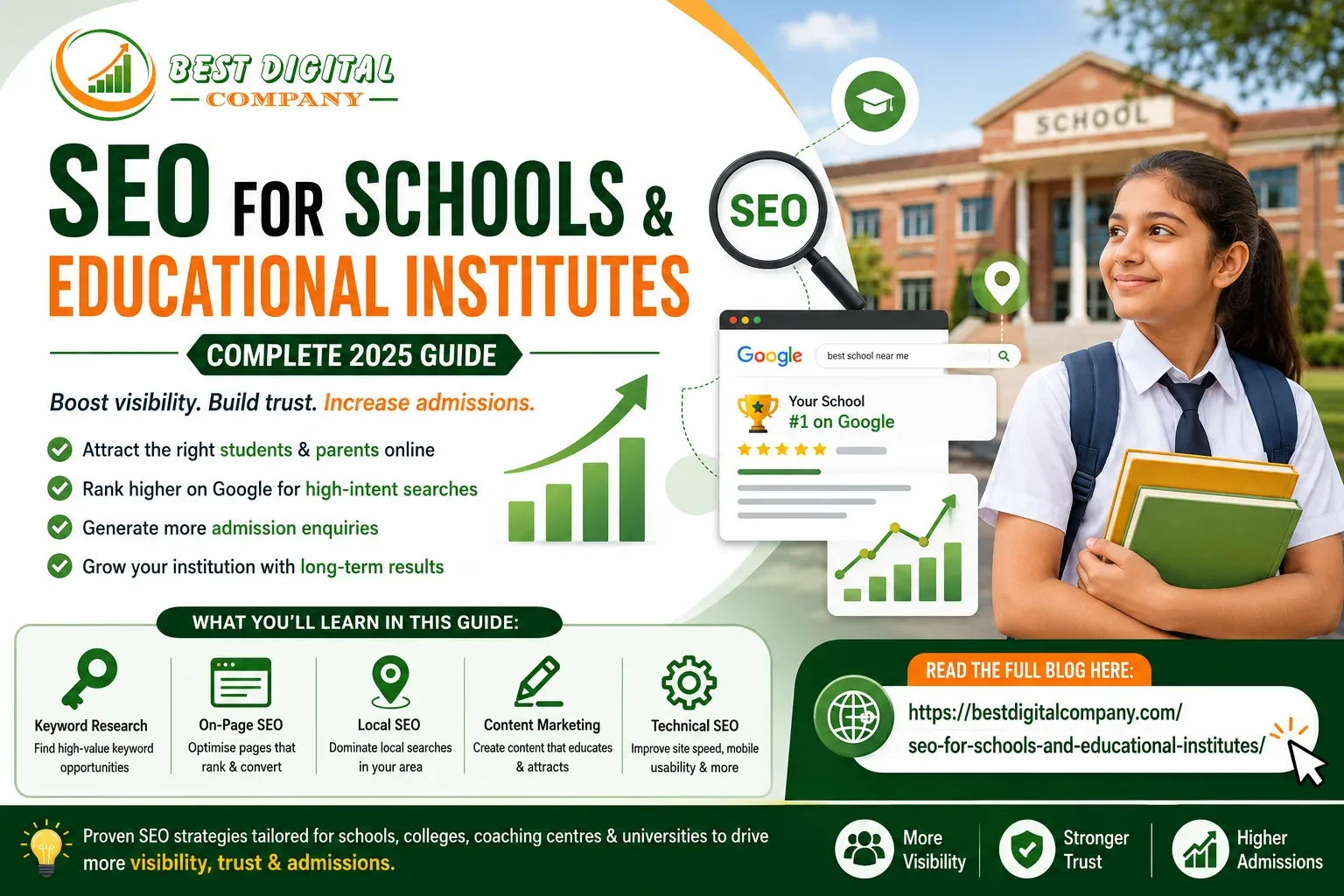
SEO for Schools & Educational Institutes

SEO for Schools & Educational Institutes

When a parent types “best CBSE school in Delhi” or a student searches “MBA colleges with placement near me”, the institutions that appear on page one win. Those that don’t exist on Google simply don’t exist in the minds of prospective students.

Unlike paid advertising, SEO builds compounding returns. A well-optimised blog post or admission page can drive enquiries for years without ongoing ad spend. For schools operating with tight marketing budgets, this makes SEO the highest-ROI digital marketing channel available.

Quick Summary:

Educational institutes face unique SEO challenges seasonal search spikes, hyper-local intent, and a parent-student dual audience. This guide covers keyword strategy, on-page optimisation, local SEO, content marketing, and technical SEO tailored specifically for schools, colleges, coaching centres, and universities.


Why SEO Matters for Educational Institutes

Over 93% of parents research schools online before visiting in person. Yet most educational institutes still rely on word-of-mouth and print advertising alone. The institutions investing in SEO today are quietly capturing every prospective admission that their competitors are missing.

Here is why SEO is the most powerful long-term marketing investment for any school or educational institute:

Targeted Visibility:

SEO puts your institution in front of parents and students who are actively searching for exactly what you offer high intent, zero wastage, and no cost per click.

Credibility and Trust:

 Parents associate top Google rankings with institutional quality. A school that ranks on page one is subconsciously perceived as more credible, established, and trustworthy than one buried on page three.

Long-Term Admissions Growth:

 Unlike paid ads that stop delivering the moment you stop paying, organic traffic compounds over time. A page optimised today can drive admission enquiries for the next three to five years.

Multi-Location Reach:

Institutes with multiple campuses can target each location independently with dedicated landing pages and localised SEO strategies, multiplying their organic footprint.

Cost Efficiency:

The cost per lead from organic SEO is consistently three times lower than paid advertising over a 12-month period making it the smartest allocation of a school’s limited marketing budget.


Keyword Research for Educational Institutes

Effective keyword research for schools requires understanding three types of search intent. Informational intent covers queries like “how to apply for school admissions.” Navigational intent covers branded searches like your school’s name. Transactional intent covers high-value queries like “CBSE school admissions open near me” where the parent is ready to act.

High-Value Keyword Categories

Local Brand Keywords – Example: “best school in Delhi” or “top institute in Noida” — These are transactional, high-competition, and highest priority. These are the keywords that directly drive admission enquiries.

Course and Board Specific Keywords – Example: “CBSE school Delhi admissions 2025” or “IB curriculum school South Delhi” , High intent, moderate competition, and excellent for dedicated landing pages.

Proximity Keywords – Example: “school near me” or “coaching centre nearby” — These are local searches with immediate intent. Winning these requires strong Google Business Profile optimisation.

Informational Keywords – Example: “how to choose a good school for my child” or “difference between CBSE and ICSE” , Lower competition, builds brand authority, and attracts parents early in their research phase.

Comparison Keywords – Example: “CBSE vs ICSE which is better for engineering”. These high-volume informational queries are perfect for long-form blog content that builds topical authority.

Long-Tail Niche Keywords – Example: “IB schools with hostel facilities in South Delhi” — Very low competition, very high conversion. Parents using these searches know exactly what they want.

Pro Tip -Target Admission Season Keywords Early:

Search volumes for “school admissions 2025–26” spike sharply between October and January in India. Begin your SEO campaign three to four months before admission season to build ranking momentum before the peak traffic window opens.


On-Page SEO for School Websites

On-page SEO transforms your website pages from static digital brochures into admission-generating assets. Every page from the homepage to individual department and programme pages must be systematically optimised.

1. Optimise Title Tags and Meta Descriptions

Each page on your website needs a unique, keyword-rich title tag between 50 and 60 characters and a meta description between 150 and 160 characters. The meta description should include a clear value proposition and a call-to-action like “Explore admissions 2026–27” or “Book a school tour today.”

2. Use Proper Heading Hierarchy

Use one H1 per page containing the primary keyword. Use H2 headings for major content sections and H3 headings for subsections. A clear heading structure helps Google understand your page content and improves accessibility for screen readers.

3. Create Dedicated Admission Landing Pages

A single generic admissions page severely limits your SEO potential. Create separate landing pages for each programme, board, grade group, or academic year. A page titled “Class 1 to 5 Admissions 2026–27 — XYZ School Delhi” will outperform a generic admissions page for nearly every relevant long-tail search.

4. Optimise All Images with Descriptive Alt Text

Every campus photograph, classroom image, event photo, and infographic needs descriptive alt text. A good example: “Annual sports day celebration at XYZ School Rohini Delhi 2026.” This helps Google index your images and improves accessibility compliance.

5. Build a Strong Internal Linking Structure

Link from blog posts to relevant admission pages. Link from your homepage to department pages and course-specific pages. Internal linking passes SEO authority between pages and guides visitors naturally toward conversion points like the enquiry form or contact page.

6. Implement Structured Data Markup

Add EducationalOrganization, Course, FAQPage, and Event schema markup to your key pages. Rich results generated by schema markup can boost click-through rates from search results by up to 30% , a significant competitive advantage during admission season.


Local SEO: The Most Powerful Tool for Schools

The vast majority of school-related searches carry local intent. Parents want a good school near them. Winning the Google Local Pack, the map-based results that appear above organic listings can dramatically increase calls, campus visits, and admission form submissions.

Google Business Profile Optimisation Checklist

Claim and verify your Google Business Profile with the correct and consistent Name, Address, and Phone number (NAP).

Select an accurate primary business category such as “School,” “Private school,” “University,” or “Coaching centre.”

Add all services your institution offers: Nursery, Primary, Secondary, Senior Secondary, Extracurricular activities, Hostel, and Transport.

Upload a minimum of 20 high-quality photographs: classrooms, science labs, sports facilities, library, canteen, and event coverage.

Publish regular GBP posts covering admission updates, exam results, upcoming events, and institutional achievements. Google rewards active profiles with higher local rankings.

Respond to every review positive and negative within 24 to 48 hours. Your responses are publicly visible and shape the perception of prospective parents.

Pre-populate the Q&A section with answers to the most common admission questions so parents get instant information.

Ensure your NAP is completely consistent across all online directories including JustDial, Sulekha, IndiaEducation, SchoolMyKids, and CollegeDekho.

Reviews Are Ranking Signals: Google’s local search algorithm weights review quantity, recency, and sentiment heavily. Proactively encourage satisfied parents to leave Google Reviews after positive touchpoints  graduation ceremonies, parent-teacher meetings, result announcements, or sports events.


Content Marketing Strategy for Educational Institutes

Content marketing serves a dual purpose: it educates and assists your target audience while simultaneously signalling topical expertise to Google’s ranking algorithms. Schools that publish consistently useful content outrank competitors by a wide margin and they do so without paying for every click.

Blog and Content Ideas That Drive Organic Traffic

Admission Guides: “How to Apply for Class 1 Admission in Delhi 2025–26” is a high-intent query that parents search every admission season. A detailed, accurate guide positions your school as the authority and the destination.

Board Comparison Articles: “CBSE vs ICSE vs IB: Which Board is Best for Your Child?” This type of evergreen comparative content attracts enormous search volume from parents in the research phase of their school selection journey.

Achievement and Success Stories: Toppers, national sports champions, alumni career achievements, and scholarship winners , this content builds social proof, earns natural backlinks from local news websites, and keeps your site fresh with new content.

Event Recaps and School News: Annual day coverage, science fair results, inter-school competition wins, and cultural events. Regular event content signals to Google that your institution is active, growing, and community-engaged.

Career Guidance Articles: “Best Career Options After Class 12 Science” or “How to Prepare for JEE 2026”, these high-traffic informational articles attract students and parents researching academic decisions and position your institution as a trusted advisor.

Parent Resource Guides: “10 Questions to Ask During a School Admission Interview” or “How to Evaluate a School’s Infrastructure Before Enrolling”, practical guides that help parents make decisions earn enormous trust and social shares.

Aim for a consistent publishing schedule of four to six blog posts per month, targeting a mix of informational and transactional keywords. Over twelve months, this compounds into a significant and durable organic traffic advantage over competitors who publish rarely or not at all.


Technical SEO Fundamentals

Technical SEO ensures that search engine crawlers can efficiently find, crawl, index, and rank every important page on your website. Many school websites suffer from preventable technical issues that cap their organic search potential entirely.

Page Speed: Target a Core Web Vitals score above 90 on both mobile and desktop. Compress and convert all images to WebP format, enable browser caching, use a Content Delivery Network, and minify CSS and JavaScript. Parents abandon slow-loading websites within three seconds and Google penalises them in rankings.

Mobile-First Design: Over 75% of education-related searches in India happen on mobile devices. Google’s indexing is mobile-first by default, meaning it evaluates the mobile version of your website for ranking purposes. A non-responsive website is a critical SEO liability.

HTTPS Security: An SSL certificate is non-negotiable. Browsers display “Not Secure” warnings on HTTP websites,  an immediate trust-killer for parents considering your institution.

XML Sitemap: Submit a complete, current XML sitemap to Google Search Console so all important pages are discovered and indexed promptly. Update the sitemap whenever new admission pages or blog posts are published.

Canonical Tags: Implement canonical tags to prevent duplicate content issues between www and non-www versions of your site, and across filtered category or pagination pages.

Structured Data: Implement EducationalOrganization and FAQPage schema on relevant pages to qualify for Google rich results, which significantly improve click-through rates from search results.

Broken Link Audits: Run monthly checks to identify and fix 404 errors. This is especially critical for admission pages that change URLs or are retired at the end of each academic year broken admission pages cost real enquiries.


Link Building for Schools

Backlinks remain one of Google’s top three ranking factors. For educational institutes, earning high-quality inbound links is more achievable than in most industries, thanks to natural community credibility and consistent news-generating activity.

Local News Coverage: Press releases about student achievements, sports victories, academic results, and community events get picked up by local news websites and portals — earning high-authority, geographically relevant backlinks at no cost.

Education Directories: List your institution on SchoolMyKids, CollegeDekho, JustDial Education, Sulekha, IndiaEducation.net, and similar authoritative education directories. These are trusted sources that pass genuine link equity and drive direct referral traffic.

Guest Articles and Thought Leadership: Principals, academic directors, and department heads writing for parenting blogs, education portals, and local newspapers builds personal and institutional authority and earns natural editorial backlinks in the process.

Alumni Networks: Encourage active alumni to feature their alma mater on LinkedIn profiles, personal websites, and professional portfolios. Over time, alumni-generated mentions and links create a consistent stream of trust signals for your domain.

Community Partnerships: Sponsor local events, partner with NGOs for educational initiatives, or collaborate with government literacy programmes. These partnerships consistently generate backlinks from government and non-profit domains, which carry exceptional authority.


Frequently Asked Questions

Why is SEO important for schools?

SEO helps schools appear at the top of search results when parents and students search for educational institutes nearby. It drives organic admissions enquiries, builds institutional credibility, and reduces dependence on paid advertising delivering consistently better ROI over 12 months and beyond.

How long does SEO take to show results for educational institutes?

Typically 3 to 6 months for meaningful ranking improvements on competitive keywords. Local SEO results, Google Maps visibility and the local pack can appear within 4 to 8 weeks with consistent Google Business Profile optimisation and citation building.

What keywords should schools target for SEO?

Focus on local intent keywords: “best school in [city]”, “CBSE school near me”, “top coaching institute in [area]”, and course-specific terms like “MBA college admissions Delhi 2025”. Long-tail keywords like “IB schools with hostel in South Delhi” have lower competition and significantly higher conversion rates.

Is local SEO different from regular SEO for educational institutes?

Yes. Local SEO targets geographically specific searches and focuses on Google Business Profile optimisation, local citations, online reviews, and location-based keywords. It is essential for schools that serve a defined geographic catchment area and want to appear prominently in “near me” and map-based searches.

Do schools need a blog for SEO?

Absolutely. A consistently updated blog signals topical authority to Google, attracts long-tail search traffic, and helps answer the questions parents and students ask during the admission research phase. Schools that blog regularly generate up to three times more organic traffic than those with static websites.

How can Best Digital Company help my school with SEO?

Best Digital Company offers end-to-end SEO services for educational institutes including keyword strategy, on-page optimisation, technical SEO audits, Google Business Profile management, content creation, link building, and monthly performance reporting. Contact us for a free SEO audit of your school’s website.
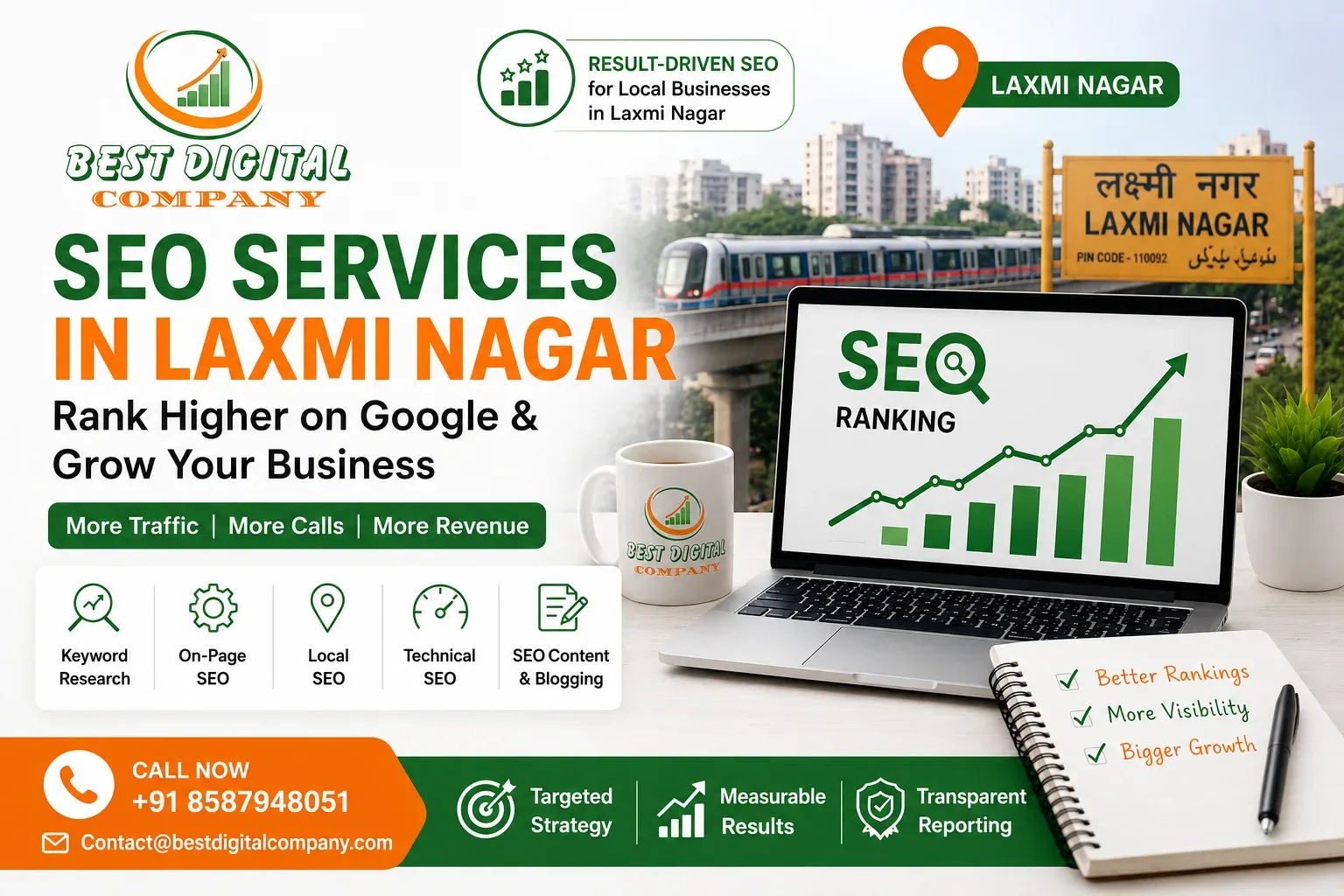
seo services in laxmi nagar

SEO Services in Laxmi Nagar – Rank Higher on Google & Grow Your Business

SEO Services in Laxmi Nagar – Get Found on Google’s First Page

Is your business invisible on Google? You are not alone. Thousands of businesses in Laxmi Nagar invest in quality products and services, yet lose customers every single day simply because competitors rank higher in search results.

Best Digital Company is a trusted digital marketing agency offering result-driven SEO services in Laxmi Nagar that help local businesses, startups, clinics, coaching institutes, and eCommerce brands dominate Google search rankings. Our data-backed strategies combine technical precision with creative content to deliver sustainable organic growth.

If you want more website traffic, more calls, and more revenue without spending endlessly on paid ads, professional SEO is your most powerful investment.


Why SEO Matters for Businesses in Laxmi Nagar

Laxmi Nagar is one of East Delhi’s most commercially active zones. From retail shops and coaching centres to healthcare clinics and real estate agencies, competition for customer attention online is fierce.

Here is what the data tells us:

  • 75% of users never scroll past the first page of Google results
  • 46% of all Google searches have local intent (e.g., “near me” queries)
  • Businesses with optimised Google Business Profiles receive 7x more clicks than those without
  • SEO leads have a 14.6% close rate, compared to just 1.7% for outbound methods like cold calling

When someone searches “best coaching institute in Laxmi Nagar” or “dentist near Laxmi Nagar metro,” your business must appear at the top. Our SEO strategies make that happen consistently.


Our Complete SEO Services in Laxmi Nagar

1. SEO Website Audit

Every successful SEO campaign starts with understanding where your website currently stands. Our comprehensive audit identifies exactly what is holding your rankings back and what opportunities exist.

Our audit covers website speed and Core Web Vitals, mobile usability, keyword gap analysis, competitor benchmarking, backlink profile health, crawl errors and indexation issues, and duplicate or thin content detection.

You receive a clear, actionable report ,not a confusing spreadsheet. We explain every issue in plain language and outline how we will fix it.


2. Keyword Research & SEO Strategy

Targeting the wrong keywords is one of the most common reasons SEO campaigns fail. We go beyond basic keyword tools to understand how your actual customers search online.

Our keyword strategy includes high-intent commercial keywords (e.g., “SEO agency Laxmi Nagar”), long-tail low-competition phrases that convert faster, location-specific keywords for Delhi and NCR, and seasonal or trending search terms in your industry.

We then build a 3–6 month content and optimisation roadmap aligned with your business goals, not a generic template.


3. On-Page SEO Optimisation

On-page SEO ensures Google’s algorithms correctly understand, index, and rank every page of your website. Our on-page work includes SEO-optimised title tags and meta descriptions, header tag hierarchy (H1, H2, H3) structured for clarity, internal linking to distribute page authority, image alt text and file name optimisation, URL slug improvements for readability and keywords, content updates to match search intent,  informational, navigational, or transactional, and schema markup for rich snippets in search results.

Even a well-designed website can rank poorly without strong on-page foundations. We fix that.


4. Technical SEO Services

Technical SEO is the backbone of high-performing websites. If search engine bots cannot properly crawl and index your site, no amount of content or link building will move the needle.

Our technical SEO services include page speed optimisation (targeting under 3-second load time), mobile-first optimisation for Google’s mobile indexing, XML sitemap creation and submission, robots.txt configuration, fixing broken links and redirect chains, SSL/HTTPS security setup, structured data and schema implementation, and Core Web Vitals improvements (LCP, INP, CLS).


5. Local SEO Services in Laxmi Nagar

For any business serving customers in a specific location, local SEO is non-negotiable. We specialise in putting Laxmi Nagar businesses on the map literally.

Our local SEO services include Google Business Profile (GBP) optimisation, the single most impactful step for local visibility, local citation building across directories like JustDial, Sulekha, and IndiaMART, NAP (Name, Address, Phone) consistency audit, location-based landing page creation, review generation and reputation management strategy, and local backlink acquisition from Delhi-based websites.

Whether your customers are searching on Google Maps or typing “near me” queries, we ensure your business shows up first.


6. Content Marketing & SEO Blogging

Google rewards websites that consistently publish high-quality, useful content. Our content team creates SEO-optimised material that ranks well and genuinely helps your target audience.

We produce SEO blog posts and articles, service and product pages, location-based landing pages, FAQ pages ideal for capturing featured snippets, and informational guides that build topical authority.

Every piece is written for both humans and search engines, naturally keyword-integrated, well-structured, and aligned with your brand voice.


7. Link Building & Off-Page SEO

Backlinks remain one of Google’s top three ranking factors. However, not all links are equal  low-quality or spammy links can actively harm your rankings. We use only white-hat, Google-compliant link-building strategies.

Our approach includes guest posting on authoritative industry websites, business directory submissions, local citation building, digital PR and brand mention outreach, and niche-specific link partnerships.

The result is a steadily growing domain authority that improves your rankings across all target keywords over time.


Why Choose Best Digital Company for SEO in Laxmi Nagar?

Delhi has hundreds of digital marketing agencies. Here is what sets us apart:

Experienced SEO Professionals – Our team has delivered measurable ranking improvements across industries including healthcare, education, real estate, and retail.

Custom Strategies, No Templates – We do not sell the same SEO package to every client. Your business, competition, and goals are unique your SEO strategy should be too.

Transparent Monthly Reporting – You always know exactly where your rankings stand, what work was done, and what results it generated.

Affordable Packages – We offer flexible SEO plans suited to local businesses, startups, and larger enterprises.

Focus on Revenue, Not Just Rankings – Rankings are a means to an end. We track the metrics that actually matter: traffic, leads, calls, and conversions.


Industries We Serve

We provide SEO services for coaching institutes and education businesses, clinics, hospitals and healthcare providers, real estate developers and agents, restaurants and food businesses, eCommerce and retail brands, fashion and lifestyle businesses, IT startups and SaaS companies, and corporate and professional services.


Our Proven SEO Process

PhaseActivity
Week 1–2Full website audit + competitor research
Week 2–3Keyword strategy + content roadmap
Week 3–4On-page optimisation across key pages
Month 2Technical SEO fixes + GBP optimisation
Month 2–3Content creation begins + link building
OngoingPerformance tracking + monthly reporting

Most clients begin seeing measurable ranking improvements within 60–90 days. Significant traffic and lead growth typically follows within 4–6 months.


Frequently Asked Questions (FAQs)

How long does SEO take to show results in Laxmi Nagar?

SEO is a medium-to-long-term strategy. Most businesses notice improved rankings within 60–90 days. Significant increases in organic traffic and leads typically occur between 4 to 6 months, depending on keyword competition and the starting condition of your website.

How much do SEO services cost in Laxmi Nagar?

SEO pricing depends on the scope of work, industry competitiveness, and your business goals. Best Digital Company offers flexible monthly packages starting at affordable rates for local businesses, with scalable plans for eCommerce and enterprise clients. Contact us for a customised quote.

What is the difference between local SEO and regular SEO?

 Regular SEO aims to improve a website’s ranking nationally or globally. Local SEO specifically targets customers in a defined geographic area , such as Laxmi Nagar, East Delhi, or Delhi NCR. It includes Google Business Profile optimisation, local citations, and location-based keyword targeting.

Will SEO work for my small business in Laxmi Nagar?

Absolutely. In fact, small and local businesses often benefit the most from SEO because ranking for hyper-local keywords is far less competitive than national terms. A well-optimised local presence can generate a steady flow of new customers without ongoing ad spend.

Do you provide SEO reports?

Yes. We provide detailed monthly SEO reports covering keyword rankings, organic traffic growth, backlinks acquired, technical improvements completed, and an outline of the work planned for the next month. You are never left wondering what we are doing.

Can SEO help me rank on Google Maps?

Yes. Google Maps rankings (the “local pack” shown at the top of local search results) are driven by local SEO, particularly Google Business Profile optimisation. This is one of our core services and a high-priority deliverable for all local clients.

What makes Best Digital Company different from other SEO agencies in Delhi?

 We combine deep technical SEO expertise with strong content and link-building capabilities all under one roof. We do not outsource your work, and we do not use black-hat shortcuts that risk Google penalties. Every strategy is built around your specific business goals and reviewed monthly.


Get a Free SEO Audit for Your Business Today

If your business is not appearing on Google’s first page, you are leaving revenue on the table every single day. Let our SEO experts analyse your website, identify quick-win opportunities, and build a strategy tailored to your goals.

Best Digital Company 📞 +91 8587948051 📧 Contact@bestdigitalcompany.com 🌐 bestdigitalcompany.com

Contact us today for a free website audit and discover exactly what it will take to rank your business at the top of Google in Laxmi Nagar.

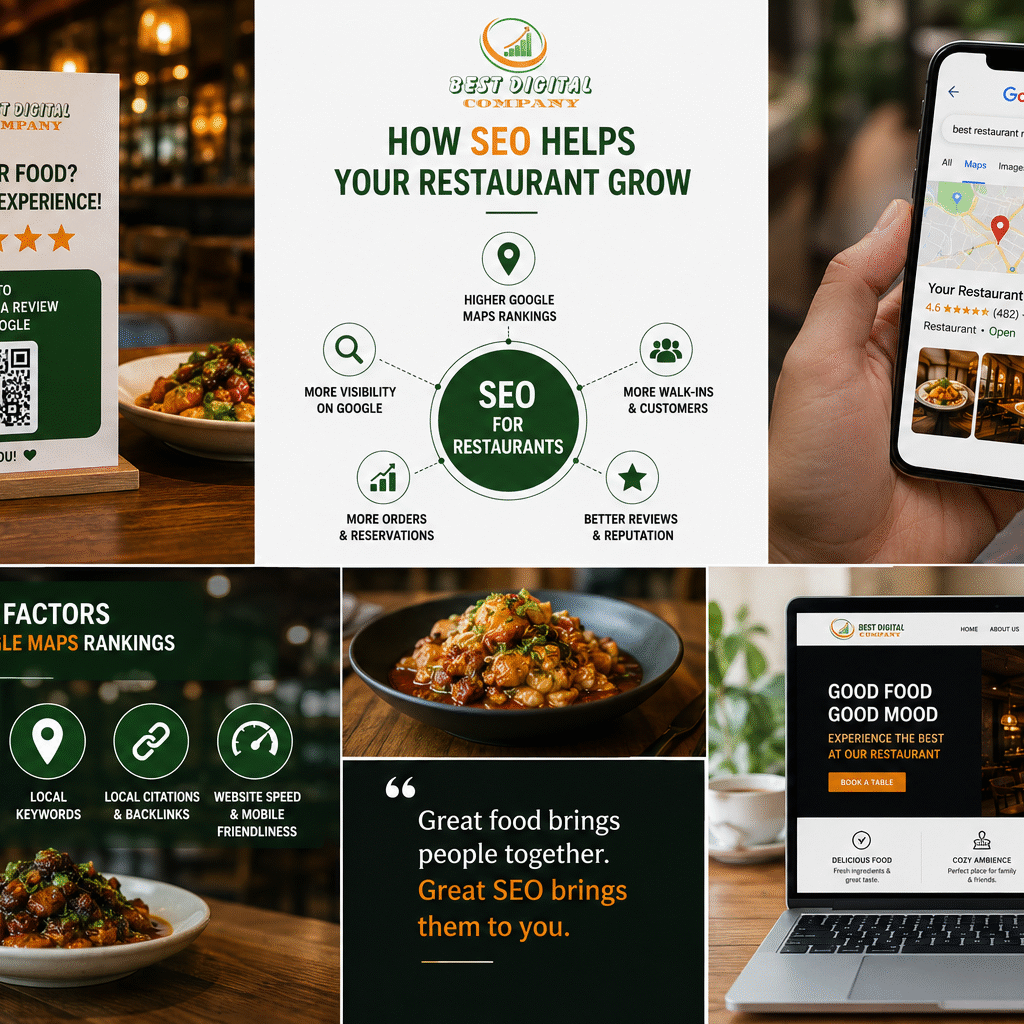
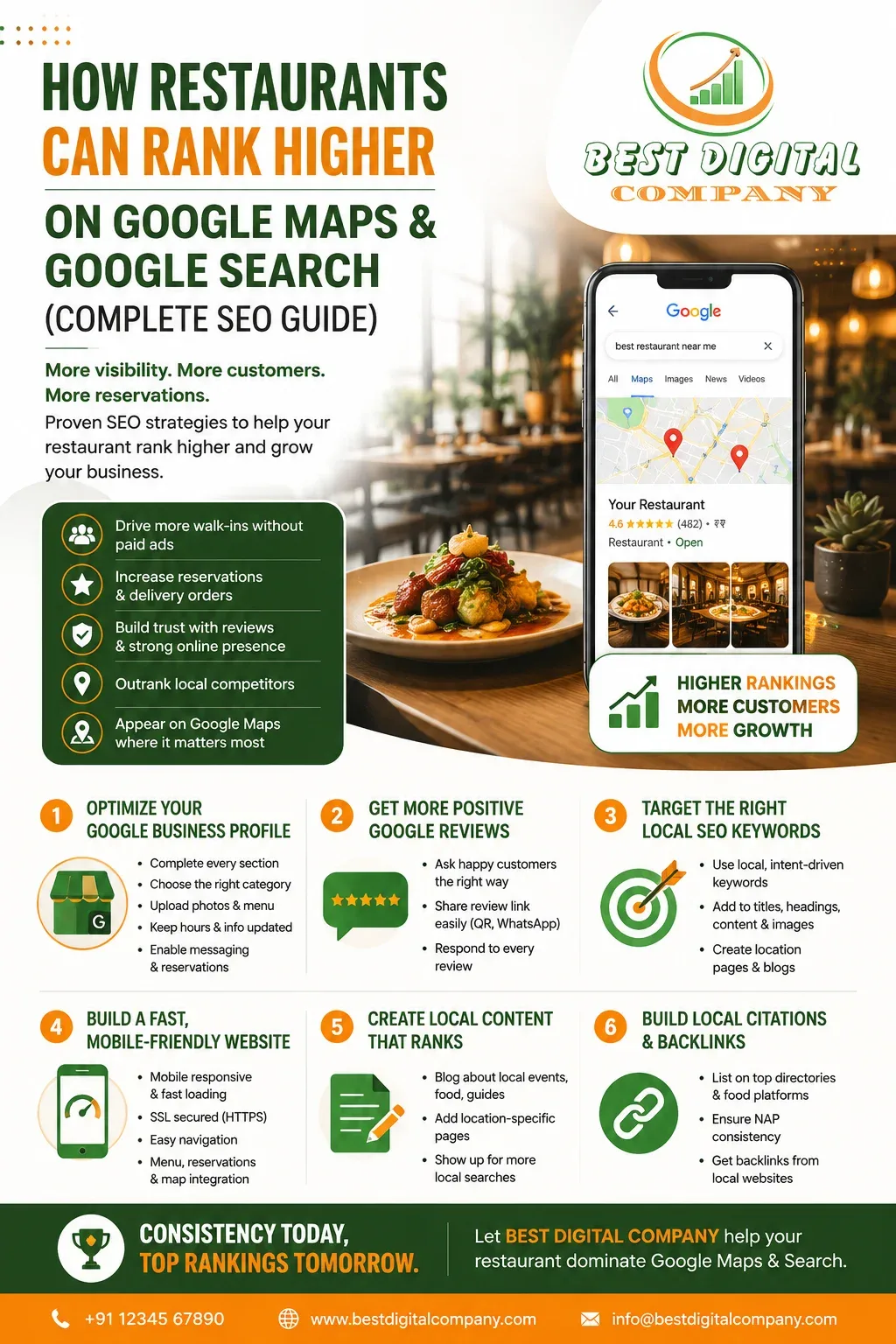
How Restaurants Can Rank Higher on Google Maps & Google Search (Complete SEO Guide)

How Restaurants Can Rank Higher on Google Maps & Google Search (Complete SEO Guide)

Every day, thousands of hungry people open Google and type phrases like “best café near me” or “top restaurants in Delhi.” The restaurants that appear at the top of those results aren’t there by accident, they’ve invested in SEO. And if your restaurant isn’t showing up, you’re quietly handing those customers to your competitors.

This guide breaks down exactly how restaurants can improve their Google Maps rankings and Google Search visibility with practical, actionable steps you can start implementing today.

Why SEO Matters More Than Ever for Restaurants

Before a customer decides where to eat, most of them Google it. They check ratings, read reviews, browse photos, and compare options all before stepping out of the house. If your restaurant doesn’t appear in those results, it simply doesn’t exist in their decision-making process.

A well-executed restaurant SEO strategy helps you:

  • Drive consistent walk-in traffic without depending on paid advertising
  • Increase online reservations and food delivery orders
  • Build credibility through reviews, ratings, and a polished online presence
  • Outrank local competitors in your area
  • Appear prominently on Google Maps – where most local food searches end

The best part? Unlike paid ads, SEO delivers compounding results over time. Invest once, reap the benefits for months and years.


1. Optimize Your Google Business Profile – Your Most Powerful Local SEO Asset

If you do nothing else on this list, do this. Your Google Business Profile (GBP) is the single most influential factor in how your restaurant ranks on Google Maps.

An incomplete or outdated profile signals neglect both to customers and to Google’s algorithm. A fully optimized profile, on the other hand, builds trust and pushes you higher in local search results.

Here’s what a fully optimized Google Business Profile looks like:

  • Business Name: Use your exact restaurant name, no keyword stuffing
  • Address & Phone Number: Must be accurate and consistent with every other platform
  • Business Category: Choose the most specific and relevant category (e.g., “North Indian Restaurant” rather than just “Restaurant”)
  • Photos: Upload high-resolution images of your dishes, interiors, ambience, and team regularly
  • Menu: Add your full menu with prices directly to your profile
  • Business Hours: Keep these updated, especially during holidays and special events
  • Business Description: Write a natural, keyword-rich description that tells customers who you are and what makes you special
  • Messaging & Reservations: Enable these features to reduce friction for potential customers

2. Get More Positive Google Reviews (And Respond to Every Single One)

Reviews are the currency of local SEO. Restaurants with more reviews and higher ratings consistently outrank those without them. But beyond rankings, reviews are what convert a searcher into a guest.

How to generate more Google reviews consistently:

  • Ask at the right moment — when a customer compliments the food or thanks your staff, that’s your window
  • Make it frictionless — share a direct Google review link via WhatsApp, SMS, or printed QR codes on the table
  • Train your team — your front-of-house staff should know how to naturally invite happy guests to leave a review
  • Respond to every review — thank positive reviewers warmly, and address negative ones professionally and constructively

Responding to reviews shows Google (and potential customers) that you’re engaged and take feedback seriously. It’s a small effort with a significant impact on both trust and rankings.


3. Target the Right Local SEO Keywords

Your restaurant’s website needs to speak the same language your customers are using when they search on Google. That means intentionally weaving local, intent-driven keywords throughout your content.

Examples of high-intent restaurant keywords:

  • Best restaurant in Delhi
  • Family restaurant near Connaught Place
  • Top café in Ghaziabad
  • Best North Indian food in Noida
  • Fine dining restaurant in Delhi NCR
  • Rooftop restaurant in South Delhi
  • Budget-friendly restaurants near me

Where to use these keywords:

  • Page titles and meta descriptions
  • Website headings
  • Body content on your homepage, about page, and menu page
  • Blog posts and location pages
  • Image alt text and file names

The key is to use keywords naturally, write for your customer first, and let the SEO follow. Stuffing keywords awkwardly into your content will hurt both readability and rankings.


4. Build a Fast, Mobile-Friendly Restaurant Website

Your Google Business Profile gets people interested. Your website seals the deal. A slow, cluttered, or hard-to-navigate website is a conversion killer and Google knows it.

Essential features of an SEO-ready restaurant website:

  • Mobile responsiveness – over 70% of restaurant searches happen on smartphones
  • Fast loading speed – aim for under 3 seconds; compress images and use quality hosting
  • SSL certificate (HTTPS) – non-negotiable for both security and SEO
  • Clear navigation – menu, reservations, contact, and location should be one click away
  • Dedicated menu page – with searchable, text-based content (not just a PDF)
  • Online reservation integration – reduce the steps between interest and booking
  • Embedded Google Map on your contact page
  • High-quality food photography – visuals are your digital storefront

A well-designed website doesn’t just rank better, it converts more visitors into paying customers.


5. Create Location-Specific Pages (Especially for Multi-Branch Restaurants)

If your restaurant serves multiple neighbourhoods, or if you have more than one location, dedicated location pages are a powerful SEO tool that most restaurants overlook.

Examples of location pages:

  • Restaurant in Connaught Place, New Delhi
  • Best Café in Sector 18, Noida
  • Rooftop Dining in Cyber Hub, Gurgaon

Each page should include:

  • Unique, location-specific content (not copy-pasted)
  • Locally relevant keywords
  • Branch-specific contact details and hours
  • An embedded Google Map
  • Customer reviews from that location

These pages help Google understand exactly where you operate and who you serve — boosting your visibility in hyper-local searches.


6. Publish Regular Blog Content to Capture More Search Traffic

Blogging is one of the most underutilized SEO tools in the restaurant industry. Every blog post you publish is another opportunity to rank for a relevant search term and bring new customers to your website.

High-performing blog ideas for restaurants:

  • “Best Dishes to Try in Delhi This Monsoon Season”
  • “5 Romantic Dinner Spots in Delhi NCR (That Aren’t Overpriced)”
  • “Our New Summer Menu: What’s Fresh and What to Order First”
  • “Planning a Corporate Lunch in Noida? Here’s Why We’re the Top Choice”
  • “Healthy Eating Out: Our Lightest, Most Nutritious Dishes”

Fresh, relevant content signals to Google that your website is active and authoritative — two factors that directly influence rankings. Even one well-written blog post per month can make a meaningful difference over time.


7. Invest in Professional Food Photography

This one sits at the intersection of SEO and customer psychology. High-quality visuals increase time spent on your website, improve engagement on your Google Business Profile, and directly influence a customer’s decision to visit.

Visual content to prioritize:

  • Hero shots of your signature dishes
  • Lifestyle photos of your dining room ambience
  • Behind-the-scenes glimpses of your kitchen and team
  • Event and seasonal decoration photos
  • Candid customer experience moments (with permission)

On the SEO side: optimize every image with descriptive file and relevant alt text. Images can rank independently on Google Images, another traffic source most restaurants ignore.


8. List Your Restaurant on Every Major Directory

Consistent citations across the web strengthen your local SEO authority. Make sure your business name, address, and phone number (NAP) are identical across every platform where you’re listed.

Key platforms for restaurant listings:

  • Zomato
  • Swiggy
  • Justdial
  • TripAdvisor
  • Yelp
  • MagicPin
  • Dineout
  • Facebook Business

Even a small discrepancy, like “St.” on one platform and “Street” on another can dilute your local SEO signals. Audit your listings periodically to keep everything consistent.


9. Use Social Media to Amplify Your SEO Efforts

Social media doesn’t directly affect Google rankings, but it plays a powerful supporting role. A strong social presence drives traffic to your website, increases brand searches, and builds the kind of authority that Google notices.

What to post and how often:

  • Instagram & Facebook Reels — short, visually compelling food videos perform exceptionally well
  • Customer testimonials — repost tagged photos and stories with permission
  • Offers and events — time-sensitive posts create urgency and engagement
  • Behind-the-scenes content — people connect with the humans behind the food
  • Seasonal and festival specials — align your content calendar with occasions your customers care about

Aim for consistency over volume. Three well-crafted posts a week outperform daily posts that feel rushed or generic.


10. Monitor Your Performance and Keep Improving

SEO is not a one-time task it’s an ongoing process. Use free tools like Google Search Console and Google Business Profile Insights to track how customers find you, which keywords drive the most traffic, and where you can improve.

Set a monthly reminder to:

  • Review your Google Business Profile for outdated information
  • Check and respond to new reviews
  • Publish a new blog post or update existing content
  • Audit your website speed and mobile experience
  • Track keyword rankings and organic traffic trends

The restaurants that stay on top of local search results are the ones that treat SEO as a habit, not a one-time fix.


Final Thoughts:

SEO Is the Most Reliable Way to Fill Your Tables

Paid ads stop working the moment you stop paying. SEO keeps delivering. A restaurant that ranks at the top of Google Maps for “best restaurant in [your area]” gets seen by every hungry person searching in that neighbourhood, day after day, without paying per click.

The strategies in this guide aren’t complex, but they do require consistency and attention to detail. Start with your Google Business Profile and reviews, build out your website and content, and layer in citations and social activity over time. The results compound.

If you want to accelerate the process and work with a team that specializes in restaurant SEO from Google Maps optimization to content strategy and technical SEO, we’re here to help.


Ready to Rank Higher and Attract More Customers?

Best Digital Company — Specialists in Restaurant SEO & Local Search Visibility

📞 +91 8587948051 ✉️ Contact@bestdigitalcompany.com

Let’s put your restaurant in front of the customers who are already searching for you.

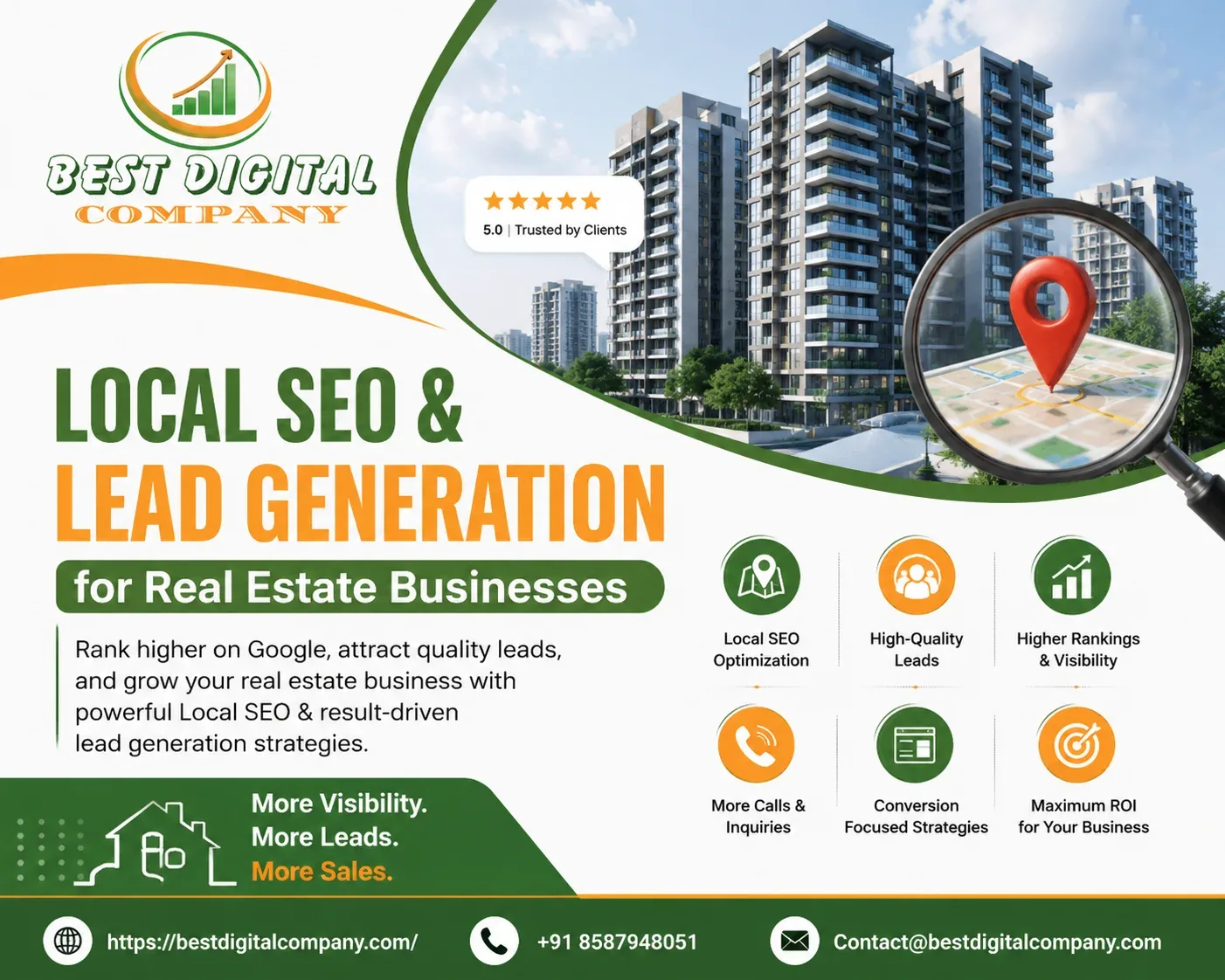
Local SEO & Lead Generation for Real Estate Businesses

Local SEO & Lead Generation for Real Estate Businesses

The real estate industry has become highly competitive in recent years, and buyers now rely heavily on Google searches before contacting any property dealer or real estate company. Whether someone is searching for “property dealer near me,” “best real estate agent in Delhi,” or “flats for sale in Gurgaon,” businesses that appear at the top of local search results generate the maximum leads and conversions.

This is where Local SEO and lead generation strategies play a major role. A strong online presence not only helps real estate businesses rank higher on Google but also attracts high-quality buyers, sellers, and investors. Modern digital marketing agencies are increasingly focusing on SEO, paid advertising, and conversion-focused strategies to drive measurable business growth.

If you want your real estate business to dominate local search results and generate consistent inquiries, this guide by Best Digital Company will help you understand the most effective strategies for 2026.


What is Local SEO for Real Estate Businesses?

Local SEO (Search Engine Optimization) is the process of optimizing your online presence so your business appears in local Google search results and Google Maps listings.

For example, when users search for:

  • Property dealer in Delhi
  • Real estate agent near me
  • Flats in Noida
  • Commercial property in Gurgaon

Google shows businesses with strong local SEO optimization first.

For real estate businesses, Local SEO helps:

  • Increase local visibility
  • Generate high-quality property leads
  • Build trust through reviews
  • Drive website traffic
  • Increase phone calls and inquiries
  • Improve conversion rates

Without proper Local SEO, even the best real estate companies struggle to attract online clients.


Why Local SEO is Important for Property Dealers

Most property buyers begin their search online before making any purchase decision. If your business is not visible on Google, your competitors are getting your potential customers.

Benefits of Local SEO for Real Estate Businesses

1. Higher Google Rankings

Local SEO helps your business appear in Google Maps and local search results, increasing your chances of getting inquiries.

2. Better Quality Leads

People searching for properties locally already have buying intent, which means they are more likely to convert into clients.

3. Increased Trust and Credibility

Positive Google reviews, updated business information, and a professional website improve customer trust.

4. Cost-Effective Marketing

Compared to traditional advertising, Local SEO provides long-term results and better ROI.

5. More Website Traffic and Calls

Optimized local listings generate direct phone calls, WhatsApp inquiries, and website visits.

Many modern digital marketing agencies now focus heavily on SEO, lead generation, and conversion optimization because businesses increasingly demand measurable ROI from online marketing campaigns.


Top Local SEO Strategies for Real Estate Businesses

1. Optimize Your Google Business Profile

Your Google Business Profile is one of the most important factors for local rankings.

Make sure you:

  • Add accurate business details
  • Use proper categories
  • Upload office and property images
  • Add business hours
  • Collect customer reviews
  • Include your website link
  • Add service locations

A fully optimized Google profile improves your visibility in local searches and Google Maps.


2. Use Local Keywords

Keyword research is essential for real estate SEO.

Examples of local keywords:

  • Property dealer in Delhi
  • Best real estate agent in Noida
  • Flats for sale in Gurgaon
  • Commercial property dealer near me
  • Real estate consultant in Delhi NCR

Use these keywords naturally in:

  • Website pages
  • Blog content
  • Meta titles
  • Descriptions
  • Image alt text
  • Service pages

3. Create Location-Based Landing Pages

If you serve multiple cities or areas, create dedicated pages for each location.

Examples:

  • Property Dealer in Delhi
  • Real Estate Consultant in Gurgaon
  • Flats in Noida
  • Commercial Properties in Faridabad

These pages help Google understand your service areas and improve local rankings.


4. Build High-Quality Real Estate Content

Content marketing is one of the best ways to improve SEO and attract leads.

Write blogs such as:

  • Best Places to Invest in Delhi NCR
  • Top Residential Areas in Gurgaon
  • Real Estate Market Trends 2026
  • Tips for First-Time Property Buyers
  • Commercial Property Investment Guide

Helpful content builds authority and increases organic traffic.


Lead Generation Strategies for Real Estate Businesses

Generating traffic is important, but converting visitors into leads is the real goal.

Here are the best lead generation strategies for real estate businesses:


1. Facebook & Instagram Ads

Social media advertising helps target:

  • Home buyers
  • Investors
  • Renters
  • Commercial property clients

With proper targeting, you can generate highly qualified leads at affordable costs by Pay Per Click.


2. Google Ads for Property Leads

Google Ads helps your business appear instantly for high-intent searches like:

  • Buy flat in Delhi
  • Property consultant near me
  • Office space for rent

These ads generate immediate inquiries and phone calls.


3. Lead Capture Landing Pages

A high-converting landing page should include:

  • Property details
  • Strong CTA buttons
  • Contact forms
  • WhatsApp integration
  • Client testimonials
  • High-quality property images

Landing pages significantly improve conversion rates.


4. Social Media Marketing

Consistent social media posting helps build trust and engagement.

Post content such as:

  • Property tours
  • Market updates
  • Client testimonials
  • Investment tips
  • Before-and-after property transformations

Creative storytelling and engaging content are becoming essential parts of successful digital marketing strategies.


Common Local SEO Mistakes Real Estate Businesses Should Avoid

Ignoring Mobile Optimization

Most property searches happen on mobile devices. Your website must be mobile-friendly.

Inconsistent Business Information

Your business name, address, and phone number should remain consistent everywhere online.

Not Updating Google Business Profile

Inactive profiles lose visibility and trust.

Poor Website Speed

Slow websites increase bounce rates and reduce conversions.

No SEO Strategy

Without keyword optimization and content marketing, your website cannot compete effectively.


How Best Digital Company Can Help Real Estate Businesses

Best Digital Company helps real estate businesses improve online visibility, generate qualified leads, and grow faster with result-driven digital marketing strategies.

Services include:

  • Local SEO
  • Google Business Profile Optimization
  • Real Estate Lead Generation
  • Google Ads Management
  • Facebook & Instagram Advertising
  • Website Development
  • Content Marketing
  • Social Media Management
  • Conversion Optimization

With the right digital strategy, real estate businesses can increase inquiries, improve search rankings, and generate long-term growth.


Final Thoughts

Local SEO and lead generation are no longer optional for real estate businesses in 2026. Buyers now depend on Google, social media, and online reviews before choosing a property dealer or real estate consultant.

A strong Local SEO strategy combined with effective lead generation techniques can help your business:

  • Rank higher on Google
  • Generate more property inquiries
  • Build customer trust
  • Increase conversions
  • Grow revenue consistently

If you want to grow your real estate business online, investing in professional digital marketing services can give you a significant competitive advantage in your local market.