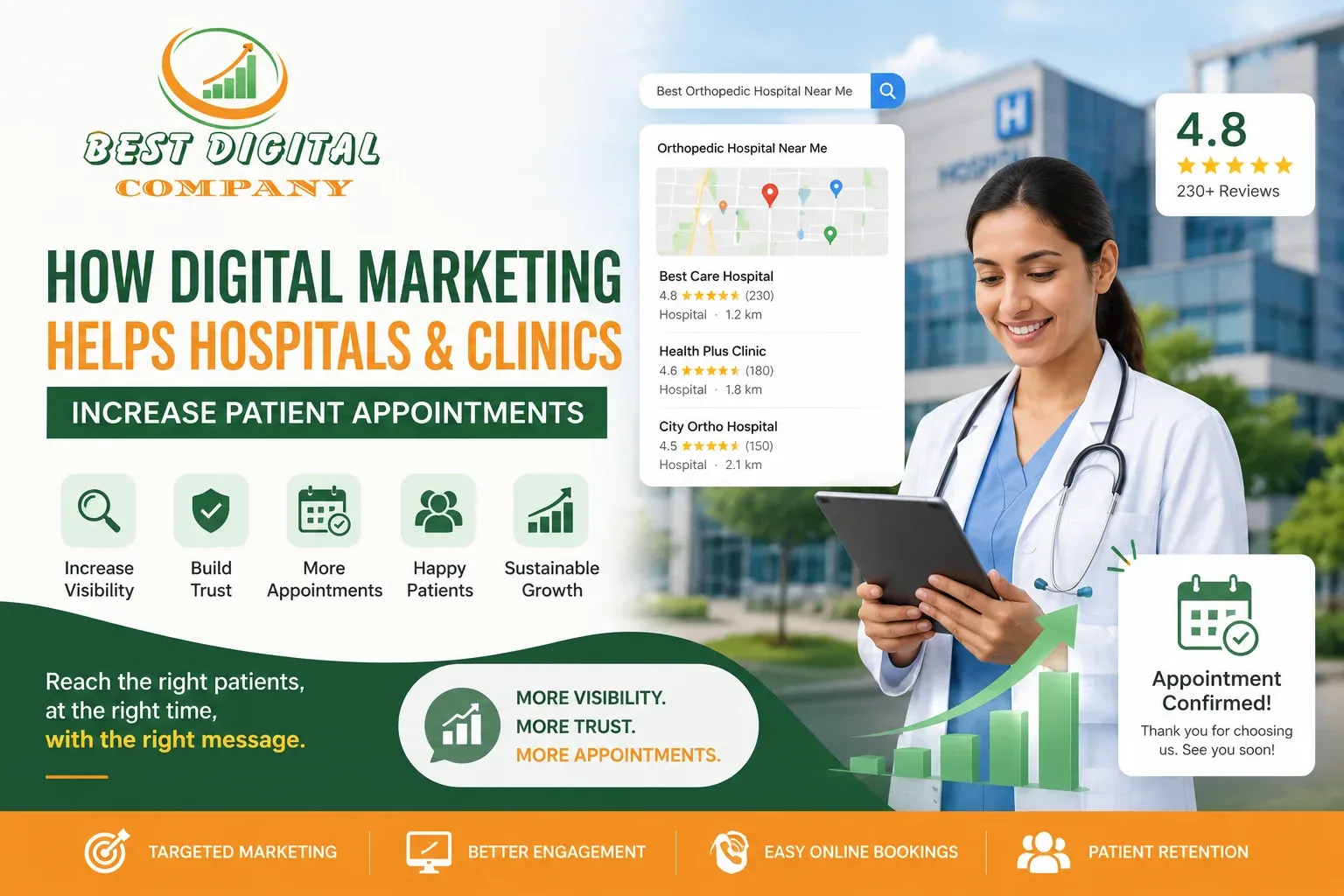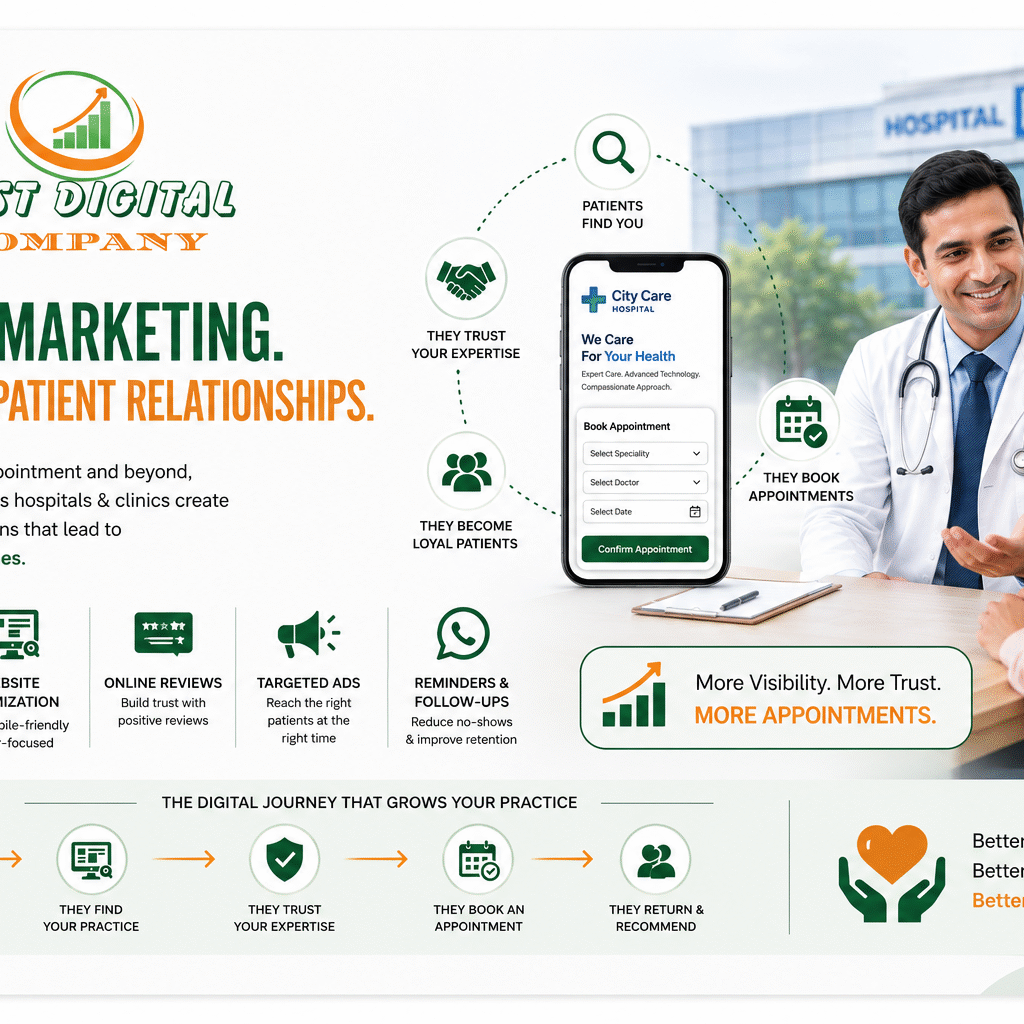
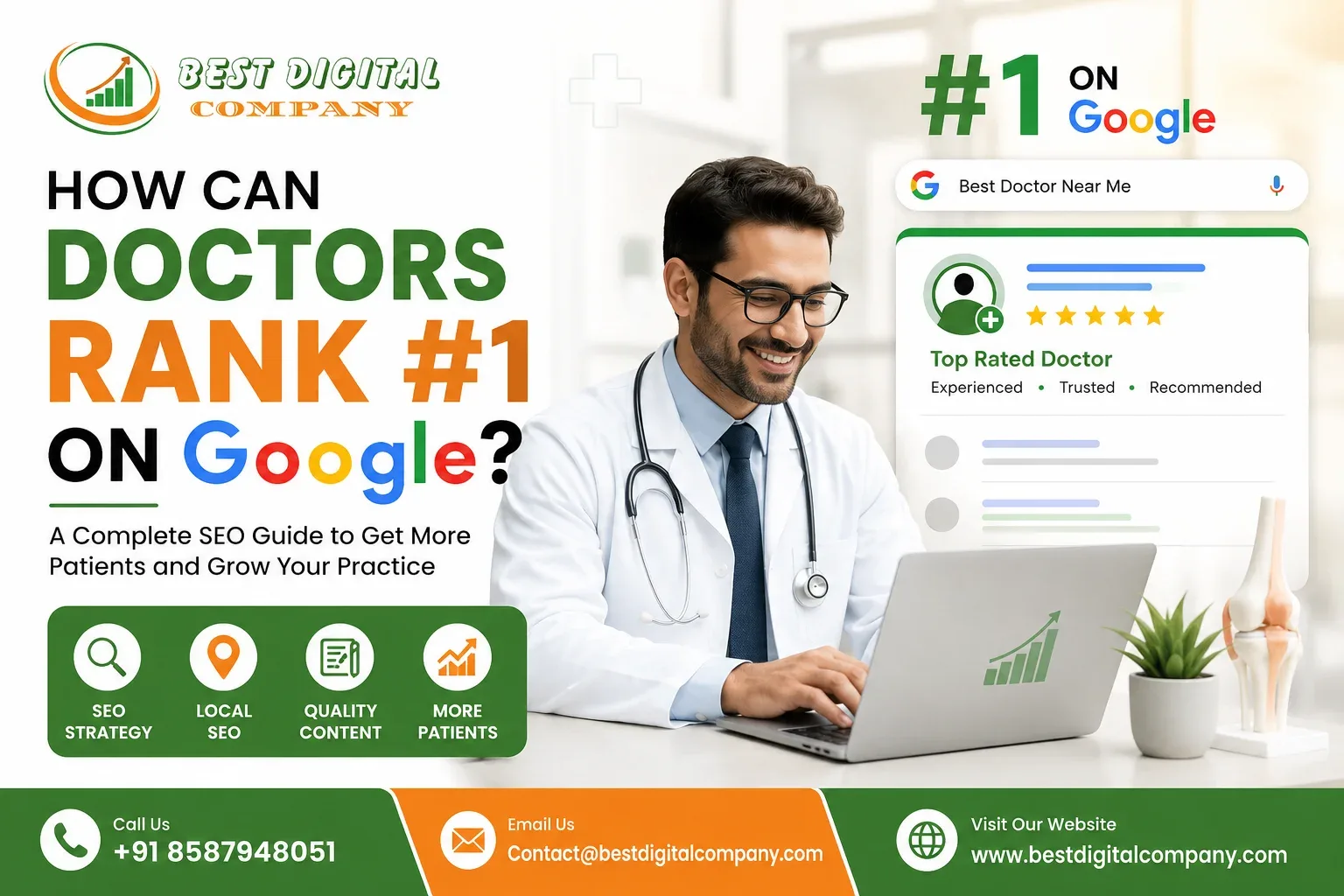
A patient in pain rarely calls three clinics and compares brochures. They open their phone, type something like “best orthopedic doctor near me” or “dentist in Delhi open now,” and pick from whatever Google shows them first. If your clinic is not part of that first screen, it doesn’t matter how skilled you are or how many years you have spent in practice. A large share of patients will never even learn you exist.
This is the reality most doctors are living with in 2026, whether they have admitted it to themselves or not. Word-of-mouth referrals still matter, but they no longer carry a practice the way they did a decade ago. Search has quietly become the new waiting room, and the doctors who understand this are the ones building steady, predictable patient inflow month after month.
So the real question is not whether you need to show up on Google. It’s how. This guide walks through what actually moves a doctor or clinic toward the top of search results without shortcuts, without guarantees, and without the kind of exaggerated promises that tend to backfire in healthcare marketing.
Why Ranking on Google Matters More for Doctors Than for Most Businesses
Healthcare searches are different from most other searches. Someone Googling “running shoes” is browsing. Someone Googling “cardiologist near me chest pain” is often anxious, in discomfort, or acting on a family member’s behalf. Google knows this, and it treats medical and health-related pages with far more scrutiny than it treats, say, a restaurant listing.
That’s precisely why doctors who invest properly in search visibility tend to see outsized results compared to other industries. There’s less noise, patients research heavily before booking, and trust signals carry real weight in the decision. A well-optimized clinic website isn’t a luxury add-on anymore. It’s closer to a digital reception desk that never closes.
What Are Patients Actually Searching For?
Before any technical work begins, it helps to understand search intent in plain terms, what the person typing the query actually wants.
Most patient searches fall into a few clear buckets:
- Symptom-based searches — “why does my knee hurt when I climb stairs”
- Doctor or specialty searches — “best dermatologist in [city]”
- Comparison searches — “orthopedic vs physiotherapist for back pain”
- Local, ready-to-book searches — “dentist near me open on Sunday”
- Reassurance searches — “is [procedure] safe,” “[medicine] side effects”
A clinic that only has a homepage and a contact page is only ever competing for that third bucket, the ready-to-book searches. Everything else, which is often a much larger volume of traffic, goes to whichever website actually answered the question. This is where a proper content strategy comes in, something we will get to shortly.
Start With a Website Built for Trust, Not Just Looks
Many clinics still treat their website as a digital business card- a home page, a few photos, a phone number, and little else. That approach rarely ranks well anymore, and more importantly, it does not reassure a nervous patient.
A strong medical website needs:
- Fast loading speed, especially on mobile, since most patients search from their phones
- Clear doctor profiles with qualifications, years of experience, and areas of specialization
- Secure browsing (HTTPS) and a clean, professional design
- Easy appointment booking, ideally in two clicks or fewer
- Accurate contact details and clinic timings that match Google exactly
This is where working with an experienced Website Development & Designing team makes a genuine difference. A site that’s built with healthcare visitors in mind clear navigation, readable fonts, no clutter, mobile-first layout tends to keep patients on the page longer, and that behavior signal matters to Google over time.
If your clinic’s website was built years ago and hasn’t been touched since, our website launch checklist is a useful starting point for spotting what’s outdated.
On-Page Optimization: The Foundation Doctors Often Skip
This is the part of search engine optimization that happens directly on your website’s pages — titles, headings, images, and page structure. It’s unglamorous work, but skipping it is one of the most common reasons clinic websites stay invisible.
A few fundamentals that consistently make a difference:
- Page titles and headings should describe exactly what the page offers — for example, “Knee Replacement Surgeon in Delhi” rather than a vague “Welcome to Our Clinic”
- Meta descriptions should be written for the patient reading them, not stuffed with keywords (Google has been clear that these descriptions aren’t a direct ranking factor, but they strongly influence whether someone clicks — we broke this down in detail in our guide on meta descriptions)
- Images of the clinic, equipment, or team should have descriptive alt text, both for accessibility and for image search visibility
- Internal links between related pages — for instance, a symptom page linking to the relevant doctor’s profile — help both patients and Google understand your site’s structure
If you’re building new service pages for specific conditions or treatments, our piece on creating landing pages that actually convert covers how to structure these so visitors don’t just read and leave,they book.
Proper Search Engine Optimization work ties all of this together into one coherent strategy rather than a set of disconnected fixes.
Local SEO: Where Most Clinics Win or Lose
For a doctor or clinic, local visibility usually matters more than ranking nationally. Very few patients will travel across a city for a general physician when three others are closer.
The single most important tool here is your Google Business Profile (formerly Google My Business). A well-maintained profile can outperform an entire website in terms of the calls and visits it generates. To get this right:
- Claim and fully verify your listing
- Use your exact clinic name — avoid stuffing it with extra keywords
- Select every relevant medical category (general physician, cardiologist, dentist, and so on)
- Add real photos of the clinic, waiting area, and team
- Keep hours, address, and phone number identical across your website and profile
- Post updates regularly — health camps, new services, holiday timings
- Respond to every review, positive or negative, in a calm and professional tone
Consistency across directories matters too. If your clinic’s name, address, or phone number differs even slightly between your website, Google listing, and other directories like Justdial or Practo, it creates confusion that search engines pick up on. Doctors serving patients across Delhi and nearby areas like Noida and Gurugram often benefit from making sure each location, if there’s more than one, has its own accurately optimized profile.
Content That Educates: Blogging for Doctors
Google has repeatedly emphasized helpful, people-first content, and nowhere does that matter more than in healthcare. A blog isn’t just a box to tick for search engines. It’s often the first real interaction a nervous patient has with your clinic, long before they pick up the phone.
Useful content formats for a medical practice include:
- Plain-language explainers of common conditions and when to see a doctor
- Pre- and post-procedure guidance
- Myth-busting posts around widely misunderstood treatments
- Seasonal health advisories relevant to your city or region
- FAQs answering the exact questions patients type into Google
The key is depth and honesty rather than volume. A handful of genuinely useful, doctor-reviewed articles will consistently outperform dozens of thin, generic posts. Each new post should also link back to relevant service pages and older articles something we cover in more depth in our internal linking strategy guide, which explains how a clinic site can lose ranking potential simply by linking poorly between its own pages.
Building E-E-A-T: Why Google Trusts Some Medical Sites More Than Others
Google evaluates health content against a stricter bar than almost any other topic, using what’s commonly known as E-E-A-T — Experience, Expertise, Authoritativeness, and Trustworthiness. For a doctor’s website, this translates into concrete, practical steps:
- Experience — show real patient outcomes, case types handled, and years in practice
- Expertise — display medical degrees, certifications, and specialty training clearly on doctor profile pages
- Authoritativeness — get mentioned or linked from recognized medical associations, hospitals, or health directories where possible
- Trustworthiness — keep contact information transparent, disclose consultation fees where appropriate, and never make guaranteed-cure claims
It’s worth being direct here: no ethical clinic should promise guaranteed results for any treatment, and no genuine SEO process guarantees an overnight top ranking either. Both medicine and search visibility involve variables that shift from case to case and from month to month. What’s achievable is steady, measurable improvement built on real credentials and real patient trust.
Social Media: Supporting Search Visibility, Not Replacing It
Search engines increasingly look at signals beyond your website including whether your clinic has an active, credible presence elsewhere online. This is where Social Media Marketing plays a supporting role.
For a medical practice, social platforms work best for:
- Sharing short health tips and awareness content
- Introducing doctors and staff to build familiarity before a first visit
- Answering common patient questions in short video or carousel formats
- Highlighting real (consent-given) patient experiences and testimonials
Clinics in cities like Delhi and Mumbai have found that consistent, informative posting rather than purely promotional content builds far more patient trust over time. We’ve seen this play out with brands in our SMO services overview, where informative content consistently outperformed sales-heavy posts.
Paid Search: A Faster, Parallel Path
Organic ranking takes time, often several months of consistent work. For clinics that need visibility sooner a newly opened practice, or a doctor entering a competitive specialty Pay Per Click advertising through Google Ads can fill that gap while the organic strategy builds momentum.
Done correctly, Pay Per Click campaigns for healthcare should:
- Target specific, high-intent searches like “root canal specialist near me”
- Use location targeting tightly around the clinic’s actual service area
- Link to a dedicated landing page for that specific treatment, not just the homepage
- Track calls and form submissions, not just clicks, since that’s what actually matters for a clinic
Our detailed breakdown on choosing the right PPC agency is worth reading if you’re considering paid ads alongside your organic strategy. The two tend to work best in tandem rather than as substitutes for one another.
Online Reviews: The Trust Signal Patients Read First
Before a patient calls, they almost always check reviews. This single factor influences both click-through rates and, indirectly, rankings, since Google factors review volume, recency, and rating into local search results.
A few practical habits help here:
- Ask satisfied patients for a review right after a positive visit, rather than weeks later
- Never offer payment or incentives for reviews. This violates platform policies and damages trust if discovered
- Respond to every review professionally, including less favorable ones
- Address recurring complaints (wait times, staff behavior) as operational fixes, not just PR problems
Common Mistakes Doctors Make When Trying to Rank
A few patterns show up again and again with clinics that struggle to gain visibility:
- Copying content from medical reference sites word-for-word, which search engines increasingly detect and penalize
- Ignoring mobile experience, even though most patient searches happen on phones
- Inconsistent business information across the website, Google listing, and directories
- Chasing quick-fix promises from agencies that guarantee a #1 ranking within days — this isn’t how modern search algorithms work
- Publishing once and forgetting, rather than treating content and reviews as an ongoing process
How Long Does It Actually Take?
Doctors often ask for a specific timeline, and honesty matters here: there isn’t a fixed number that applies to every clinic. Competitive specialties in large cities generally take longer than niche practices in smaller towns. Most clinics that follow a consistent strategy, proper website structure, local optimization, regular content, and review management. Start seeing meaningful movement within three to six months, with stronger results building over a year. Anyone promising a guaranteed date for a #1 position is overstating what’s realistic.
A Realistic Starting Checklist for Doctors
If you are beginning this process today, here’s a sensible order of priorities:
- Fix your Google Business Profile completely
- Ensure your website loads quickly and works well on mobile
- Add clear, accurate doctor and treatment information
- Publish a small number of genuinely useful patient-focused articles
- Build a simple, honest review-collection habit
- Consider paid ads only once your core site is solid, not as a replacement for it
Frequently Asked Questions
How long does it take for a doctor’s website to rank on Google?
Most clinics see initial movement within three to six months of consistent work, though this varies by specialty, city, and competition.
Do I need a blog on my clinic website?
Yes ,a blog that answers real patient questions helps demonstrate expertise and gives Google more relevant content to show searchers.
Is Google Business Profile more important than my website for local visibility?
Both matter, but for local, “near me” searches, an optimized Google Business Profile often drives the fastest visible results.
Can I guarantee a #1 ranking for my clinic?
No ethical agency can guarantee a specific position, since rankings depend on many factors, including competitors’ activity and ongoing algorithm updates.
Should doctors run Google Ads if they already rank organically?
It can still help, particularly for competitive keywords or when launching a new service, since paid and organic visibility often work well together.
How important are patient reviews for search rankings?
Very important for local searches, review volume, rating, and recency all factor into how prominently a clinic appears.
What’s the biggest mistake clinics make with their websites?
Treating the website as a one-time project instead of something that needs regular updates, new content, and accurate information.
Does social media affect Google rankings directly?
Not directly in most cases, but an active, credible social presence builds the kind of trust and awareness that supports overall visibility.
Is it enough to just list my clinic on directories like Practo or Justdial?
Directory listings help, but they work best alongside a strong website of your own, not as a replacement for one.
How often should a clinic update its website content?
Reviewing and refreshing key pages every few months, along with adding new articles regularly, keeps the site relevant and accurate.
Final Thoughts
Ranking on Google as a doctor isn’t about one clever trick. It’s the sum of many smaller things done consistently: a trustworthy website, accurate local listings, genuinely useful content, active reviews, and patience with the timeline. Clinics that treat this as an ongoing practice, rather than a one-time project, are the ones that stay visible year after year.
If you’d like help auditing where your clinic’s website currently stands and building a realistic roadmap toward better visibility, our team at Best Digital Company works with healthcare practices across Delhi and NCR on exactly this. Get in touch for a straightforward conversation about where your practice stands today and what’s realistically achievable from here.
Social Media Caption
Struggling to get new patients to find your clinic online? Ranking #1 on Google is not luck, it’s a strategy. Read our latest guide on how doctors can build real, lasting visibility.