

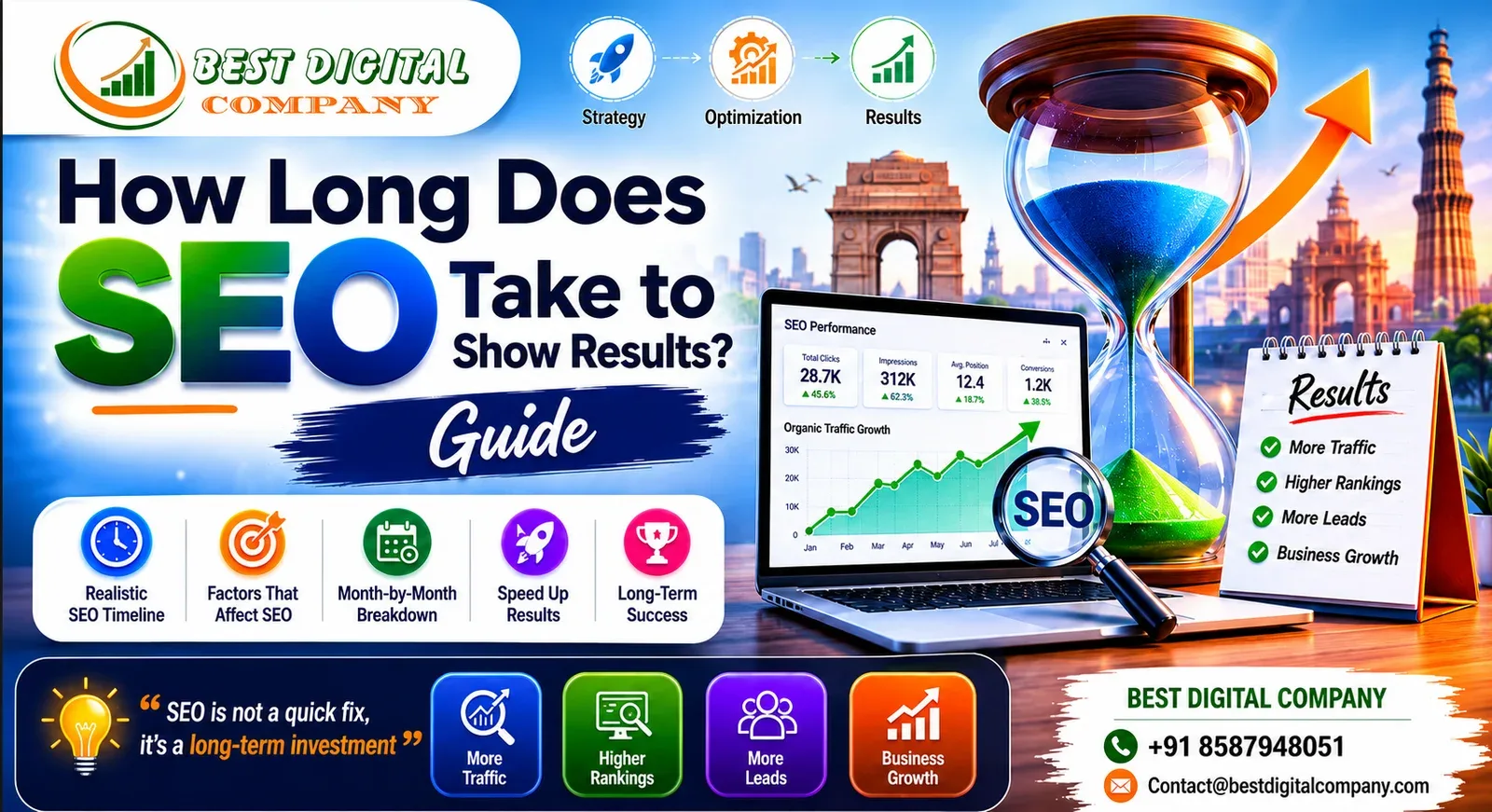
SEO typically takes 3–6 months to show noticeable results for most businesses. Competitive industries require 6–12 months. Brand-new websites may need 12+ months to achieve first-page rankings.
Table of Contents
- The Realistic SEO Timeline
- Key Factors That Affect SEO Speed
- Month-by-Month Breakdown
- How to Speed Up Your SEO Results
- New Website vs. Established Website
- Frequently Asked Questions
If you’ve ever Googled “how long does SEO take,” you’ve probably seen answers ranging from “3 months” to “it depends.” The truth is both frustratingly nuanced and genuinely important because understanding the SEO timeline is the difference between setting realistic expectations and wasting your budget.
At Best Digital Company, we’ve helped businesses across India rank on Google’s first page. Here’s what we’ve learned about SEO timelines, backed by real data and hands-on experience.
1. The Realistic SEO Timeline
Let’s be direct: SEO is not a quick fix. It is a compounding long-term investment. Unlike Google Ads, which delivers traffic the moment you pay, SEO builds authority gradually but the payoff is far more sustainable and cost-effective over time.
Based on industry data from Ahrefs, Moz, and our own campaign results, here is what to realistically expect:
Months 1–2 – Foundation & Crawling Phase Google crawls and re-indexes your site. Technical fixes go live. Minimal visible ranking change, but essential groundwork is laid.
Months 3–4 – Early Signals Long-tail keywords start moving. Google Search Console impressions rise. Some pages may enter the top 20–30 results. Organic traffic begins showing a slight upward trend.
Months 5–6 – Momentum Builds Noticeable ranking improvements for target keywords. Organic traffic increases 20–50% for well-optimised sites. Conversions may start appearing from organic channels.
Months 6–12 – Compounding Growth Consistent traffic increases. First-page rankings for primary keywords. Strong ROI becomes clearly visible. Content authority starts attracting backlinks organically.
2. Key Factors That Affect SEO Speed
There is no universal SEO clock, your timeline depends heavily on several interconnected variables.
Domain Age & Authority Older domains with existing authority rank faster. New sites must prove trustworthiness to Google first.
Industry Competition Low-competition niches show results in 3 months. Highly competitive sectors- finance, legal, e-commerce can take 12+ months.
Content Quality & Volume Consistent, high-quality, EEAT-aligned content accelerates rankings. Thin or duplicate content slows everything down.
Backlink Profile Quality backlinks from authoritative sites significantly speed up ranking growth. Toxic links can actively harm your timeline.
Technical SEO Health Crawl errors, slow page speed, poor mobile experience, and broken links all delay Google from ranking your pages.
SEO Investment Level More resources, time, content, link building, and expert guidance — directly correlate with faster and stronger results.
3. Month-by-Month Breakdown: What to Expect
Month 1: Audit, Strategy & Technical Fixes The first month is about building the right foundation. A thorough SEO audit identifies crawl issues, broken links, duplicate content, and keyword gaps. This month is critical but produces no visible ranking changes, Google needs time to process updates.
Months 2–3: Content Creation & On-Page Optimisation Keyword-optimised content is created and published. Meta titles, descriptions, header tags, internal linking, and schema markup are implemented. Some long-tail keyword pages may start appearing in Google’s top 50 results.
Months 4–5: Link Building & Outreach Quality backlinks are built through guest posting, digital PR, and directory listings. Google begins assigning more trust to your domain. You should see measurable Search Console impression increases.
Month 6+: Rankings, Traffic & Conversions This is where your investment starts paying visible dividends. Pages rank for primary keywords. Organic traffic climbs month-over-month. With consistent effort, many of our clients at Best Digital Company achieve first-page rankings and solid lead generation from organic search within this window.
4. How to Speed Up Your SEO Results
While there are no shortcuts, these strategies consistently accelerate the timeline:
✓ Fix technical SEO issues first – crawl errors, page speed, Core Web Vitals, and mobile-friendliness are non-negotiable baseline requirements.
✓ Target long-tail, low-competition keywords – early quick wins build momentum and domain authority before you tackle harder terms.
✓ Publish content consistently – Google rewards fresh, helpful, well-structured content. Aim for at least 2–4 quality posts per month.
✓ Build quality backlinks proactively – one link from a DA 60+ website is worth more than 50 low-quality directory submissions.
✓ Optimise for user intent – content that truly answers search queries earns longer dwell times, reducing bounce rates and signalling quality to Google.
✓ Leverage Google Business Profile – for local SEO, an optimised GMB profile can deliver results in weeks, not months.
✓ Monitor and iterate monthly – SEO is not set-and-forget. Regular analysis of GSC data, rank tracking, and competitor gaps keeps you ahead.
Pro Tip: If your site is brand new, running Google Ads in parallel during the first 3–6 months is a smart strategy, it drives traffic while your organic SEO builds momentum in the background.
5. New Website vs. Established Website
One of the most common questions we receive is: “I just launched my website ,how long will it take?”
New websites face what’s informally called the “Google Sandbox” effect, a trust-building period where Google holds back rankings until sufficient authority signals are established.
✓ New websites typically take 6–12 months to see meaningful organic traffic, even with excellent SEO.
✓ Established websites (2+ years, existing backlinks) can see improvements in 2–4 months after a targeted SEO campaign begins.
✓ Penalty-affected sites may take 3–6 months just to recover to their previous position before growth resumes.
Frequently Asked Questions (FAQ)
How long does SEO take to show results?
SEO typically takes 3 to 6 months to show noticeable results for most businesses. However, competitive industries may require 6 to 12 months or more to see significant organic traffic growth and keyword ranking improvements. The exact timeline depends on your domain age, competition level, content quality, and backlink profile.
Can SEO show results in 1 month?
It’s possible to see minor improvements within the first month ,especially for technical fixes, indexing updates, or low-competition long-tail keywords. However, substantial organic ranking improvements usually take at least 3–6 months. Anyone promising first-page rankings in 30 days is overpromising.
What factors affect how fast SEO works?
Key factors include website age and domain authority, content quality and publishing frequency, backlink profile strength, technical SEO health, industry competition level, keyword difficulty, and Google algorithm updates. The more of these you optimise, the faster your results will come.
Is SEO a long-term investment?
Absolutely. SEO is a compounding long-term digital marketing strategy. Unlike paid ads that stop the moment your budget runs out, SEO builds lasting organic authority over time. Once you rank on page one, the traffic is essentially free and continues delivering ROI for months and years afterward.
How can I speed up my SEO results?
You can accelerate results by fixing technical SEO issues immediately, consistently publishing high-quality content, earning quality backlinks from authoritative sites, targeting low-competition keywords first, improving Core Web Vitals and page speed, and ensuring complete mobile-friendliness across all pages.
Does a new website take longer to rank on Google?
Yes. New websites typically take 6 to 12 months to rank because Google needs time to crawl, index, and assess your domain’s authority and trustworthiness. Established websites with prior authority tend to see faster ranking improvements, sometimes in as little as 2–4 months.
Should I do SEO or Google Ads while waiting for organic results?
Both serve different purposes. Google Ads delivers immediate traffic and leads while your SEO builds in the background. Running them in parallel is the smartest approach for new websites ,ads generate revenue now, while SEO builds long-term, free traffic. As your organic rankings grow, you can gradually reduce ad spend.
Ready to Start Ranking on Google?
Let Best Digital Company build an SEO strategy tailored to your business goals, industry, and timeline.
📞 +91 85879 48051
✉️ Contact@bestdigitalcompany.com
🌐 bestdigitalcompany.com
Get your free SEO audit today.

Add a Comment